

Knowledge with Zeal: Biblical Examples of Using God-Anointed Intellect in His Service

Introduction
In Matthew 22:37 Jesus commanded all believers to love God with all of their heart, strength, and mind, and to love their neighbor as themselves, stating that the Law and the Prophets were predicated on these two commandments. Loving God will all of one’s mind can mean seeking to develop one’s intellectual capacities.1 Four men in the Bible: Moses, Ezra, Daniel, and Paul, exemplified obedience to this principle, even though three of them lived and died before Jesus ever uttered those words. Using non-Western narrative methodology—in this case, biography—let us study what it means to serve God with our intellects. Rick Nañez’s repeated premise of the need for intellectual development along with spiritual passion is accepted as the basis for this paper.2 One is compelled to agree with Donald Bowdle that “Jesus is Lord of learning …,” as well as every other area of life.3 Consequently, the greater weight in this paper will be given to the intellectual development, insofar as possible, of the lives of the biblical characters to be examined, and how that development impacted their service to God and man. These men serve as outstanding examples of combining powerful intellects with passionate piety.
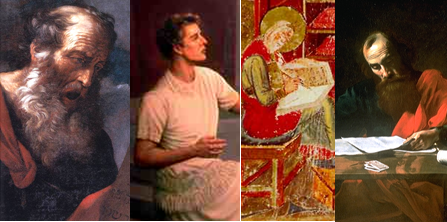
Four Men Who Followed Jesus’ Command
There are two classes of education that are apparent in the lives of these four men. Moses and Daniel were classically educated in the liberal arts of their day while Ezra and Paul were theologically schooled in Judaism.
Moses

Image: Wikimedia Commons
Moses was educated in the best tradition that ancient Egypt had to offer (Acts 7:22). Education fit for a prince would have likely included literacy, architecture, painting, astronomy, and mathematics as these were some of the strong aspects of Egyptian culture.4 It also seems reasonable to assume that a prince would have been instructed in statecraft and law. A. W. Morton suggests Moses may have learned the duties of a scribe as part of his education and would have become literate in both Hebrew and Egyptian.5 That he rejected the lifestyle of the palace does not suggest that he eschewed his education.
In defending the Mosaic authorship of the Pentateuch, Gleason Archer explains that there were actually two strands of Moses’ intellectual development:
He had the education and background for authorship, since he received from his ancestors that wealth of oral law which originated from the Mesopotamian cultures back in the time of Abraham (hence the remarkable resemblances to the eighteenth century [b.c.] Code of Hammurabi), and from his tutors in the Egyptian court he received training in those branches of learning in which eighteenth dynasty Egypt excelled the rest of the ancient world. From his forebears he would naturally have received an accurate oral tradition of the career of the patriarchs and those revelations which God had vouchsafed to them.6
The Hebrew strain could have been gained from his mother but as the biblical record does not mention conclusively that she cared for him beyond the period of his weaning (Exodus 2:10),it seems most likely that he learned the traditions of his forebears during the years in the desert.
Both strands are evident in the Pentateuch. Moses was an outstanding storyteller in the oral tradition of the Hebrews. The Pentateuch reveals Moses as an experienced leader in many areas: law, tabernacle building, dietary regulations, and many other things. Concerning law, for example, E.B. Smick draws several correlations between the Mosaic law and other legal systems known in the Middle East at the time, specifically the famous law code of Hammurabi, implying that Moses was familiar with them.7 One could argue that his knowledge of Hammurabi’s Code could have come from either strand of his tradition.
The Pentateuch also reveals more than one literary style. While most of it is written in compelling narrative, certain small sections are poetic (i.e. Genesis 3:14-19; 4:23-24; 9:25-27; 49:1-27).8 Also, the table of the nations in Genesis reveals that Moses had a grasp of history that went beyond that of the Egyptians and the Hebrews.
Moses’ passion for God is not only reflected in the man of God and great leader that he indeed became, but also in the fact that he wrote the Pentateuch. The document upon which Hebrew society would be built, it provided a solid history, statecraft, and numerous other things—God breathed into and through Moses.
Daniel

Image: WorldImages
Daniel was taken captive by Nebuchadnezzar, most likely in the first group taken around 605 B.C. All that is known about Daniel is drawn from the Old Testament book that bears his name. Nothing is known about Daniel’s early life except for what is found in 1:3-4 that he was young, intelligent, handsome, part of the Jewish upper class, and showed potential for serving the king of Babylon. Daniel 1:4, 17 indicates that he and his friends were to be educated in order to serve in the court, specifically stating that they were educated in the literature, language, and wisdom of the Babylonians. The literature included writings on ethical values, aesthetic appreciation, morals, religious issues, and social attitudes.9 Norman Porteous holds that the language they were required to learn would have either been the neo-Babylonian language spoken in the king’s court or, more likely, the ancient Sumerian tongue used in their rituals and sacred myths.10
At the end of three years, they were to stand before the king (1:5). Being called to stand before the king could mean more than one thing. Either they would simply be presented as having finished their studies and ready for service, or it could mean that he would examine them personally to see if their education was satisfactory. It appears from 1:18-21 that the latter was the case, meaning that they had additional motivation to study hard since the king held the power of life and death over them. In the case of Daniel and his friends, God gave them great favor with the king.
Their teachers were the wise men or enchanters and magicians of the land. John Goldingay gives some excellent insight into who these people were:
The Babylonian sages combined many of the functions fulfilled by wise men, prophets, and priests in Israel, though they are to be distinguished from those cultic functionaries who were more especially concerned with the temple and its ritual. They were the guardians of the sacred traditional lore developed and preserved in Mesopotamia over centuries, covering natural history, astronomy, mathematics, medicine, myth, and chronicle. Much of this learning had a practical purpose, being designed to be applied to life by means of astrology, oneirology, hepatoscopy and the study of other organs, rites of purification, sacrifice, incantation, exorcism and other forms of divination and magic.11
Subjects such as astronomy, natural history, mathematics, medicine, chronicle, and perhaps myth would pose no religious conflict for the Jewish exiles, but most of the other subjects listed above represent various ways of practicing divination and were expressly forbidden by God (Leviticus 19:26, 31; 20:6). The high status of the magicians and enchanters is indicative of the depth of animistic practices in Babylon. How Daniel and his friends avoided being immersed in the occult during their three years of study is not revealed, but their later display of steadfastness of faith indicates that they must have done so (Daniel 3:1-27).
While most forms of divination are an abomination to God, the interpretation of dreams, known as oneiromancy, apparently is not. Because the Babylonians knew that Daniel had this gift and, therefore, was obviously in touch with a supernatural power source, they may not have been all that concerned that he did not participate in their other activities. However, the difference between Daniel and the others is that his interpretations always revealed the glory of God (cf. Daniel 2:31-45; 4:19-28), while those of other magicians tended to honor mankind.
Daniel applied his education well and spent many decades in the service of the king, holding many posts in the kingdom, including possibly becoming the top administrator in the reign of Darius the Mede (Dan. 6:2-3). That he excelled in his vocation, which would have required a substantial intellect, is abundantly clear from the biblical record. Daniel’s passion to live in obedience to God’s word is evident from the very beginning when he and his friends asked to be excused from eating food that was ceremonially unclean. As H.C. Leopold points out, receiving a Babylonian education and even taking on Babylonian names did not violate the consciences of Daniel and his friends. Eating the king’s food, however, which violated the Levitical food laws, was an entirely different matter.12 Abstaining from unclean food in the court of the pagan king of Babylon was not easy, but they preferred obedience to compromise (1:8-21).
Daniel’s competence in his job and his piety are both revealed in Daniel 6:1-5. His enemies could find no fault with him either in reference to the execution of his responsibilities or in the area of integrity. He was both competent and faithful. The subsequent trap that his enemies laid for him was a back handed compliment to his faith. They knew that they would catch him in prayer because he was both consistent and uncompromising.
Ezra
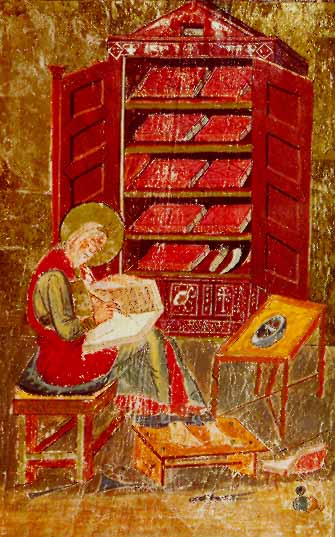
Codex Amiatinus, 8th Century. Image: Wikimedia Commons
Ezra was a Levite who could trace his lineage all the way back to Aaron, Israel’s first high priest. He was “learned in matters of the Law,” (Ezra 7:1-6, 11) leaving little doubt that he was numbered among the intelligentsia of the day. How he was educated is a matter of conjecture. Most scholars believe that the institution of the synagogue was founded during the Exile as Jews could no longer worship at the temple. It may be that he was raised in a synagogue school and perhaps later trained under an individual teacher of the Law. Whatever the case, he was of such high and noble character that he even commanded the respect of the pagan king of Persia, Artaxerxes (Ezra 7:12).
Originally, the function of the scribe may have been part of the job of the Levities in the early history of Israel, and court scribes certainly served in the times of the monarchy. But scribes as a special class began to emerge in the period of the Exile, meaning that Ezra was part of a new breed (see Ezra 7:6, 11; Nehemiah 8:4, 9, 13). Ezra was trained in what is now known as Rabbinic Judaism which emphasized the study of the law—a written tradition that needed interpretation.13 Because of his skill in interpreting the Law and his priestly lineage, Ezra symbolizes the close relationship between the priesthood and the interpretation of the Law that was common in the post-exilic period.14 His literary skills can be seen in the book that bears his name. Many of the early church fathers also believed that he wrote the books of the Chronicles, although the evidence is not conclusive.15 It has also been argued that he may have written all or part of the book of Nehemiah.16
But Ezra was no ivory tower scholar. Not only had he served in the court of Artaxerxes, he also served as a civil leader who led a part of the Jewish remnant from Babylon back to the promised land in 458 B.C. (Ezra 7:6). Although acting in an official capacity, he surely would have understood the return of the remnant in light of Jeremiah’s prophecy (Jeremiah 25:11) that the Jews would return after seventy years. Certainly he would have seen himself as part of that prophecy’s fulfillment.
What he saw when he arrived in Jerusalem shocked and disturbed him greatly. In clear and open violation of the Law of Moses, the children of the Jews who had been left behind seventy years previously had intermarried with peoples among whom the Law had expressly forbidden them to marry (Ezra 9:1-2; cf. Exodus 34:15-16). His prayer in Ezra (9:6-15) is one of contrition and repentance on behalf of those that had sinned. The picture of one of the most dignified, well educated Jews of his era sitting before God weeping with his clothes torn in repentance is most poignant (Ezra 9:5; 10:1).
As a true son of the covenant, Ezra could not be satisfied to leave things the way they were. With the encouragement of Shecaniah, Ezra began to lead the people back towards faithfulness to God (Ezra 10:2-5). Faithfulness to God demands obedience, and Ezra issued the call for them to divorce their foreign wives (Ezra 10:6-17). This proved to be a difficult task as their sin had been so rampant. While Ezra had rightly called them back to obedience, he tempered it with mercy in allotting some time to work out the issue. The melding of the intellect and piety of this marvelous man is found in Ezra 7:10 that he purposed to study, practice, and teach God’s law.
Paul

Image: Wikimedia Commons
Paul was from Tarsus in the province of Cilicia which was in the southeastern part of Asia Minor (Acts 21:39). As a border province and a commercial center, people from Tarsus would have not only been aware of the Hellenic culture that permeated the Roman Empire, but would have also been well aware of the religious thought to the east. E.M. Blaiklock notes that this cosmopolitan atmosphere was an ideal environment for nurturing one who would become God’s messenger to the Gentiles.17 Since God’s revelation came first to the Jews, it would require the mastery of the Old Testament, but it would also require the intellectual ability to communicate that message in the thought forms of the Greek speaking world.
Tarsus was a university city, home of the renowned teacher, Athenodorus, the personal tutor of Caesar Augustus, who returned home in his later years. Unlike other cities, such as Alexandria, it was the natives of Tarsus, not those from outside, who flocked to the schools.18 Blaiklock is surely correct in contending that it was a great learning opportunity for a brilliant mind like Paul’s, and a choice place of preparation for becoming an apostle to the Gentiles.19
Although the Jewish enclave in Tarsus was tolerant of Hellenic culture, Philippians 3:4-11 reveals that Paul was raised in a strict Hebrew home.20Paul’s claim to be a “son of the Pharisees” in Acts 23:6 may indicate that his father or one of his other ancestors may have been associated the Pharisees.21 Gerald Hawthorne notes that the phrase “a Hebrew of Hebrews,” (v. 5) refers either to Paul being of completely Jewish lineage, or that he was raised to speak Hebrew in the home.22 Perhaps both were true, although Bruce holds that Aramaic, not Hebrew, was Paul’s native language.23 Paul was most likely fluent in both of these languages as well as Greek. Paul’s fluency in Hebrew would have been critical to his studies under Gamaliel, his inclusion as a member of the strictest sect of the Pharisees (Acts 22:3), and his ability to exegete the Old Testament in its original language.24
His rabbinic training under Gamaliel in Jerusalem would likely have commenced shortly after his Bar Mitzvah which took place when he was thirteen.25 Gamaliel, a prominent member of the Jewish Sanhedrin, was “an honored teacher of the law” (Acts 5:34). According to R.F. Youngblood, Gamaliel believed that the Law was divine, but tended to emphasize its human elements, calling for a more relaxed application of the Sabbath laws, and urged kindness towards the Gentiles. He was also an avid student of Greek literature.26 Paul’s knowledge of Greek literature seems to be consistent with that of his mentor, suggesting that Gamaliel’s attitude may have help to shape his own.
By far, Gamaliel’s greatest influence upon Paul was in relationship to the Law of God. According to Paul’s own confession, he was of the strictest sect of the Pharisees, meaning that he was passionate about the study and adherence to God’s Law (Philippians 3:5). Like many others, perhaps he assumed that salvation was obtainable through obedience to the Law. Paul’s Damascus Road experience resulted in a change in perspective regarding the function of the Law (Galatians 3:24), but not his desire to study and fulfill it. When Paul speaks of counting all things in his background as loss or rubbish, he was only discounting these things as a way of salvation (Philippians 3:8-9). He was not devaluing education or intellectual development. Jesus himself rightly criticized the Pharisees for many things, but the pursuit of mental acumen was not one of them.
In assessing whether Hellenism or Judaism had the greatest influence on him, one is compelled to note that Judaism held the stronger hand.27 Paul’s deep intellectual understanding of the Old Testament is reflected throughout his writings and in the speeches recorded (and edited) by Luke in Acts. As to his writings, the book of Romans is unsurpassed in reflecting the depth and range of his theological thinking, especially in regards to his reinterpretation of the function of the Law as a means to lead one to Christ and not as the means of salvation in itself—a radical departure from Judaism (Romans 7 and 8). Mainly didactic in nature, Merrill Tenney notes that while Romans does not contain all fields of Christian thought, “it does give a fuller and more systematic view of the heart of Christianity than any other of Paul’s epistles, with the possible exception of Ephesians.”28 Romans can be described as a well reasoned defense of the Christian faith.
Perhaps the clearest example of the combination of his intellect and piety is found during his time in Athens, and specifically in his sermon on Mar’s Hill (Acts 17:16-34). While Athens had long passed its Golden Age, it was still the philosophical center of the Mediterranean world. In the market place, which doubled as the center for public life, Paul reasoned (v. 17 NKJV) with the philosophers of the day. John R.W. Stott suggests that Paul used the Socratic method of questions and answers, a methodology which with the Athenians would have been very familiar.29 This means that he was well schooled in the communication patterns of his target audience and was able to communicate the gospel in thought forms known to the Greeks even if they did not understand his message. He was taken to the Areopagus, an august group of the intelligentsia of Athens, apparently involuntarily, to explain his philosophy. F.F. Bruce explains that this group had considerable authority in matters of religion and morals. Although Paul was not on trial in a “forensic sense,” he was required to give an account of his teaching.30
One must agree with Bruce that while Paul’s message presented here by Luke was likely an edited edition of the original, it is a brilliant apologetic of the gospel to educated unbelievers.31 Here, his intellect and mental agility to apply what he knew are readily apparent in his message. First, he demonstrates knowledge of their history and literature in making reference to the unknown God (v. 23). Don Richardson writes that 600 years before Christ, a plague that was attributed to a curse broke out in the city of Athens. In response to an oracle, a poet philosopher named Epimenides was summoned from Crete, who called for sacrifices to an unknown deity, and the plague stopped. Several altars were built in the region to this unknown power.32 While it is possible that Paul did not know the story behind the altar, it is more likely that he was familiar with it. He had read the writings of Epimenides and quotes him in 17:28.33 It also seems unlikely that he would use this altar as an illustration if the background of it was unknown to him.
From the reference to this altar, Paul builds his case for Christ using linear logic and moving from the general revelation of God in nature to the specific revelation of God in Christ. Paul began with the understood concept of creation to explain the rationale for something they emphatically did not understand—the need for repentance and the reality of the coming judgment. Notably absent is any direct reference to the Old Testament, an unknown and therefore unauthoratative book to the Greeks.
As mentioned above, Paul was also familiar with the classical literature of the day, using quotes from Greek poets to support his argument for divine revelation.34 In verse 28, he quotes from Epimenides and in verse 29 he quotes from Aratus, a native of his home province in Cilicia. Both writers referred to a Supreme Being, but not the God of the Bible. In using their writings to proclaim Christ, Bruce rightly says that Paul opened himself to the charge of misquoting their poets, but also explains that Paul’s general theological position allowed him to borrow from others to the extent that what they said was in line with biblical revelation.35 Stott argues that Paul’s example in using the literature of his day is adequate warrant for today’s believer to do the same in the intellectual debates of today for the purpose of pointing people to Christ.36
But Paul’s intellectual brilliance was not motivated by a desire to win an argument but to bring people to Christ (vv. 30-31). Simply stated, Paul, his mind steeped both in the Scriptures and the literature of his day, was obviously anointed by the Holy Spirit to introduce the gospel to those who had never heard it. He was a first rate apologist and evangelist.
Application and Implications for Christians Today
In assessing the lives of the men studied here, it is evident that all of them were men of great intellect and spiritual passion. They were all well educated, even if it must be admitted that in the case of Daniel, and perhaps Moses, their studies may not have been their personal choice.
But not everything in their education was designed to lead them to God. Neither the Egyptians nor the Babylonians took the God of the Jews seriously. In Paul’s case, much of what he learned in Judaism had to be jettisoned when he came to Christ. They had to critically analyze what they were taught in light of God’s revelation, retaining that which was biblical or at least did not violate Scripture, while rejecting that which was unbiblical. The evidence is clear that they did so. For this they needed an intellect touched by the Holy Spirit. This is critical for modern thinkers as many of today’s ideologies (and not a few theologies) are far from Christ centered. In dealing with these issues, one must know how to think and reason, not simply what to think.
Justification of Liberal Arts Education
The lives of Moses and Daniel reveal how they used their education to glorify God through writing the Pentateuch and through administrating government competently and honestly. Their lives provide ample justification for a Bible-based, Christ centered liberal arts education that calls for the development of a Christ-like mind in every area of life including the arts, the sciences, or politics. Nañez calls for a return to studying philosophy and the sciences, pointing out that many fathers of modern science were devoted Christians and gives some outstanding examples.37 His call is a little late, as is evidenced by the abundance of liberal arts courses in Pentecostal Bible schools and universities that predate his comments by several decades, but it is on the mark.38
Harry Blamires contends that everything in human experience, whether sacred or secular, can be thought about from a Christian point of view.39 In politics, for example, William Wilberforce was an example of an outstanding Christian who used his intellectual powers for the glory of God. Serving in the English Parliament in the late eighteenth and early nineteenth century, he was one of the driving forces in outlawing slavery in the British Isles, as well as having a moralizing influence over many areas of national British life.40
Nañez also calls for the sanctified use of reason and logic, using these mental tools in doing theology and especially in the art of apologetics.41 Nañez’s book is culture bound, however, dealing only with issues related to Western, particularly American, Pentecostals. He advocates the reading of Western philosophers, whose writings, he believes, should be studied for one’s intellectual development.42 Would he also endorse reading the Confucian classics, the sacred books of Hinduism, Buddhism, Islam, and other ideologies that are dominant in various parts of the world today? One would presume so in the interest of apologetics for those living in those cultural milieus. Knowing the ideologies of one’s cultural context is important to communicating the gospel.
Maintaining Intellectual Growth and Spiritual Passion
With the possible exception of Paul’s alluding to books and parchments that he had left behind (2 Timothy 4:13), the Bible, unfortunately does not reveal how these men continued their intellectual development. It also does not explain how they maintained a balance between the intellect and spiritual passion, but it is clear that they did so. How this can be done depends on the interests and the ability of the individual. For those who desire to get or continue a formal education, the opportunities today are endless with the advent of distance based education. For those living in oral societies such as that of the ancient Hebrews, a wealth of information is available in the folklore, fables, and poetry that should not be ignored in seeking to understand those one is called to serve. There are no shortcuts. The words of Solomon ring true that the writing of many books is endless and the study of them is wearisome (Ecclesiastes 12:12), meaning that intellectual development is both mind stretching and exhausting.
But intellectual development is never an end in itself. It must always be held in creative tension with spiritual passion. Harold Kohl, the founding president of the Far East Advanced School of Theology in Metro Manila (now the Asia Pacific Theological Seminary in Baguio City, Philippines) argued that scholarship without spirituality is dead and barren. He also contended that spirituality that is not deeply grounded in God’s word easily becomes fanaticism. True Pentecostal education would strive for both in balance, although the challenge of holding these two ideals in creative tension is not easy.43 Eli Javier echoed the same thoughts when he warned Bible school leaders to be wary of those who have master’s degrees but no practical experience in ministry.44 He goes on to use the metaphor of a railroad track with one rail representing the intellectual and theoretical while the other representing the practical and concrete.45 Both rails are necessary for the train to run.
The biblical characters studied here are an excellent example. In all four cases, they sought to use their education in advancing the purposes of God in their generation. The driving force for getting an education and maintaining continued development must always be motivated by a passion for God himself and a strong desire to see his purposes accomplished in the world today.
Conclusion
This paper was written under the premise that part of fulfilling the great commandment to love God with all of one’s heart, soul, and mind means to develop one’s intellect. The sketch of the biblical characters revealed four men, trained in different disciplines, who used their brilliant minds in passionate service to God. Moses was a statesman, lawgiver, and gifted writer. Daniel excelled in administration, his integrity and faith known to all who worked with him. Ezra’s study of the Law led him to be part of the remnant that returned and to be a leader in the spiritual renewal that followed. Paul, the disciple of Gamaliel and apostle to the Gentiles, used his gifts in articulating theology and apologetics, particularly among the Gentiles, with the goal of bringing them to Jesus Christ.
All of them dealt with daunting challenges. Moses led the children of Israel, who were known to be hard-headed and cantankerous, out of the most powerful and influential nation of the Middle East and towards the Promised Land. Daniel served a pagan king, worked with unfriendly colleagues, and spent a night with the lions because of his faith. Ezra returned to a land which had been devastated by a conqueror to serve people who had lived in violation of God’s law. Paul’s list of challenges are eloquently listed in 2 Corinthians 11:21-29. But today all are rightly remembered as men of immense intellects and passionate faith who stood faithfully for God, no matter what the circumstances.
The challenge continues today. False ideologies, errant theologies, and unbiblical worldviews are proliferating around the world. This generation needs men and women who are filled with the spirit of Christ who will bend and stretch their minds to be used of God in disciplines and areas of service too numerous to elucidate here, both in the sacred and secular realms, seeking to honor Christ in all times and circumstances.
PR
Notes
The title of this paper, “Knowledge with Zeal” is an inversion of the motto of the Asia Pacific Theological Seminary in Baguio City, Philippines whose motto is “Zeal With Knowledge.”
1 The need and opportunity to develop one’s intellect is an underpinning premise of Rick Nañez’s book, Full Gospel, Fractured Minds?: A Call to Use God’s Gift of the Intellect (Grand Rapids: Zondervan Publishing House, 2005.).
2 Ibid.
3 Donald N. Bowdle, “Informed Pentecostalism: An Alternative Paradigm,” in The Spirit and the Mind: Essyas in Informed Pentecostalism,Sstudies in Honor of Donald N. Bowdle, eds. By Terry L. Cross and Emerson B. Powery (Lanham, MD: University Press of America, 2000), 12.
4 Taylor, William M. Moses The Law-Giver (Grand Rapids: Baker Book House, 1961), 24-28.
5 Archibald. W. Morton, “Education in Biblical Times,” in The Zondervan Pictorial Encyclopedia of the Bible 2, 206-223 (Grand Rapids: Zondervan Publishing House, 1976), 207.
6 Gleason L. Archer Jr., A Survey of Old Testament Introduction (Chicago: Moody Bible Institute, 1974), 122.
7 E.B. Smick, “Pentateuch,” in The Zondervan Pictorial Encyclopedia of the Bible 4 (Grand Rapids: Zondervan Publishing Corporation, 1976), 688.
8 Smick, 690-691.
9 D.J. Wiseman, “Babylonia,” in The International Standard Bible Encyclopedia 1, rev. ed. ed. Geoffrey W. Bromily (Grand Rapids: William B. Eerdmans Publishing Company, 1982), 398.
10 Norman W. Porteous, Daniel: A Commentary, The Old Testament Library (Philadelphia: Westminster Press, 1965), 27.
11 John E. Goldingay, Daniel, Word Biblical Commentary, vol. 30, eds. David A. Hubbard and Glenn W. Barker (Dallas: Word Books, 1989), 16.
12 H.C. Leopold, Exposition of Daniel, (Augsburg Publishing House, 1949, reprint (Grand Rapids: Baker Book House, 1969), 66.
13 Frederick Carlson Holmgren, Israel Alive Again: A Commentary on the Books of Ezra and Nehemiah, International Theological Commentary (Grand Rapids: William B. Eerdmans Publishing Co., 1987), xv.
14 Rainey, Anson, “Scribe, Scribes,” in The Zondervan Pictorial Encyclopedia of the Bible, ed. Merrill C. Tenney (Grand Rapids: Zondervan Publishing Corporation, 1976), 300-301.
15 C. F. Keil and F. Delitzsch, Commentary on the Old Testament vol. 3 (Peabody, MA: Hendrickson Publishers, 1986), 23.
16 Mervin Breneman, Ezra Nehemiah Esther: An Exegetical and Theological Exposition of Holy Scripture. The New American Commentary (Nashville: Broadman and Holman Publishers, 1993), 37.
17 E.M. Blaiklock, “Tarsus,” in The Zondervan Pictorial Encyclopedia of the Bible5, ed. Merrill C Tenney (Grand Rapids: Zondervan Publishing Company, 1976), 599.
18 Strabo, Geography, xiv. 5. 12 ff. (673ff.) in F.F. Bruce, Paul: Apostle of the Heart Set Free (Grand Rapids: William B. Eerdmans Publishing Company, 1977), 35.
19 Blaiklock, 602.
20 Blaiklock, 602.
21 F.F. Bruce, Paul: Apostle, 44.
22 Gerald F. Hawthorne, Philippians, Word Biblical Commentary, vol 43, ed. David A. Hubbard and Glenn W. Barker, (Waco, TX: Word Publishing, 1983), 133.
23 F.F. Bruce, Paul: Apostle, 43.
24 R.F. Youngblood notes that Paul normally uses the Septuagint when referring to Old Testament passages, he does use the Hebrew text in a number of places in his writings (R.F. Youngblood, “Gamaliel,” in The International Standard Bible Encyclopedia, rev. ed. ed. Geoffrey W. Bromily (Grand Rapids: William B. Eerdmans Publishing Company, 1982), 394.
25 R.N. Longenecker, “Paul the Apostle,” in The Zondervan Encyclopedia of the Bible, ed. Merrill C. Tenney (Grand Rapids: Zondervan Publishing House, 1976), 625.
26 Youngblood, 394.
27 Brad H. Young, Paul The Jewish Theologian: A Pharisee Among Christian, Jews, and Gentiles (Peabody, MA: Hendrickson Publishers, Inc., 1997), 9.
28 Merrill C. Tenney, New Testament Survey (Grand Rapids: William B. Eerdmans Publishing Company, 1961), 304.
29 John R.W. Stott, The Spirit, The Church, and The World: The Message of Acts (Downer’s Grove, IL: Inter-Varsity Press, 1990), 280.
30 F.F. Bruce, Commentary on the Book of Acts, The New International Commentary on the New Testament, ed. F.F. Bruce (Grand Rapids: William B. Eerdmans Publishing Company, 1979), 352.
31 Ibid., 362.
32 Don Richardson, Eternity in Their Hearts, rev. ed (Ventura, CA: Regal Books, 1981), 16-19. Richardson substantiates his story by citing several classical Greek writers: Diogenes Laertius, The Lives of Eminent Philosophers, vol 1, 110; Plato, Laws; an editor’s footnote on Aristotle’s, The Art of Rhetoric, book 3, 17:10 in the Loeb Classical Library, translated by J.H. Freese; Pausanias, Description of Greece, vol. 1, 1:4; and Philostratus, Appolonius of Tyana.
33 Bruce , Acts (p. 359, footnote 49). notes that Epimenides quote was probably drawn by others from the work of Theodore of Mopsuestia.
34 Bruce, Paul: Apostle, 239.
35 Bruce, Acts, 360.
36 Stott, The Spirit, 286.
37 Nañez, 184-193.
38 Email from Dr. Charles Harris to the author, August 18, 2007.
39 Harry Blamires, The Christian Mind: How Should A Christian Think? (London: S.P.C.K., 1963), 45.
40 John R.W. Stott, Involvement: Being a Responsible Christian in a Non-Christian Society (Old Tappan, NJ: Fleming H. Revell Company, 1985), 21-22.
41 Nañez, 135-143.
42 Ibid., 172-179
43 Harold Kohl, “From the President’s Desk,” BBI Gazette, July-August, 1965, 2-12.
44 Eli Javier, Pursuing Excellence, Experiencing Renewal: An Agenda for AG Ministerial Training Institutions, lectures notes at the PGCAG Bible School Faculty and Admin Staff Enrichment and Retreat, Tagaytay City, Philippines, May, 2007.
45 Ibid.
References Cited
Archer, Gleason L. A Survey of Old Testament Introduction. Chicago: Moody Bible Institute, 1974.
Blaiklock, Edward M. “Tarsus.” In The Zondervan Pictorial Encyclopedia of the Bible. Ed. Merrill C. Tenney. Grand Rapids: Zondervan Publishing House, 1976.
Blamires, Harry. The Christian Mind: How Should a Christian Think? London: S.P.C.K., 1963.
Bowdle, Donald. “Informed Pentecostalism: An Alternative Paradigm.” In The Spirit and The Mind: Essays in Informed Pentecostalism, Studies in Honor of Donald Bowdle. Eds. Terry L. Cross and Emerson B. Powery. Lanham, MD: University Press of America.
Breneman, Mervin. Ezra Nehemiah Esther: An Exegetical Commentary and Theological Exposition of Holy Scripture. The New American Commentary. Nashville: Broadman and Holman Publishers, 1993.
Bruce, F.F. Paul: Apostle of the Heart Set Free. Grand Rapids: William B. Eerdmans Publishing Company, 1977.
_______. Commentary on the Book of Acts. The New International Commentary on the New Testament. Ed. F.F. Bruce. Grand Rapids: Zondervan Publishing Company, 1979.
Goldingay, John E. Daniel. Word Biblical Commentary. Eds. David A. Hubbard and Glenn W. Barker. Dallas: Word Books, 1989.
Harris, Charles. Email to the Author, August 18, 2007.
Hawthorne, Gerald. Philippians. Word Biblical Commentary. Vol. 43 Eds. David A. Hubbard and Glenn W. Barker. Waco, TX: Word Publishing, 1983.
Holmgren, Frederick Carlson. Israel Alive Again: A Commentary on the Books of Ezra And Nehemiah. International Theological Commentary. Grand Rapids: Zondervan Publishing House, 1987.
Javier, Eli. Pursuing Excellence, Experiencing Renewal: An Agenda For AG Ministerial Training Institutions. Lecture notes at the PGCAG Bible School Faculty and Admin Staff Enrichment and Retreat, Tagaytay City, Philippines, May 2007.
Kohl, Harold. “From the President’s Desk.” BBI Gazette July-August, 1965.
Keil, C.F. and Delizsch. Commentary on the Old Testament. Vol. 3. Peabody, MA: Hendrickson Publishers, 1986.
Leopold, H.C. Exposition of Daniel. Augsburg Publishing House; reprint Grand Rapids: Baker Book House, 1966.
Morton, Archibald W. “Education in Biblical Times.” In The Zondervan Pictorial Encyclopedia of The Bible. Ed. Merrill C. Tenney. Grand Rapids: Zondervan Publishing House, 1976.
Nañez, Rick. Full Gospel Fractured Minds? A Call to Use God’s Gift of the Intellect. Grand Rapids: Zondervan Publishing House, 2005.
Porteous, Norman W. Daniel: A Commentary. The Old Testament Library. Philadelphia: Westminster Press, 1965.
Rainey, Anson F. “Scribe, Scribes.” In The Zondervan Pictorial Encyclopedia of the Bible. Ed. Merrill C. Tenney. Grand Rapids: Zondervan Publishing House, 1976.
Richardson, Don. Eternity in Their Hearts. Rev. ed. Ventura, CA: Regal Books, 1981.
Smick, Elmer B. “Pentateuch.” In The Zondervan Pictorial Encyclopedia of the Bible. Ed. Merrill C. Tenney. Grand Rapids: Zondervan Publishing House, 1976.
Stott, John R.W. The Spirit, The Church, and The World: The Message of Acts. Downer’s Grove, IL: Inter-Varsity Press, 1990.
_______. Involvement: Being a Responsible Christian in a non-Christian Society. Old Tappan, NJ: Fleming H. Revell Company, 1985.
Strabo. Geography. Xiv. 5, 12ff.
Taylor, William M. Moses The Law-Giver. Grand Rapids: Baker Book House, 1961.
Tenney, Merrill C. New Testament Survey. Grand Rapids: William B. Eerdmans Publishing Company, 1961.
Wiseman, Donald J. “Babylonia.” In The International Standard Bible Encyclopedia. Ed. Geoffey W. Bromily. Grand Rapids: William B. Eerdmans Publishing Company, 1982.
Young, Brad H. Paul The Jewish Theologian: A Pharisee Among Christians, Jews, and Gentiles. Peabody, MA: Hendrickson Publishers, 1997.
Youngblood, Ronald F. “Gamaliel.” The International Standard Bible Encyclopedia. Ed. Geoffrey W. Bromily. Grand Rapids: William B. Eerdmans Publishing Company, 1982.