Paul Hattaway: Tibet

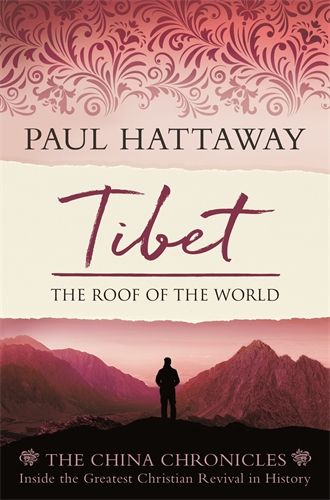
 Paul Hattaway, Tibet: The Roof of the World (London, England: SPCK, 2020), 356 pages, ISBN 9780281084135.
This book is volume 4 of Paul Hattaway’s series called the China Chronicles. This collection of books is devoted to providing an extensive account of the history and progress of Christianity in China. In recounting this history among the Tibetan people the author tells his readers about key events and individuals. One message that comes through very clearly is that trying to reach Tibetans with the gospel is not an easy task. It is a rough mission field. There are a number of reasons for this. First, the land is large. In addition, the terrain is rough and the weather can be quite severe. On top of all these things the dark spiritual forces at work in this area are very powerful. The demonic activities described in this book greatly exceed those that we might typically hear about in the West. But as the book demonstrates, even this darkness cannot stop the gospel from advancing. In the pages of this volume you will encounter some Christian people that “the world was not worthy of” (Heb. 11:38 NIV). Their commitment and steadfastness to the cause of Christ is truly amazing.
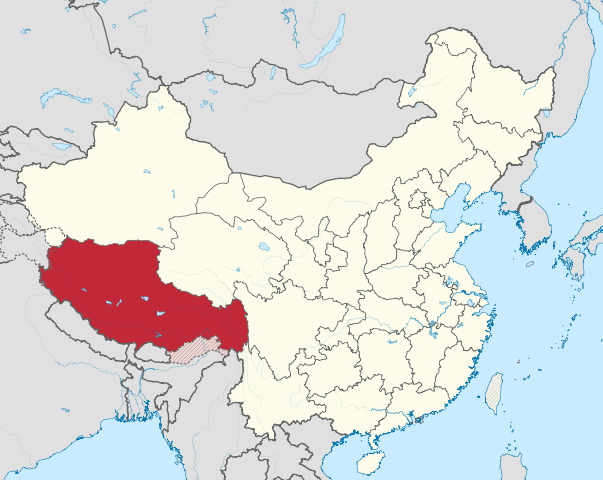
Image: Wikimedia Commons
The Tibet Autonomous Region consists of 474,300 square miles (page 1). If the Tibetan areas located in other Chinese provinces are added in, the figure increases to about 750,000 square miles. The population in the Tibetan Autonomous Region in 2020 is 3,370,598 (page viii). However, on average, the population density in this area is only seven per square mile (page viii). Though different elevations can be found in this region the altitude average is 14,800 feet (page 1).
The Nestorians, who have been in China since AD 635, were likely the first Christians to share the gospel there. However, a citation from a book by Martin Palmer dates the Christian presence there even earlier (page 22). In later history both Catholic and Protestant missionaries worked in Tibet. Early Catholic missionaries to Tibet include: Antonio de Andrade (pages 25-36) and Odoric of Pordenone (pages 37-38). Years later other Catholic missionaries served in Tibet, among them were Ippolito Desideri (page 40-41), Evariste Regis Huc, and Joseph Gabet (pages 43-44). For about 600 years, Catholics were the only missionaries in Tibet preaching Christ (page 47).
The first Evangelical missionaries came to Tibet in 1877 (page 47). Once this happened those who entered the area came from a number of different organizations including: the Moravians, the China Inland Mission, the Christian and Missionary Alliance, and the Assemblies of God. This list is not complete but it gives you some idea of the variety of groups that ministered there. James Cameron, an Englishman, was the first Evangelical to serve in Tibet (page 48). After him others followed these included: George Parker (pages 52-54), Cecil and Eleanor Polhill (pages 62-64), Annie Taylor (pages 65-74), William Christie (pages 90-108), Albert Shelton (pages 118-129),Victor Plymire (pages 164-185), and Frank and Annie Learner (pages 194-203). One well-known name that can be found in the book is Sundar Singh, who was an evangelist from India (142-150). Pentecostals may be surprised to learn that both Lester Sumrall and Howard Carter ministered in Tibet in the 1930s (page 186-188).
One very interesting section of the book tells the story of the publication of the Tibetan Bible. It took 92 years to get the complete Bible into print (see link below). This was accomplished amidst very significant obstacles. You can read this story online. The link to access this excerpt is: https://asiaharvest.org/tibet-the-roof-of-the-world
Another interesting piece of information in this book concerns the Dalai Lama. In 1939, when the man who is the current Dalai Lama was four years old, missionary Frank Learner shared the gospel with him (pages 201, 203). Later, when the completed Tibetan Bible was available this same Dalai Lama received a copy of it (page 226).
Like the other books in this series, this volume has pictures sprinkled throughout its pages. It also has very detailed charts in the back of the book noting both census figures and Christian population numbers. Paul Hattaway’s Tibet: The Roof of the World is another great account of what God has done, and is doing, in Asia. I have found this series of books very informative. They are also very challenging. One cannot help but be impressed by the perseverance of the missionaries who have labored in this very difficult mission field.
Reviewed by John Lathrop
Publisher’s page: https://spckpublishing.co.uk/tibet-170