

Pentecostal/Charismatic Churches and Ecumenism: An Interview with Mel Robeck
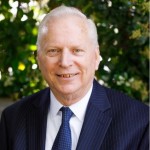
A conversation with Professor and Pentecostal Statesman Cecil M. Robeck, Jr.
PneumaReview.com: As a Pentecostal, how do you define ecumenism?
 Mel Robeck: The term “ecumenism” is derived from the Greek word oikoumene, which comes from the noun, oikos. The basic meaning of oikos is “house,” and by extension, oikoumene refers to those things, which have to do with the household. I understand the ecumenical household to be the “Household of God,” the Church, the whole “People of God,” the Christian community. From my perspective, then, ecumenism is a term reserved primarily for the issues of relationship that exist between Christians. My understanding of what constitutes a Christian is fairly simple. A Christian is one who confesses that Jesus Christ is his or her Lord and Savior.
In my ecumenical work, I begin with the biblical premise that there is only one Church and that all who confess Jesus Christ are part of that Church, regardless of their denominational label. But if we drive down the street in any of our cities, we can see that there is something wrong. How is it that we have so many denominations—over 30,000 around the world today—while there is only one Church? Why is it that many of these denominations have nothing to do with one another, yet there is only one Church? Why do we speak against one another, and yet we say that we belong to the same Church?
Many people who are not Christians ask these same questions. Unfortunately, these questions compromise the message of reconciliation that we preach, the message that God has offered through Jesus Christ, a means of breaking down all barriers between God and humankind, and between all individuals. The result is that those outside the Church are either confused about the effectiveness of the Gospel, or they are completely scandalized by what they view as our “hypocritical” claims.
The so-called “Ecumenical Movement” first came into being as a direct result of these evangelistic and missionary concerns. The World Council of Churches, which was founded, in part, as a result of these concerns, seeks to overcome the historic divisions between its member denominations. Along the way, it has also addressed other human, inter-religious, and environmental issues that represent the concerns of the churches that are members of the Council. The World Council of Churches has invited all Churches who can confess that “Jesus Christ is both God and Savior according to the Scriptures” to join together in a common quest for visible Christian unity. Very few Pentecostals have taken them up on their offer.
PneumaReview.com: Why should Pentecostal/charismatics be involved in ecumenical dialogue?
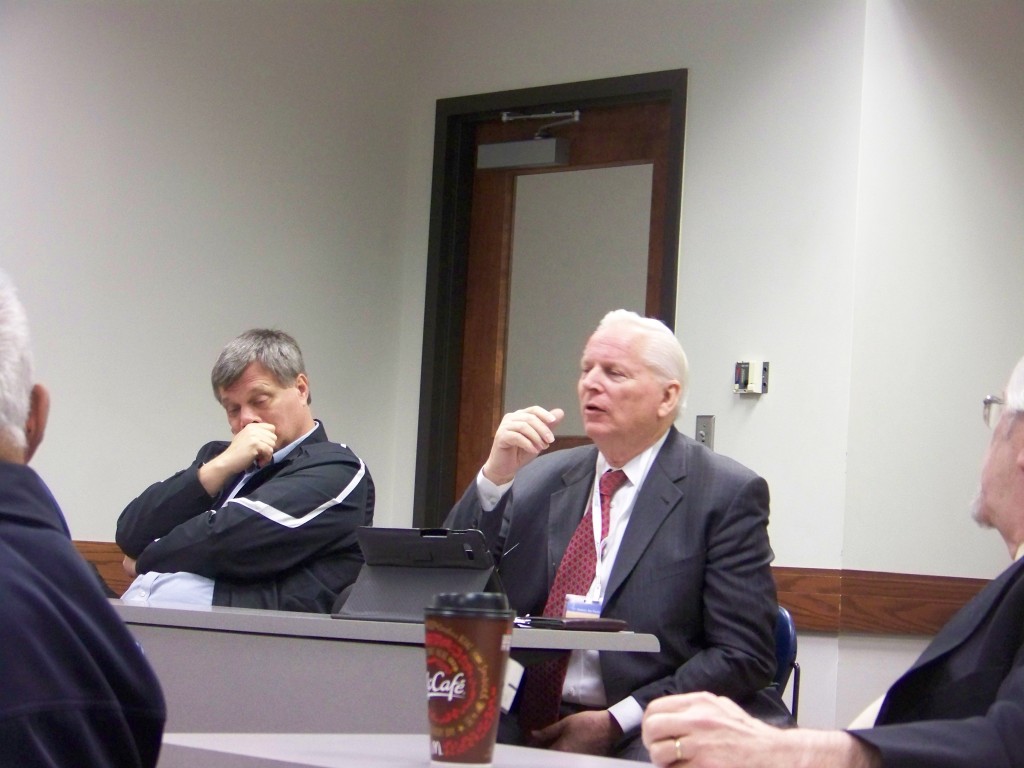
Mel Robeck: I am convinced that most of our real differences do not so much lie where we say they do, that is, in our various theological positions. Yes, our doctrinal differences are sometimes deep and they are very real. But our most substantive differences lie in a history packed with personal relationships that have been broken, in the misinformation that has been sown between us, in our differing sociologies and social locations, in our unwillingness to admit that during our time of division the other could have changed, or that God could be working among them when they strive toward some form of visible unity. All too often, we seem to have a psychological need to be “right”—that is, to be in control.
In their “Decree on Ecumenism” (Unitatis Redintegratio, 1), the Bishops of the Roman Catholic Church who gathered in Rome for the Second Vatican Council made a very important assertion.
Christ the Lord founded one Church and one Church only. However, many Christian communions present themselves to men as the true inheritors of Jesus Christ; all indeed profess to be followers of the Lord but they differ in mind and go their different ways, as if Christ himself were divided. Certainly such division openly contradicts the will of Christ, scandalizes the world, and damages that most holy cause, the preaching of the Gospel to every creature.

2014 Lausanne-Orthodox Initiative Consultation,
September 15 – 19, 2014, at the monastery of St. Vlash, Albania.
Dr. Robeck is 8th from the left, wearing a white shirt and dark necktie.
PneumaReview.com: How does ecumenical dialogue relate to the faith, life, and work of the local church?
Mel Robeck: The way that I look at ecumenism—that it embraces those things that affect the “Household of God”—means that I see it as having an enormous impact upon the ongoing faith, life, and work of the Church. To the extent that my local congregation sees itself as part of that universal Church, or to word it another way, to the extent that the universal Church finds its expression in my local congregation, I am already involved in ecumenism. This relationship between the local and the universal aspects of the Church is sometimes referred to in terms of the Church’s “catholicity.” When I try to interact with others who make the same claims about their local congregations as I do with respect to its universal ecclesial nature, I engage in ecumenical dialogue.
When Christians in the United States and Christians in other parts of the world find themselves fighting against one another because their governments are aligned against one another, we are brought face to face with issues of real life. Ecumenical dialogue is a useful tool in helping us resolve our differences, or in educating us to the political realities that we might otherwise miss. In the end, it can help us to recognize whether it is the blood of American soldiers or Christian Palestinians, for example that is more important to us as members of the “Household of God.”
When one set of churches says that the way to be the most helpful to people around the world is to engage in some form of active social justice, and another set of churches says that what is most essential is that we preach the Gospel and engage in evangelism and mission, ecumenical dialogue can be a useful tool in helping us to prioritize how best to meet the specific needs of a specific people in a specific life setting with the resources we share. The point of all ecumenical dialogue is to build and/or maintain bridges of communication between all parties.
PneumaReview.com: Why do so few ecumenical documents reach pastors and congregations?
Part of the reason that these documents are not more widely received is the fact that they are often technical in nature. All divisions that separate Christians have come about at some point in history, in many cases these divisions may have taken place centuries ago. Many ecumenical documents presuppose a certain level of understanding of the historical factors that led to these divisions as well as historical developments that have taken place since the original break. At the beginning of the 21st Century, few Pentecostal or charismatic leaders possess the level of training in church history (with the possible exception of their own), that is necessary to enable them to interact meaningfully with what appears in many ecumenical documents. Insofar as potential readers do not know that history they are disadvantaged.
Similarly, the authors of most ecumenical documents are the Church’s theologians who pay close attention to the language of division. Like those who work in any trade or profession, these specialists have sometimes developed and employed a jargon that functions as an in-house form of shorthand. As a result, their work does not always communicate clearly to the person in the pew. Reading some ecumenical documents is like reading through some legal documents. The experts know what they mean, but ordinary lay people do not. In the case of Pentecostalism, where education has seldom received the support it deserves even in the preparation of pastors and other church leaders, some of these documents are largely incomprehensible. The theological vocabulary is simply above their ability to engage it.
At a much deeper level within the Pentecostal and Charismatic tradition, however, lies the fact that virtually any move toward greater ecumenical understanding or cooperation is viewed with extreme suspicion. We are suspicious of these documents, suspicious that they may be documents of compromise. This suspicion is easily substantiated with a simple reading of the Bylaws that some groups have adopted in order to marginalize or exclude the ecumenical agenda from their midst, or in various practices that are designed to do the same, for example, the unwillingness to allow publication of articles on the subject that might be construed as supportive of ecumenism, or even the willingness to preach against it from a context that lacks understanding. As a result of this suspicion, few Pentecostal leaders have been willing to allow any forum to exist in which ecumenism is explored objectively. With few exceptions, I believe that they fear the response of the people. Frequently the people are more ecumenical than their leaders are. As a result, Pentecostal leaders often do not allow their constituencies to know of any situation in which Pentecostals are participating ecumenically, they do not inform their constituencies of any documents that ecumenists have produced unless it is to criticize them, and they refuse to publish any article that might contribute to a change in the status quo.
PneumaReview.com: What could Pentecostal/charismatics do that would foster greater understanding and cooperation between Christian communities?
Mel Robeck: There are several different ways in which believers can get involved in genuine ecumenical activity. First, prayer, a staple of Pentecostal/Charismatic life, can play an enormous role in helping to form ecumenical sensitivity. When we pray for others, they move from the margins of our lives to areas of more central importance. It is the case that all too often, we do not pray for other churches by name. We may offer prayers for other “Christians” generally, or we may single out a specific group such as “persecuted Christians,” and these times of prayer are all good. What we tend not to do is to pray for other denominations, or local congregations, or pastoral and church leaders by name.
Many times throughout the year, my local congregation prays for other specific congregations in our community—Pentecostals, Methodists, Nazarenes, Presbyterians, Roman Catholics, and others. When John Paul II travels and is given the opportunity to speak on behalf of the Church as a whole, we lift him up in prayer as well. In the recent sexual scandals that have plagued the Roman Catholic Church, rather than add our voices to its condemnation, we have lifted its leaders up in prayer, asking that God would give them wisdom in how best to address the situation. It seems to me that by praying for these “others” we take our place within the Church as a whole, and we become one with them in a new way.
Second, we need to educate ourselves more broadly. Most of us receive information regarding other churches from our pastors or from those periodicals or news sources that are published by our own congregations or denominations. Pentecostals and Charismatics may also read more broadly from Evangelical sources, but it is extremely rare that they move outside their comfort zones and read more broadly from more liberal Protestant, or Orthodox, or Roman Catholic sources.
I spend about three months each year in other countries. Over the past 15 years this has taught me just how important it is to see and hear the news from a variety of perspectives. As a North American, I can have a far too narrow perspective on global realities if all I do is listen to the North American sources. The same could be said if I limited myself to news originating only in Europe, or Africa. Similarly, the Church is part of the global reality, and we need to develop a global perspective on the One Church of Jesus Christ, which is “catholic” in the sense of being a universal Church.
Having such a global perspective on the Church may help to overcome our fears regarding ecumenism. Unfortunately, the apologetic that was developed to support the rise of Pentecostalism and in many cases the rise of the Charismatic and subsequent renewal movements, has been a triumphalistic apologetic, one that is “over against” the historic churches. Whether this apologetic employs the “lost and restored” motif of Joel 2, or the “latter rain” motif of Acts 2 or the multiple “wave” theory championed early by Frank Bartleman and often by C. Peter Wagner to support a form of Restorationism, it has clearly made judgments against the churches that gave them birth. When such an apologetic is linked to an uninformed eschatological perspective that simply assumes that Revelation 17 and 18 speaks specifically about existing ecumenical organizations such as the World Council of Churches or such denominations as the Roman Catholic Church as supporting the agenda of the Antichrist, the results can be devastating to the relationships that might be possible were we to trust the Lord to lead us.
Third, we could place the support of theological education higher on the agenda in our local congregations. While this action would focus more narrowly on the training of our pastors, and more broadly on the young people of our congregations, it would also contribute to the education of the majority of our people, because the sermons we hear would be different from many that are preached today. In my local congregation, people know that I know something about other churches, and about many of the ideas or actions that are reported in the local press or on their television news. They will often seek me out to talk with them about such things. What this shows is that they are interested in what is going on in the Church at large, and not simply in our local congregation.
Finally, each year there are a number of times in which cooperative efforts between congregations may be possible. Most of us are familiar with such things as Good Friday services or Easter Sunrise services. Often we do not think of these services and celebrations as having genuine ecumenical significance. But they do! Most Pentecostals and charismatics, however, do not know that for nearly a century the “Week of Prayer for Christian Unity” has existed and a vast number of historic churches participate in it. In some countries this week has been linked with the events of the Easter season. In the United States and Canada, it has typically been celebrated during the month of January. Sometimes the impetus comes from local or regional councils of churches, but frequently there are joint prayer services that are offered within this context.
Fourth, many historic congregations are actively involved in a variety of social concerns. They feed the hungry, offer temporary housing for the homeless, and work toward greater community development among the poor and the marginalized. Pentecostals, too, take seriously some of these points, but often they don’t see them as being linked with their expression of faith. It seems to me that this is an area that Pentecostals and Charismatics need to study, and then find a role to play in it.
PneumaReview.com: How can a believer be involved in dialogue with other churches?
Mel Robeck: Ecumenical dialogue may be undertaken at many different levels. The level of dialogue that is most common is an informal one. It is one that may be found within families in which at least two different faith traditions are present. During the past generation, we have watched as the children of many Christians have married across denominational lines. It has become quite common for a Catholic boy to marry a Pentecostal girl, for a charismatic man to marry a non-charismatic woman. Once this occurs, you have an ecumenical household. The situation gets more complex when you include the immediate family of the bride and groom or when the new couple has children. Sometimes the differences that emerge between them can be very intense. Beliefs are lifted up with great feeling. Left unresolved, the potential for division in this young marriage may be very high. Yet, many families have learned how to love one another across these ecumenical divides, and most frequently, they have arrived at the decision to love one another precisely because they have been willing to sit down with one another around a common table and get to know one another. Ecumenical dialogue is like that.
The dialogue with Roman Catholics as well as with the Reformed Churches have stated explicitly in their published reports that they are not in discussion for the purpose of merging with one another or with negotiating institutional unity. They recognize that they are coming together with very difficult histories and they need to find a way to talk with each other. “Evangelization, Proselytism, and Common Witness,” released by the International Roman Catholic-Pentecostal Dialogue in 1999 stated, “The goal is not structural unity, but rather the fostering of this respect and mutual understanding between the Catholic Church and classical Pentecostal groups. (Introduction, ¶2).” The final report of the first round of discussions with the World Alliance of Reformed Church, published under the title “Word and Spirit, Church and World,” set three goals for the Dialogue. They were to (1) increase “mutual understanding and respect,” (2) seek ways to strengthen one another by identifying areas of “theological agreement, disagreement, and convergence,” and (3) explore “various possibilities for common witness” (Introduction, ¶5). In the case of the Joint Consultative Group, the discussion is too new to have yet published any results.
Divisions between the people of God have been taking place for centuries. In earlier days, hard lines were drawn and those who didn’t agree with the majority were excommunicated as “heretics.” In more recent times, the designation “heretic” has come under increasing fire. In 1960 it was difficult to imagine that certain “heretics” at the time of the Reformation might be “rehabilitated” by the Roman Catholic Church any time soon. But just five years later, the Second Vatican Council had published its “Dogmatic Constitution on the Church” that acknowledged that at the time of the Reformation, schism took place because “Men of both sides were to blame” (Unitatis Redintegratio 1.3).
It is with this as background that I have come to view any attempt to move toward a kind of ecumenical dialogue that may extend the possibility to develop a reconciled history to be worth our investment. The recent Joint Declaration on Justification by Faith that the Lutheran World Federation and the Roman Catholic Church made together is, thus, an important witness to the essential oneness of those traditions. Revisiting our reasons for separation from one another, or the reason for our coming into existence, learning how to express those reasons or concerns in language that can ultimately be embraced by the other, allowing them to interact with our challenges to them, and allowing them to challenge us at places that trouble them—all of these actions—are worthy of pursuit. It is, first and foremost, these things that have been the focus of most modern ecumenical dialogues. It is my hope that more of these actions will take place, and that Pentecostals and Charismatics will be willing and able to support them.
PR











A very fine interview with Mel Robeck! Though one of the walls to increasing dialogue (which he briefly mentions) is that there are explicit statements in some of our Pentecostal bylaws which would oppose many forms of ecumenical dialogue (my own fellowship — the AG — included). It seems that more often than not individual members and ministers have to very nearly go against the grain to attempt such dialogue.
Also, while I would agree with his quote from Vatican II, it is still something of a misreading to suggest that for the authors of that statement the wider Church is considered one. The authors, in point of fact, still exclude the majority from full communion on grounds of rejecting the faith of that majority. So while I would like to think that its authors envisioned a universal Church, I am under no pretense that it is so. Instead, again, we must all work against the grain to re-imagine the Kingdom (and His Church) as entailing all who call on the Lord Jesus and walk in His ways.