Power from on High to Bear the Fruits of the Spirit

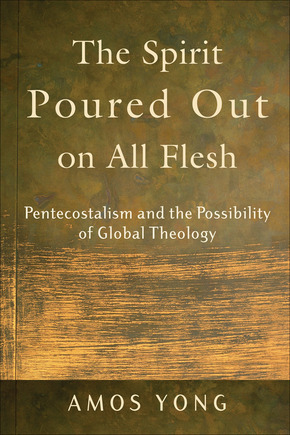
A Review of Amos Yong’s The Spirit Poured Out on All Flesh: Pentecostalism and the Possibility of Global Theology by Pastor Rony Reyes.
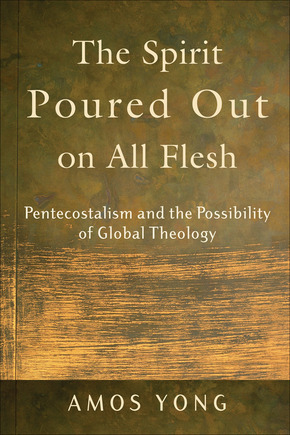
Amos Yong is an adroit theologian and a role model for young Pentecostal theologians in the twenty-first century. As Pentecostals seek to define their identity, Yong describes a Pentecostal theology from a pneumatalogical perspective. The Spirit Poured Out on All Flesh: Pentecostalism and the Possibility of Global Theology1 seeks to develop a Pentecostal theology by revisiting traditional views on Soteriology, Ecclesiology, Ecumenism, World Theology, Discernment, and Theology of Creation from a fresh perspective of the person and work of the Spirit. This book surveys how the Spirit works in different Pentecostal context around our globe. The title of his book emphasizes the new inclusiveness that is in distinctive Pentecostal Theological traditions. Throughout the book, I found Yong asking the overarching question, what does salvation mean to Pentecostals (in Latin America, Asia, Africa, the Caribbean, and the African Diaspora), and how has this been manifested and experienced.
Yong survey of Pentecostalism across the globe, it was interesting to discover how Latin American Pentecostalism engages social issues. Yong praises the efforts of two former Guatemalan Pentecostal/Evangelical presidents, Efrain Rios Montt, and Jorge Serrano (pp. 35-36). Although, I agree with Yong that Pentecostals need to be involved in politics, the question still remains how involved should the Pentecostal believer be in his/her motivation to social justice. In addition, how sensitive should they be toward others who have a different political and religious view?
In the case of Rios Montt, his political and religious views caused a great deal of disunity and conflict against Catholic believers. His views were so divisive that the Guatemalan army ended his presidency. Montt’s political motivations did not respect fellow human beings. Should not Pentecostal political involvement be an act of love that respects other human beings?
President Jorge Serrano was also disrespectful to his fellow citizen. He was not religiously sensitive to the natives of Guatemala. Serrano came into his presidency with his Pentecostal/Evangelical views declaring “Christ Jesus Lord of Guatemala.” In his political campaign he sought “to free the country from a curse relating to pre-Christian religion,” [Mayan Religion] (pp. 36). Based upon these examples, how can we balance Pentecostal political involvement and Pneumatological theology of religions in order to avoid demonizing other religions for political reasons?

In chapter 2, Yong further develops his Pneumatological soteriology discussing the saving work of the Spirit in transforming human lives, and “restoring humans to a relationship with God, to each other, and to their habitats” (pp. 117). The second explanation of his Pneumatological soteriology is that salvation is “a holistic and dynamic process: I was saved (justification), I am being saved (sanctification), and I will be saved (glorification)” (pp. 118). The third explanation is “the ongoing debate about whether the baptism in the Holy Spirit is understood as a conversion-initiation experience or a second (sanctifying) or even third (empowering) work of grace” (pp. 118). These three main explanations of his Pneumatological soteriology, can be summarized, “Salvation is a holistic transforming work of the Spirit on the human being that brings healthy relationships together by God’s Spirit.” Is this explanation of salvation sufficient and the only one within the Pentecostal experience? Could there be another manifestation of the Spirit by which salvation can be known?
In chapter 3, Yong explores ecclesiology from a pneumatological perspective. Yong acknowledges that Pentecostals have not developed their own ecclesiology. Often Pentecostals have borrowed ecclesiastical paradigms and theology from the Free Church tradition. In this chapter, Yong challenges Pentecostals to formulate their own pneumatological ecclesiology. According to Yong, a pneumatological ecclesiology is “an organic, dynamic, and eschatological people of God called after the name of Jesus and constituted in the fellowship of the Holy Spirit” (pp. 122). After defining pneumatology ecclesiology, Yong elaborates on how Pentecostals have tried to develop their own ecclesiology. First, Pentecostals have borrowed from the Free Church tradition “uncritically.” Second, Pentecostal ecclesiology has centered itself in the missionary task of the church. Third, Pentecostal ecclesiology is inheritably pneumatological, in other words, “the church is founded by the Spirit, nurtured as a fellowship of and in the Spirit, and empowered by the Spirit to spread the Gospel” (pp. 127). Fourth, Pentecostal ecclesiology in the future must seek ecumenical conversations such as the relationship between the Spirit and the sacraments. Finally, Pentecostal ecclesiology will continue to ask, what does it mean to be saved from a Pentecostal ecclesiastical perspective? At the end of this chapter, Yong revisits his definition of his pneumatological ecclesiology by stating, “The Spirit is the personal reality who makes many individuals into a community of persons …the rhema word of the Spirit of God is formative and transformative for individuals in community” (pp. 135, 142). The Spirit forms his community in Pentecostal ecclesiology.
Overall, the chapter emphasizes the working of the Spirit through spiritual gifts in Pentecostal ecclesiology. Yong does a good service to Pentecostal theology in acknowledging the imbalance that exists between the gifts of the Spirit and the fruit of the Spirit. Yong acknowledges, “There are also, unfortunately, too many examples of Pentecostals who supposedly manifest the gifts of the Spirit but lack the fruits thereof” (pp. 139). Can Pentecostals show others not only how the Spirit works through his gifts, but demonstrate the evidence that the Spirit’s fruit is in their lives? Pentecostals are gifted, but why have the gifts not moved them to do more work in social justice? Is it because there is no fruit, love, kindness, etc. …just gifts? Is it because Pentecostals have listened to the voice of their culture instead of listening to the voice of the Spirit in regards to social issues? Should not the gifts move them towards social justice? Section 4 elaborates that Pentecostals are beginning to emerge from themselves and reach out in doing social justice.
My contention with this book and with Pentecostals in general is that the focus is not in the person of the Spirit but in his gifts. They seek the manifestations instead of the one who gives those manifestations. Pentecostals are so “fixated” with the gifts that they forget about the fruit of the Spirit. Through Pentecostal history, the focus has been on the gifts of the Spirit. I believe now is the time to develop a theology focusing in the fruit of the Spirit. Some Pentecostal scholars fail to focus on the fruit of the Spirit. From their perspective, the fruit is not a gift but more of an ethical moral development. Whether it is a gift or not, the issue remains that, there is danger to having gifts without the fruit. The Spirit’s power is often associated with the gifts but not with the fruit. The book of Isaiah associates the anointing with both the gifts and the works of social justice or moral development.
The book of Isaiah depicts the suffering servant who has the Spirit of God for the sole purpose of bringing justice, Isaiah 42:1 says, “Here is my servant, whom I uphold, my chosen, in whom my soul delights; I have put my spirit upon him; he will bring justice to the nations” (NRSV). Two characteristics of the suffering servant are 1) he has the spirit of God, 2) because that Spirit is upon him, he will bring justice. How will this suffering servant bring justice? Isaiah 42:7 says that he comes, “To open the eyes that are blind, to bring out the prisoners from the dungeon, from the prison those who sit in darkness” (NRSV). In order to bring people out of darkness, the empowerment of the Spirit is manifested through the gifts, but in order to reach out to people that are physically and spiritually blinded, the fruit is needed, the fruit of love and compassion. Yes, the power is great, but the fruit is greater in bringing social justice.
Another aspect of Pentecostal ecclesiology is liturgy. Liturgy is a part of the Pentecostal worship. Yong explains Pentecostal liturgy, “Put this way, the sacramental liturgy, a gift of God and the Holy Spirit, is now a performance that redeems and transforms all persons, along with their times and places, for the kingdom and glory of God” (166). Liturgy, in the Pentecostal setting, comes alive by the rhema word, “which speaks God’s word anew and afresh to the here-and-now situation of the believer and the believing community” (161). Yong outlines five dimensions of the Lord’s Supper. First, the Spirit is present in the sacraments. Secondly, the Supper taken under careful self-discernment can serve as an occasion where God’s healing power is released to heal emotional or physical illness. The third dimension defines the Supper as, “an ecclesiastical and social act of solidarity whereby Jesus the resurrected Word is united with the body of Christ through the Fellowship of the Spirit” (164). Fourth, the Supper is “a political and prophetic act whereby the enacted and enacting body of Christ provides and mediates an alternative way of life through the gracious activity of the Spirit” (165).
In section 4, after defining “ecumenism” from a biblical perspective, Yong goes on to say, ” …the ecumenical movement is more about affirming differences than it is about making churches the world over fit into one mold. In fact, as the Baptism, Eucharist, Ministry document illustrates, the plurality of churches, liturgies, and traditions are affirmed [section 4.1.3]” (pp. 175). Each church or denomination has something to contribute to other churches in order to bring the unity of the body of Christ. Ecumenism also has its challenges in a pluralistic world. Yong challenged pentecostals to engage on this front by discerning and engaging others and by not forming a “sectarian withdrawal and condemnation” view (pp. 175).
In section 4.3 (pp. 187), Yong explains the present and future challenges of ecumenism. In the case study of black-white Pentecostal differences in the church, Yong identifies the main differences that exist among black-white Pentecostals (section 4.2). He states, “So whereas white Pentecostals in North America are concerned first and foremost about doctrinal orthodoxy and evangelism directed toward conversion, black Pentecostals are more concerned with social issues” (187). Pentecostals must see social issues in a global context since Pentecostalism is a worldwide movement. According to Pentecostal Latin American theology social issues is where: …the Spirit challenges the church to participate in the reign of God, to confront and dismantle structural sin and evil, and to fulfill its prophetic and vocational missions of establishing koinonia through liturgy, kerygmatic proclamation, and discipleship and service” (pp. 189). Theologians need to unify to white, black, Asian, and Latino Pentecostal social justice theologies.
Chapter 5 explores the issues of “oneness” and Trinitarian theology. Among Pentecostals, Yong writes that oneness Pentecostal theology is as essential as Trinitarian theology in strengthening dialogue with other world religions. Oneness Pentecostals can contribute to conversations with monotheistic religions like Islam and Judaism. Yong recognizes that, “The Oneness Pentecostal encounter with other monotheistic faiths in general and with Islam in particular is not burdened by the doctrine of the Trinity” (pp. 231).
In The Holy Spirit and the Spirits (Chapter 6), Yong raises provocative questions regarding open dialogue with other religions. He asks what the role of the religion is in the providence of God. Does God save through other religions, and if so, how? What should be the Christian response to other faiths? (pp. 236). Yong believes that, “Only a pneumatological approach to the religions enables us to hold in tension the distinctive confessional claims of Christian faith alongside the actual claims of the religions themselves, because the Spirit’s being poured out upon all flesh does not cancel out but instead preserves the diversity of human voices” (pp. 236). Yong contends that God speaks to humans through the vehicle of other religions.
Yong confronts the issue of syncretism in a subtle way. He approaches syncretism from the Pentecostal missiological perspective. However, he does not define what he believes, or why one should be interested in syncretism. He talks about syncretism, but is syncretism good or bad? If syncretism is good, can it be termed differently? If syncretism is bad, how can we categorize or explain its evilness? Yong is not clear in respect in his review on syncretism.
When discerning the Spirit(s) in other religions, Yong gives three suggestions. First, we need to discern the context of religions: geographically, historical, economic, political, and social (pp. 253). Second, we must understand the complex demands of religions. Yong says, “How can we say anything about the Spirit’s presence, activity, or absence in the world of the religions without empirical investigation of this complex reality?” (255). The process of discernment will give Pentecostals a better understanding of how God is working in other religions.
Chapter 7 investigates many philosophical and theological arguments concerning creation, and science. Yong first explains that he is doing a Spirit theology of creation rather than of nature (pp. 284). Modern science has not acknowledged the spiritual world. Pentecostal and conservative Christians try to subordinate science to divine revelation. However, as science and theology work together, there is wholeness in how each works for the greater purpose of human beings, and God. Being open to the supernatural work of the Spirit, Pentecostals can be a role model to the scientific community. “The challenge for theology in the late modern world, with its scientific assumptions about the closed nature of the universe, is to make sense of the claim that human beings can experience the divine” (236). Yong admits that interpreting truth from a theological and philosophical perspective is hard work; nevertheless, it is important if we are to value both science (nature, creation), and the spiritual realm (God).
Yong’s discussion of semiotic (theory of signs) was hard to understand. I believe he is encouraging Pentecostal students not to shy away from philosophical arguments. Yong states, “Hence what I call the eschatological character of semiosis as inquiry in the infinite long run which anticipates that reality will eventually reveal the truth behind all interpretants"’ (288). Yong states this as he explains how interpretation is complex and that ” …given the qualitative open-endedness of the process of interpretation, one cannot predict when future events may call the ‘settled’ interpretant into question” (286). Even though, interpretation is hard, there is hope that someday we will know for sure. “Now we see but a poor reflection as in a mirror; then we shall see face-to-face. Now I know in part; then I shall know fully, even as I am fully known” (NIV, 1 Corinthians 13:12). From a Pentecostal perspective, the experience of the Sprit enables us to discern the work of God in our lives and in creation.
Yong elaborates on Donald L. Gelpi’s work concerning how we experience the Spirit of God in our lives. Yong outlines experiences of the Spirit working in humans. “The Spirit enables human freedom by gifting human experience with the genuine opportunity to collaborate with the divine offer of grace; there can never be a simple dualistic opposition between divine and human willing in a triadic metaphysical framework” (pp. 294). Yong further develops his pneumatological theology of revelation, and he outlines how revelation is experienced from the Pentecostal perspective. He explains the distinctiveness of the pneuamatological approach to the doctrine of revelation. When he states, “First, revelation is transcendental: the Spirit breaks through into the human condition from beyond ourselves” (298). Later on Yong explains what he means, he says, “the (Spirit) who breaks the established habits of sin and replaces them with the living realities of Christ, and who opens up to the transcendental, uncanny, and eschatological in-breaking of the kingdom” (pp. 299).
I agree with Yong that the Spirit of God breaks the sin that pulls us down and away from relationship with God. However, if as Gelpi said, the human spirit has the gift to collaborate with the divine, then why does God have to “break in” with revelation? Can God give the revelation without breaking in? Wouldn’t the collaboration of the human spirit with God’s Spirit move or allow humans go beyond themselves and touch the divine?
Summarizing the chapter on pneumatological theology of creation, Yong states, “most important, the spiritual and the material realms are intertwined both ontological and epistemologically. Regarding the former, the Spirit both hover the waters of creation and gives the breath of life: the human is intimately and intricately connected with the orders of creation” (pp. 300). If this is the case and humans connected with orders of creation, then how do we make sense of disorders in nature such as hurricane Katrina? There are many writings of how to preserve nature, but how do we make sense and work with the disorders of nature? I think the pneumatological theology of creation can assist us in developing a theology that will address the disorders of nature and recovery from the pain that nature causes.
This book looks at Pentecostalism in the broad world context from the personal experience of salvation to the corporate expression of the church the Spirit is present. Beyond these, the Spirit is also evidenced in other religions and creation. Yong constructs a unique theology using a Pentecostal lens. He revisits traditional Christian doctrine with openness that challenges his reader. This book is a starting point for both Pentecostals and others to develop and articulate an understanding of God based upon their tradition and experiences.
Notes
1. Amos Yong, The Spirit Poured Out on All Flesh: Pentecostalism and the Possibility of Global Theology (Grand Rapids: Baker Academic, 2005).
Publisher’s page: http://bakerpublishinggroup.com/books/the-spirit-poured-out-on-all-flesh/232981
Preview The Spirit Poured Out on All Flesh: http://books.google.com/books/about/The_Spirit_Poured_Out_on_All_Flesh.html?id=65DsASd_ORMC
Originally published as “Power from on High to bear the fruits of the Spirit?” on December 7, 2006 and mentioned in the print edition of Pneuma Review in the Winter 2007 issue.