
Rightly Understanding God’s Word: Whole-Book Context, Part 2, by Craig S. Keener

Part of the Rightly Understanding God’s Word series by Craig S. Keener.
As appearing in Pneuma Review Spring 2004.

Continued from Part 1 in the Winter 2004 issue
8. The Spirit-baptized life in Mk 1:8-13
The Gospel of Mark explicitly mentions God’s Spirit only six times, but half of them appear in his introduction (1:8-13), where he introduces several of his central themes for his audience. His other uses emphasize the Spirit’s work in empowering Jesus for exorcism (Mk 3:29-30), Old Testament prophets to speak God’s message (12:26) or Jesus’ witnesses to speak his message (13:11).
In the introduction, John the Baptist announces the mighty one who will baptize others in the Holy Spirit (1:8); this Spirit-baptizer is Jesus of Nazareth. Immediately after this announcement, we see Jesus baptized and the Spirit coming on him (1:9-10). The Spirit-baptizer thus gives us a model of what the Spirit-baptized life will look like, for he himself receives the Spirit first. That is why what the Spirit does next appears all the more stunning: the Spirit thrusts Jesus into the wilderness for conflict with the devil (1:12-13). The Spirit-filled life is not a life of ease and comfort, but of conflict with the devil’s forces!
The rest of the Gospel of Mark continues this pattern. Shortly after Jesus emerges from the wilderness, he must confront an evil spirit in a religious gathering (1:21-27). Throughout the rest of the Gospel, Jesus continues to defeat the devil by healing the sick and driving out demons (cf. 3:27), while the devil continues to strike at Jesus through the devil’s religious and political agents. In the end, the devil manages to get Jesus killed—but Jesus triumphs by rising from the dead.
9. How to Make Disciples in Matthew 28:18-20
The immediate context of 28:18-20 provides us examples for how to testify about Christ (28:1-10) and how not to testify about Christ (28:11-15). But the context of the whole Gospel of Matthew further informs how we should read this passage, especially because it is the conclusion of the Gospel and readers would have finished the rest of this Gospel by the time they reach it.
The command to “make disciples” of all nations (KJV has “teach” them) is surrounded by three clauses in Greek that describe how we make disciples of the nations: by “going,” “baptizing,” and “teaching.” Jesus had spoken of “going” when he had sent his disciples out even within Galilee (10:7), but here disciples must go to other cultures and peoples because they will make disciples of the “nations.”
Making disciples of the “nations” fits an emphasis developed throughout this Gospel. The four women specifically mentioned in Jesus’ ancestry (1:2-17) appear to be Gentiles: Tamar the Canaanite, Rahab the Jerichoite, Ruth the Moabitess, and the “widow of Uriah” the Hittite (1:3, 5-6). Ancient Jewish genealogies normally emphasized the purity of one’s Israelite lineage, but this genealogy deliberately underlines the mixed-race heritage of the Messiah who will save Gentiles as well as Jews.
“Baptizing” recalls the mission of John the Baptist, who baptized people for repentance (3:1-2, 6, 11). Baptism in Jewish culture represented an act of conversion, so as “going” may represent cross-cultural ministry, we may describe Jesus’ command to “baptize” as evangelism. But evangelism is not sufficient to make full disciples; we also need Christian education. “Teaching” them all that Jesus commanded is made easier by the fact that Matthew has provided us Jesus’ teachings conveniently in five major discourse sections: Jesus’ teachings about the ethics of the kingdom (chs. 5-7); proclaiming the kingdom (ch. 10); parables about the present state of the kingdom (ch. 13); relationships in the kingdom (ch. 18); and the future of the kingdom and judgment on the religious establishment (chs. 23-25).
In Matthew’s Gospel, however, we do not make disciples the way most Jewish teachers in his day made disciples. We make disciples not for ourselves but for our Lord Jesus Christ (23:8). This final paragraph of Matthew’s Gospel fittingly concludes various themes about Jesus’ identity in this Gospel as well. John (3:2), Jesus (4:17), and his followers (10:7) announced God’s kingdom, his reign; now Jesus reigns with all authority in all creation (28:18). Further, we baptize not only in the name of God and his Spirit, but in the name of Jesus (28:19), thereby ranking Jesus as deity alongside the Father and the Spirit. And finally, Jesus’ promise to be with us always as we preach the kingdom until the end of the age (28:20) recalls earlier promises in the Gospel. Jesus himself is “Immanuel,” “God with us” (1:23), and wherever two or three gather in his name he will be among them (18:20). To any ancient Jewish reader, these statements would imply that Jesus was God.
Does the promise that Jesus will be with us “till the end of the age” (28:20) imply that once the age ends he will no longer be with us? Such an idea would miss entirely the point of the text. Jesus is promising to be with us in carrying out his commission (28:19); that must be accomplished before the age ends (24:14), so the nations can be judged according to how they have responded to this message (25:31-32). Taking this passage in the context of the entire Gospel provides us plenty of preaching material without even stepping outside Matthew!
10. Loyalty to the Death in John 13:34-35
The immediate context makes this example clearer. Jesus takes the role of a humble servant by washing his disciples’ feet (13:1-11); he also calls on his disciples to imitate his servanthood (13:12-17). In the same context, we understand the degree to which he became a servant for us by noting what he would suffer: Jesus and the narrator keep talking about Jesus’ impending betrayal (13:11, 18-30). Jesus explains that he is being “glorified” (13:31-32), i.e., killed (12:23-24); he is about to leave the disciples (13:33), and Peter is not yet spiritually prepared to follow Jesus in martyrdom (13:36-38). This is the context of loving one another “as” Jesus loved us. We are called to sacrifice even our lives for one another!
The rest of the Gospel of John illustrates more fully Jesus’ example of love and servanthood which culminates in the cross.
11. Judah’s Punishment in Genesis 38
In his attacks on Christianity, South African writer Ahmed Deedat complains that the Bible is full of pornography and that Genesis 38, the story of Judah and Tamar, is a “filthy, dirty story.” Did the Bible include this story simply to satisfy base interests of ungodly readers? Or have Deedat and others missed the entire point of the story?
But Onan spills his seed on the ground, and God angrily strikes him dead (38:9-10), as he had struck his brother before him. Why did Onan “spill his seed”? And what was so sinful about him doing so? The firstborn (in this case Er) normally received twice as much inheritance as any other brother; if Onan raised up a son for his brother, that son would be counted as his brother’s son and would receive half the inheritance, leaving only a quarter for Onan and a quarter for Shelah. But if Tamar could not become pregnant, Onan would receive two-thirds of the inheritance and Shelah one-third. Onan was greedy, and cared more about the extra inheritance than about honoring his brother and providing for Tamar. God defended Tamar’s honor, because he cared about Tamar. The text teaches us about justice.
But the story goes on. Judah, fearing that allowing his sons to sleep with Tamar is leading to their deaths, refuses to give his final son to Tamar. In some of the surrounding cultures (though never in later Israelite law), if a brother were unavailable, a father was considered acceptable; so Tamar takes matters into her own hands. She disguises herself as a prostitute, knowing what kind of person Judah is; then she allows him to impregnate her, but keeps his signet ring so she can later prove that he is the father (38:18).
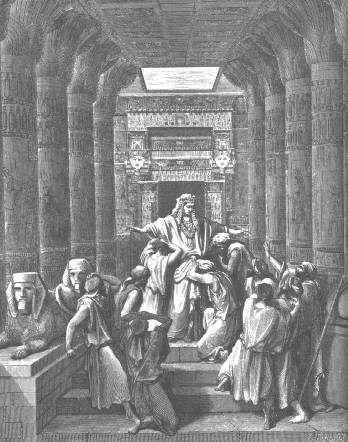
When Judah learns that Tamar is pregnant, he orders her to be executed. This reflects a double standard practiced in many cultures: the idea that a man can have sex with anyone (as Judah slept with what he thought was a prostitute) but a woman cannot. But God has no double standard: sin is as wrong for a man as it is for a woman. Tamar sent him the signet ring, forcing Judah to release her and admit, “She is more righteous than I” (38:26). That was the moral of the story: Judah was immoral and raised two immoral sons, and now is caught in his guilt. By challenging the double standard of his culture, the writer argues against sin. This is not a “dirty story” at all!
But whole-book context shows us more. The chapter directly before chapter 38 is chapter 37, where Judah takes the lead in selling his brother Joseph into slavery. In chapter 38, Judah’s lifestyle of sin finally catches up with him, and he suffers for it! He sold his father’s son into slavery; now he loses two of his own sons to death. The chapter after 38 is chapter 39, where Joseph resists the sexual advances of Potipher’s wife, despite the penalty he faces for doing so. Joseph does not practice a double standard: he lives holy no matter what the cost. And a few chapters later, God rewards Joseph for his obedience; he becomes Pharaoh’s vizier, and the agent through whom God can actually rescue the very brothers who sold him into slavery. And when Joseph is exalted, Pharaoh gives Joseph his signet-ring (41:42)—inviting us to remember Judah who lent his to what he thought was a prostitute (38:11). The larger story has a moral: those who live sinful lifestyles may prosper in the short run, but eventually they suffer; by contrast, those who remain faithful to God may suffer at first, but in the end they will be blessed.
12. Rivers of Living Water in John 7:37-38
Jesus’ promise of rivers of living water in John 7:37-38, referring to the coming of the Holy Spirit (7:39), is exciting in any case. But it is especially exciting if one traces through the rest of the Gospel the contrast between the true water of the Spirit and merely ritual uses of water by Jesus’ contemporaries.
John’s baptism in water was good, but Jesus’ baptism in the Spirit was better (1:26, 33). Strict Jewish ritual required the waterpots in Cana to be used only for ritual waters to purify, but when Jesus turned the water into wine he showed that he valued his friend’s honor more than ritual and tradition (2:6). A Samaritan woman abandons her waterpot used to draw water from the sacred ancestral well when she realizes that Jesus offers new water that brings eternal life (4:13-14). A sick man unable to be healed by water that supposedly brought healing (5:7) finds healing instead in Jesus (5:8-9); a blind man is healed by water in some sense but only because Jesus “sends” him there (9:7).
The function of this water is suggested more fully in John 3:5. Here Jesus explains that Nicodemus cannot understand God’s kingdom without being born “from above” (3:3, literally), i.e., from God. Some Jewish teachers spoke of Gentiles being “reborn” in a sense when they converted to Judaism, but Nicodemus cannot conceive of himself as a Gentile, a pagan, so he assumes Jesus speaks instead of reentering his mother’s womb (3:4). So Jesus clarifies his statement. Jewish people believed that Gentiles converted to Judaism through circumcision and baptism, so Jesus explains to Nicodemus that he must be reborn “from water.” In other words, Nicodemus must come to God on the same terms that Gentiles do!
But if Jesus means by “water” here what he means in 7:37-38, he may mean water as a symbol for the Spirit, in which case he is saying, “You must be born of water, i.e., the Spirit” (a legitimate way to read the Greek). If so, Jesus may be using Jewish conversion baptism merely to symbolize the greater baptism in the Spirit that he brings to those who trust in him. The water may also symbolize Jesus’ sacrificial servanthood for his disciples (13:5).
Jewish tradition suggests that on the last day of the Feast of Tabernacles, priests read to the people from Zechariah 14 and Ezekiel 47, which talk of rivers of living water flowing forth from the Temple in the end time. Jesus is now speaking on the last day of that feast (7:2, 37), probably alluding to the very Scriptures from which they had read (“as the Scripture said,” 7:38). Jewish people thought of the Temple as the “navel” or “belly” of the earth. So Jesus may be declaring, “I am the foundation stone of the new temple of God. From me flows the water of the river of life; let the one who wills come and drink freely!”
Normally (as we will point out below) one should not read symbolism into biblical narratives, but the end of John’s Gospel may be an exception, a symbol God provided those who watched the crucifixion. (John uses symbolism a little more than narratives normally do.) When a soldier pierced Jesus’ side, water as well as blood flowed forth (19:34). Literally, a spear thrust near the heart could release a watery fluid around the heart as well as blood. But John is the only writer among the four Gospel writers to emphasize the water, and he probably mentions it to make a point: once Jesus was lifted up on the cross and glorified (7:39), the new life of the Spirit became available to his people. Let us come and drink freely.
13. Moses’ Character in Exodus 6:10-30
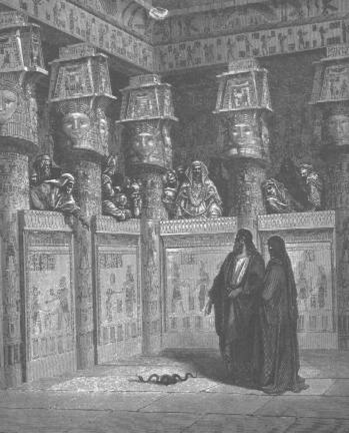
Most of us do not preach from genealogies; most individual genealogies were probably not designed exactly for preaching anyway. But one must ask why God suddenly interrupts the story of Moses with a genealogy in Exodus 6:14-25. God commands Moses to tell Pharaoh to release his people, but Moses protests that his own people have not heeded him, so how would Pharaoh listen to him (6:10-13)? After the genealogy, the narrative repeats the point: God commands Moses to confront Pharaoh, and Moses protests that Pharaoh will not listen to him.
What is the point of interrupting this narrative with a genealogy? The genealogy itself lists three tribes, the three oldest tribes, which sages who remembered the story might have called out until getting to Moses’ tribe. But the fact that the genealogy occurs at this point in the narrative may indicate more than that. The list reminds us that Moses was descended from Levi, and related to Reuben and Simeon. Reuben slept with his father’s concubine and Simeon and Levi massacred all the men in Shechem. By placing the genealogy here, Exodus may be commenting on why Moses was so uncomfortable with confronting Pharaoh. If he was descended from such people as Levi, Reuben and Simeon, is it any wonder that Moses would act like this?
With the exception of Jesus, all the people God chose in the Bible were people with weaknesses rather than those who might think they “deserved” to be called. God chose broken people whose triumphs would bring glory to him rather than to themselves.
14. Rebekah’s Deceit (Gen 27:5-10)
Some readers have accused both Isaac and Rebekah of equal fault in favoring their sons (Esau and Jacob respectively; Gen 27:1-10). But in context of the entire book of Genesis, the motives of the two parents are quite different. Isaac favors the elder son (25:25; 27:4), but the whole patriarchal line suggests that God does not always choose the elder son (21:12; 49:3-4), and paternal favoritism produces problems (37:4); Jacob himself finally learns and practices this in his old age (48:14-20). What are Rebekah’s motives? The clearest clue the text itself provides is in 25:22-23: she had sought God, and God had told her that the younger would prevail. In contrast to Isaac, Rebekah acts on the basis of a word from God. Further, Esau had married pagan wives and sold his birthright, with apparently no sense of responsibility for the call on this family to be God’s blessing to the earth (25:31-34; 26:34-35). In a culture where the husband’s will was law and Isaac was blind to God’s choice, Rebekah took the only route she knew to secure God’s promise.
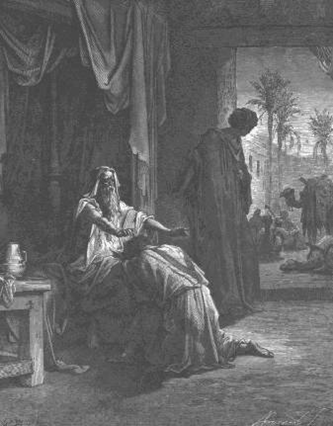
Genesis is full of accounts that underline for Israel the miracle of their blessing and existence—three barren matriarchs (18:11; 25:21; 30:22), royal abduction or threatening of matriarchs (12:13; 20:2; Isaac repeated his father’s example—26:7), and so on. Elsewhere in Genesis someone other than the patriarch makes a choice, nevertheless leaving the right land to the patriarch (13:9-13; 36:6-8). In the context of the themes the entire book emphasizes, it is consistent to believe that God worked through Rebekah’s deception, as he worked through a variety of other means, to protect his chosen line.
This is not to say that the deception was God’s preferred means to accomplish this, though he sometimes blessed deception when it would save human life from unjust oppressors (Ex 1:18-21; Josh 2:5-6; 1 Sam 16:1-3; 2 Sam 17:19-20; 2 Kings 8:10; Jer 38:24-27). When Isaac asked Jacob his name, he lied to get the blessing (Gen 27:18-19), hence incurring his brother’s murderous anger (27:41). His mother promised to send for him when it proved safe to return (27:45), but apparently she died in the meantime hence could not send for him, so when he is returning he expects that Esau still desires to kill him (32:11). Thus he struggles all night with the Lord or his agent, and he is confronted with his past. This time, before he can receive the blessing from God, he is asked his name and must tell the truth (32:26-27; and then gets a new name—32:28), in contrast to the time he sought his father’s blessing (27:18-19). But God was with Jacob even in spite of himself; he met angels both going from (28:12) and returning to (32:2) the land. In this story, though Isaac outlives Rebekah, she was the one with the greater perception of God’s purposes for their descendants.
15. Casting Lots in Acts 1:26
Some interpreters today suggest that the apostles made a mistake in casting lots for a twelfth apostle, even though it was before the day of Pentecost. The immediate context, however, suggests something positive; the believers were in prayerful unity (1:12-14; 2:1), and now Peter has exhorted them to replace the lost apostle (1:15-26). Would Luke spend so much space to describe a practice he disagreed with, and then fail to offer any word of correction?
16. Some Closing Observations on “Biblical Theology”
Sometimes today we start with specific doctrinal assumptions and read them into the Bible. The danger with this method is that it keeps us from ever learning anything new—if we read the Bible only as a textbook of what we already believe, we are likely to miss anything it has to teach and correct us. Thus it is important to learn the Bible’s perspectives as they are written.
This principle is important in whole-book (or sometimes whole-author) context. When a specific passage seems obscure to us and we cannot tell which way the author meant it, it helps to look at the rest of the book to see what the author emphasizes. Thus, for example, the fact that the Gospel of John so often stresses that future hopes like “eternal life” are present realities (e.g., Jn 3:16, 36; 5:24-25; 11:24-26) may help shed light on how we approach John 14:2-3, as noted above. At the same time, we should never forget that each New Testament writing, however distinctive, is also part of a larger context of the teaching of apostolic Christianity, which had some common features. Thus, though the Gospel of John emphasizes the presence of the future, it in no way minimizes the fact that Jesus will return someday future as well (5:28-29; 6:39-40).
Whole book interpretation principles:
- We must be careful never to “miss the forest for the trees,” as the saying goes: We must not focus so much on difficult details at the beginning that we miss the larger picture of what the book of the Bible is trying to say. (One can work on more details later.)
- We should look for the themes that follow through any particular book in the Bible.
- We should get the flow of argument in any book of the Bible where that is relevant.
- It is often helpful to trace various themes where they occur in a book of the Bible, taking notes on them, or outline the flow of argument.
Editor’s Note
Professor Craig S. Keener originally designed this course on Hermeneutics for use in Nigeria and not for traditional publication. Desiring to make it available to a wider audience, he has granted permission to publish this course in the Pneuma Review. Dr. Keener grants permission for others to make use of this material as long as it is offered without cost or obligation and that users acknowledge the source.
Portions of this course follow these recommended works: How to Read the Bible for All Its Worth by Gordon Fee and Douglas Stuart (Zondervan). Revelation, NIV Application Commentary by Craig S. Keener (Zondervan, 1999).