

Samuel Waje Kunhiyop: African Christian Theology

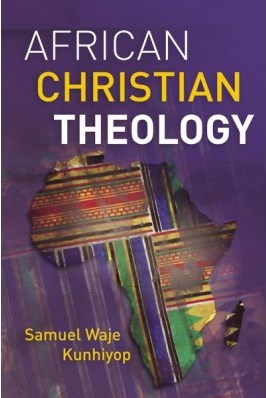 Samuel Waje Kunhiyop, African Christian Theology (Hippo Books/Zondervan, 2012), 250 pages, ISBN 9789966003164.
Theology as a reflection on God and his creatures is eternal, but some of the questions we ask and our discourse about God are rooted in our experiences, cultural beliefs and worldview. Therefore our understanding of theology is also rooted in our culture. The author, Professor Samuel Kunhiyop, (the current ECWA General Secretary and Professor of Ethic at Bingham University, Karu, Nigeria) fully aware of this, produced African Christian Theology sequel to his African Christian Ethics. In this book, Kunhiyop discusses a myriad of themes and topics in African Christian Theology. This book, therefore, constitutes an excellent introduction to systematic theology in relation to the traditional African worldview. The book can be referred to as “African Systematic Theology”. The book is written to address questions that arise from an African context. It helps readers to discover how theology affects our minds, our hearts and our lives. It is a sort of contextual theology. If Christian theology will be relevant to the occasion of any local people, it must take in to consideration the context in which theology will be done, particularly their cultural worldview (this is Ngugi Moshete’s thesis).
Professor Samuel Waje Kunhiyop exemplified this fact in the book. He sets out his method from the outset of the book “though I write as one who is convinced that Christianity based on biblical revelation stands above other religions, but my own understanding of Christianity in African context is that it should take African situation seriously while seeking to be true and explicit teachings of the scripture.” The author maintains that “Scripture is always interpreted within a context; Africa is the context in which I seek the true meaning of Scripture” (Samuel Waje Kunhiyop, pxiii). With this view, the author explores traditional African worldview about God and how he reveals himself. The book, though simplified and abridged (as said by the author), is divided into ten chapters with one appendix. Each chapter covers the major themes of systematic theology in a lucid manner. That is, the book seeks to articulate theologies in a way that ordinary Christian can understand. To ensure that the book actualizes its purpose, the author sets out some important hints on how to get the most of the book. In this thematic analysis in each chapter of the goal the author sets to achieve is to “articulate a theology that originates from an authentic search for the meaning of Scripture in order to apply it to contemporary African life” (p.xiii).
The second chapter discusses revelation of God as the basic starting point of theology. The two types of revelation (general and specific) and their sources are discussed and he also elucidates the meaning and value of revelation for today. He cautions that any means of revelation that may be upheld today must be subsumed to the finality and primacy of the scripture. Of great importance is the author’s discussion on the basic bibliological and hermeneutical issues particularly the various principles of biblical interpretation.
In chapter four, the book transits to deal with cosmological issues; biblical creation story and African cosmogonies. The author deals with the issue of original sin contrasted to the sin against God and taboos in African context. The chapter is concluded by discussing the four important historical views concerning sin in Christendom: Pelagianism, Augustinianism, federal theory and corporate personal theory (p.75). Notwithstanding that the issue of original sin is controversial, the author affirms the fact that we “have all sinned and come short of God’s glory and we stand in need of salvation.” He then moves on to the issue of Christology and Soteriology in the fifth chapter. The author compares and contrasts some salient issues in the biblical concept of Christ and salvation to the African concept of sacrifice and salvation. While he notes that the idea of atonement (substitutionary and propitiatory) is known in Africa, the concept of a human-god sent to die for another is quite strange. His discussion on what resemblances the biblical concept of Christ can have in an African context is noteworthy. Christ can mean a founder, ancestor, elder, brother, diviner, or proto-ancestor. He concludes the chapter with a detailed discussion of the personhood of Christ, his human-God nature, his offices and several heretical misunderstanding of these issues in the history of the church. A good question to ask, according to the author, is can a Christian lose their salvation? Because the confidence of a genuinely-saved Christian is in God, Eternal security, rightly understood, then points to the glory of God and power of God within the believer.
In chapter six, the author turns his attention to the personhood and roles of the Holy Spirit in soteriological processes (regeneration, justification, conversion, indwelling, sanctification and others). The rise of Pentecostalism in Africa has given birth to some hot pneumatological debates which include issues such as the difference between baptism and filling of the Holy Spirit, anointing of the Spirit, the gift of the Holy Spirit and others issues. Some church denominations tend to misconstrue some of these important theological issues. The recipe offered by the author for all these theological misdemeanors, as a way of concluding the chapter, is that African Christianity should always affirm and uphold the primacy and supremacy of the Bible and endeavor to use correct hermeneutical principles in matters such as these.
In chapter seven the attention of the author is on the key issues in practical Christian living in African context. Some of the prevailing issues in contemporary African context include blessings and curses, generational curses, theology of using the blood and name of Jesus, theology of prayer and reverence to the deceased. Our salvation is holistic and so it should affect all areas of lives. Kunhiyop contends that African Christian should live according to the faith they profess in the Bible. As to the issue of whether a born-again Christian can still be subject to family and generational curses, Kunhiyop argues that this can be tackled by prayers of deliverance but to be “preoccupied with issues of demonic deliverance is unscriptural” (p.124). The deliverance wrought by Christ should be the basis of other deliverances. In regard to the issue of using the blood and name of Jesus by African Christians, particularly the Pentecostals, the author warns that they should be aware of fanciful, speculative spiritualizing. He warns that the name of Jesus should not be taken as a magical formula that can be used to manipulate supernatural forces. At the closure of the chapter, Kunhiyop observes that the occurrence of these things in Africa shows that people really have some existential needs, and Christianity can provide all these needs. Therefore our biblical Christianity should allow Christ to “come and give full abundant life to African Christians, even in the midst of their problems” (p139).
Noting the importance of the “concept of community” in African context, the author dedicated chapter eight to its discussion. He presents and discusses the importance of community and mutual relationship in Africa. He attempts to contextualize the biblical ecclesiological concept of community in Africa. Locating the church as the community understood by the African, he underscores the basic ordinances of the community (baptism and Holy Communion and the divergent views on them).[2] To Kunhiyop, worship, evangelism, discipline and prayer are the most important functions of the church. He concludes the chapter with issue of church leadership, its varied forms and the relationship between the church and society. One thing that is noteworthy in Kunhiyop’s submission is that the church community should serve as the light in the world and should have a clear impact on society. The point made here by the author is of utmost importance to the present condition of the church in Africa. Particularly in Nigeria, where leadership problems, unhealthy church politic, love of money and lack of unity has denied the church the ability to make any impact in its immediate environment. Following this is the author’s discussion on the basic practices and belief system of the community of God in chapter nine of the book. The issues he discussed include the use of spiritual gifts and the controversy that it has generated. According to him, there are two errors that permeate Christianity in Africa today. “[T]he error of assuming that the experience the early church had is still normal and present till today, and the error of assuming that everyone else will experience the Spirit in the same way as we do” (p178).
In response to this, the author warns that African Christians should be very cautious. Just because somebody is performing a supernatural act in the name of Christ does not automatically mean that they have a spiritual gift. The truest test of any gift is the inspired word of God. Also, Kunhiyop discusses the issue of discipline in the church, the issue of ministerial ordination, the controversy over women ordination[3] and finally the issue of treatment of church workers.
The author concludes the book with a discussion on biblical teaching on death and the afterlife and also addresses the role traditional religion ascribes to African ancestors. The chapter discusses some key eschatological concepts and presents the biblical teaching on eternity, judgment, the second coming, heaven and hell. This chapter presents the divergent views concerning the eschatological issues such as rapture, tribulation and millennial kingdom. Though there are ancient concepts of life after death in Africa, the author argues that the biblical teaching about these things is clear and should supersede any competing views.
While this book is a great resource for a wide readership, it nonetheless has some inherent weaknesses. First, the author, in his attempt to actually “do theology in Africa context” did not say anything about the origin, history, and evolving approaches in African Christian theology. Also, some germane topical issues that are affecting the African Christian theology like polygamy, feminism, ecumenism, church politics, succession problems and denominationalism are not given adequate treatment by the author. Though he mentions some of them in passing, the space such important issues deserve is not given.
Meanwhile, the book has a lot of strengths and advantages. First, the author presents after each chapter a list of questions that enhance critical thinking on the issues and relevant books for further readings. This makes the book a very useful tool in the hands of students and scholars. Second, the topical arrangement of the issues discussed represents a very good thematic analysis of the issues that are prevalent in African Christian theology. Third, though Kunhiyop did not attend to any issues concerning the origin, history and approaches in African Christian Theology, this allowed him to concentrate on “doing African Christian theology.” He went straight to the matter at hand. Another noteworthy strength in this book is the place the author gives to the Bible in all his arguments. While he believes theological enterprise can be influenced by other sources like experience, reason and culture, he is careful to preserve the primacy and finality of the inspired word of God. On the whole, this book represents how Christian theology can be both African and biblical.
Reviewed by Adeboye Godwin Oriyomi
Publisher’s page: http://www.zondervan.com/african-christian-theology
Notes
[1] The author is an evangelical ethicist, and his area of core discipline is reflected here.
[2] The way the author delimits his treatment of church ordinances portrays him as an authentic evangelical. A majority of evangelicals solely emphasize baptism and the Lord’s Table.
[3] The position holds by Kunhiyop represents the African understanding of feminist theology.










This is a review of an outstanding book written by a Professor and an administrator, Rev’d Professor Samuel Waje Kunhiyop. To God be the Glory.