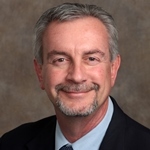

That the life of Jesus may be manifested: An interview with Dan Izzett
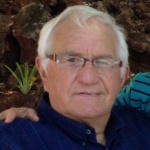
What would you do if you learned you had leprosy? Pastor John Lathrop interviews pastor and missionary Dan Izzett about his ministry and advocacy for those afflicted with the ancient, debilitating disease.
John Lathrop: Please tell us where you come from and how you began your walk with Jesus.
Dan Izzett: When I was born my parents were attending the Presbyterian Church. My father realized that he needed to be baptized in water and receive the baptism of the Holy Spirit, but he discovered that he could not do this in the Presbyterian Church. So as a family we moved to a Pentecostal church, The Apostolic Faith Mission in Zimbabwe, a movement that was a result of John G. Lake’s ministry in South Africa.
I was born again at the age of five and a half years old and still remember the service the pastor preached when I went forward to the front of the church.
Soon after that I remember one Sunday my parents taking communion and seeing the emotion, joy and rapture they were enjoying during communion, I longed for it! I asked my father if I could join with them the next time and he said that he’d have to ask the pastor. After speaking to the pastor, he was told that the ruling of the church was that I’d need to be baptized first. Therefore, I wanted to get baptized right away. But I was told that I could not be because I was not 12 years old yet. This disappointed me deeply and made me feel that Christianity was only for older people.
My father passed away when I was eight years old and by the age of 14 I’d drifted into a bad relationship with God. An uncle of mine, not many years older than myself, encouraged me to do Hatha Yoga, Yoga for the physical body. But this was a demonic trap to get me into the occult. The end result was that for 11 years I lived in a desert of confused religious ideas.
In 1974 I returned to serving my heavenly Father and my wife got saved! We’d been married since 1970 and then in 1975 we were blessed with our first son. We now have two sons who are married and have blessed us with two wonderful daughters-in-law. That was an answer to at least 25 years of prayer. We are now grandparents to five very special grandchildren.
Lathrop: You have been involved in ministry in Africa for a number of years. Please tell our readers a little bit about that.
Izzett: Here is a brief overview of my involvement in ministry at various levels:
- Youth leader in my local church in 1975
- Served on the church board, first as a member, then as a deacon, then as an elder and finally as the treasurer.
- Full time church discipleship – internship 1981. Taught in 5 Bible Colleges in Harare. Local church bible studies and home groups.
- 1987 worked with CfAN, the ministry of Reinhard Bonnke, as a crusade director, Zimbabwe, Zambia and Malawi.
- Planted a church in 1986 and pastored there until retiring in April 2012.
- Through the years I have also done numerous pastors’ seminars with Barnabas Ministries, led by Dr. David Wyns in Zimbabwe, Zambia, South Africa, Kenya and Botswana.
Lathrop: In 1972, you discovered that you had a health problem. What was that?
It was a family secret for 28 years. We did let those who were close family and close friends know about our situation, but because of the stigma and fear of the disease we kept it to ourselves. It was not until 1999 that we went public about our disease.
Lathrop: How did you respond when you found out that you had leprosy?
Izzett: With veiled joy because it could be treated and that it was not syphilis. But also full of fear that we would have to go “outside the city gate and walk around ringing a bell and calling out: leper, leper and wear sack cloth”. I kept asking myself: Will everyone reject me? Will I still be able to work, have a family? There were many other negative aspects I thought about. Leprosy is a feared disease that few understand.
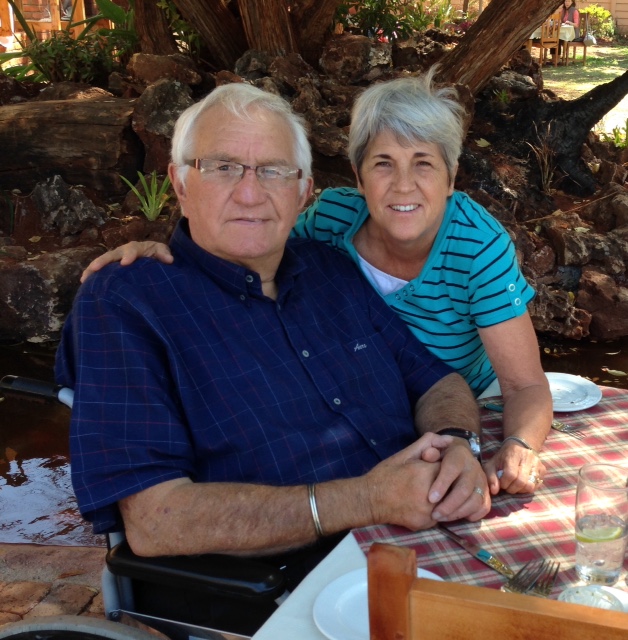
When we got home after the shocking announcement, I had a chat with Babs and put the following proposal to her: As we did not know that I had leprosy when we got married, I was prepared to have our marriage annulled so that she could rebuild her life. Her reply to me was that this was not an option. She said that she married me because she loved me and that in August 1970, before God and man, she had made a commitment; “for better, for worse, in sickness and health” and would not renege on that.
In 1977 my wife Babs was diagnosed with leprosy, when she was pregnant with our second son. She had pinkish blotches on her back, arms and face. Again, this began as another misdiagnosis. She was told that it was a hormonal imbalance because she was pregnant. But one day, she burnt her forearm and felt no pain. This alerted us and we went to the leprosy doctor. She also had contracted leprosy, and she could only have gotten it from me.
Babs has been my tower of strength, friend, lover, the mother of our two sons, and loves Jesus! What more could a man ask for?
Lathrop: I know that you are involved with the Leprosy Mission please tell us what that organization does.
Izzett: I served with Zimbabwe Leprosy Mission since 1999 and with The Leprosy Mission International since 2000 until 2008 as a trustee and board member. In November 2014 I was asked to serve on the board of American Leprosy Missions.
These ministries work to help leprosy sufferers around the world. They provide treatment care; they teach and encourage self-care, and assist with rehabilitation, restoration of dignity, psychological needs, self-sustainability and integration into society. These missions operate with a strong Christian ethos.
Here is a sketch of what the missions do:
- The work is broad and far-reaching. The combination of a disease that has a severely debilitating effect on the body and the stigma surrounding it means a unique and holistic approach is required to care for a person’s needs.
- Health, rehabilitation and disability care. Tragically, even after treatment, leprosy may have already permanently damaged the nerves.
- Housing, water and sanitation
- Education, training and livelihoods. Every year we enable thousands of children from leprosy-affected families to go to school.
- Advocacy. Leprosy is one of the world’s most stigmatised diseases. A myth still prevalent in the world today is that leprosy is a curse for something you have done wrong, an untruth and needs to be addressed.
Lathrop: What work do you do for the Leprosy Mission?
Izzett: Advocacy is what I do and what I feel my present calling is as I work alongside the various mission outreaches to leprosy sufferers.
Lathrop: What do you wish people knew about leprosy?
Izzett: Leprosy is still afflicting many people today. Every 24 hours, 600 new leprosy cases around the world are diagnosed and begin treatment. The very sad thing is that every day another 600 people have not yet been diagnosed.
Leprosy does not eat your flesh, nor do your limbs fall off. It affects the nerves, especially those around the elbow (ulnar nerve) and knee (peroneal nerve).
There are many more ways that leprosy affects a person, including: severe nerve pain, muscle weakness especially in the hands and feet, skin stiffness and dryness, eye problems which lead to blindness, the loss of fingers or toes following an injury or an infection because the sufferer cannot feel the pain in their feet and hands.
Many people suffer from the stigma and rejection that is related to leprosy. These subjects must be continually addressed, and we cannot afford to neglect any patient’s spiritual condition.
You can touch a person affected by leprosy and not get it yourself! Ninety-five percent of the world is immune to the disease or repels the infection.
Lathrop: There is a book about the experience that you and your wife had. Please tell us about the book.
 Izzett: In 2012, the director of The Leprosy Mission in Switzerland said that author Daniel Gerber wanted to write about a personal life story and asked if I would be willing to coauthor the book with him. That started a long process of many, many hours of interviews and conversations with us, my mother and various friends. The book was written in German because Daniel is German. We are hoping one day to have it translated into English.
PR
For more about Pastor John Lathrop, see his author page: /author/john/