
Demos Shakarian and His Ecumenical Businessmen
Breakfast with the Holy Spirit: The FGBMFI
In many countries of the world one can go to a fashionable hotel and find a Saturday breakfast meeting of the Full Gospel Business Men’s Fellowship International (FGBMFI).[1] There they will see businessmen raising their hands in adoration and praise to the Lord. A speaker, most likely not an ordained minister, would give a talk or Bible teaching, and others would be invited to witness to what the Lord has done in their lives. At times the emcee- facilitator of these breakfast meetings would ask those present to raise their hands in recognition as he called out the major denominations, such as Baptist, Methodists, Presbyterians, Catholics, etc. This ritual makes it clear to all that these breakfast meetings are ecumenical fellowships.[2]

The FGBMFI has brought the gospel to millions of men all over the world, and then immediately baptized many of them in the Holy Spirit–something few other churches or para-churches are likely to do. This has been done mostly by the thousands (and ultimately hundreds of thousands) of members taking the trouble to invite unbelieving friends, nominal Christians, and outright skeptics to the meetings with the lure of a free breakfast. In these meetings there have always been a steady stream of healings and deliverance prayers that occur either across the breakfast table, in a healing line, or in spontaneous prayer groups that form as the official meeting adjourns. This is evangelization as in the Hebrews 2:1-4 model at its best.
– Hebrews 2:1-4
From Armenia to California
This grand and influential para-church ministry had its roots in the Shakarian family, which fled Armenia in 1900 and settled in California. In Armenia they had belonged to a congregation of believers that had roots in an 1850’s Russian revival which manifested some of the Gifts of the Spirit, especially prophecy. They worshiped in barns and homes and were independent from the majority Armenian Orthodox Church. In 1900, a local prophet warned the fellowship of impending doom, and he urged migration to America. Many did, including the Shakarian family. In fact, after World War I broke out, Turkey began a mass deportation of Armenians to the Mesopotamian desert (1916). This resulted in genocide of perhaps one million Armenians.
Safe in California, Isaac Shakarian and his wife established a small dairy farm and wholesale vegetable business, and both prospered. Like his father’s home in Armenia, the Shakarian home in California became a house-church on Sundays. The congregation embraced the Azusa St. Revival from the beginning as an extension of their own experiences in Armenia. Into this family environment their boy, Demos was born (1913).
Demos developed as a faith filled Christian. At thirteen, while attending Sunday church and praising the Lord he experienced the baptism of the Holy Spirit and began speaking in tongues. Unlike most others of his generation, he was in a congregation that understood the experience. The shout went out, “Demos’s got the Spirit!”[3]
Years later Demos’ sister, Florence, was involved in a horrendous car accident. That accident broke many of her bones, shredded her pelvis bones, and left her with third degree burns all over her back. Bone fragments were gravitating towards the internal organs, and the prognosis was not hopeful. The physicians had braced her body in wires and counterweights to keep her shattered pelvis immobile.
Shakarian’s church went into a day of prayer and fasting. Demos prayed for his sister and was able to alleviate her pain, but there was little healing. His sister was dying. He heard that the anointed Pentecostal healing evangelist, Dr, Charles Price, was at a nearby town and went to fetch him. Dr. Price came to the hospital, and after laying hands on Florence’s forehead with oil prayed:
“Lord Jesus” he said, “we thank you for being here. We thank you for healing our sister.”…
All at once, on the high bed, Florence twisted. Dr. Price jumped back as one of the heavy steel traction weights swung past his head. Florence rolled to one side as far as the wires would allow, then to the other….for twenty incredible minutes Florence continued to toss and roll in her wire prison. ….[Then] Florence lay still on her bed, gradually the weights ceased their circling. For a long moment she stared at me.
“Demos,” she whispered, “Jesus healed me.”[4]
The hospital staff was astounded at what the x-rays revealed: where the day before there was a gaggle of shattered bones, now there was only the merest trace of bone injures, as if the accident had happened years ago. Florence’s dramatic healing began a life long friendship with the Dr. Price.
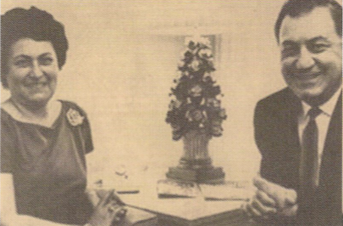
Demos married in 1933. He and his wife Rose decided to rededicate their lives to God and to serve the church. Demos knew he was not called to preach, so he began by renting a tent for a local Pentecostal preacher and sponsoring his revival. The family dairy business began to prosper and grow, and he continued to be both businessman and church booster. This continued throughout the war years (1941-1945) when, due to gas shortages and rationing, running revivals became especially difficult.
Founding of the FGBMFI
It was at these revivals where Demos noticed that, unlike his Armenian-American congregation, very few men attended the events. Dr. Price informed him that this was common to the American church. He explained: “Sure, we clergy can give comfort and counsel to a man who’s down and out, but what about the man who makes it?…ministers like me don’t even know the language.”[5] Without knowing it Dr. Price planted the seed that would bear the greatest fruit in Demos’ life.
After the end of World War II (1945), Demos committed to sponsor and manage a major revival in Fresno. But when the time came for the revival he found himself in a business crisis of the family’s feed enterprise which needed daily attention. He chose to stay in Fresno and attend to the revival and God’s interests first. Miraculously, in the midst of the revival, the Lord sold that business for a profit. Demos then used the money to expand his dairy herd. That business prospered to the point of becoming the largest privately owned dairy in America.
Demos continued to sponsor Pentecostal events in California and especially the Los Angeles area, and as a byproduct created network of Pentecostal businessmen and professionals who contributed their money and skills to various rallies and revivals. Demos’ activities also made him friends with the major healing revivalists of the post-War era. He was especially close to Oral Roberts who had stayed at the Shakarian home several times. In the fall of 1951 Demos chaired and organized a large crusade for Oral Roberts in LA. Demos shared with Roberts his dream of establishing a fellowship for lay persons. Demos explained:
“It’s a group – a group of men. Not exceptional men. Just average business people who know the Lord and love Him, but haven’t known how to show it.”
“And what does this group do?”
“They tell other men, Oral. No theories. They tell what they’ve actually experienced of God to other men like themselves – men who might not believe what a preacher said – even someone like you – but he will listen to a plumber or dentist or salesman because there’re plumbers and dentists and salesmen themselves.”[6]
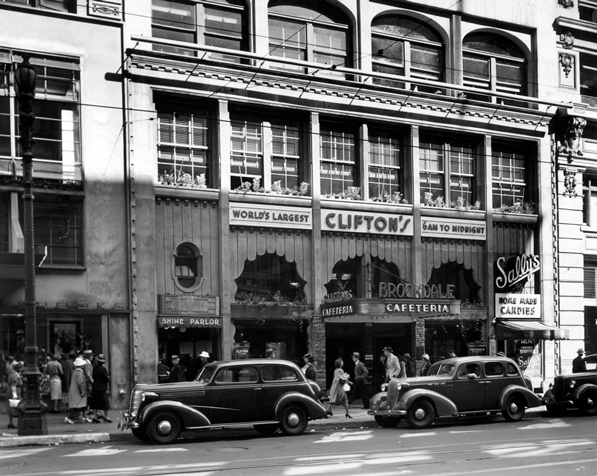
Oral Roberts affirmed that his dream was from the Lord, and promised to be the first guest speaker. In October of 1951, the first meeting of the Full Gospel Businessmen’s Fellowship International was held at the upper room of Clifton’s cafeteria in LA. It was a place that could accommodate several hundred persons. The plan to become international seemed pretentious at the time, but Demos insisted the Lord had given him that precise name.
Demos had announced the meeting at the end of Oral Robert’s LA crusade. They both expected several hundred persons to attend the first breakfast meeting. Nineteen came. In spite of this, Oral Roberts prophesied it would be indeed an international organization to witness the power of God all around the world. But the weekly Saturday morning meetings continued to draw scant attendance – between 15 and 40. Some pastors began opposing the group fearing Shakarian would drain their best people and their money to “another church.” This was most unfair, as Demos continuously called the men to stay in their own congregations, and influence their churches with the power of the Spirit. But in 1950s the word “para-church” had not yet been coined, and the concept of an independent, non-denominational entity that supported other churches instead of competing against them was not well understood.
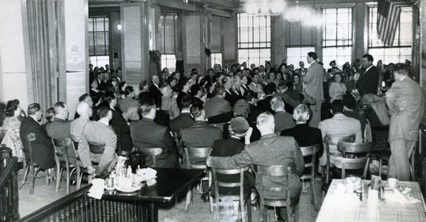
After a year of meetings, Demos was deeply discouraged. When his evangelist friend Tommy Hicks visited his home, Demos went to prayer over the situation, to see what the Lord would have him do – thinking it may perhaps it was time to close it down. While Demos was praying Rose Shakarian slipped into the room and began softly playing their Hammond organ. She sang in tongues then prophesied: “My son, I knew you before you were born. I have guided you every step of the way. Now I am going to show you the purpose of your life.”[7]
At the same time Demos had a two part vision. He was taken up to the sky and from there could see the sad state of the world, with men lifeless and frozen in sadness. Then he saw the same men, all over the world, alive, happy and with their hands lifted praising the Lord. Rose understood her prophecy and his vision to mean that the FGBMFI would continue and grow. In fact, the next week Demos was given a $1,000 donation by one of his businessmen friends who had recently advised the Fellowship be closed down. It was used to start the Fellowships’ magazine, Voice.
The FGBMFI Explodes
The next year, 1952, the FGBMFI grew to eight chapters in the United States. At this early stage many who attended were also associated with the Camps Farthest Out.[8] By the late 1960s, there were three hundred chapters and over a hundred thousand members. The yearly conventions drew thousands, and attracted the best speakers of the Charismatic renewal. These were its glory years. In 1988, there were 3000 chapters in the United States and chapters in over 80 counties overseas. It had truly become international.
It is difficult to overestimate the role of the FGBMFI in the formation of the Renewalist churches. The FGBMFI was specifically a world-wide conduit for the Faith Idealism developed by E.W. Kenyon and spread by the “Word Faith” evangelists such as Kenneth Hagin and Kenneth Copeland. Hagan and Copeland were particularly popular speakers for the businessmen who resonated with the prosperity covenant taught them. The famous healing evangelists of the post-World War II era were also frequent speakers and ministered at their meetings.
By 1993, when Demos died, the FGBMFI in the United States was undergoing a decline – the natural course of a revival institution that succeeded. Its initial message: that God acted in everyday life of ordinary people with the power of the Spirit, and the gifts of the Spirit, was now common. The theology of Faith Idealism and Christian New Thought prosperity, which it did so much to spread, was well established if still controversial.
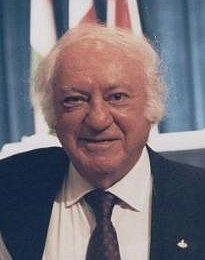
From the 1980s the FGBMFI underwent a tremendous expansion overseas, especially in the majority world. In many of these countries the combination of the concepts of “businessman” with “honesty” and “holiness” and the power of the Spirit had never been made. The FGBMFI presence and modeling have been truly revolutionary. It suddenly injects, in a sense, the “Protestant Ethic” and Puritan respect for commercial life in places where those things were unknown. Especially in Africa, the FGBMFI has been a conduit for the spread of the Charismatic renewal and the gifts of the Spirit.[9] In that continent, where many persons are still under the bondage of witchcraft and almost everyone believes in the spiritual dimensions of dreams and visions, the strong Pentecostal/charismatic message of FGBMFI speakers is readily accepted. [10] Similarly, the FGBMFI has experienced dramatic successes in Latin America in recent decades.
No matter what perspective you look at FGBMI with, its revolutionary “worship ecumenism” is its greatest legacy.
PR
[1] The history of the FGBMFI is documented in Demos Shakarian’s autobiography: Demos Shakarian, “as told by” John and Elizabeth Sherrill, The Happiest People on Earth (Old Tappan: Chosen Books, 1975). A later, general history of this important para-church ministry was written by the dean of Pentecostal historians, Vinson Synan, Under His Banner (Gift Publications, 1991). The FGBMFI website has a brief history and wonderful pictures, at: http://www.fgbmfi.org/home.htm
[2]I first encountered the FGBMFI as a new and very “Catholic” Charismatic about 1975. I was struck by this ritual of denominational ecumenism. Having been well educated in Church history it impressed me immediately that such a multidenominational meeting would not have been held two hundred years ago, and three hundred years ago they might have been at each other’s throats with the cutlery on the table. Catholics would have had all Protestants declared as heretics and worthy of the stake. Calvinists would have attempted the same for the Baptists. This “worshiping ecumenicism,” where doctrines were not discussed, prompted me to reconsider the meaning of heresy, and its over use in conservative theological circles.
[3] Demos Shakarian (“As told by” John and Elizabeth Sherrill), The Happiest People on Earth (Old Tappen: Chosen books, 1975), 36
[4]Ibid., 70-71.
[5] Ibid., 83
[6] Ibid., 118
[7] Ibid., 133
[8] Editor’s note: Camps Farthest Out, founded by Glenn Clark in 1929, is a Christians retreat ministry. Glenn Clark described their mission as being “dedicated to the purpose of discovering the wholeness of that abundant life which Christ promised” (acfona.org).
[9] Opoku Onyinah, “African Christianity in the Twenty-first Century.” Word & World, 27 #3 (Summer 2007) 305-314.
[10] Kwabena Asamoah-Gyadu, “Missionaries Without Robes: Lay Charismatic fellowship and the evangelization of Ghana,” Pneuma, 19 #2 (1997), 167-188.






An excellent historical report on Demos Shakarian and the Shakarian Family, but the author needs to be more careful in spelling, such as the misspelling of his name. In one place the article refers to him as “Demon”, instead of Demos and the website link uses “-Sakarian-“, instead of Shakarian “-and-the-his-” instead of: -and-his-! Also, in the article, “prophesized” is employed, instead of prophesied. Because I first learned in 1964 about the baptism in the Holy Spirit through a FGBMI breakfast meeting, I’m particularly sensitive about these details in regard to Shakarian. On May 29, 1964, I was filled with the Holy Spirit, first spoke in tongues as a Presbyterian and immediately became a Presbycostal!