Pioneer Women of Pentecostal Revivals

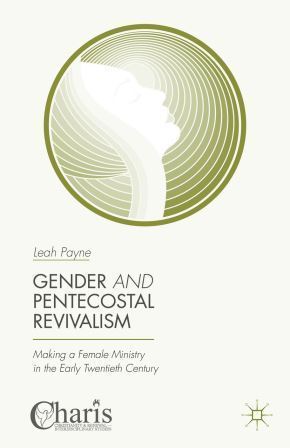
Leah Payne speaks with PneumaReview.com about her book, Gender and Pentecostal Revivalism.
PneumaReview.com: For your book, Gender and Pentecostal Revivalism, why did you concentrate on the ministry of two revivalists?

From the Publisher’s page: This innovative volume provides an interdisciplinary, theoretically innovative answer to an enduring question for Pentecostal/charismatic Christianities: how do women lead churches? This study fills this lacuna by examining the leadership and legacy of two architects of the Pentecostal movement – Maria Woodworth-Etter and Aimee Semple McPherson.
Leah Payne: I wanted to explore how gender (as well as race and class) shaped Pentecostal Revivalism over time, so I chose revivalists who were powerful and influential representatives of the first two generations of the movement. Maria Woodworth-Etter is an example of how Pentecostal revivalism originated in holiness revival circles and then morphed into its own distinct set of practices and theologies. A generation later, Aimee Semple McPherson represented a shift in Pentecostal revivalism from its rural, tent-revival practices into the middleclass mainstream of American evangelicalism. Both revivalists toured extensively, wrote prolifically, pastored mega-churches, had many imitators, and used mass media to distribute their messages. Thus, they are ideal subjects to study the formation and reformation of the movement over the years.
PneumaReview.com: How would you introduce Maria Woodworth-Etter and Aimee Semple McPherson to someone who is not familiar with their stories?
Leah Payne: Good question! Woodworth-Etter and McPherson were two of the most influential and innovative revivalist ministers of the late nineteenth and early twentieth centuries. Like a lot of powerful revivalists, they were famous for their preaching and infamous for their ministry careers and personal lives. Like a lot of celebrity pastors, they had sex and money scandals. What makes them especially interesting to me is that they created and maintained authority as celebrity ministers in an era when the categories of “woman” and “minister” were perceived to be discreet. How they negotiated those two identities, how and why Pentecostals accepted them, and how their careers shaped the movement is the focus of Gender and Pentecostal Revivalism.
PneumaReview.com: Others often refer to your two primary subjects as Sister Etter and Sister Aimee. Has it been a conscious decision to refer to these pioneers as Woodworth-Etter and McPherson instead?
Leah Payne: Most people (including many historians) refer to Woodworth-Etter and McPherson by their “churchy” names like Mother Etter or Sister McPherson. For example, Edith Blumhofer’s excellent biography of Aimee Semple McPherson, Aimee Semple McPherson: Everybody’s Sister does this in part to demonstrate the warmth and feelings of intimacy that McPherson evoked from her followers. I choose to refer to them the way academics & theologians typically refer to important thinkers/activists: by their last name. I do this because I want to give them credit for being architects of Pentecostal theology and practice. I want these women to be talked about alongside other important Pentecostal-Charismatic theologians and practitioners like Whitefield, Wesley, etc. Referring to them in this way is my way of recognizing their accomplishments.
PneumaReview.com: How important was it for early Pentecostal women, or at least women preachers, to negotiate the stereotypes expected of them?

Leah Payne: Negotiating (and even heightening) gender stereotypes was key for early Pentecostal women. Women ministers had to show that they were womanly enough to be respectable women and authoritative enough to wield power as ministers. This was quite the tightrope to walk! Women ministers tried different ways of embodying their womanliness and their ministries, but the most successful women usually took on an identity as a minister that corresponded to an ideal form of womanhood in the late nineteenth and early twentieth centuries. Stereotypical versions of womanliness abound in any era, but there was no stereotypical authoritative female minister, so that was where the women had to get really creative.
PneumaReview.com: How do you think Woodworth-Etter and McPherson would be received today? What can we learn from them and other women revivalists of their era?
Leah Payne: Women celebrity ministers like Paula White, Juanita Bynum, or Joyce Meyer, who – self-consciously or not – imitate Woodworth-Etter and McPherson demonstrate how they would probably be received. Some love and support them; others believe they are fraudulent, disobedient to God, or just plain ridiculous. I guess that there would not be a lot of middle ground. As it is with many celebrity revivalist preachers (from Creflo Dollar to Mark Driscoll), they are usually either loved or hated.
We can learn several things from Woodworth-Etter, McPherson, and other women of the era. First, they show us the kind of toughness, smarts, and creativity women ministers needed in order to succeed in the “man’s world” of the ministry. They also teach us that Pentecostalism held within it the theological and practical flexibility needed in order to have authoritative female ministers (for more on this, read Gender and Pentecostalism!). In addition, women revivalists of the era show us that gender – even gender in the late nineteenth and early twentieth centuries – is a dynamic construct. Even when it seems like the categories of woman and man are rock solid, these women demonstrate that there is always wiggle room! Woodworth-Etter and McPherson also remind us that a radical experience with the Holy Spirit can transcend pretty much any earthly barrier. And that’s just the beginning! I hope that others will continue to study these women and their legacies.
PneumaReview.com: How are the issues today different from what Woodworth-Etter and McPherson faced?

Leah Payne: In many ways, the more things change, the more they stay the same. Women in any positions of power continue to wrestle with how to maintain their legitimacy as women, while at the same time creating and exercising authority. The specifics around what makes an ideal woman have changed, but the pressure to be one remains. Today, as in the early twentieth century, women leaders are generally not well received in churches or in American culture at large. On the other hand, today’s women have more access to theological education, they have made undeniable progress in leadership roles outside the church, and there are more opportunities for women to network with one another than there have ever been.
PneumaReview.com: How did Woodworth-Etter’s and McPherson’s methodologies set them apart from other revivalists of their time?
Leah Payne: Woodworth-Etter and McPherson practiced typical forms of revivalism: they held large meetings, used altar calls and divine healing to show the efficacy of their messages, were skilled preachers, and experts at self-promotion. We know of them today in large part because of their talent and skill. Woodworth-Etter and McPherson were distinct from other revivalists in a few key ways. First, they differed from their male counterparts in that they did not (could not) use stereotypical masculinity to bolster their preaching or shore up their authority. Second, unlike the vast majority of their female counterparts, Woodworth-Etter and McPherson did not argue much over whether or not the Bible authorized their ministries. Neither woman spent a significant amount of preaching or writing time trying to convince her followers that the supposed prohibitions in Pauline literature did not apply to women today. Instead, they created biblically-informed identities that simultaneously reinforced their status as feminine women and as authoritative ministers.
PR