
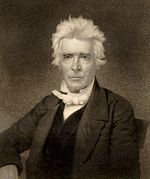
The Holy Spirit, The Missing Finger: Comparing the Pneumatology of Alexander Campbell and Don Basham
Introduction
The purpose of this article is to reveal the initial development of the teaching on the Holy Spirit in the life of Alexander Campbell, founder of the movement named the Disciples of Christ. Campbell’s pneumatology must be placed within the context of American history in the nineteenth century. Beginning with the influence of Cane Ridge and Millennialism on his theology, his weak pneumatology led to an insipid work of the Spirit through the denomination’s history. However, in the charismatic renewal of the twentieth century, Don Basham stood boldly against the rationalistic atmosphere of his church and became well-known for his teachings on deliverance and casting out demons. Consequently, the initial aspect of the paper contains the early history of Campbell’s pneumatology. The second part is a revelation of the charismatic Spirit’s work in one of Campbell’s followers, Don Basham. Though the two appear theologically different, the thesis of the paper is that the operation of the Holy Spirit is the amputated element of Campbell’s theology which is renewed by the baptism in the Holy Spirit in Don Basham and the mainline churches.

The indigenous growth of the Christian Church (Disciples of Christ) in America has a remarkable background and history. As Alexander Campbell searched for a way to end partisan bickering among Presbyterians in Scotland, his company of Christians became one of the largest church movements in American history. As Kevin Ranaghan wrote in his journalistic description of the movement, “one type of revival movement, called Campbellite stressed the word of God well enough, but the word as understood and interpreted by ‘good common sense.’ From the somewhat more rationalistic revival emerged the Disciples of Christ in the north and the Christian Church in the south.”[1] Because the Christian Church (Disciples of Christ) had a diluted pneumatology, the Spirit’s presence was submerged in the past 180 years limiting revival and renewal in its members.
Cane Ridge
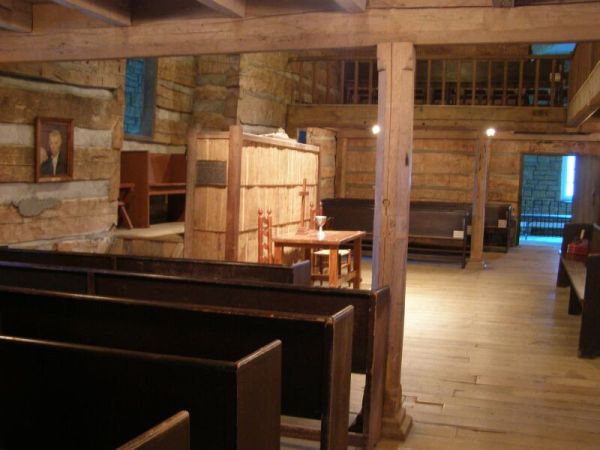
Cane Ridge became known for its unusual manifestations of the Spirit. Though many churches were calm and quiet places of reflection, this experience was diametrically different. Leroy Garrett recorded in the The Stone-Campbell Movement, a graphic description of the “exercises” manifested at Cane Ridge:
They consisted of laughing and singing, the jerks, falling and even screaming and barking. The falling and screaming would sometimes go together, leaving the subject as if he were dead. The jerks were mostly a head movement, which sometimes agitated the whole body. Some people became amazingly acrobatic, for they would stand in one place and jerk backwards and forward with their head almost touching the ground…witnesses would see people on hands and knees in the woods, making the noise with uplifted hands, and would report that ‘they barked up trees like dogs.’[4]
This event was a Pentecost experience before Azusa Street was a reality. C. Dwight Dorough in The Bible Belt Mystique added that “persons were very often favored with visions and heavenly singing.”[5] This early nineteenth century worship was a precursor to what the twentieth century would encounter with the fullness of the Holy Spirit. Yet, Alexander Campbell, a rationalist and devout reader of the intellectual philosopher John Locke never incorporated emotional worship into his church.
As Romans 8:26 (NIV) affirmed, “the Spirit helps us in our weakness. We do not know what we ought to pray for, but the Spirit himself intercedes for us through wordless groans.” Though the barking and jerking seemed eccentric, the Spirit’s anointing many have fallen on the crowd without the knowledge of how to display the manifestations. Paul Conkin noted, “the forms of ‘miraculous’ speech, the holy laughter or sounds from deep within the body, took a form other than glossalia.”[7] The Cane Ridge revival paved the way for future holiness worship with singing, shouting and prophetic words. “These revival techniques involved new rituals-new hymns and new modes of singing them, lay exhortation and personal pleading with identified sinners.”[8]
This seminal event was a missed opportunity for Alexander Campbell. Though he deserted his Presbyterian and Calvinistic background; he never abandoned the approach of the rational thinking of his religion. He not only truncated the Spirit’s work but also created an atmosphere for a subordinate role for pneumatology in the life of the Disciple churches. As a result, the Disciples of Christ contained few reports of such events in their 180 year history. However, a future Holy Spirit-filled minister, Don Basham, would claim, like Cane Ridge, that demons and evil spirits came out of his church members with shrieks and jerks. The miraculous manifestations at Cane Ridge would eventually come to fruition in the twentieth century in the Pentecostal/charismatic renewal in the mainline churches.
The Holy Spirit was moving in His way through churches with the light that they received. Cane Ridge was “a taste for ecstasy. The third person of the Trinity took precedence. People felt the power and received the gifts of the Holy Spirit.”[9] Though Alexander Campbell was not a proponent of the emotional religion, it set the stage for his church to grow. Certainly, his lifetime goal of envisioning Christians become one seemed possible. Because of Cane Ridge, for one “brief moment even a glorious millennium seemed imminent.” Christ’s kingdom was closer to earth and many people believed that America was on the path of Christ’s Second coming.
Millennialism in America
As the nineteenth century progressed, Protestant Christianity in America manifested an influx of belief in the millennial kingdom. The word millennial came from the one thousand year reign of Christ described in the apocalyptic book of Revelation. Revelation 20:1-4 (NIV) reads:
And I saw an angel coming down out of heaven, having the key to the Abyss and holding in his hand a great chain. He seized the dragon, that ancient serpent, who is the devil, or Satan, and bound him for a thousand years. He threw him into the Abyss, and locked and sealed it over him, to keep him from deceiving the nations anymore until the thousand years were ended. After that, he must be set free for a short time.
Alexander Campbell and the Holy Spirit
There is not a considerable amount of information on Alexander Campbell’s pneumatology. However, his premier book, The Christian System contained some brief thoughts on his portrait of the Spirit. He believed that the Holy Spirit “was GOD, the Word of God, and the Spirit of God.”[14] An old Campbellite maxim was “where the Bible speaks, we speak, and where the Bible is silent, we are silent.” Campbell did not use the word Trinity in his theological jargon because the utterance was not identified in the Bible. However, he did have a sense of the Spirit in his writing. He confirmed that, “the Spirit is said to do, and to have done, all that God does and all that God has done.”[15]
Campbell’s belief system was enamored by the millennial teachings of the day. Furthermore, his interest in intellectual pursuits and debates caused him to speak rarely about the Holy Spirit. This lack of emphasis in the Spirit laid the foundation for a weak pneumatology for over a century in the Christian Church (Disciples of Christ). “Taken by itself, the phrase, ‘gift of the Holy Spirit,’ had a rather vague meaning.”[18] His analytical method of Bible study and worship created the cerebral personality of his churches. “Campbell contended that in conversion the influence of the Spirit came only through the word. His basic concept was his Lockian sensationalism, as when he said that ‘our first argument in proof of our proposition, shall be drawn from the constitution of the human mind.”[19] Thus, the millennial kingdom was to come, not with dynamic emotion but rather with an intellectual pursuit of reason.
Acts 2:38, The Five Finger Exercise, and the Holy Spirit
“Scott’s specific purpose was to show that preachers try to produce belief in the Messiahship of Jesus by presenting the evidence, instead of trying to induce a mystical state variously called an ‘assurance of pardon,’ or ‘assurance that Christ died for me,’ by emotional techniques, vivid pictures of the fate of the damned, and wrestling to win the miraculous action of the Holy Spirit to bestow saving faith on an mourner already ‘convicted of sin.’”[22]
Campbell had a unique opportunity to revive the Spirit’s work in his ministry. However, he emphasized baptism to the exclusion of the other points. The missing finger of the Holy Spirit is the lost piece of this sermon. If Campbell had embraced the Spirit at his moment in the ministry of Walter Scott, he may have created a far more Spirit-filled church than the one existing today.
As a result, “in the twentieth century a great silence settled upon the Disciples search for meaning of the Holy Spirit.”[23] Just as the 400 years from the last Old Testament prophet Malachi, until John the Baptist appeared, the Spirit was silent; similarly, the lack of a strong pneumatology with the Campbellites created a vacuum of the Spirit’s presence and power in the Christian Church (Disciples of Christ). In the history of the Disciples of Christ, the lost years were painfully obvious. An initial anemic pneumatology created a church with little emphasis on the Holy Spirit. Without acknowledgment of the Spirit’s operation, one noticed a movement built on reason rather than a strong Spirit-filled foundation.
Charismatic Renewal—Don Basham

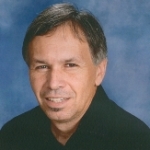
In the 1960’s Dennis Bennett became the icon of a movement of the Spirit that was known as the charismatic renewal. The work of the Spirit operated in an ecumenical course in the historic mainline protestant denominations, including the Christian Church (Disciples of Christ). One minister who became prominent and controversial was Don Basham. Attending the Campbellite-based school, Phillips University in Enid Oklahoma, Basham was ordained in the CC/DOC in 1955.[24] After receiving the baptism in the Holy Spirit, his traditional ministry changed. He prayed for demons to be cast out of members of his church. Many people believed his unconventional ministry was unbiblical. David du Plessis argued against exorcism since the cross of Christ was victorious over evil. On the other side, Don Basham provided an example of exorcism and the successful cure of someone who did not respond to conventional treatment.”[25]
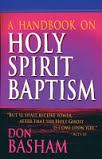
In his helpful book, A Handbook on Holy Spirit Baptism, Basham answered relevant and honest questions for those interested about how the baptism in the Holy Spirit functions in the practical Christian life. Numerous inquiries about tongues and the Spirit’s work were deciphered, with thoughtful analysis. He wrote “this second experience of the power of God, which we call the baptism in the Holy Spirit, is given for the purpose of equipping the Christian with God’s power for service. It is the spiritual baptism for Jesus Himself, in which He begins to exercise His sovereign possession, control and use of us in supernatural fashion.”[26]
Though Basham was a Disciples of Christ minister, he was also a classical Pentecostal in his theology. He placed tongues in a paramount place in the experience of the Christian and was not ashamed to announce that “speaking in tongues” should be normative for the believer. He taught, “the only clear scriptural evidence of the baptism in the Holy Spirit is speaking in tongues.”[27] He did not evade the tongues experience but highlighted that Acts 2, 10, 19 support evidence for this theological belief. He discovered both power for service and anointing to minister over evil through the baptism. He emphatically wrote, (his emphasis in capital letters) “SOMETHING IS MISSING IN YOUR SPIRITUAL LIFE IF YOU HAVE RECEIVED THE HOLY SPIRIT YET HAVE NOT SPOKEN IN TONGUES.”[28] Thus, tongues was an essential for Christian living. Without tongues, one does not have access to God’s thoughts (1 Cor. 14:2). Basham proclaimed, “stated in the simplest way: man does the speaking while the Holy Spirit furnished the words.”[29] Certainly, tongues as the initial evidence was the beginning and foundation for his ministry in exorcism and casting out demons.
 A sequel to his first writing on Holy Spirit baptism was another question and answer book titled A Handbook on Tongues, Interpretation and Prophecy. He specifically dealt with the spiritual gifts of tongues and interpretation in I Corinthians 12 and 14. The basis for the book encouraged Paul’s exhortation to “not quench the Spirit” (1 Thess. 5:19, NIV). Additionally, he promoted Paul’s teaching to “be eager to prophesy, and do not forbid speaking in tongues. But everything should be done in a fitting and orderly way” (1 Cor. 14:39-40, NIV). The natural cohort to glossolalia was interpretation of tongues. “The gift of ‘interpretation of tongues’ is the companion gift to the gift of tongues. The two cannot function properly without the other.”[30] Basham related several stories through his numerous books of tongues and interpretation in his church ministry. In addition, he added that prophecy is more edification than predicting the future. He wrote, “our national preoccupation with astrology, fortune-telling, spiritualism and the popularity of clairvoyants like Jean Dixon and Edgar Cayce have urged many Christians into a morbid desire to peek into the future.”[31] This profound revelation demonstrated both the care and balance Basham took in these specific spiritual gifts. As Paul penned “anyone who speaks in a tongue edifies themselves, but the one who prophesies edifies the church” (1 Cor. 14:4). Basham likewise sought wise council in the apostle’s sage advice.
 Basham’s style of deliverance ministry was both popular and controversial. He used “the term ‘deliverance,’ then to specify particularly the ministry of casting out demons.”[36] In 1964 he accepted a call to minister as pastor in a Disciples of Christ church in Sharon, Pennsylvania. In his best-selling book Deliver us from Evil he related with candid honesty his successes and failures with the congregation. At first, he experienced disappointment. The traditional methods of counseling did not help the people. After prolonged work with a parishioner who had cancer, her sudden death shook his faith. He reflected on the experience, “I began to appraise my work in Sharon in terms of negatives, reminding myself that in a congregation of over six hundred members, only a few dozen were finding meaningful spiritual answers to their needs.”[37] He believed that the deliverance ministry was meant to be imparted “in addition to, not in place of prayer for healing, crucifixion of the nature.”[38] Basham considered this exorcism important as he wrote that one-third of “Jesus own ministry was given to casting out demons.”[39] However, the accent must stay centered on God’s greatness and power over evil. He related, “the fact that there are myriads of demons representing all kinds of bondage and torment does not mean that all problems, illnesses or errors are caused by evil spirits.”[40] In short, the Holy Spirit’s presence must take preeminence and an understanding of omnipotence of God must prevail in one’s theology.
In due course, his involvement with the “shepherding movement” was ridden with conflict. Basham and the leaders believed many charismatics were rootless and wandered from church to church to seek the latest anointing. “This ‘shepherding’ system was considered to be an answer for the thousands of charismatics who were drifting from conference to conference.”[41] They believed people needed a “covering” to keep them safe from evil. Others saw their expression of Christianity as controlling. This association of ministers came to a head in Minneapolis, Minnesota. “Attending this meeting were Mumford, Prince, Basham, Simpson, and Baxter from the Fort Lauderdale group, while critics such as Pat Robertson, Dennis Bennett, and others came from the other side.”[42] Conflict dominated the summit. “At one point Dennis Bennett…stormed out of the meeting, but by mistake stepped into a cleaning closet where he thrashed about among mops and buckets before leaving.”[43] In the end, nothing was solved at the “shootout at Curtis Hotel”[44] and the movement eventually dispersed as they were shunned by major ministries including FGBMFI.
Conclusion
Though Don Basham was a minister in a mainline denomination, he stepped out in faith into the realm of the Spirit for a ministry others never attained. His courage to address evil in his churches spoke of his audacity to declare that the Name of Jesus was more powerful than any demon. Throughout his books, his admittance of mistakes speaks of his humility. He acknowledged his inaccurate assessments of discernment in others but yet continued to press forward in the power of the Spirit. Basham’s real life stories and experiences convey to the unpretentious Spirit-filled faith he provided his parishioners. Every story disclosed, whether about forgiveness, deliverance or tongues communicated his penchant for learning. He wisely expressed in Willing to Forgive, “anytime God wants to teach us a lesson, He very seldom does it in the abstract.”[45]
Two areas of growth and disappointment were the unknowns of the deliverance ministry and the shepherding movement. Yet, preaching deliverance in a liberal mainline denomination took courage. Many of his pastor friends did not believe in this experience. In fact, because America was dominated by Western rationalism (which Alexander Campbell embraced) the ministry of deliverance was considered suspicious. In addition, his involvement with the shepherding movement was a dark mark in his life. Because of the subsequent controversy about his union with the Fort Lauderdale Five, his ministry became less prominent. However, his boldness opened the door for Disciple churches to receive the Spirit-filled experience. Former President of Bethany College, Duane Cummins noted, “the Christian Church (Disciples of Christ) in our time, therefore, encompasses both Galatia and Corinth, both Bethany and Cane Ridge. There are Disciples congregations unequivocally and sincerely committed to a charismatic faith expressed through gifts of the Holy Spirit including prophecy, speaking in tongues and healing.”[46] Thus, Basham’s ministry in the mainline church was not unique.
The Holy Spirit was the missing finger in the life of the church for 180 years. From the beginning, Holy Spirit pneumatology and its dynamism were muted because reason was placed over the Spirit’s work in the life of a believer. Alexander Campbell had a gateway to provide the Spirit through his association with Walter Scott. Yet, he accepted John Locke’s rationalism as a basis for faith and living. This action created a church movement built on an overemphasis of the mind to the detriment of the Spirit. In comparison, “John Wesley demonstrated that a warm, spiritual religion is as possible in an high church, liturgical tradition as within the more plain and simple style of Puritans and Presbyterians.”[47] Wesley, though educated and scholarly, did not allow the intellect to become preeminent over the Spirit. Additionally, Don Basham, though trained as an educated, traditional Disciples minister, appropriated Wesley’s approach and imagined a ministry more compatible to Cane Ridge than the Campbellite religion. The Holy Spirit was the missing finger of Campbell’s faith that Basham recaptured. To this end, Don Basham revealed that the pneumatology of the charismatic renewal was the needed corrective to a rational mode which most mainline churches feature in the life of their congregations.
PR
Bibliography
Basham, Don. Can a Christian Have a Demon. Monroeville, PA: Whitaker Books, 1971.
—. Deliver Us From Evil. Grand Rapids: Chosen Books, 1972.
—. Face Up With a Miracle. Northridge, CA: Voice, 1967.
—. A Handbook on Holy Spirit Baptism. Monroeville, PA: Whitaker Books, 1969.
—. A Handbook on Tongues, Interpretation and Prophecy : 27 Questions and Answers on the Inspirational Gifts of the Holy Spirit. Monroeville, PA: Whitaker Books, 1971.
—. A Manual for Spiritual Warfare. Greensburg, PA: Manna Books, 1974.
—. Willing to Forgive. Ft. Lauderdale, FL: CGM Publishing, 1977.
Burgess, Stanley M., Gary B. McGee, Patrick H. Alexander, eds. Dictionary of Pentecostal and Charismatic Movements. Grand Rapids: Zondervan Publishing House, 1998.
Campbell, Alexander. The Christian System. Cincinnati: H.S. Bosworth, 1866; reprint, Salem NH: Ayer, 1988.
Conkin, Paul K. Cane Ridge: America’s Pentecost. Madison, WI: The University of Wisconsin Press, 1990.
Cummins, D. Duane. A Handbook for Today’s Disciples in the Christian Church (Disciples of Christ). St. Louis: CBP Press, 1974.
Dorough, C. Dwight. The Bible Belt Mystique. New York: Random House, 1962.
Foster, Douglas A. and others. Encyclopedia of the Stone-Campbell Movement. Grand Rapids: Eerdmans, 2004.
Garrett, Leroy. The Stone-Campbell Movement. Joplin, MO: College Press, 1994.
Garrison, Winfred Ernest and Alfred T. DeGroot. The Disciples of Christ, A History. St. Louis: Bethany Press, 1958.
Hoekema, Anthony A. The Bible and the Future. Grand Rapids: Eerdmans, 1979.
Kay William K. and Anne E. Dyer, eds. Pentecostal and Charismatic Studies: A Reader. London: SCM Press, 2004.
Ranaghan, Kevin and Dorothy. Catholic Pentecostals. New York: Paulist Press Deus Books, 1969.
Synan, Vinson. Century of the Holy Spirit: 100 Years of Pentecostal and Charismatic Renewal. Nashville: Thomas Nelson, 2001.
—. An Eyewitness Remembers the Century of the Holy Spirit. Grand Rapids, MI: Chosen Books, 2010.
Notes
[1] Kevin and Dorothy Ranaghan, Catholic Pentecostals (New York: Paulist Press Deus Books, 1969), 255.
[2] Leroy Garrett, The Stone-Campbell Movement (Joplin, MO: College Press, 1994), 103.
[3] Paul K. Conkin, Cane Ridge: America’s Pentecost (Madison, WI: The University of Wisconsin Press, 1990), 11.
[4] Garrett, 104-105.
[5] C. Dwight Dorough, The Bible Belt Mystique (New York: Random House, 1962), 70.
[6] Conkin,164.
[7] Conkin, 173.
[8] Conkin, 168.
[9] Conkin, 173.
[10] Anthony A. Hoekema. The Bible and the Future (Grand Rapids: Eerdmans, 1979), 175.
[11] Douglas A. Foster and others. Encyclopedia of the Stone-Campbell Movement (Grand Rapids: Eerdmans, 2004), 517.
[12] Foster, 116.
[13] Foster, 517.
[14] Campbell, Alexander. The Christian System (Cincinnati: H.S. Bosworth, 1866; reprint, Salem NH: Ayer, 1988), 24.
[15] Campbell, 24.
[16] Campbell, 24.
[17] Campbell, 24.
[18] Winfred Ernest Garrison and Alfred T. DeGroot. The Disciples of Christ, A History (St. Louis: Bethany Press, 1958), 188.
[19] Garrison, 233.
[20] Garrett, 219.
[21] Garrett, 218.
[22] Garrison, 184.
[23] Cummins, D. Duane. A Handbook for Today’s Disciples in the Christian Church (Disciples of Christ) (St. Louis: CBP Press, 1974), 25.
[24] Stanley M. Burgess, Gary B. McGee, Patrick H. Alexander, eds. Dictionary of Pentecostal and Charismatic Movements (Grand Rapids: Zondervan, 1998), 51.
[25]William K. Kay and Anne E. Dyer. Pentecostal and Charismatic Studies: A Reader (London: SCM Press, 2004), 239.
[26] Don Basham. A Handbook on Holy Spirit Baptism (Monroeville, PA: Whitaker Books, 1969), 61.
[27] Ibid.
[28] Ibid., 63.
[29] Ibid., 65.
[30] Don Basham. A Handbook on Tongues, Interpretation and Prophecy: 27 Questions and Answers on the Inspirational Gifts of the Holy Spirit (Monroeville, PA: Whitaker Books, 1971), 69.
[31] Ibid., 103.
[32] Don Basham. Face Up With a Miracle. (Northridge, CA: Voice, 1967), 63.
[33] Basham. A Handbook on Tongues, 34.
[34] Ibid., 76.
[35] Don Basham. Can a Christian Have a Demon (Monroeville, PA: Whitaker Books, 1971), 42-45.
[36] Don Basham. A Manual for Spiritual Warfare (Greensburg, PA: Manna Books, 1974), 30.
[37] Don Basham. Deliver Us From Evil (Grand Rapids: Chosen Books), 1972.
[38] Basham. A Manual for Spiritual Warfare, 31.
[39] Ibid., 55.
[40] Ibid., 43.
[41] Vinson Synan, Century of the Holy Spirit: 100 Years of Pentecostal and Charismatic Renewal (Nashville: Thomas Nelson), 2001.
[42] Ibid., 364.
[43] Vinson Synan, An Eyewitness Remembers the Century of the Holy Spirit (Grand Rapids, MI: Chosen Books, 2010), 83.
[44] Synan. Century of the Holy Spirit, 364.
[45] Don Basham. Willing to Forgive (Ft. Lauderdale, FL: CGM Publishing, 1977), 33.
[46] Cummins, 25-26.
[47] Conkin, 168-169.








As an addendum to the article: When I contacted folks from Bethany College WV they admitted there was little about the Holy Spirit in Campbell’s writings (The Christian System, etc.). As Don Basham was a well-known charismatic, the contrasts in Campbell’s and Basham’s pneumatology were immense. Campbell, as a man of reason recognized the ability of the mind (as I appreciate) whereas, Basham, follows the theme of heart religion, which a Wesleyan may value. As John Wesley said, “my heart was strangely warmed.” My paper seeks to examine the contrast between the founder of the Christian Church (Disciples of Christ) and a minister within the same movement.