
Discipleship Through Community

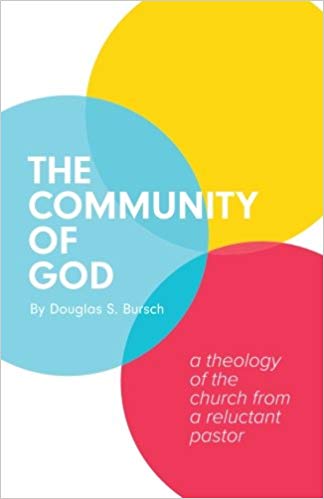
Every follower of Jesus is called to be a disciple maker. In this excerpt from his book, The Community of God, Pastor Doug Bursch shows us that the New Testament says discipleship happens in and through community.
God cares equally about the individual and the group. He does not give preference to the development of one over the other. With the formation of Eve, God created humans to exist as communal beings, dependent upon each other and their Creator to be one. Before sin entered the world, God declared that “it is not good” for Adam to be alone. What was true for Adam, remains true for every human being. For the children of God to understand fully the goodness of God, we must dwell in meaningful ways with each other. Consequently, community plays a crucial role in any healthy discipleship process.
Jesus discipled through community
Community was central in New Testament discipleship. Jesus ministered through a group of disciples. The New Testament church continued Jesus’ ministry and discipleship model after Christ’s ascension. In the New Testament, almost every stage of discipleship and growth occurred within the gathered community, specifically through ministry pairings.
Jesus did not minister the kingdom of God alone. Instead, he began his official ministry on Earth by gathering a group of disciples. Jesus ministered to and with disciples because he was fully God but also fully human. Just as it was not good for Adam to be alone, it would not have been good for Jesus to be alone or minister alone. God created humans for community. To rightly express his humanity, Jesus needed to abide with and work through meaningful human relationships. If Jesus had not shared his ministry with other people, he would not have been the perfect expression of a righteous human. To exhibit the perfect expression of humanity, Jesus shared his ministry with others. Through his incarnation, Jesus allowed himself to be dependent upon human relationships. He shared the plan of God with a community of disciples. In gathering the twelve, Jesus showed us that the gospel is fully realized in and through community.
In Jesus’ communal method of discipleship, he did not individually disciple his followers before bringing them into the larger group. Instead, he asked each disciple to join him and learn about him within a community of followers. The disciples discovered God and themselves within and through fellowship with each other. Their knowledge of God and their ministry giftings developed together. Jesus took twelve equally ignorant disciples and discipled them as an interactive group.
Even when ministering to individual disciples, Jesus often had the spiritual growth of the larger group in mind. In one instance, Peter took Jesus “aside and began to rebuke him” for teaching “…the Son of Man must suffer many things and be rejected by the elders and the chief priests and the scribes and be killed…” (Mark 8:31-32). Jesus rejected both Peter’s words and his attempt to isolate the discussion from the rest of the disciples. Scripture states, “But turning and seeing his disciples, he [Jesus] rebuked Peter and said, ‘Get behind me, Satan! For you are not setting your mind on the things of God, but on the things of man’” (Mark 8:33). Immediately, Jesus called the surrounding crowd to him and taught them, “If anyone would come after me, let him deny himself and take up his cross and follow me. For whoever would save his life will lose it, but whoever loses his life for my sake and the gospel’s will save it” (Mark 8:34-35). Jesus took his personal rebuke of Peter and turned it into an opportunity for a public teaching with the disciples and the larger crowd. The disciples learned about Jesus, not in isolation, but through the gathered community.
Through his method of discipleship, Jesus taught his followers that individual development and group development should be intertwined in every stage of the discipleship process. Regardless of our individual spiritual maturity, our relationship with God will develop best within the gathered community. We live out and nurture our individual salvation most effectively through abiding in purposeful, connected ways with our fellow brothers and sisters in Christ. Discipleship, through and with others, is not an optional choice or a secondary step on the journey of spiritual maturity, but a crucial, foundational expression of following Christ.
As we follow Christ in a fellowship of believers, we also grow in our individual identity as disciples of Christ. To have an individual relationship with Christ is to be individually invested in a larger group of believers. In relationship with the body of Christ, we find out who we are and why we exist. To separate discipleship from community is to separate ourselves from a central reason for our salvation. We have been saved so that a disconnected creation can become one in Christ, so that God can form us into one people, his people, a holy nation that will bless all the nations of the earth. We become expressions of this oneness in Christ as we align our purposes with an identity bigger than our own personal spiritual journey.
Individualistic discipleship turns spiritual growth almost solely into a self-directed development journey. Within this personal awareness journey, Christians pray, read the Bible and participate in the sacraments for primarily self-absorbed reasons. Our prayers are for our needs, our Bible reading is for our devotional growth and even communion becomes an individual pursuit to soothe our own conscience or develop our own intimacy with God. Although a form of community might be valued in our present Christian discipleship, too often community is positioned as an option we think about or engage only after we have ministered to our individual pursuits.
The early church discipled through community
Jesus instructed and trained his followers in and through community. The early church carried on this tradition, understanding that the Spirit of God was poured out upon all flesh to empower, strengthen and expand the gathered community of Christ.
The path of discipleship
“So, what is your discipleship pathway?”
I first thought about saying something such as, “Well, I’m considering maybe a meandering, crushed gravel pathway, with mason honed flagstone, edged by ornamental grasses and weather resistant succulents.” However, sarcasm did not seem to fly well with my supervisors. Instead, I pointed to my white poster board full of sticky notes and directional arrows and led my church planting coach through a hypothetical journey that transformed a pagan into a disciple of Christ. Like everyone else in the room, my pathway had stages of development; from seeker, to saved, to growing in the faith, to volunteering, to eventually pastoring or even becoming the next Billy Graham. The plan did look pretty in its systematized simplicity; everything on a poster board in a nice clean, step-by-step pathway of discipleship.
I began to understand that discipleship is not about my path, but God’s path. I realized that my ways did not match God’s ways or God’s timing. Even so, God clearly calls leaders to facilitate environments where individuals grow in the character of Christ. As a minister of the gospel, I take seriously the commandment to “Go therefore and make disciples of all nations…” (Matt. 28:19). However, I do not enjoy experiencing the pain and heartache that ensues when believers regress or remain stagnant in their faith. So much relational hurt is rooted in believers who have not become healthy disciples.
I assume the church experts would point to my poorly planned, implemented and executed pathway. They would tell me that I need to write down more steps and communicate them in simple and transferable ways. They would tell me that everyone in the church should be able to articulate the stages or steps to discipleship. The experts are probably right. But I do not like systems, I do not like religious math, I do not like spiritual equations and I flat out hate memorization. Frankly, I am hesitant to embrace any religious activity that turns relationship with God into a structured process.
Of course, that is not a good enough answer; everyone must work on communicating clearly. As my pastor friend Steve Schell says, we must all learn how to “organize the parade.” Even so, I have always felt there should be something deeper than writing down and implementing a better map and endlessly trying to get everyone to keep in line and in step with our carefully designed systematized paths.
They are “tomorrow disciples” or “someday disciples,” believing that a day will come, other than today, when they will be willing and able to completely follow Christ and do the true work of the kingdom. Until that tomorrow comes, they are satisfied with being perpetually rescued, nurtured, fed, and taught by others. They are spectator Christians, who believe the work of the kingdom is done by healthier, wiser, more mature disciples of Christ. Reluctant or resistant to completely following Christ, they speak of a future when they will finally surrender to the call of discipleship. They are “disciples on hold” who see true discipleship as something they will fully embrace once their life is in order, work slows down, the kids are older, the mortgage is paid and they finally have time to focus on the things of God. They are “give me just a little more” Christians, looking for one more sermon, one more Bible study, one more program or friendship to solidify their faith and to provide them with the courage necessary to fully commit to following Jesus.

If discipleship happens best in a community of active Christ followers, then we must create environments that enable believers to participate actively in the ministry of the kingdom, regardless of their spiritual maturity. We must facilitate discipleship climates where we immediately invite new Christians to participate fully in ministering the kingdom. In environments full of love, grace and forgiveness Christians will mature while ministering one to another. This means we must avoid creating a two-tiered class system of “disciples of Christ” who do the ministry and the “saved but not yet ready” who are being served rather than serving. In other words, the church is to function as Jesus did with his twelve disciples. Once individuals decide to follow Jesus, the church’s responsibility is to call them to engage in working for the kingdom of God. Jesus is the path, the way, the destination and the ultimate maker of disciples. When people follow Jesus, discipleship happens because he is the great shepherd of the sheep.
PR
Copyright © 2017 by Douglas S. Bursch. All rights reserved. Used with Permission.
Further Reading:
Read John Lathrop’s review of Douglas S. Bursch, The Community of God.
Stephen Lim, “Elephant in the Church: Identifying Hindrances and Strategies for Discipleship“
How Should we Lead the Church? A Pneuma Review Conversation