
Peter Marina: Getting the Holy Ghost

Sociology and the Spirit: a review of Peter Marina’s Getting the Holy Ghost by Joy Allan.
 Peter Marina, Getting the Holy Ghost: Urban Ethnography in a Brooklyn Pentecostal Tongue-Speaking Church (Lexington Books, 2014), 322 pages, ISBN 9781498503563.
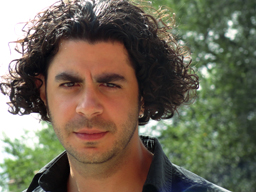
A snapshot: A young man sits alone in an office, adaptable, patient, ready to listen. He is aware of the words he has written and read, aware that he must be ready to interpret those words for his audience and bring them to meaning. Who is this man? A pastor? No. A prophet? Perhaps. He is in fact, a sociologist, and the author of the book Getting the Holy Ghost: Urban Ethnography in a Brooklyn Pentecostal Tongue-speaking Church. He is Peter Marina, and his book suprised me.
Marina describes himself as ‘unsaved, white sociologist,’ who does not ‘speak in tongues.’ This would be unsurprising except that this, his first book, is an incredibly insightful ethnographic study of a ‘Black Tongue-speaking Pentecostal church.’ His research aim was to move beyond a knowledge of Pentecostalism for its ‘bizarre habits’ towards an ethnography which ‘built on participant observation, puts those outsiders inside the church pews.’ He fulfills this aim well. So well that in spite of some fault and my own trepidation, I loved this work.
My trepidation came from my position as both a ‘tongue-speaking Pentecostal,’ and a Pentecostal scholar who uses sociological methods in her own work. I was worried that by putting ‘tongue speaking church’ in the very centre of the title, he was giving it a more normative position than it has in many of our churches, thus setting up a straw man for his research aim. I also worried initially that he was going to follow in the wake of the few outside sociologists who wade into Pentecostal communities with little of the scriptural and historical background of their chosen community. This can lead to compromised data. The researchers do not know the scriptural and social causes of the narratives of their participants, and thus their understanding of the very lives and speech which they are researching is compromised. I worried that Marina was going to be of this ilk.
I needn’t have. I was surprised by the scholarly merit of this work, the deep theological and psychological understanding which Marina had of his congregation. Yes, there were moments when he displayed a lack of knowledge concerning his participants’ influences, yet, the book was good. It was good enough to be of benefit not only to scoiologists and academics, but to Pentecostals, ‘tongue-speaking’ or otherwise, as we learn more about our structure and form from one who has had the opportunity to sit back, observe and take note over such a long time.
Of particular note was his argument that conversion does not necessarily happen through a crisis in the convert’s life but through a series of choices, situations and movements building up to that moment. Primarily, this is important as it leads away from the idea of Pentecostal Christianity as a crutch for the weak, so often repeated in both secular and Christian spheres. Throughout the work there is an emphasis on the empowering nature of Pentecostal Christianity. He has come to the same conclusion as Bridges Johns’ without having read her: Pentecostalism has the power to empower and to do so for good. One senses that though he doesn’t feel Pentecostalism, he clearly respects it, and the effect which it has upon those whom he interviews.
This is also important due to the pastoral/pedagogical implications here. If conversion is a series of events and moments, perhaps we should reconsider the consistent emphasis we place on one rational, verbal moment? This re-emphasis could greatly benefit our growth and understanding as we consider the redemptive moments in the whole narrative arc of our lives. Furthermore, it would have obvious beneficial implications for those who are cognitively disabled amongst us in particular.
It would not be the first time that a sociologist has done work which speaks powerfully to the church. This is no easy task, as the researcher is faced with a method firmly placed in the concrete and a community firmly placed in the transcendent. Though this problem can never be fully solved, Marina deals with it well. He does not overwrite the explanations of his participants with one of psychology or immanence. He does not do so in the faux, ‘whatever works for you’ way favoured by so many postmoderns. Rather, his silence makes for good sociology. Further, in doing so, he has written space for good theology to be done within the silence. Those of us who work ‘from inside the belly of the whale’ can view and take apart the words of his scholars for a different, but not dissonant purpose from Marina. We can use them because they are clear of his lens. This is a skill and one which is much needed and often missing from current research on Pentecostalism.
All in all, this is a piece of work which is written with clarity and understanding, and which has the potential to bring clarity and understanding to those within both the academy and the church. As such I do not hesitate to recommend it. Even if sociology is not your thing, it is a gripping read.
Reviewed by Deborah Joy Allan
Publisher’s page: https://rowman.com/ISBN/9781498503563/Getting-the-Holy-Ghost-Urban-Ethnography-in-a-Brooklyn-Pentecostal-Tongue-Speaking-Church