Apocalyptic literature, a double review by Amos Yong

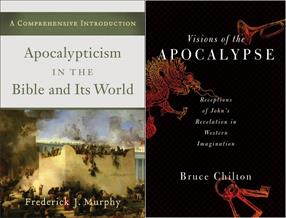
 Frederick J. Murphy, Apocalypticism in the Bible and Its World: A Comprehensive Introduction (Grand Rapids: Baker Academic, 2012), xviii + 429 pages.
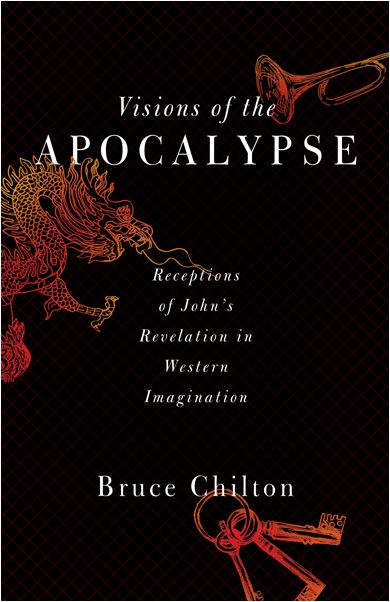 Bruce Chilton, Visions of the Apocalypse: Receptions of John’s Revelation in Western Imagination (Waco, Tex.: Baylor University Press, 2013). vi + 169 pages.
These two books are very different – length-wise, style, and scope – but they will appeal to readers of The Pneuma Review for related reasons. Murphy’s is quite readable but more academic and in-depth (not to mention three times the length of Chilton’s book), and focuses on a genre of literature, apocalyptic, that emerged in the last third of the first millennium BCE and continued well into the next millennium. Chilton’s is in more conversational style, although no less informed by rigorous scholarship, given his previous authorship of over a dozen other scholarly volumes, and covers three times the historical period (the last two thousand years compared to six hundred) while being focused on the reception history of one biblical book. Revelation aficionados will want to read both volumes, since Murphy includes a 35+page chapter on the Apocalypse), although they will come away informed in very different ways.
Pentecostal and charismatic ministers and readers interested in the book of Revelation and in “ends times” interpretations of the Bible will easily be able to follow Chilton’s narrative of how this last scriptural book has been read over the last twenty centuries. His book’s first six chapters unfold: chiliastic (or millennial) interpretations of Revelation among the patristic fathers (particularly Papias); spiritual and ecclesiological readings following Origen’s multi-level hermeneutic and Augustine’s two-cities (of God and of the world) vision; visionary anticipations of the coming age of the Spirit inspired by the trinitarian framework of Joachim of Fiore in the medieval period; prophetic messages claiming to identify the antichrist and other enemies of the true church in the Renaissance, Reformation, and post-Reformation periods; progress narratives developed during the early modern period by scientists like Isaac Newton and Romantic poets like William Blake among others; and catastrophic scenarios envisaged by dispensationalists from John Nelson Darby to Timothy LaHaye, and everyone in between. The final and concluding chapter returns to situate the original book of Revelation in its post-apostolic context and identifies its central themes that have precipitated these divergent elucidations over 2000 years. Readers uninitiated into the history of biblical interpretation ought to come away from Visions of the Apocalypse sympathetic with the various readings given the rationales Chilton lays out in connection to the biblical book, which of course begs the question: why should we prefer any one of these approaches over any of the others. That’s where I’d say we ought to dive deeper into the broader context within which Revelation fermented, which Chilton’s book touches on only briefly given his foci, and for this task, Frederick Murphy’s tome comes to the rescue.
Apocalypticism in the Bible and Its World lives up to its subtitle: this Roman Catholic biblical scholar presents and summarizes all of the apocalyptic texts in the Bible and also from around the biblical world, providing their historical context (to the degree that can be determined) and showing the basic development of apocalyptic ideas. Thus after an initial chapter that attends to the difficulties of defining apocalypse (the genre), apocalypticism (the worldview), and related terms – note then that texts can be apocalyptic in terms of including some of the features of the worldview, but not be apocalypses in terms of the genre – readers are introduced to “proto-apocalyptic” texts from the Hebrew Bible or Old Testament (ch. 2), the biblical book of Daniel and the so-called Animal Apocalypse, which is also I Enoch 85-90 (ch. 3), and the book of Revelation (ch. 4). The next three chapters, for those who are biblically literate but rather ignorant about extra-biblical literature, are fascinating reading about other ancient Jewish apocalypses (ch. 5 on the book of Enoch in its various parts, 4 Ezra, 2 Baruch, the Apocalypse of Abraham, and the book of Jubilees) and apocalyptic type literature (ch. 6 on The Testament of Moses, the Psalm of Solomon, the Sibylline Oracles, and the Testaments of the Twelve Patriarchs), and on the Dead Sea Scrolls (ch. 7). Chapters 8-11 exposit apocalyptic materials in the Gospels and Acts; in relationship to attempts to reconstruct the historical Jesus (hint: Murphy agrees with those who argue that Jesus “was an eschatological, apocalyptic prophet” [p. 304]); in the Pauline literature; and in the rest of the New Testament. The final chapter is titled the “ongoing legacy of [biblical] apocalypticism,” and begins to do for the apocalypse genre what Chilton does for Revelation. More conservative biblical readers may take issue with this or that decision – historical or interpretative – that Murphy makes, but his approach is fair to the contested matters, and his tone is irenic in presenting reasons for his conclusions. Murphy’s is a posture of faith-seeking-understanding, so that historical-critical perspectives are deployed to illuminate the biblical text rather than to undermine its authority.
Yet, after Murphy, readers will realize that much of the worldview of the New Testament is informed by the apocalypticism that defined Jewish life in the centuries leading up to the apostolic period, and that this persisted long into the second century CE. Another way to put this is that if Chilton helps us comprehend where our understandings of Revelation have derived historically, then Murphy helps us see that the message of Revelation specifically and the New Testament as a whole emerges from within the apocalyptic milieu dominant across the Jewish diaspora during the first centuries of the Christian millennium. If some might argue that the apostolic message in its various New Testament parts is unique in contrast to other apocalypses or to apocalyptic type literature during that time, in some respects we might make the argument that each apocalypse or other apocryphal or Second Temple Jewish text has its own distinctive features.
But another way of receiving the gifts that these two books represent is that they provide us with historical perspective to appreciate the provenance and reception of scripture, in particular apocalyptic texts like but not limited to the book of Revelation. For those committed to the authority of the Bible, Murphy and Chilton will educate us historically, whether in relationship to the Bible or to our interpretation of it. For end-times enthusiasts and others interested in the Apocalypse in particular because they have the task as ministers of the gospel to teach and preach from these sometimes difficult texts, we will be well served to take up and read so we can be better informed in conversation with those who have gone before us. (For those in pentecostal and charismatic movements who want perspectives from those with like commitments, I would recommend the work of Robby Waddell and Melissa Archer especially, but comment on these will have to wait another occasion.) Thankfully, both Murphy and Chilton write well, and will keep most of us engaged with them and with their timely but challenging texts.
Reviewed by Amos Yong
Publisher’s page for Frederick J. Murphy, Apocalypticism in the Bible and Its World: http://bakerpublishinggroup.com/books/apocalypticism-in-the-bible-and-its-world/336490
Preview Frederick J. Murphy, Apocalypticism in the Bible and Its World: https://books.google.com/books/about/Apocalypticism_in_the_Bible_and_Its_Worl.html?id=kJvCP1FD6TwC
Publisher’s page for Bruce Chilton, Visions of the Apocalypse: http://www.baylorpress.com/Book/392/Visions_of_the_Apocalypse.html