
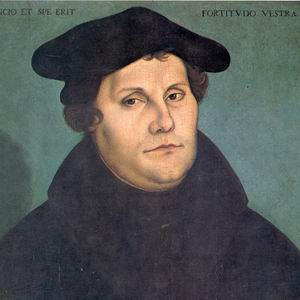
The Impact of Martin Luther and the Reformation on Modern Revivalism

What can the Reformer teach us about revival?
The emphasis by Martin Luther and other Reformers on the ultimate authority of Scripture and the priesthood of all believers opened the way for all the great revivals of the modern era. Luther’s work broke the paralyzing hold of a religious hierarchy that claimed final authority over the people, quenched the work of the Holy Spirit in their midst, and confined Biblical knowledge to the priesthood. His emphasis on the priesthood of all believers unleashed the masses to pray and expect answers from God. If there had been no Luther, there would have been no Methodist revival, no Great Awakenings, no Cane Ridge, and no Pentecostal-Charismatic revival.
Luther’s Early Life

Luther was born into a poor, peasant German family where he was taught to pray to God and the saints, to revere the church and the priests, and was told frightful stories about the devil and witches. One day, at the age of 22, he was caught outdoors in a terrible thunderstorm and feared for his life. In a state of panic, he made a vow to become a monk if his life was spared. True to his vow he entered the Augustinian monastery at Erfurt that same year of 1505.
As a monk, Luther’s chief concern was to become a saint and earn a place in heaven. He, therefore, observed the minutest details of discipline, living a very austere life and learning the principles of mystical prayer and meditation. His days were spent in reading and studying, prayer and fastings, night watches, and self-mortifications. His fellow monks held him up as a model of sanctity and envied his self-denial. He later said, “If ever a monk got to heaven by monkery, I would have gotten there.” However, in spite his austere lifestyle and many religious works he found no peace with God.
While a monk, Luther continued his studies and in 1507 he was ordained to the priesthood and celebrated his first mass. In 1511 he was sent to Wittenberg to be the professor of Bible at the newly formed university there, and, in the same year, he received his doctor of theology degree. He began to lecture in the vernacular on the books of the Bible and, to do so intelligently, he began to study the Bible in the original languages. It was while teaching through the New Testament, particularly Romans and Galatians, that Luther began to see the truth of justification through faith in Jesus alone.
Luther Learns the Power of God’s Word
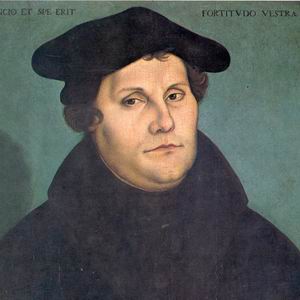 It was the power of God’s word, and the revelation therein, of being made righteous before God through faith in Jesus that brought Luther into a place of peace with God. Romans 1:17 convinced him that only through faith in Christ could a person become just before God and find peace in their soul. This was revolutionary, for the church taught that one was saved through submission to the church and by receiving the sacraments from an ordained priesthood. The mystics, who were generally loyal to the institutional church and its doctrines, taught that one could only find peace with God through a mystical union of the soul with God obtained through a series of religious exercises and intense suffering.
Luther, being also the parish priest in Wittenberg, preached these revolutionary doctrines of salvation through faith alone from the pulpit as well as in the classroom. It was not long before his sermons were being printed and distributed throughout Germany, arousing great interest among the masses and great consternation with church officials. Ordered by his superiors to stop preaching and publishing these “heretical” doctrines, Luther had to decide if he would obey God or man. By now it was clear to him that his source of authority was the word of God and that he must preach it even if the devil and all the world opposed him.
When he continued to preach and teach the truths he had learned from Scripture, he received notice from Rome of his excommunication and an order that all his books and tracts be confiscated and burned. He was later condemned as a heretic at the Diet of Worms and anyone knowing his whereabouts was instructed to inform the nearest authorities so that he could be apprehended.
Luther’s writings, however, gained such popularity with the masses that neither pope or emperor dared to try and apprehend him. Later in life, in explaining how he was able to succeed against such formidable opposition, Luther credited his success to the power of God’s word. He said,
I only urged, preached, and declared God’s Word, nothing else. And yet while I was asleep, the Word inflicted greater injury on popery than prince or emperor ever did. I did nothing; the Word did everything.1
Confronting An Errant Spirituality With Scripture
Luther confronted, not only erroneous doctrine and the church hierarchy with Scripture, but also an errant spirituality that had become divorced from Scripture. While Luther was hiding in the Castle of Wartburg after his condemnation at the Diet of Worms, two individuals from Zwickau, known as the Zwickau Prophets, came to Wittenberg claiming to have had divine visions, dreams, and visits from the angel Gabriel. They wowed the people with their revelations and began taking the reform movement in Wittenberg in a radical direction that was not compatible with Scripture. Melanchthon and Luther’s other colleagues were unable to stop them.
When Luther heard what was happening, he put his life at risk and returned to Wittenberg. He preached eight sermons for eight days in succession in which he challenged with Scripture the visions and dreams of the prophets from Zwickau. Schaff says, “In plain, clear, strong, scriptural language, he refuted the errors without naming the errorists.”2 It soon became obvious to the populace that the two men were in error. The prophets, realizing they had lost the day, departed Wittenberg and never returned. One of Luther’s colleagues wrote to the Elector of that region,
Oh what joy has Dr. Martin’s return spread among us. His words, through divine mercy, are bringing back every day misguided people into the way of truth. It is as clear as the sun, that the Spirit of God is in him, and that he returned to Wittenberg by His special providence.3
Luther was open to supernatural, mystical experiences, but he subjugated his experiences to Scripture. For example, while in intense prayer one day, Luther suddenly saw a bright vision on the wall of Jesus, with the wounds of His passion, looking upon him. At first he thought it was a heavenly revelation but changed his mind because the person in the vision was not compatible with the Christ he knew from Scripture. He said,
Therefore I spoke to the vision thus: “Avoid you, confounded devil. I know no other Christ than He who was crucified, and who in His Word is presented unto me.” Whereupon the image vanished, clearly demonstrating from whom it came.4
Opposing Miracle Claims for Monetary Gain
Luther also challenged the Roman Church hierarchy for using miracle claims within monasticism and mysticism for monetary gain. Luther believed in miracles, but miracles must be in line with Scripture. In his estimation, many of the miracle claims within monasticism and mysticism did not meet the test of Biblical truth.
For example, in his book, To the Christian Nobility of the German Nation, Luther blasted church leaders for exaggerating the truth and promoting extra-Biblical miracles, such as certain hosts (communion wafers) bleeding and the miraculous creation of a statue of the Virgin Mary. Great crowds flocked to the places where these miracles supposedly occurred and much money was collected in offerings, in fees for masses, and from the sale of amulets and indulgences. Luther was incensed and thundered his rebuke,
Oh, what a terrible and heavy reckoning those bishops will have to give who permit this devilish deceit and profit by it. They should be the first to prevent it and yet they regard it all as a godly and holy thing. If they had read the Scripture as well as the damnable canon law, they would know how to deal with this matter! The miracles that happen in these places prove nothing, for the evil spirit can also work miracles, as Christ has told us in Matt. 24:24.
Luther’s Personal Faith in the Miraculous
Luther believed in miracles and saw miraculous answers to his prayers. He even formulated a divine healing service for Lutheran congregations. When his friend and colleague, Philip Melanchthon, was dying, Luther prayed over him, quoting all the Scriptures he could call to mind related to faith and healing. He then took Melanchthon by the hand and said, “Be of good courage Philip, you shall not die.” Melanchthon immediately revived and soon regained his health. He later said, “I should have been a dead man had I not been recalled from death itself by the coming of Luther.”5 The noted historian, Philip Schaff said, “He lived and moved in the heart of the Scriptures; and this was the secret of his strength.”6 Luther himself once said,
What greater wickedness, what greater contempt of God is there than not believing His promise? For what is this but to make God a liar or to doubt that He is truthful?—that is, to ascribe truthfulness to one’s self but lying and vanity to God.7
Luther & Anti-Semitism
Luther made unfortunate and inexcusable statements about the Jews of his day, which must be recognized and rejected by modern believers. However, the attempt by some contemporary writers to paint Luther as a primary cause of modern anti-Semitism and a reason for Jewish hatred in Nazi Germany goes beyond the historical record and may well be fueled by a sinister attempt to discredit Luther and, thereby, rob the Church of the vital and critical contributions he made.
Luther’s Love & Support for the Jewish People
Luther once stated that he admired—indeed, loved—the Jewish people. In his book of 1523 entitled That Jesus Christ Was Born a Jew, he attempted to win Jews to the gospel message of Christ, and in that context he also advocated humane treatment for them in the face of widespread anti-Semitism throughout Europe. He reminded Christians that Jesus Christ was born a Jew and that “we in turn ought to treat the Jews in a brotherly fashion.” Excommunicated and persecuted by the medieval church, Luther obviously identified with the Jews in their suffering. He wrote,
The Jews are blood-relations of our Lord; if it were proper to boast of flesh and blood, the Jews belong more to Christ than we. I beg, therefore, my dear Papist, if you become tired of abusing me as a heretic, that you begin to revile me as a Jew.
Luther continued to support the baptized Jew, Bernard, when he fell on hard times in 1531 and had to leave his family because of his debt. Luther and Melanchthon each cared for one of his children and continued this support for many years. Even though it posed a financial hardship for him, Luther said he did it because “he felt obligated to do good to Bernard as a member of the Jewish church.” Bernard also served as a messenger for Luther on numerous occasions.
Luther reported on one occasion that three rabbis visited him because they had heard of his interest in the Hebrew language and hoped to reach an agreement with him. However, they rejected Luther’s argument that the messianic prophecies of the Old Testament point to Jesus Christ. Nonetheless, because Jews were forbidden to travel in that part of Germany, Luther gave them a letter of introduction in which he asked “for Christ’s sake” that they be granted free passage. Because of his mention of Christ, they refrained from using the letter.
Luther Encounters Anti-Christian Polemics
Luther was eventually attacked by Jewish writers who vilified him for his attempts to win them to Christ. His writings such as, That Jesus Christ Was Born a Jew, were maligned and held up to ridicule. Luther’s response was, at first, mild. He replied, “For the sake of the crucified Jew, whom no one will take from me, I gladly wanted to do my best for you Jews, except that you abused my favor and hardened your hearts.”
Luther’s attitude toward the Jews obviously hardened as he entered more extensive dialogues and debates with Jewish rabbis on the Scriptures and the Messiah. Luther had hoped that, through these debates, the Jews would be won to faith in Christ. Through these debates, however, Luther was exposed to rabbinical writings that maligned Jesus and Christianity. He was horrified to read of Jesus being vilified as the illegitimate son of a whore and a kabbalistic magician who was exposed for his trickery and put to death. Having been taught from childhood to reverence and honor God and Jesus and Mary, he responded with both anger and fear. He wrote,
I am still praying daily and I duck under the shelter of the Son of God. I hold Him and honor Him as my Lord, to whom I must run and flee when the devil, sin or other misfortune threatens me, for He is my shelter, as wide as heaven and earth, and my mother hen under whom I crawl from God’s wrath. Therefore, I cannot have any fellowship or patience with obstinate blasphemers and those who defame this dear Savior.
When he found the rabbis to be obstinate in their positions, he finally gave up any hope of the Jews coming to Christ en masse. And with them entertaining such blasphemous views of Christ, he gave up any hope of Christians and Jews being able to live together in harmony.
Although Luther should have responded in the spirit of the One he proclaimed (who had prayed for His tormenters at the cross, “Father forgive them, they know not what they do”) he, instead, reacted with anger and fury and wrote a treatise entitled On the Jews and Their Lies. The word Lies in the title referred to the Jewish diatribes against Jesus, Mary, and the Triune God. The third section of this book contains the diatribes that he fulminated against the Jewish people.
The Significance of the Religious & Social Setting
Without excusing Luther, we must, nonetheless, understand that the medieval period was not a time of civility and tolerance. The medieval Roman Church, of which Luther was a part, imprisoned, tortured, and put to death those that deviated from the official teachings of that church. Luther himself was declared a heretic and excommunicated because of his teachings on justification by faith and the priesthood of all believers. But for God’s help, he too would have been imprisoned and put to death. Not having—or desiring—material weapons with which to fight his enemies, Luther said he sought to overwhelm them with words. He thus used logic, ridicule, compassion, laments, threats, satire, hyperbole, and every form of speech in making his arguments. He did not hold back but unleashed a torrent of words against the “Romanists,” the “Turks,” the “Anabaptists,” the “Jews” and all that he considered to be enemies of the gospel of Christ. Those on the other side used the same sort of abusive language against him.
Yes, On the Jews and Their Lies contains abusive and violent language; but Luther used the same sort of language against the Catholics, the Anabaptists and even his own German people whom he called “brutal, furious savages” who were spiritually “deaf, blind, and obdurate of heart.” His recommendation that the Jews be expelled from Germany was his same stance toward Catholics, Turks (Muslims), and Anabaptists. In this he was consistent with the idea, he retained from Roman Catholicism, of a territorial state church that holds the right and responsibility to forcefully maintain the purity of the faith in a particular region. It was smaller sects, such as the Anabaptists and Quakers, who championed the cause of voluntary congregations, free to function in an open environment without coercion by a state church. Such an idea of openness and tolerance was, however, new and novel to the medieval period and it was one in which Luther fell short in his battles with the Jews and Anabaptists.
Respecting Luther Despite His Shortcomings
The eminent Lutheran scholar, Martin Brect, points out that Luther’s invectives against the Jews were not based on race but on a disagreement in theology. He says that Luther, therefore, “was not involved with later racial anti-Semitism.”8 Nonetheless, Luther’s misguided invectives had the unfortunate result of him becoming identified with the church fathers of anti-Semitism and they provided fodder for modern anti-Semites who cloaked their hatred of the Jews in the authority of Luther.
While we acknowledge Luther’s failures, we must not fall into the trap of rejecting him and everything he stood for. That would be tragic. On their website (www.lcms.org), The Lutheran Church, Missouri Synod has graciously and wisely denounced Luther’s anti-Jewish invectives while recognizing the vital and critical contributions he has made to all of Christendom. They also point out Luther’s conciliatory tone in his last sermon when he said of the Jews, “We want to treat them with Christian love and to pray for them, so that they might become converted and would receive the Lord.”
In 1545, about one year before his death, Luther revised a hymn that had blamed the Jews for the death of Christ (a common claim by the medieval church), removing the invective against the Jews. Luther’s revised version reads,
T’was our great sins and misdeeds gross
Nailed Jesus, God’s true Son, to the cross.
Thus you, poor Judas, we dare not blame,
Nor the band of Jews; ours is the shame.
If Luther were living today in this more tolerant and civil era, and with the Jews back in their homeland, he might well be one of their biggest supporters.
Reformation Opened the Way For Revival
It was no coincidence that the Reformation, with its emphasis on Scripture, came on the heels of the invention of the printing press, with the Bible being the first book to be printed. For the first time in history God’s word could be mass-produced and made available to the common people. With the word of God now available on a scale hitherto unknown, Luther and other reformers emphasized education for the masses, primarily so they could read the Bible. They saw getting God’s word into the hands and hearts of the people as the key to on-going reformation throughout the Church. The Reformation and its emphases also opened the way for all the great revivals of the modern era.
The invention of the printing press and Luther’s success in directing the church’s attention back to Scripture did more to change the course of history than any events since the birth of Christ and the conversion of the apostle Paul. Even secular historians understand this and Time Warner, in the year 2000, named Gutenberg’s invention of the printing press and Luther’s instigation of the Reformation as the number 1 and number 3 most important events of the past millennia.
PR
Notes
1 Philip Schaff, vol. 7 of History of the Christian Church, 8 vols. (Grand Rapids: Eerdmans, 1910), 389.
2 Schaff, vol. 6 of History of the Christian Church, 388.
3 Schaff, vol. 6 of History of the Christian Church, 390.
4 Martin Luther, Table Talk (Gainsville, FL: Bridge-Logos, 2004), 138-39.
5 A.J. Gordon, The Ministry of Healing, (Harrisburg: Christian Publ., 1961), 94.
6 Schaff, vol. 7 of History of the Christian Church, 295.
7 Martin Luther, “The Freedom Of A Christian,” Three Treatises (Philadelphia: Fortress Press, 1957), 285.
8 Martin Brect, James L. Schaaf, trans., Martin Luther: The Preservation of the Church 1532-1546 (Minneapolis: Fortress Press, 1993), 351.