Veli-Matti Kärkkäinen, Trinity and Revelation, A Constructive Christian Theology for the Pluralistic World, Volume 2 (Grand Rapids, MI: William B. Eerdmans Publishing Company, 2014), 486 pages, ISBN 9780802868541.
This is the second volume in Kärkkäinen’s five-volume series developing a constructive Christian theology. Constructive theologies differ from systematic theologies by their use of a coherentist model of truth (in contrast to a foundationalist model of truth) and their fuller engagement with different faith traditions both within Christianity as well as without. The guiding assumption for constructive theologies is that other faith traditions contain information about God because God, whether through common grace or the direct work of the Holy Spirit, connects, influences, or reveals himself to people throughout the world. By engaging other traditions, theologians purposely avoid the solipsism and biases inherent to their own context and are challenged to think of new ways to understand and articulate their faith. The result of reflective thought on this process is the creation of a theology that is both contemporary and comprehensive.
Despite how some colonizing Christians behaved, God’s revelation truly does liberate.
The book is divided into two parts. Part 1, “Triune Revelation,” discusses the Christian doctrine of revelation, namely, how God communicates in Scripture and nature. Full attention is paid to the trinitarian grounds of revelation, with treatments on revelation through the Father, Christ, and the Holy Spirit. But the engagement goes beyond traditional issues of whether God communicates analogically or univocally. Kärkkäinen takes on the more difficult question of whether revelation can be perceived via historical events. He suggests a middle path between history as completely objective or completely subjective. He asserts that God’s revelation liberates, despite how Christian missionaries may have behaved in the Third World. Effort is made to explain how other religious traditions understand their scriptures and to see how that understanding illuminates, contrasts, and assists Christians in understanding their own scripture as containing divine revelation.
What is panentheism? While not all expressions of process theism (another term for panentheism) are the same, God is often understood in ways that differ significantly from classical theism and historic Christianity. Proponents of process theology believe that the future is open (not predetermined), they believe God is changed by interaction with creation, and they believe evolutionary theory is compatible with God’s continuous process of saving activity in the world.
Part 2, “Triune God,” comprises about two-thirds of the book. The opening chapters explain how to talk about God in a secular world and relate Kärkkäinen’s defense of classical panentheism as the model to understand God’s relationship with the creation. After discussing the character of intra-trinity relations and how God’s traits relate to his nature, Kärkkäinen uses the concept of hospitality as a model to characterize God’s behavior. Kärkkäinen contends that hospitality fits with the trinity’s mutual relationality, radical equality, and community in diversity. As worthy of an insight as this is, I think Kärkkäinen stumbles when he tries to apply hospitality to social behavior. For example, he writes, citing E. Johnson, “The triune God constantly sustains life and resists destructive powers of non-being and violence” (321). Certainly, all Christians agree that God is the creator and sustainer of life. But is it true that God resists violence? It seems to me that such a statement suggests that all violence is wrong in marked contrast with the numerous references about God’s violence against evil doers found in the Old and New Testaments. Perhaps, I am being too hard on Kärkkäinen. But these types of grand theological abstractions can be found elsewhere (see 328-9). I understand that theologians, like professors of theoretical physics, attempt to find the overarching principles that at times ignore confounding details. However, the testimony of Scripture should always be consulted to ensure that we have not simplified our abstractions too much.
I appreciated the author’s sincere and transparent effort to foster true dialogue with other religions. I think his goal is proper both in method and goal. He correctly shuns oversimplification of other religions as well avoiding conflicts that are more apparent than real. I think readers will benefit from reading his reviews of the theologies of Islam, Hinduism and Buddhism as Kärkkäinen shows where Christians differ and areas where we may not.
There is much to consider in these pages.
I do think that God has revealed himself to other people and faiths, as Kärkkäinen suggests, assuming I understand him correctly. I think any theology of natural revelation must affirm such a view. My concern, however, with this line of thinking is that Kärkkäinen did not consider the possibility that Satan also reveals. If revelation is merely communication, then could we not also say that non-Christian religions can express the revelation of the demonic? This distinction is important because it would suggest that other religions are not just wrong in what they lack (theological privation) but also that they may have elements of positive error deliberately distorting the truth (i.e. the doctrine of demons). Unfortunately, Kärkkäinen did not engage that question, but I understand that demons will be addressed in volume 5.
In sum, this book is challenging. The author does not just repackage ideas that have been heard before, but carefully engaging issues from perspectives not typically addressed by systematic theologians. Readers should have a fair amount of theological background to fully appreciate and evaluate Kärkkäinen’s ideas. But make no mistake, there is much to consider in these pages.
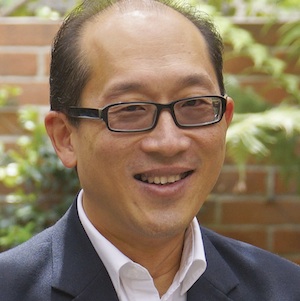
Reviewed by Stephen M. Vantassel
Publisher’s page: https://www.eerdmans.com/Products/6854/trinity-and-revelation.aspx
Preview Trinity and Revelation: https://books.google.com/books/about/Trinity_and_Revelation.html?id=aybpAgAAQBAJ
See also the review of Christ and Reconciliation, Volume 1 of the Constructive Christian Theology for the Pluralistic World series: /veli-matti-Kärkkäinen-christ-and-reconciliation/
Read Stephen M. Vantassel’s reviews of all five books in Veli-Matti Kärkkäinen’s series A Constructive Christian Theology for the Pluralistic World:
Volume 1: Christ and Reconciliation
Volume 2: Trinity and Revelation
Volume 3: Creation and Humanity
Volume 4: Spirit and Salvation
Volume 5: Hope and Community