To begin, and in the interest of full disclosure, I have previously written on the question of the identification and relation of the Triune God and Allah being considered by Duane Litfin. (/do-all-abrahams-children-worship-abrahams-god/.) In that article I essentially argue that the true and living God is not contained or controlled by any religion (Isaiah 66:1 and Acts 7:49). Why should it be considered inconceivable that God is infinitely greater than any religion’s perception and presentation of divine reality and identity? Yet I am a Christian. I unreservedly confess my faith in Jesus Christ as the Son of God and as Lord and Savior (John 14:6; Romans 10:9). For me, the question is not to which religion does God belong but who among us belongs to God and in what way. According to the Bible, in some sense all creation and every creature belongs to the Creator God (Psalm 24:1; 1 Corinthians 10:26). However, according to John’s Gospel the Church belongs to Christ as the bride belongs to the groom (3:29). Christians belong to God as those who have heard God’s word in Christ (8:47). And Christians belong to Christ as the Father’s gift to him; therefore, Christ gives the Spirit to them to make known the otherwise unfathomable depths of divine mysteries (16:15). In my estimation, Christians can (and should) consistently affirm that God isn’t the exclusive property of any particular religion and also that God is definitively and decisively made known only in Jesus Christ as Lord and Savior.
Jerusalem, seen from the roof terrace of the Austrian Hospice of the Holy Family in the Muslim Quarter of old Jerusalem, looking towards the south. In the foreground is the silver dome of the Armenian Catholic chapel, “Our Lady of the Spasm,” the fourth station of the Via Dolorosa. In the background, left side, the golden Dome of the Rock. Image: Justin McIntosh / Wikimedia Commons.
The scandal of Jesus cannot be avoided.
Second, I approach the present conversation from a context informed by the work of Amos Yong and Miroslav Volf. Yong is a Pentecostal theologian and Volf has a Pentecostal background. The thought of Yong and Volf on this matter can be seen together in Yong’s review of Volf’s Allah: A Christian Response (/miroslav-volf-allah/). Volf dedicated this book to his father, a Pentecostal pastor who taught him that Christians and Muslims worship the same God—a position Volf eventually came to recognize as exceptional. Volf himself also affirms that positive assessment, while noting that only Christians know God as the Father of Jesus and as Trinity, and then explores the political, social, and ethical implications of that claim. Yong appreciatively notes the theological and philosophical sophistication and subtlety of Volf’s work. However, he suggests that likely neither Christians nor Muslims will be satisfied with the outcome, and that the scandal of Jesus cannot be avoided. (Interestingly, Yong has himself sometimes been charged, although not entirely fairly, in my opinion, with attempting to belay debate on the controversial issue of Christ’s identity.) What Yong finds most mentionable about Volf’s treatment is Volf’s decision to avoid soteriological issues, or, in other words, the question of salvation. (Again, and interestingly, Yong has repeatedly complained that classic theology of religions categories tend to over focus on soteriology!) In the end Yong praises Allah: A Christian Response, and proposes that it could have immense significance for Pentecostals.
Whether Christians and Muslims worship the same God or not is substantively the wrong question. And even if it weren’t, it’s almost impossible to answer to nearly anyone’s satisfaction.
Now let’s turn directly to Duane Litfin’s “The Real Theological Issue Between Christians and Muslims: It’s not about a different God, but a different Jesus”. This is well thought out and well written work. Litfin does an excellent job of lifting up the complexities and intricacies of the topic, and of refocusing attention where it belongs—on Jesus Christ. Basically, Litfin argues that whether Christians and Muslims worship the same God or not is substantively the wrong question. And even if it weren’t, it’s almost impossible to answer to nearly anyone’s satisfaction. Rather, he says, we should focus our efforts on the nature of the gospel as the all-important point. Of course, this avenue turns attention to the person and work of Jesus Christ, and their significance. To me, this is the greatest strength of Litfin’s comments. In fact, in my aforementioned article I conclude that the all-important issue, suggesting everything else becomes secondary and diversionary, is not whether we worship the same God but what we do with Jesus Christ. And Litfin goes to some trouble to accentuate the missiological and theological implications of his position. Specifically, he doesn’t wish to handicap efforts at mutual understanding and dialogue between Christian and Muslims as he nevertheless holds up the importance of evangelistic priorities. Accordingly, I’d like to register upfront that I am largely in agreement with much of what Litfin says.
The question is not to which religion does God belong but who among us belongs to God and in what way.
That being said, I suggest that Litfin’s efforts to simplify the current theological debate about God and Allah by re-centering on the gospel of Jesus Christ may be only partially successful. First, as already noted, they are successful in turning our attention to Jesus Christ as the definitive and decisive issue for Christians. Second, they may not be fully successful in simplifying the debate after all. For example, and most obviously, I think, cannot the same kind of mindboggling complexities apply to (mis)understandings of Jesus as well? If it is challenging to think and talk about the identity and nature of God, isn’t it, if anything, even more challenging to think and talk about the identity and nature of the Son of God? The Incarnation is an incredibly, and perhaps ultimately, indescribably, profound truth. What about the atonement? Even affirming Christians don’t agree on how to understand it. I’m not sure but I think Litfin is assuming his own (and, for the most part, mine) Christology as the starting point. In reality, there are differing understandings among Christians regarding Christ.
Even if we assume a generally shared Christology among at least most Christians, it is not as if Muslims don’t believe anything about Jesus. Neither we nor they start with a blank slate.
However, even if we assume a generally shared Christology among at least most Christians, it is not as if Muslims don’t believe anything about Jesus. Neither we nor they start with a blank slate here. In fact, they do have strong beliefs about him. The Quran, which mentions Jesus (or Isa) by name in 93 verses, teaches that Jesus is the virgin-born son of Mary, and thus without sin, a great prophet and teacher, a worker of miracles, and a holy man who is sometimes called the Word of God or the Spirit of God. The Quran also teaches that Jesus will come back in the last day to defeat the Antichrist.[1] More amazingly, there are many Muslims who go even farther. I’ve a Muslim friend whose father was raised as a Christian in Lebanon. Oddly enough, after coming to the United States he converted to Islam, in part through marriage to an African-American Muslim woman. Significantly, he raised his daughter to know that when he became a Muslim he did not see himself as leaving Jesus Christ. Of course, issues of syncretism come up. And I’d be the first to suggest that the Jesus of the Quran clearly seems to be a different Jesus than the Jesus of the New Testament—thus inevitably entailing a different gospel (Galatians 1:6-10). And Christians simply cannot compromise for a different Jesus or a different gospel (2 Corinthians 11:4). Yet don’t we well know that Jesus is capable of appearing in a different form, a form unrecognizable even to his own disciples (Mark 16:12)? Can it be that the form of the true Jesus somehow shows through the diminished and distorted (in my opinion) version in Islam? In seminary, I had a fellow student who had begun a search for Jesus when reading about Jesus in the Quran that eventually led him to accept the Jesus of the New Testament. Isn’t the Holy Spirit at work in such cases? If so, what are we to make of that possibility? Remember the woman at the well in John 4? Didn’t Jesus choose to take her Samaritan religion’s misunderstanding of the coming messiah up to the level of real Christian faith and truth? Was she wrong about who and what the messiah meant? Undoubtedly! Wasn’t Jesus able to reach her anyway?
Litfin’s “Real Theological Issue” does re-center attention on Jesus Christ. That’s accurate and appropriate. But no, it doesn’t necessarily simplify the conversation. In my tradition we frequently quote Jesus’ words in Luke 11:23:“Whoever is not with me is against me.” Well and good. But earlier in the same gospel Jesus also said “whoever is not against you is for you” (v. 50). Mark’s Gospel has it, “for whoever is not against us is for us” (9:40). Seeking to understand and discuss, either theologically or missiologically, the relation of Jesus to individuals or groups who don’t share our understanding of or relation to Jesus is a complex, intricate, nuanced, and vitally important process. But it isn’t easy or simple.
Be authentic, transparent, compassionate Christians always, everywhere, with everyone.
How to move forward? First, we must be willing to tackle tough questions. Second, we may have to take an unpopular (that is, a minority) stance if our quest for truth and the strength of our convictions lead us there. Third, become agents for change. Fourth, be authentic, transparent, compassionate Christians always, everywhere, with everyone.
Tony Richie, D.Min, Ph.D., is missionary teacher at SEMISUD (Quito, Ecuador) and adjunct professor at the Pentecostal Theological Seminary (Cleveland, TN). Dr. Richie is an Ordained Bishop in the Church of God, and Senior Pastor at New Harvest in Knoxville, TN. He has served the Society for Pentecostal Studies as Ecumenical Studies Interest Group Leader and is currently Liaison to the Interfaith Relations Commission of the National Council of Churches (USA), and represents Pentecostals with Interreligious Dialogue and Cooperation of the World Council of Churches and the Commission of the Churches on International Affairs. He is the author of Speaking by the Spirit: A Pentecostal Model for Interreligious Dialogue (Emeth Press, 2011) and Toward a Pentecostal Theology of Religions: Encountering Cornelius Today (CPT Press, 2013) as well as several journal articles and books chapters on Pentecostal theology and experience.
The Kingdom and the Power. The Pneuma Review has received permission to reprint chapters from this important work that asks: “Are Healing and the Spiritual Gifts Used by Jesus and the Early Church Meant for the Church Today?” The Spring 2007 issue will continue the article “The Purpose of Signs and Wonders in the…
Ralph Martin, Will Many Be Saved? What Vatican II Actually Teaches and Its Implications for the New Evangelization (Grand Rapids and Cambridge, UK: William B. Eerdmans Publishing Company, 2012), xvi + 316 pages, ISBN 9780802868879. Ralph Martin should be no stranger to those with some historical experience in or perspective on the charismatic renewal, especially…
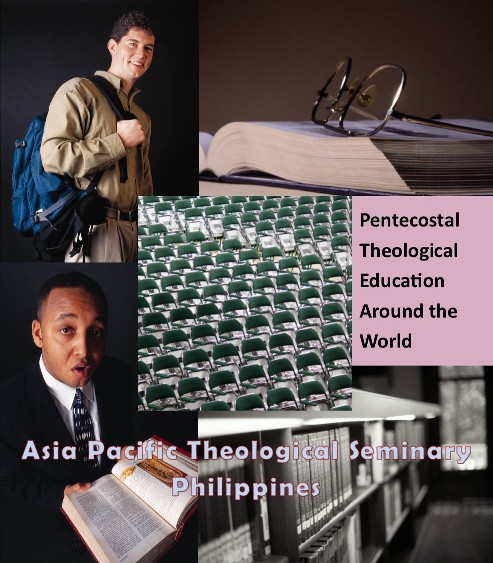
Asia Pacific Theological Seminary What does Spirit-filled education look like around the world? Dave Johnson, part of the faculty and leadership at Asia Pacific Theological Seminary, introduces us to the school and the state of education in the Asia Pacific region of the world. Part of the Pentecostal Theological Education Around the World series from…
Mark Driscoll and Gerry Breshears, Doctrine: What Christians Should Believe (Wheaton, IL: Crossway, 2010), 464 pages, ISBN 9781433506253. Mark Driscoll, founding pastor of Mars Hill Church, and Gerry Breshears, professor of theology at Western Seminary, describe the foundational doctrines and therein the membership requirements of the Mars Hill Church. They divide the book into…
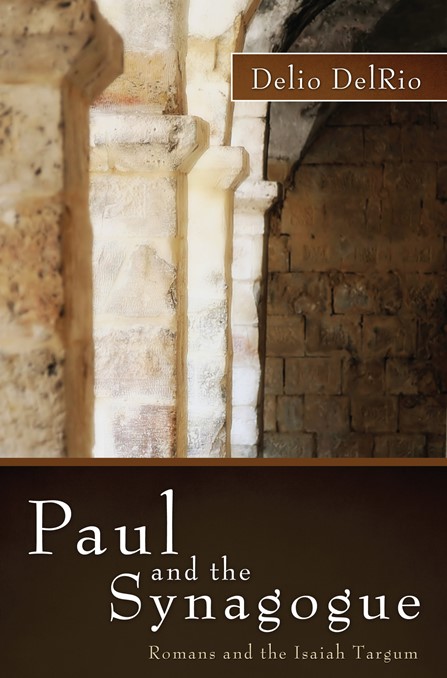
Delio DelRio, Paul and the Synagogue: Romans and the Isaiah Targum (Eugene, OR: Wipf & Stock, 2013), 156 pages. This book explores how insights from the field of Targumic studies can help us understand some of Paul’s exegetical moves in Romans. It takes the form of an analysis of Paul’s use of Isaiah. DelRio was…
We may think of God as the leader of a cosmic community.1 But God is not encountered only in spectacular and physically improbable or counter-intuitive historical events; he is also detected in his manifestation of human experience. One of the distinctive features of the NT documents is the description afforded the interaction of the God,…