Listening for God’s Voice and Heart in Scripture: A conversation with Craig S. Keener

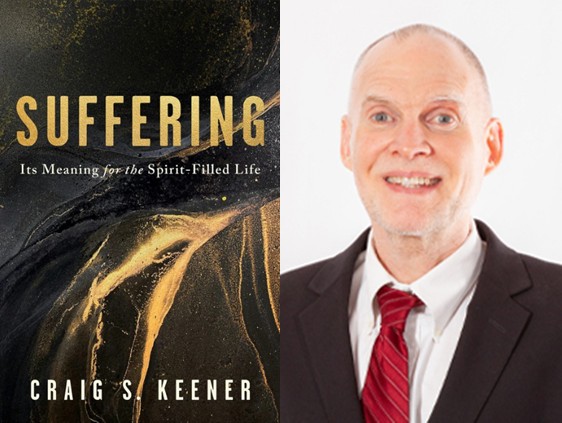
New Testament scholar Craig S. Keener speaks with PneumaReview.com about his new book, Spirit Hermeneutics.
PneumaReview.com: Please define for our readers what you mean by “Spirit Hermeneutics.â€
 Craig S. Keener: Spirit hermeneutics is listening for God’s voice and heart in Scripture. Obviously I do believe in doing our homework, exploring cultural background and understanding the context as best as we can. But at the end of the day, it’s not just an academic pursuit separated from life. We want to submit our lives to be transformed by Scripture’s message. Otherwise we’re like someone who sees their face in a mirror and goes off forgetting what they look like.
PneumaReview.com: One theme that you stress in the book is the importance of reading biblical texts in their contexts. In view of its importance why do you think that many Christians do not read the Bible this way?
PneumaReview.com: Why do Christians frequently have difficulty hearing God speak to them through the Bible?

Craig S. Keener: Some Christians don’t realize that this is partly what the Bible is for, but sometimes also we don’t recognize that God can speak to us in a lot of different ways. We should pray that we will hear Him, then read the Bible (in context, etc.) to see what we can learn about God and how He acts in real human situations. Some of those will surely relate to us and to the world we live in. Some passages do show us His heart more than others, or perhaps in more concentrated ways; we find that most clearly in the message of the gospel, the message about Jesus’s death and resurrection for us. What the Spirit speaks to us will be consistent with His heart as already revealed in the gospel; the Spirit helps activate that in our lives. (Of course, I am not saying that the Spirit does not guide us in day-to-day ways as well. But being grounded in Scripture helps us recognize His voice and His character.)
PneumaReview.com: Please give a couple of examples from Scripture to demonstrate that biblical texts are meant to address and have application to situations outside of their original context.
Craig S. Keener: For one example, continuing the above-mentioned topic: the Spirit tells Philip to run up to the chariot where the African court official is (Acts 8:29). That fits a consistent theme in the Book of Acts: the Spirit leads the church across cultural barriers. Ancient historians and biographers wrote to communicate accurate historical information, but information that was framed in a way that also taught moral, political, or even theological lessons. One lesson here should be pretty obvious from Luke’s inspired vantage point: we need to continue to depend on God, and God will lead us to cross cultural barriers to bring the gospel to others. Many of us live in communities where God has brought people from other cultures to us, some of them unevangelized in their homelands. Okay, that was just the first example that came to my mind; it might not actually be one of the examples in the book!

Jesus told his disciples that He had more things to tell them than they could bear at the moment (John 16:12). But He would send them the Spirit of truth who would continue to share with them the message He would hear from Jesus (16:13), just as Jesus shared whatever He heard from His Father (15:15). This promise wasn’t just for the disciples who heard Him that night; the gift of the Spirit is for all believers who are born from the Spirit (John 3:5; 7:37-39; 1 John 2:27; 3:24; 4:13). We can all expect to hear from the Spirit, and surely when we are reading the message that He authored in Scripture. So we can approach that task with faith. But just as God often surprised His people in the Bible, we can count on being surprised some time. God speaks in different ways to me than He speaks to my wife, but we each hear Him, and so we also learn from each other. It’s just important that we stay in touch with the God we read about in Scripture and His ways, because obviously not everybody who tells us, “God told me,†or, “The Bible says,†is speaking that accurately.
PneumaReview.com: One theological viewpoint that you touch on in Spirit Hermeneutics is cessationism. Why do you say that cessationism is a post-biblical doctrine?
Craig S. Keener: The Bible nowhere teaches that spiritual gifts will cease. (The one text traditionally cited to support that, 1 Cor 13:8-10, in context actually indicates that the gifts are expected to continue until we see Christ face to face at his return!) Nor does the Bible offer any precedent for dividing its lists of gifts into those that will cease and those that will continue. The idea that the gifts will cease is a postbiblical idea. Ironically, the concern about gifts continuing after the closing of the canon is the fear that some might use prophecy to propound postbiblical doctrine. This is not, in my opinion, a legitimate use of the gift of prophecy. Yet cessationism is a postbiblical doctrine. In other words, it commits the very error it was designed to keep others from committing.
PneumaReview.com: Also, related to the ministry of the Holy Spirit you say that many Christians, including Pentecostals and charismatics, are doctrinal continuationists but practical cessationists. Please explain what you mean and why you think that this is so.
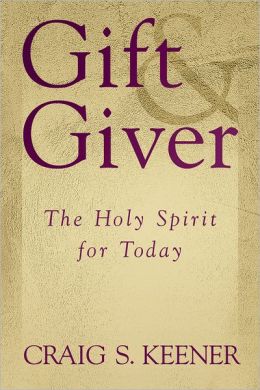
Read Wolfgang Vondey’s review of Gift & Giver: The Holy Spirit for Today.
Craig S. Keener: We should welcome all the gifts that the Lord places in Christ’s body, not just the gifts that some other churches have discarded. (While a body that amputates valuable members is not whole, neither is a collection of amputated members. God’s gifts are good, whether those gifts are spectacular in our eyes or not.) But even regarding gifts traditionally associated with Pentecostals and charismatics, many of our churches rarely experience healing, prophecy, and so forth. When the Sanhedrin tried to shut down signs in the name of Jesus, the believers prayed in Acts 4: “And now, Lord, look at their threats, and grant to your servants to speak your word with all boldness, while you stretch out your hand to heal, and signs and wonders are performed through the name of your holy servant Jesus.†Jesus encouraged his disciples to pray for the Holy Spirit (Luke 11:13). Maybe many of our churches need to call on the Lord with renewed confidence to stir us afresh. Prophecies, healings and the like are not the only signs of the Spirit’s activity by any means. But if we are more concerned about respectability than celebrating God’s gifts, something is wrong. Maybe the primary place for this belongs in smaller groups, which is mostly what the early churches were, except for the Jerusalem megachurch that had access to meet in the temple. The house churches were groups of maybe 20-50 people, but each brought gifts, and far from prophecy scaring off nonbelieving visitors, it was meant to reveal the secrets of their hearts and bring them to the faith. I used to see that in action at an Ohio church named High Mill back around 1977-78 (before I went away to college), where it regularly brought people to faith. Well, I am spending too much of my space on this one question. We don’t all need all the gifts, but we need to welcome the gifts more.
PneumaReview.com: In the book you have a section about Global Readings. Please tell our readers what Global Readings are and how they can be helpful in the interpretation of Scripture.

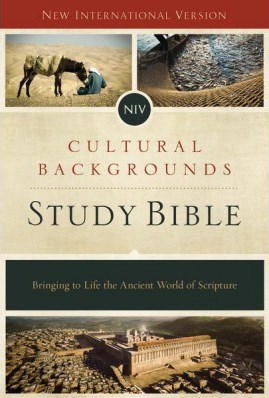 Now I know not everybody has these kinds of resources or even friends whose insights they can solicit. I do know that at least a lot of ancient Bible background is available because I wrote a background commentary (InterVarsity) and edited the NT part of the NIV Cultural Backgrounds Study Bible (Zondervan). These cannot answer every question one might think of, but they offer a start. One will be well-served so long as one thinks cross-culturally; read the Bible the way you would read a message from another culture, because it is one. At the same time, read the Bible the way you would read about people like yourself, because they are people like we are and most of all, our God is the same God, the one hero throughout the Bible and all history.
PneumaReview.com: What steps can Bible schools and seminaries take to help equip their students to hear the Bible as a living book that speaks to God’s people today?
PR
Editors’ note: Special thanks to John Lathrop for his assistance with this interview.
Further Reading:

Rightly Understanding God’s Word, in 15 portions (published in The Pneuma Review from Spring 2003 through Spring 2006, with a new introduction added in Winter 2015).
An excerpt from the Introduction:
I arrange this course from the most basic principles to the more complex. Some students may find principles like “context†too basic and may wish to skip ahead. Before they do so, I encourage them to sample the context examples; many will be surprised how many songs, sermons, and popular sayings have taken texts out of their context. In other words, it is one thing to affirm that we believe in context; it is quite another to practice that skill consistently. I have supplied concrete examples to help us grapple with that reality and encourage us to apply our “belief†in context more rigorously. Context is essential because that is the way God inspired the Bible—not with random, isolated verses but with a continuous flow of thought to which those verses contribute.