

Pietists as Pentecostal Forerunners

Excerpts from the paper “The Petersens and the Silesian Kinderbeten Revival†by Eric Jonas Swensson.
Lutheranism is a tradition born out of a dispute within the Roman Catholic Church. The blooming of German Lutheran Pietism, 1675-1725, a period commencing with Phillip Jakob Spener’s Pia Desideria and ending with the death of his protégé August Hermann Francke, was a movement with less bloodshed than the Reformation, but nevertheless one of great upheaval. … Martin Brecht, one of the deans of German Pietist history, … said that he thought the future direction of Pietist studies would be how the Pietists were forerunners of the Pentecostal movement.

I found this really interesting, delightful in fact, because it is something I always suspected; however, this is significant because it was made by the main editor of Pietist studies. That Pietists were Pentecostal is not a recent discovery, it is actually basis of the charges against the Charismatic movement made nearly thirty years ago, one made in a book by a Lutheran historian, Dr Carter Lindberg, who said that the Spiritualists of the time of Luther, the Spener-Francke Pietists and the participants in the Lutheran Charismatic Revival were all cut from the same cloth.1 Lindberg’s book is interesting, but it is problematic. In my opinion he is correct in making the connections; however, it is obvious that it is an attempt to discredit both Pietism and Pentecostalism. Clearly there is much more work to be done on the subject, but it is work which may have to wait as there is very little interest in the subject by scholars of Lutheranism and little interest in anything involving Lutheranism outside of Lutherans. …
The Petersens

German historian and Pietist scholar Emmanuel Hirsch called Johann Wilhelm Petersen (1649-1727) and Johanna Eleonora Petersen (1644-1724) “two of the most fascinating representatives of Pietist fanatics.â€5 Johann studied theology, philosophy, and poetry at leading German universities Gießen, Rostock, Wittenberg, Leipzig and Jena. He was pastor at Hannover in 1677, was quickly made Superintendent and Hofprediger (court preacher) in Eutin (1678), in 1686 he returned to Rostock for the Doctor of Theology degree, in 1688 he returned to being a Superintendent until 1692 when he was in trouble again for his teachings. Besides being a “fanatic,†which of course, is all in the eyes of the beholder, Petersen was a respected man of letters who was a professor of poetry, which at that time meant teaching composition of poetry in Latin. Petersen was respected by intellectuals such as Leibniz, who suggested he write a long poem on the history of the world up to its consummation. The year 1692 proved to be the only time he was “fired†for his beliefs, and he spent the next thirty five years free to study, pray and write under the patronage of pious nobles. Peterson forms an important link between Spener and Radical Pietists for historians.6 Radicals were those who left the Church so they had some freedom to engage in speculative theology, and while they must be viewed individually, all were motivated by millennialism. Hans Schneider wrote, “In dealing with radical Pietism, it is impossible to miss the fact that the great significance eschatology was afforded in Pietism only increased in Pietism’s radical representatives. For some figures and groups, it almost became the focal point of their theology and piety.â€7
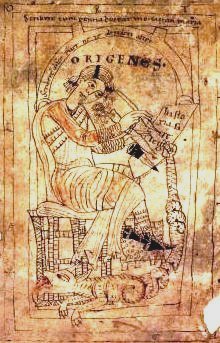
Both Petersens wrote autobiographies in which they document their biblical hermeneutics as well as interpreting dreams and visions.10 They were both Biblicists, which played no small part in their process, but they consistently explain how they come to their understanding through their reading of Scripture and how this is verified through experiential assurance. For example, they both wrote about receiving simultaneous, but independent messages and interpretation. Two instances of this in their writings, and both are times when they make rather large divergences in their beliefs. The first was in 1685 while they are in separate rooms of the house and both were studying Revelation. Schneider calls this their “discovery of chiliasm.†The second simultaneously, independent discovery was in 1694 when they came to believe that eternal damnation only meant “a very long timeâ€. Their views on apocatastasis were influenced by Jane Leade, but it is one that freethinkers of the past have put forward since Origen. …
Petersen, like many Pietists and Puritans of the time was interested in signs of revival in other countries. He was in contact with the Huguenot refugees after the Edict of Nantes in 1685. It was at this time that he came in contact with Jane Leade and the Philadelphians in England, etc. These, along with political events like the “Great War against the Turks†(1683-1699) and the approach of the year 1700, meant that Petersen was part of a large movement that was “scouring the heavens for signs.†Researchers such as Schneider see the concept of Philadelphianism as the most significant for Petersen and the radical Pietists.
The term “Philadelphia†appears again and again in Der Macht der Kinder. It symbolizes their theological and apocalyptical speculations concerning the unfolding of history …
The Silesian Kinderbeten
The “Praying Children†(Kinderbeten) touched off a larger revival which endured in Silesia for decades.15 The children resumed meeting for prayer in various areas at times of renewed trouble until the Prussian invasion of 1740. The Silesian revival spread and had direct influence on other Central European countries,16 especially Moravia and Bohemia. The children’s revival in one of Zinzendorf’s settlements for Moravian refugees two decades later was one of their two formative events,17 and those children had the story of the Silesian Kinderbeten told to them by adults who had experienced it (the Zinzendorf estates bordered Silesia and he had traveled through Silesia to learn more about the Awakening there). There are records of children’s revivals occurring in Europe through the 19th century, and there are, of course, contemporary reports around the world, but the Silesian Kinderbeten seems to have no direct predecessors and a case can be made that it is a more pure form of revival than any examined so far, i.e., it really hadn’t been organized or “gotten up†by any revivalists.
This unusual awakening of the Kinderbeten began in the mountains in 1707, creating a sensation as it spread, giving birth to numerous eyewitness accounts bearing remarkable similarity. A dozen of these appear in a report made in the spring of 1708, Gründliche Nachrichten, which are translated here with the material common to each conflated for the following:
It had begun in the Silesian mountains and thereafter gone forth from one place to another. By it the children show such an uncommon reverence and zeal that neither their parents nor anyone else are able to hold them away. Sometime after Christmas, around December 28, Holy Innocents Day, it began spreading through Silesia reaching five provinces in five days. The children, male and female, 4 to14 years in age, with an unusual devotion for their age, assemble themselves in a certain place to pray together with childlike devotion daily. They come together in the morning about 7, around Noon and around 4 [it was winter]. These poor, hard-pressed children, out of their own desire and without their being given some prescribed method, began to assemble to pray. Indeed, without any direction from any adult, not only were they not given help, but were even having to act against the commands of the religious and civil authorities, and against their parents, who made threats and laid hindrances in their way. The children initiated this within their villages, towns, and cities; however, when their gatherings were not tolerated, they chose to keep to themselves [outside the city] in open fields and under the open sky. They hold orderly prayer meetings, singing, reading the Bible; they fall on their knees, and at some places it is reported they fall on their faces praying and repenting. It had begun sparse but in many places it grew to 3,000-4000 people. The places have crowds of people coming to regard the unusual devotion of the tender children. The children kneel on the ground almost the whole time of the prayer meeting. They have chosen from their midst a reader for this purpose who a stands in the middle, reads aloud and leads not only the songs but also the prayers which are clearly audible from a distance.†[One fairly typical but more detailed description stated] “Ordinarily they sing seven songs, and a prayer comes between each one; they have a psalm of repentance, and they read a chapter from the Bible; in the end the children lift hands together upwards and sing [two more hymns]. The bystanders cannot regard it without being moved to tears hearing the prayers. Truly, one can hear the singing nearly a quarter mile away. They have among their prayers also one which is to ask that the dear God give their churches back to them. No one knows how the children would have gotten such a longing without the parents’ knowledge.18
The awakening exacerbated the controversy between Pietism and Lutheran Orthodoxy. Both churchly Lutheran Pietists and Radical Pietists saw the revival as a work of God and placed it within the broader framework of salvation history over what they perceived was a lukewarm reception by Lutheran Orthodoxy. Pietist’ millennialism saw the history of salvation in terms of continuous divine intervention, which led them to see the prayer revival as a sign of God’s activity in anticipation of the end of all things. Lutheran Orthodoxy simply declared Pietist conventicles a heresy, something the Lutheran Confessions does not do, ignoring what Luther himself wrote on the subject in his German Mass and Order Of Service, 1526, “But those who want to be Christians in earnest and who profess the gospel with hand and mouth should sign their names and meet alone in a house somewhere to pray, to read, to baptize, to receive the sacrament, and to do other Christian works.â€19 …
It is clear from the 1712 decree that Confessional Lutheranism was being protected whereas Pietism was labeled “foreign†and to be exterminated. The decree makes the charge that Pietists only “externally confess our Augsburg Confession,†which is serious because Pietists would have no legal protection without being recognized as Lutheran. The decree says the Pietists were “everywhere coming and going,†and that the authorities were serving notice that they would no longer allow this “to be propagated.â€22 The major allegations against the Pietists in this decree were that they taught direct inspiration (unmittelbare Eingebung), that one could become so perfect one did not need to go to Communion (Stillestand), that they had secret gatherings (heimliche Winkelversammlungen), and that there was going to be a new kingdom of Christ on earth (Chiliasmus). …
Prayer meetings were seen by Lutheran Orthodoxy and Pietist alike as having potential for change; Orthodoxy saw risk, Pietists saw the coming of Christ. It is hard for us today to imagine how controversial prayer meetings were, but they were the cause for the phrase “this pietistic evil†coined by Löscher, a phrase still used to disparage pietism.
The Silesian controversy illustrates the nature of religious conflict. It continues to this day in Lutheranism, i.e., Pietists have a bad name and all sorts of things are blamed on them, but it is emblematic of what happens in innumerable denominations. Something new happens, it begins to catch on, something about it is threatening to the status quo, charges are made, proponents of the new respond, it becomes personal, each round gets a little sharper, responses deal with characterizations and a generation later proponents of one side or another retail the characterizations made in the heat of a rhetorical battle as factual. The revivalists are hardly ever innocent, and often they work very hard to earn their enmity. No Christian appreciates being called, cold, dead, indifferent, or a Christian in name only, yet this is what happened over and over and it still happens today. It seems to be fuel to the fire. Beyond that, we would not want to give the impression that there is something unusual or untoward about defending Orthodoxy. No, it is most necessary. It is the way in which it is done, and of course, even how history understands the defense that is at issue.
Pentecostalism, both in its birth just over 100 years ago as well as in its current forms, shares things with both the Petersens and the revival that caught their attention. Obviously, they both placed a great emphasis on prayer. Both broke with the tradition in which they began though some or their innovations may simply have been a return to earlier traditions. The Petersens were forerunners of Pentecostalism in their emphasis on a desire for direct, unmediated contact with God. Pietists and Pentecostals share a negative view of the established Church and paid a price for their alienation, and at the same time benefited from associating with those who were drawn by the desire for new wine. It should be clear by now that this is a sword that cuts both ways. It would be better if we could have both freedom of religious conscience and a nuanced understanding towards those who hold to different beliefs, and at the same time seek faithful discernment about the core of religious orthodoxy and its necessity, if we are to teach Christian doctrine free from error.
Notes
1 Carter Lindberg, The Third Reformation? Charismatic Movements and the Lutheran Tradition. The Third Reformation? Charismatic Movements and the Lutheran Tradition (Macon: Mercer University Press, 1983).
5 Hans Schneider, German Radical Pietism (Landham, MD: Scarecrow Press, 2007), 21.
6 Ibid, 22.
7 Ibid, 6.
9 The following is from 1691: “I respect what the Holy Ghost has said through Paul and with reference to a woman’s dutiful submission I do not claim to teach in God’s community. But this I know very well: that there is no difference between man and woman (Gal. 3:28), God’s grace cannot be dampened nor be suppressed … Therefore the Holy Ghost has given witness (through Joel 2:28 and Acts 2:17-18) that not only the sons but also the daughters of Israel may prophesy and that the Lord will pour out his Spirit not only over the male but also over his female servants. And Paul himself who has forbidden women to teach in the community attributes the gift of prophecy to both men and women in that very Epistle (1 Cor. 2:4-5). Since the Lord in his grace has given me the gift of such illumination from his spirit, I do know my humble place in that community, but I do also know that I have received the Lord’s gift not in order to hide it but in order to make the most of it, to apply it for his honor and to the benefit of my neighbor. And I know that no one who with God’s blessing holds a just opinion will accuse me of teaching. This I leave to the judgment of God’s community for examination.â€(27). According to her own writings, Johanna was a spiritually awakened person who had visions and dreams. In her autobiography she tells of a dream with 24 paintings. The last one was of a man, woman and child, which she interpreted as the Trinity, using Hebrew to show that the Spirit as feminine: “I came before a door leading into a chamber with a great secret. But when I stood in front of this door, I had forgotten what to do so that the door would open, and I could see the secret in the room (in which there were a father, a mother and a son). Since I could not remember at all what I had seen in the picture, I became very sad and thought all troubles had been in vain. When I prayed with sighs to God, I remembered that I had seen a nightingale in the picture and that I learned from the picture to raise my voice like a nightingale. When I raised my voice louder and louder, the door opened and I felt very well … I have understood to a certain extent what the pictures meant and interpreted them: in the very same year the secret of the kingdom was revealed to my dear husband and to me, about which we had to suffer much and to descend deep into humility. With our confidence we had to ascend high to the Lord, who has stood by us in all our distress†(98). Johanna Eleonora Petersen eventually wrote fifteen to twenty volumes (15 according to her biographer and 20 according to her husband).
10 J.W. Petersen’s autobiography reported in 1719 that he had written 67 printed works and another 101 manuscripts.
15 See W. Reginald Ward, Protestant Evangelical Awakening (Cambridge: Cambridge University Press, 1992), 182.
16 For example, compare this report from a remote mountain community in the parish of Bern to reports of the Silesian revival thirty years earlier: “Children there banded together to live a devout and loving life and seek Jesus. To this end they meet every morning and evening for prayer and singing. Some have an astonishing gift of prayer which cannot be observed without tears. They keep excellent order…the wildest children are becoming quiet refined lambs. No one has tried to persuade them into doing it, and they have such an impulse that they can scarcely wait for evening.†Sammlung auserlesener Materien zum Bau des Reiches Gottes 5 (1736) 1044-5, as quoted in Ward, Protestant Evangelical Awakening, 182.
17 Pia Schmid, “Die Kindererweckung in Herrnhut im Jahre 1727 ist eines der Ereignisse in der Geschichte der Brüdergemeinde, das jedes Jahr mit einem eigenen Fest begangen wurde und wird: das Chorfest der Kinder, besonders der Mädchen am 17. August.†and “Die Kindererweckung in Herrnhut am 17. August 1727,†in Neue Aspekte der Zinzendorf-Forschung. Arbeiten zur Geschichte des Pietismus, Bd. 47, ed. Martin Brecht and Paul Peucker (Göttingen: Vandenhoeck & Ruprecht 2006), 115-133.
18 Anonymous. „Gründliche Nachrichten Von derer Evangelischen Schlesier Kinder Andacht/ Oder Denen/von denen Kindern in Schlesien/unter freyem Himmel/auf offenem Felde gehaltenen Bet=Stunden.“ (AFSt 121 A17). 2-4.
19 Martin Luther, Luther’s Works, (Philadelphia: Fortress Press, (2000, c1959) vol. 53, 52.
22 Gerhard Meyer, Gnadenfrei, (Hamburg: Ludwig Appel Verlag, 1943), 21–3.
Eric Jonas Swensson’s paper, “The Petersens and the Silesian Kinderbeten Revival,†was originally presented at the 2011 Society for Pentecostal Studies convention held in Memphis, Tennessee.









On the God's Word to Women Facebook group, EH said: "An interesting read!"
Thank you for this article. It illuminates a section of protestant history and revival not often seen by the average reader. Thank you especially for the description of the children's revival.
On the God’s Word to Women Facebook group, EH said: “An interesting read!”
Thank you for this article. It illuminates a section of protestant history and revival not often seen by the average reader. Thank you especially for the description of the children’s revival.
Very interesting….