In this chapter from the Rightly Understanding God’s Word series, Craig S. Keener continues with a study of laws in the Bible, Biblical prayer and songs, proverbs, and romance literature.
Biblical laws have much to teach us about justice, even if we need to take into account the culture and era of history they addressed. Thus God informs Israel that no other nation has such righteous laws as they do (Deut 4:8) and the psalmist celebrates and meditates continually on God’s law (Ps 119:97).
The law remains good and useful for ethical teaching, provided we use it properly.
Some laws, like the ten commandments, are stated largely as transcultural principles; it is also difficult to find genuine parallels to them in other ancient Near Eastern legal collections. Most laws, however, addressed ancient Israel as civil laws for how Israel’s society should work; these were addressed specifically to an ancient Near Eastern framework, and we need to think carefully when we look for appropriate analogies in how to apply them today.
Ancient Near Eastern law set the tone for which issues had to be addressed; Israel’s laws addressed many of the same issues as Mesopotamian law. The Code of Hammurabi and other legal collections addressed ear-boring (Ex 21:6); debt-slavery (21:7); the treatment of enslaved captives (21:9); causing a miscarriage (21:22); eye for an eye and tooth for a tooth (21:23-25); negligence regarding an ox (21:28-36); brideprice (22:16-17); local responsibility for bloodguilt there (Deut 21:9-10); and so forth.
Biblical laws have much to teach us about justice, even if we need to take into account the culture and era of history they addressed.
At the same time, significant differences modified ancient Near Eastern legal tradition. In other societies, one received a harsher penalty if one belonged to a lower social class; Israel’s law distinctively eliminates that injustice. Whereas in Babylonian law a man who caused the death of another’s daughter would have his own daughter executed, in Israelite law the man who did the killing would die. We do not know of other societies that protected ancestral lands the way Israel’s laws did (Lev 25:24); this law would prevent a monopolistic accumulation of capital that would make some people wealthy at others’ expense. Some offenses have more lenient penalties in Israelite law (thieves who break in during the day are executed under Babylonian law) and some have harsher penalties (Israelite law was harsher toward disobedient children). Babylonian law mandated the death penalty for those who harbored escaped slaves; God’s law commanded Israel to harbor escaped slaves (Deut 23:15).
Mere obedience to the law without faith has never brought salvation; God always saved people by grace through faith.
While the laws in the Old Testament did improve the standards of the Hebrew culture, they did not necessarily provide us with God’s perfect ideal of justice. In any culture, civil laws provide a minimum standard to enable people to work together efficiently. However, civil laws do not address all moral issues. For instance, a law may say, “Do not kill.†But only God can enforce the fullest implications of that law for moral standards, that is, “You shall not want to kill†(Matt 5:21-26).
We may take for example the law concerning a slave who is beaten and dies in Exodus 21:20-21, where the slaveholder is not executed if the slave survives a day or two. To some extent, this follows the law for anyone who does not die immediately from injuries (21:18-19), but in this case the law specifically states that this is because the slave is the slaveholder’s “property.†Given what we read about slavery in Philemon and Ephesians (treated in a previous section), slavery hardly seems God’s ideal purpose! Likewise, although the law condemns the sexual use of another’s slave, it is condemned less harshly than adultery because she is a slave (Lev 19:20; cf. Deut 22:23).
In other societies, one received a harsher penalty if one belonged to a lower social class; Israel’s law distinctively eliminates that injustice.
Two centuries ago some people tried to argue from such texts that God supports slavery, but no text specifically endorses slavery. Rather, the texts address a system that already practiced slavery and made it more humane. Fellow Israelites could not be enslaved permanently; they would serve for a time, then be set free and given capital by which they could provide for themselves (Deut 15:12-15). However, Israel usually did not even meet this divine standard; cf. Jer 34:11-22. Christians who opposed slavery cited broader biblical principles (such as loving one’s neighbor as oneself, Lev 19:18; or all people being the same before God, Acts 10:28). It is this latter group of interpreters who correctly articulated the ideal of Scripture. How do we know?
When some scholars cited Deuteronomy 24 as permission for a man to divorce his wife, Jesus said that law was a “concession†to human sinfulness (Mk 10:5). That is, God did not raise the standard to its ultimate ideal because he was working within their culture. To provide workable laws in a sinful society, God limited sin rather than prohibiting it altogether. But the morality God really demands from the human heart goes beyond such concessions. God never approved of a man divorcing his wife, except for very limited reasons (Mk 10:9; Matt 19:9). Other concessions in the Old Testament may include polygamy, indentured servanthood, and perhaps holy war. God worked through or in spite of these practices, but his ideal in the New Testament is better. Ritual and civil laws may contain some moral absolutes, but they also contain concessions to the time and culture they addressed, just as Jesus recognized.
At the same time, some offenses always carried the death penalty in the Old Testament, suggesting that God took these quite seriously for all cultures: murder, sorcery, idolatry, adultery, premarital sex, homosexual intercourse, extreme rebellion against parents, and some other offenses. This does not mean that we should enforce the death penalty against all these sins today, but we should take all these offenses seriously.
We seek God to provide us contemporary songs in the music of our own cultures as well.
In interpreting Old Testament laws, we must take into account the difference in era as well as the difference in culture. Just as people in Moses’ day could not ignore God’s revelation to Moses by citing the earlier revelation to Abraham, so today some things are different because of the coming of Jesus. Human nature is largely the same; God’s ways of working have much in common with his ways of working in the Old Testament, but now he sometimes works in very different ways. In Moses’ day, God drowned the Egyptians in the Red Sea; in Jesus’ day, God unleashed a spiritual revolution that within three centuries converted much of the Roman and Axumite (East African) empires. The old covenant was good but worked by death; the new covenant works by life (2 Cor 3:6).
The law remains good and useful for ethical teaching, provided we use it properly (Rom 3:27-31; 7:12; 1 Tim 1:8-11). But mere obedience to the law without faith has never brought salvation; God always saved people by grace through faith (Rom 4:3-12), and since the coming of Jesus he has saved people through faith in Jesus Christ. When we consider how to apply particular details of the law today, we should also take into account other factors. Some biblical patterns, like God’s command to us to rest, were given prior to the law (Gen 2:2-3; Ex 20:11), and God also gives us commands in the New Testament (Jn 13:34; Acts 2:38; 1 Jn 2:7-11). Also, the Spirit was quite active in the Old Testament era (1 Sam 19:20-24; 1 Chr 25:1-2), but has become active in a new way in Christ (Jn 7:39; Acts 1:7-8; 2:17-18).
Biblical Prayers and Songs, especially Psalms
Psalms on the whole may be meant less to be interpreted than to be prayed and sung.
In some cases we have the historical context for psalms (e.g., 2 Sam 22:1 for Ps 18; 2 Sam 23:1-7), but in more cases we do not. One can gather that some psalms reflect mourning after the exile (e.g., Psalm 89, especially 89:38-51), but the context of some other psalms, say Psalm 150, is obscure—and ultimately not as necessary as with some other parts of the Bible. God inspired the psalms not only for the immediate circumstances that generated them, but for use in liturgical worship in later times (2 Chron 29:30); most resonate with many kinds of circumstances. Worship was a primary activity in the biblical temple (1 Chron 6:31-32; 15:16, 28-29; 16:4-6, 41-42; 2 Chron 8:14; Ps 5:7; 18:6; 27:4; 28:2; 48:9; 63:2; 65:4; 68:24, 35; 73:17; 84:2, 10; 92:13; 96:6-8; 100:4; 115:19; 134:1-2; 135:2; 138:2; 150:1), and especially restored in periods of revival (2 Chron 20:20-24; 29:25-27; 31:2; 35:2; Ezra 3:10-11; Neh 12:24-47). The Levites praised God especially at the morning and evening sacrifices (1 Chron 23:27, 30), perhaps as part of the offering (Ps 141:2; cf. 5:3; 88:13). Such worship was usually not calm, but joyful, celebrating God’s mighty works (e.g., Neh 12:27, 36, 43-46; perhaps one hundred references in the Psalms).
Israel had always used songs in worship (Ex 15:20-21), and these could be used for inspired or Spirit-directed worship (1 Sam 10:5; 2 Kings 3:15; Hab 3:19; 1 Cor 14:15); God could also use prophecy to direct the nature of worship (2 Chron 29:25). In the Spirit, a worshiper could move back and forth between speaking to God and hearing from God (2 Sam 23:1-2; Ps 46:1, 10; 91:2, 14). Most significantly, God appointed an orderly but Spirit-led worship in the temple (1 Chron 25:1-7); the New Testament develops further the importance of depending on God’s Spirit to empower us for worship worthy of the Lord (Jn 4:23-24; Phil 3:3).
Some Christians today think that we should never admit that we are discouraged; biblically, however, we should openly express our hurts to God.
Psalms on the whole may be meant less to be interpreted than to be prayed and sung. Once a person is full of the psalms, they also provide models for our own spontaneous worship to God. Because the musical and poetic culture of the ancient Near East did affect the way the Psalms were presented, we might write our psalms somewhat differently today; cf. 1 Cor 14:26; Eph 5:19. The Puritans used only the biblical psalms as their hymnbook, but we seek God to provide us contemporary songs in the music of our own cultures as well.
Thus it is helpful for us to summarize some different kinds of psalms and their uses. Douglas Stuart, co-author with Gordon Fee of How to Read the Bible for All Its Worth (Zondervan, 1993), 194-97, lists several types of psalms. We have followed and adapted much of his listing here, though they overlap and one could divide many of these categories differently. Over sixty of the psalms give individuals or groups examples how to express our discouragement, suffering or sorrow in prayer to God; these are often called “laments.†Some Christians today think that we should never admit that we are discouraged; biblically, however, we should openly express our hurts to God. These psalms often follow a consistent structure; most include a statement of suffering, an expression of trust in God, a cry for deliverance, the assurance that God will deliver, and finally praise for God’s faithfulness. Prayers like this help us deal with our suffering rather than allowing it to crush our spirit.
We can teach and learn through our worship.
Thanksgiving psalms are appropriate for celebrating God’s kindness to us, and are thus in some sense for different situations than laments (James 5:13); ancient temple worshipers may have sometimes used these during thank offerings (Lev 7:7-11). Stuart lists sixteen thanksgiving psalms, some for individuals and some for God’s people as a whole (Pss 18, 30, 32, 34, 40, 65-67, 75, 92, 107, 116, 118, 124, 136, 138); these normally include an introductory summary, a note of one’s distress, an appeal that the psalmist made to God, a description of God’s deliverance and praise for God’s deliverance. In addition to these are many psalms Stuart calls “hymns of praise,†which worship God without such focus on particular matters for thanksgiving (8, 19, 33, 66, 100, 103, 104, 111, 113, 114, 117, 145-50). Others emphasize trust in the Lord (11, 16, 23, 27, 62, 63, 91, 121, 125, 131).
Thanksgiving psalms are appropriate for celebrating God’s kindness to us.
Many psalms involve celebration and affirmation of God’s works on behalf of one’s people. Some psalms emphasize God’s enthronement (Pss 24, 29, 47, 93, 95-99); we can use these to praise God’s might and reign. Psalms that celebrate the rule of Israel’s king (2, 18, 20, 21, 45, 72, 89, 101, 110, 132, 144) are useful for our celebration of our Lord and king, Jesus the Messiah; in non-royal cultures, we need to be reminded of what it means to celebrate our Lord’s rule over us. Some emphasize the holy city (46, 48, 76, 84, 87, 122), we can use these to celebrate the promised New Jerusalem and the grace God has shown us in both our future and our heritage in the holy city.
The work of the biblical historians, prophets, and sages is compatible with psalms as well. Some psalms celebrate God’s work in our heritage in Israel’s history (78, 105, 106, 135, 136); some sound like the messages of the prophets, including a covenant lawsuit summoning God’s people to obedience (Ps 50); some are wisdom psalms, sounding like the teaching of the sages (1, 36, 37, 49, 73, 112, 119, 127, 128, 133). We can teach and learn through our worship (Col 3:16).
Psalms can also express our passionate devotion to God, a devotion that we confess based not always on feeling but which we reaffirm in the very act of confessing it.
Psalms can also express our passionate devotion to God, a devotion that we confess based not always on feeling but which we reaffirm in the very act of confessing it. When we sing to God that he matters to us more than anything else, we reaffirm our devotion to him (e.g., Ps 42, 63).
The psalms provide ways for us to express anguish, sorrow, hope, despair, and joy in prayer to God. Some psalms are for mild distress; others, that end on a note of despair (Ps 89:49-51) are encouraging only to the person who is in great despair and needs to express his or her pain fully to God. Even though we know that God ultimately will deliver us—in life or in death—we need to express our feelings before him. Imprecatory psalms, such as Ps 137 (announcing blessing for one who kills the babies of Babylon as Babylon has done with Israel’s babies), fall into this category (see also Pss 12, 35, 58, 59, 69, 70, 83, 109, 140). Instead of pressing the literal meaning as far as possible, we should consider the rhetorical function of these psalms: they are prayers for swift vindication of the oppressed, for God to act with justice quickly. The oppressed does not take vengeance for himself or herself, but cries out for vindication the way Abel’s blood did (Gen 4:10; Matt 23:35; Lk 11:51; Heb 11:4; 12:24). This practice also appears in the New Testament (Rev 6:10; cf. 2 Tim 4:14), though Jesus wants us ultimately to forgive and love so fully that we pray good for our enemies (Matt 5:44; Lk 6:28).
The psalms provide ways for us to express anguish, sorrow, hope, despair, and joy in prayer to God.
This approach to the psalms is not a way to get around texts uncomfortable for those of us conditioned differently by Jesus’ teaching. We are trying to read the psalms according to their intention, thus according to their rhetorical function. Thus some psalms sound as if God always grants blessing to the righteous, whereas others note the frequent distresses of the righteous. Yet both psalms are in the same psalter, because those who first wrote and sang the psalms saw no contradiction; they used the psalms to express their hearts before God, and God inspired their worship and was pleased with it.
Levite musicians prophesied to the people as they led them in worship.
Psalms thus can include summons to worship, building to a crescendo of emotion. It would be good to note that “Hallelujah,†meaning “Praise the Lord!†is literally a command to praise the Lord rather than a word of praise itself. Levite musicians prophesied to the people as they led them in worship—1 Chron 25:1-2. Other psalms can be inspired laments, providing acceptable models for us expressing our grief. Others are prayers for vindication. Although we are to pray kind things for our enemies (Lk 6:28), prayers for vindication continue in the New Testament era (Rev 6:10; cf. 2 Tim 4:14), as we have noted.
Psalms are mainly meant to be prayed, but we can also preach and teach from them provided we recognize that we are teaching models for various kinds of prayer.
Psalms are mainly meant to be prayed, but we can also preach and teach from them provided we recognize that we are teaching models for various kinds of prayer. For instance, Psalm 150 tells us where to praise God—both in his sanctuary and in heaven, i.e., everywhere (150:1; Hebrew often summarized the whole by contrasting opposite parts); why we should praise God—both for what he has done and for who he is (150:2); how we should praise God—with dancing and all available instruments (150:3-5); and finally, who should praise God—anyone with breath (150:6). The Psalms also can provide other encouragement. For example, Psalm 2 predicts the victory of Israel’s king over the nations who mock him. This reminds us that ultimately it is not people in our society or other societies that wield power over us. God is in control, and he will reveal that. no human empire that rebels against him has ever endured and none ever will.
Proverbs
Hebrew often summarized the whole by contrasting opposite parts.
Wisdom teachers, or sages, often taught in easily memorize-able sayings called proverbs. Most cultures have some familiarity with this genre; Americans have sayings like, “Haste makes waste,†and traditional African societies have made much more abundant use of proverbs.
That the Bible also includes such a wide range of perspectives also may warn us to keep our own boundaries wide: God may send many Christians to us with different kinds of wisdom, and we should have the wisdom to embrace all kinds of wisdom.
Proverbs are short, succinct statements of general principle. As such, they are summaries of what is normal, not unconditional promises for all circumstances. Some general principles may actually conflict with one another in practice in specific situations. Thus in Proverbs 26:4-5 one should both answer a fool according to his folly, and not answer a fool according to his folly. For his sake you should correct him; for your sake you should be careful not to become like him. Both are true principles, and recognizing both requires us to keep attentive to the breadth of Scripture, rather than taking one text and reading it into all others without first considering the meaning of each text.
By ignoring the genre of Proverbs, some have used isolated proverbs as unconditional promises which they may then “claim†with certainty.
One who preaches from Proverbs may wish to gather different proverbs on the same topic and preach them together. This is important because most of the Book of Proverbs consists of sayings in random order, so normal rules of context do not apply. But the broader context of genre does apply, and pulling together other wisdom-sayings on the same topic can be very helpful.
By ignoring the genre of Proverbs, some have used isolated proverbs as unconditional promises which they may then “claim†with certainty. Some, like Job’s friends, therefore use Proverbs’ general principles about success for the righteous to condemn as lacking in faith those who do not experience such success. This approach completely misunderstands the nature of proverbs. Some have also come up with strange doctrines by taking individual proverbs out of the context of the larger collection of sayings on the same subject.
Some, like Job’s friends, use Proverbs’ general principles about success to condemn those who do not experience such success. This approach completely misunderstands the nature of proverbs.
For example, some say that we can speak things into existence based on some proverbs (as well as some other texts out of context). They note that the tongue can bring death or life, hurt or healing (Prov 18:21; 12:18). But when one compares other proverbs about the tongue bringing healing or life, their meaning becomes clear: you can edify or hurt others by your speech, and you can get yourself into trouble or help yourself by how you speak to others (Prov 12:14; 13:2-3; 18:20; 21:23). Other statements in Proverbs about healing include the well-being of those who choose trustworthy messengers (Prov 13:17), have tranquil or joyful hearts (14:30; 17:22), receive good news (25:25) or hear encouraging words (16:24). Many texts emphasize the therapeutic value of the tongue, especially in relationships (12:25; 15:1, 4, 23; 25:11-12, 25). Egyptians and Mesopotamians also had proverbs about the tongue and about words bringing healing or death, not in the sense of speaking things into existence but in the sense of getting one in trouble or out of it (see, e.g., the “Words of Ahiqarâ€).
The general principles in Proverbs are principles only, not ironclad guarantees that we can ‘claim’ as if God is obligated to answer them.
We should also note the “rhetorical function†of proverbs. Ancient sages offered proverbs in short, succinct statements as general principles. Proverbs were poetry (often with the second line contrasting with the first line), and they were short summaries that would not list all possible exceptions to the principles they articulated. They might use humor, hyperbole (rhetorical overstatement), irony, and other means to communicate graphically; proverbs were intended to be memorable and practical, not detailed statements of philosophy and certainly not legal guarantees. We must read them according to the character in which they were written.
We briefly mention some other kinds of wisdom literature. Job and Ecclesiastes both challenge the kind of conventional wisdom in Proverbs: What happens when the righteous suffer and the wicked prosper? That the Bible includes these books reminds us that the general principles in Proverbs are principles only, not ironclad guarantees that we can “claim†as if God is obligated to answer them. (He does, however, often answer our prayers of faith, including faith strengthened by such principles. But that is a different matter.) That the Bible also includes such a wide range of perspectives (although not contradictions) also may warn us to keep our own boundaries wide: God may send many Christians to us with different kinds of wisdom, and we should have the wisdom to embrace all kinds of wisdom. We may meet those who tend to be cautious and skeptical (like the cynicism of Ecclesiastes), those who have learned through the sufferings of Job, and those who have seen general principles of God’s faithfulness to the righteous; we should welcome them all, and help them to work together in Christ’s one body, just as different books of the Bible work together in one canon.
Romance Literature
Although some psalms may have been used at royal weddings (Ps 45), the largest continuous piece of romance literature in the Bible is the Song of Solomon. Throughout history many interpreters were annoyed that sacred Scripture would devote such attention to so “secular†a topic as marital romance, and so interpreted the song allegorically concerning the relationship between God and Israel or Christ and the church. However, the song makes better sense in its literal meaning. Christ’s marriage to the church has some parallels to human romance, but the probable allusions to intercourse, a marital disagreement, and jealousy do not fit that interpretation!
God gave us this song in our Bible because he values marital romance highly and wants husbands and wives to enjoy their love for each other.
God gave us this song in our Bible because he values marital romance highly and wants husbands and wives to enjoy their love for each other. Some of the romance language that is unfamiliar to us was standard romance language in its day (for instance, Egyptian love songs also celebrate as a romantic setting the coming of spring and the voice of animals emerging at that time—cf. Song 2:12).
The Song deals with many practical aspects of marital romance (through the specific example of the king and his bride): for example, he affirms her beauty (1:9-10, 15; 2:2; 4:1-15); she affirms his attractiveness (1:16; 2:3; 5:10-16); they participate in the wedding banquet (2:4); they experience a misunderstanding and are reconciled (5:2-8); one should beware of provoking jealousy (8:6).
This book is useful for marriage counseling and for preaching about marriage. Only after we have internalized its lessons for our own marriages can we find some marriage principles in the song that also apply to our relationship with our Lord.
PRÂ
Coming in Next Issue:
Context of Genre, Part 3
Context of Genre continues with a study of the type of inspired literature found in the teachings of Jesus, the gospels, letters to churches and individuals, and prophetic passages.
Editor’s Note: Professor Keener originally designed this course on Hermeneutics for use in Nigeria and not for traditional publication. Desiring to make it available to a wider audience, he has granted permission to publish this course in the Pneuma Review. These lessons will also be made available on the www.PneumaFoundation.com website. Dr. Keener grants permission for others to make use of this material as long as it is offered without cost or obligation and that users acknowledge the source.
Portions of this course follows these recommended works: How to Read the Bible for All Its Worth by Gordon Fee and Douglas Stuart (Zondervan). Revelation, NIV Application Commentary by Craig S. Keener (Zondervan, 1999).
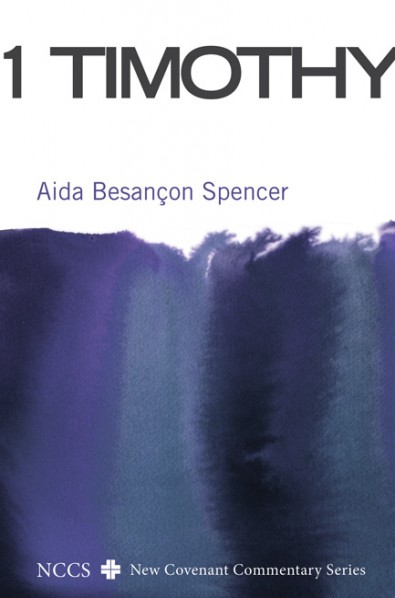
AÃda Besançon Spencer, 1 Timothy, New Covenant Commentary Series (Cascade, 2013), 192 pages. Aida Besançon Spencer’s New Covenant Commentary Series on 1 Timothy, is a fresh and powerful look at some of the most challenging texts in the New Testament. Where most commentaries give a lot of external information, Spencer bridges the gap between historical…
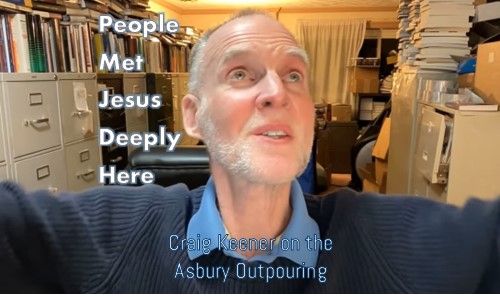
Presented by Craig S. Keener in conjunction with Tactical Faith at the 25th annual Biblical Studies Lectures, Beeson Divinity School, Samford University. Beeson Divinity School is an interdenominational, evangelical divinity school on the campus of Samford University in Birmingham, Alabama. Craig Keener Craig S. Keener, Ph.D. (Duke University), is F. M. and Ada Thompson Professor…
Part Five of the series examined Yeshua’s1 proclamation, “Do not think that I came to abolish the Law or the Prophets; I did not come to abolish, but to fulfill†(Matthew 5:17). We examined that this statement has, over the centuries, given many believers the impression that Yeshua did away with or annulled the…
From the Worship Leader series. How good and pleasant it is when brothers live together in unity (Psalm 133:1). When my teenage daughter walks out the door, and I say, “Drive safely” she looks at me and says, “Absolutely, Dad.” I reassure myself that I have really communicated. I assume she understands “Drive safely,” the…
In May 2020, Chosen People Ministries and The Feinberg Center hosted a 4-session webinar with Craig Keener called “A Keener Understanding of the Bible: Seeing the New Testament Through Jewish Eyes.” From the email promotion: Whether you are familiar with Dr. Craig Keener or this is your first introduction to his work, we are delighted…




 We briefly mention some other kinds of wisdom literature. Job and Ecclesiastes both challenge the kind of conventional wisdom in Proverbs: What happens when the righteous suffer and the wicked prosper? That the Bible includes these books reminds us that the general principles in Proverbs are principles only, not ironclad guarantees that we can “claim†as if God is obligated to answer them. (He does, however, often answer our prayers of faith, including faith strengthened by such principles. But that is a different matter.) That the Bible also includes such a wide range of perspectives (although not contradictions) also may warn us to keep our own boundaries wide: God may send many Christians to us with different kinds of wisdom, and we should have the wisdom to embrace all kinds of wisdom. We may meet those who tend to be cautious and skeptical (like the cynicism of Ecclesiastes), those who have learned through the sufferings of Job, and those who have seen general principles of God’s faithfulness to the righteous; we should welcome them all, and help them to work together in Christ’s one body, just as different books of the Bible work together in one canon.