Dave Kraft: Leaders Who Last

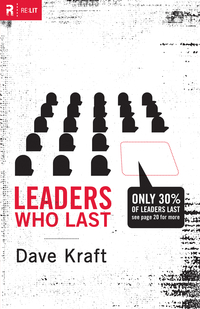
 Dave Kraft, Leaders Who Last (Wheaton, IL: Crossway, 2010), 155 pages, ISBN 9781433513183.
Leaders Who Last is written for church leaders—pastors, teachers, small group leaders, volunteers, and ministry staff—by a church leader who posits that this book is about leaders finishing well. Kraft encourages now and future leaders in the church to lead in a “new way†that will help them “stay viable … survive [the] journey, and accomplish [their] objective†(p. 22). Relying on experience culled from forty plus years of ministry, Kraft argues that “the leader’s greatest calling and most significant long-term contribution is to recruit and train other leaders†(p. 144). He views Christian leadership as having four main responsibilities: shepherding, developing, equipping, and empowering. These responsibilities focus on building up followers and future leaders.
The book contains three sections plus an introduction and epilogue. The first section is called Foundations and has five chapters on power, purpose, passion, priorities, and pacing, which Kraft says are all foundational to lasting leadership. Leaders must be attentive to these areas to stay fruitful in ministry. In order to stay connected to their power source, leaders must practice spiritual disciplines, including reading Scripture, prayer, worship, and time for reflection. The remaining foundational aspects to leading flow from the power leaders receive from Jesus Christ.  Kraft says, “Purpose is the foundation for everything†(p. 64). A purpose should give you energy, motivation, and direction. A biblically-based purpose will help leaders steer clear of distractions. Kraft provides helpful steps to identifying one’s purpose. Indeed, he offers steps for developing in all areas of leading, including passion, which he explains comes from God when we know who we are in him. In order to keep purpose and passion focused, Kraft urges leaders to determine clear priorities, and offers an intentional process for keeping one’s priorities in order. Finally, pacing is about being mindful of one’s capacity so that the leader does not burn out. Kraft recommends taking a day off once a week and limiting the number of evenings the leader is not at home.
The second section deals with Formation and covers the topics of calling, gifts, character, and growth. Whereas a leader’s purpose is based on her experiences and interests, a personal journey that starts from within, a calling comes from God. Kraft suggests that there are four types of spiritual call: to salvation, to discipleship, to service, and to leadership. His focus in this book is on the call to leadership. In order to last, leaders must have a clear and compelling call. He urges leaders to find people who will help them evaluate their calling. In turn, he encourages more experienced leaders to be on the lookout for younger, future leaders whom God is calling and to mentor them. In the chapter on the leader’s gifts, Kraft argues that the gifts of a leader tend more toward speaking than serving. Although he does not deny the importance of service, Kraft emphasizes that leaders who last have word gifts, that is the ability to use words to encourage, develop, equip, and inspire people to move from point A to point B. In addition, a leader’s character is vital to the longevity of her leadership. Kraft notes that the primary passages on leadership qualification in the Bible (1 Timothy 3 and Titus 1) refer mainly to character in the context of relationships. Kraft provides a list of essential character traits and a process for developing one’s character. He suggests that leaders discern which areas of their lives need growth and work with an accountability partner to develop those traits.

In the final section called Fruitfulness, Kraft argues that vision, influence, and legacy are the ways in which leaders impact others, in particular those who are called to be leaders. In terms of vision, Kraft laments that leaders are not hearing from God and thus lack a vision for the church. A strong and compelling vision will motivate followers to work in a ministry. A person in a leadership role in the church must have a vision from God. A lasting leader develops the vision, communicates it well to followers, and along with followers, implements the vision. In order to last, leaders must have help to see the vision accomplished. Kraft suggests that church leaders invest a good portion of their time in developing a core leadership team of individuals who are themselves invested in becoming lasting leaders. The leadership team, then, becomes responsible for communicating and implementing the vision, as well as influencing others in the church to work together toward the objective. The leader’s legacy is the quality of leaders she develops during her lifetime. Kraft argues that current leaders focus too little on developing future leaders. The reasons for this lack are numerous, including the leader’s own insecurity and low priority for leader development. True to form, Kraft offers a step-by-step process for developing potential leaders.
After each section Kraft offers the reader an opportunity to reflect on the previous chapters’ content to think things through and discern ways to implement the suggestions into practice. For example, at the end of part one, Kraft asks, “How is your walk with the Lord? Are you getting good quality time alone with him?†and “Are you trying to do too much by attempting to keep everybody happy?†At the end of part three, he asks, “Name the future leaders in whom you are currently investing. What is your game plan for each of them?†His intention for asking these and other reflective questions is to stimulate leaders to pay attention to the four main responsibilities of Christian leadership so that they can finish well.
The chief strength of the book is the hands-on and practical steps and processes, which Kraft offers throughout the book to help leaders improve their leadership capacity. Church leaders and others who are looking to do more than survive in their leadership roles may find some of the steps challenging depending on where they are on their walk. Kraft’s own purpose and calling are evident as he seeks to invest in the next generation of leaders and to encourage others to do the same. He focuses on the leader personally and the leader’s realm of influence. The book is easy to understand and quick to digest, unless you want to take the time required to reflect on your own leadership and its potential areas of improvement. Then, you may find yourself spending days or weeks of intentional, devoted time to challenging and changing your mental and ministry status quo in order to equip yourself and other leaders to finish well.
Reviewed by Michelle Vondey
Â
Publisher’s page: http://www.crossway.org/books/leaders-who-last-tpb/
Excerpt: http://www.wtsbooks.com/common/pdf_links/9781433513183.pdf
Dave Kraft Leadership Coaching: http://www.davekraft.org/