David A. Livermore: Cultural Intelligence

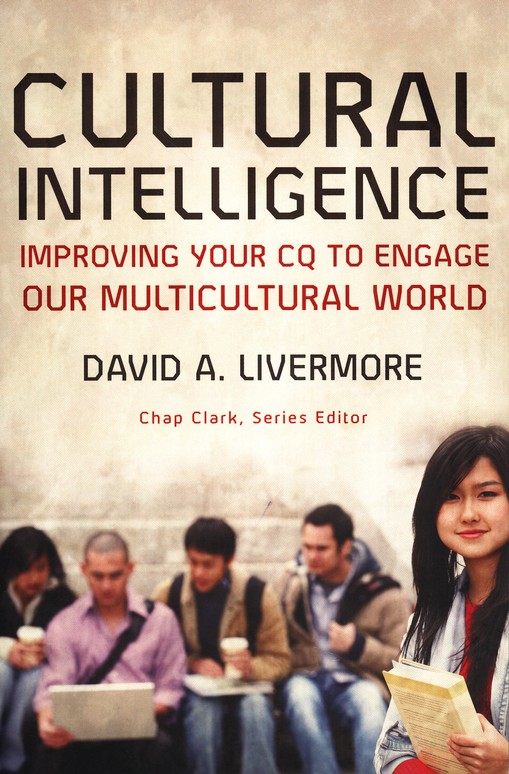
 David A. Livermore, Cultural Intelligence: Improving your CQ to Engage our Multicultural World (Baker Academic, 2009), 288 pages, ISBN 9780801035890.
What is ‘cultural intelligence’ and why is it important? In today’s multicultural and multilingual world, it is more necessary than ever for church leaders and lay believers to learn how to express “love and respect for people who look, think, believe, act and see differently than we do” (11). This becomes all the more pressing when we realise that several different generations or even nationalities may be present in the churches and communities in which we live and worship. This is the driving force behind David A. Livermore’s excellent introduction to cross-cultural work and ministry. This guide is suitable for all leaders who have a heart to “reach across the chasm of cultural difference” (11) and, in this reviewer’s opinion, is destined to become a classic in its field and the benchmark against which future works will be based.
The book is split into four parts, covering the four areas of cultural intelligence (shortened to CQ), a new model for cross-cultural work and reflection. In the first part, “Love CQ,” Dr Livermore argues that the basis of all successful cross-cultural work must be genuine love for others and not simply “politically correct tolerance” (20). Only once we are sure that this is our foundation can we move on to actually learning about other cultures.
The second part, “Knowledge CQ,” maps out the contours of culture as a concept and gives examples of its different representations in everyday life. In chapter 4, for example, the author summarises the typical values of the prevailing socioethnic culture of the USA, while in chapter 5 he wrestles with the complicated task of defining culture. The last three chapters of this part cover the nature of different cultural domains, from socioethnic to organisational culture (chapter 6), the relationship between language and culture (chapter 7) and a general overview of a variety of cultural values, overlaid on a series of sliding scales (chapter 8).
The second deficiency is that in chapter 5, where he sets out to define culture, no settled definition is actually presented. Instead, we are offered a handful of “useful” definitions and a tour around common metaphors used in discussions of cultures (80-81). While it may indeed be true that the very nature of culture makes it difficult to define, and while previous definitions may not have been too helpful (80), the lack of a settled working definition here is disappointing.
The third, and most theoretical, part of the book is entitled “Interpretative CQ” and asks us to consider the meanings behind the representations of culture discussed in the previous parts. Here, we are encouraged to become aware of what is going on and our own emotions as well as to attempt to empathise with the people we meet who come from a different culture. This will help us avoid the common trap of assuming that cultural cues like body language and word choice have the same meanings in different cultures.
In the fourth and final part “Perseverance and Behavioral CQ,” the knowledge and theory from the previous sections are applied to everyday practice. While this section may seem a little short, this is simply because the author’s research has shown that ministry leaders tend to be far weaker in the areas covered in previous sections (210). That aside, this section takes us on a journey from examining our own motivation to continually develop our CQ (chapter 13) to practical ways to develop it (chapter 15). This latter chapter contains a gold mine of ideas, not all of which will seem natural or comfortable to readers. However, it would seem that this very discomfort, when analysed and reflected upon, can be a catalyst to greater cultural intelligence.
The Appendices are excellent, as are the short Suggested Reading sections at the end of each chapter. Of the former, the most highly recommended are Appendix B, a self-assessment test of your cultural intelligence (CQ) and Appendix D on forming a culturally intelligent ministry environment. If the Church is to see the manifestation of Galatians 3:28 any time soon, this last Appendix must become a reference point for all churches.
Overall, this book is an absolute must for all ministry leaders and lay believers wishing to reach across the cultural barriers that have divided us for too long. After all, while migration and increased international travel have led to increased linguistic and cultural diversity in towns and cities of all sizes, this has not yet been reflected in the makeup of the churches who serve them. Instead, the congregation of typical American or British churches tends to be monolingual and dominated by a single socioethnic culture. It is therefore very difficult to find a real excuse for any leader in any ministry situation not to read this book. While there are one or two weaknesses and while occasionally the language does lean a little too far towards the academic for some lay readers, this should not be enough to put people off. If the principles found in this book were to be carefully applied by all church leaders and those in ministry then churches and their surrounding communities would stand to reap the benefits.
Reviewed by Jonathan Downie
Read excerpts:
DavidLivermore.com/wp-content/uploads/2011/01/Cultural_Intelligence_Excerpt_9780801035890.pdf [available as of Mar 13, 2014]