There are innumerable presentations, articles, and books being written on the subject of the Millennials and the Church. These angles include the Church’s lack of connection with the Millennials and the Millennials lack of interest in the Church. Or, more specifically, the approach recently presented in an article by Joe Hepler in Vital Magazine, “Four Ways To Connect With College Students In Church.†While reading this article, I find simple insights that could assist the Church to see from the collegiate Millennial’s perspective. The author is recently out of College himself and offers a unique look at the topic at hand.
The reason for the article is stated clearly in the title, the intent being to connect with college students “in Church.†The practicum offered by Hepler in the first point of his article is on point. It makes sense that if college students are studying at a College or University near a Church of choice, they have some level of interest in academics and growth. Capitalizing on that interest to increase their spiritual formation is noteworthy.
“[A] frequent mistake I have observed is when churches view these students strictly as short-term drop-ins instead of sojourners looking for a spiritual home.â€
On Hepler’s second point of connecting with college students in the Church, the methodology and approach used is elementary. The use of small groups and home invitation has been around for a long time. It certainly works for college students, and, is a great reminder for the Church that wants to reach University students. However, Hepler de-emphasizes the importance of programming in discipleship and spiritual formation. He over-emphasizes the personal approach of Jesus and places little emphasis upon programming. It can be easy to downplay the place of programming over relationship. But programming is essential to the process of spiritual formation, especially as it relates to accountability, curriculum, and measurement. Remember, one of the great miracles of Jesus was the feeding of the 5,000 men. Don’t forget that Jesus began that supernatural event with the gift of administration by seating the people in companies of 50. The teaching and subsequent miracle that day was dependent upon the organization of the people and the meal. One of the traits of the discipleship process by Christ and other rabbis in the 1st century was a highly structured way of teaching the law to students. We cannot get away from that today in Youth Ministry.
Image: Inbal Marilli
In the last point that Hepler makes concerning involving college students in leadership positions or roles in the Church, the structure and phrasing of the paragraph is a bit ambiguous. I sensed he had much more to say on this point but the article was rushed at this point. Still, his point is a good one. He uses the statement, “Many will give their hearts and souls to the churches they attend during college, and still many more may stay long after they have earned their degrees.†There are many avenues to developing young adults to lead in the local Church, including those that can be used with a transient crowd such as college students. Hepler seems to be leaning toward patience in discipleship, waiting before involving them. This is definitely the safest way to assure that they are quality leaders of integrity and understand the mission of the Church once they do get involved and lead.
“Invite these students into your home, take them out for lunch or to a sporting event, and include them in family celebrations.â€
No doubt Hepler would have much more to tell us about connecting with college students if he were writing at greater length. His unique angle speaks volumes, and it will be great to watch this young author develop in his ministry and writing for the body of Christ. As a reviewer who also works with young people, the article has much to offer pastors in settings that do not have a successful approach to college students. Hepler will surely get them on their way to intentional college student involvement in the Church. I would enthusiastically recommend pastoral leaders to read this article and others that follow from Hepler.
Jeff Grenell, MA (Evangel University), has over 30 years of experience in church, parachurch, and public education focused on ministry to youth. Jeff has served as a local church Youth Leader (13 years), Motivational Speaker at national camps, conventions, seminars, and public and private schools (5 years), the Lead Pastor of a youth church (5 years), University Professor (9 years), and has Coached NCAA basketball, High School, and AAU basketball and soccer (14 years). He is the author of #IfJobHadTwitter: When Hardship Hits The Palace (2017) and founder of Ythology. Instagram. Twitter.
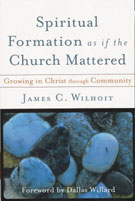
James C. Wilhoit, Spiritual Formation as if the Church Mattered: Growing in Christ through Community (Grand Rapids: Baker Academic, 2008), 233 pages, ISBN 9780801027765. Dallas Willard, in The Spirit of the Disciplines, challenges the Church to return to the primary purpose of proclaiming the gospel and making disciples (18). James Wilhoit’s spiritual theology, as…
R. Scott Rodin, The Steward Leader: Transforming People, Organizations and Communities (Downers Grove: InterVarsity Press, 2010), 197 pages, ISBN 9780830838783. The Steward Leader begins by telling the reader that the book is not about the “how†of leadership but about the “whoâ€â€”who God is and who we are as stewards in God’s kingdom. Author Scott…
Can a denomination move so far from biblical truth that it should be considered apostate? What about those local churches that have not embraced heresy or rejected the biblical gospel yet remain within the denomination? After reading the article, “The Charismatic Renewal,†by historian William De Arteaga, A.D.M. responded with this comment: I…
Video introduction by Dennis Balcombe about his new book, China’s Opening Door: Incredible Stories of the Holy Spirit at Work in One of the Greatest Revivals in Christianity (Lake Mary, FL: Charisma House, 2014). Read John Lathrop’s review. Originally published on August 12, 2014 by Charisma House. Dennis Balcombe Dennis Balcombe knew he was…
The beginnings of the CRC church in Wollongong were soaked in prayer. As the pastoral team ministered to God, they sensed the need to call the congregation to all-night prayer gatherings. Beginning around 8 p.m. on Saturday nights, intercessors persevered until daybreak. In those times of prayer, praise and proclamation, the Spirit often spoke…
By D. William Faupel As appearing the Summer 2000 issue of The Pneuma Review My mother met me at the door, her face bursting with excitement. “You will never guess what has happened,†she exclaimed. Before I could respond, she continued, “Pentecost has come to the Episcopalians!†The year was 1961. I was a senior…



 Joe Hepler, “Four Ways to Connect with College Students in Church: How families and individuals can connect and support students away from home†Vital (November 12, 2015).