
The Gift of the Holy Spirit Today
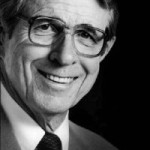
The final installment from Professor Williams’ book, The Gift of the Holy Spirit Today, about the greatest reality of our time.
The Gift of the Holy Spirit Today: Effects, Part 1 (Chapter 8)
Epilogue & Bibliography
This book has been written with excitement and hope. If it is true that many people today are freshly experiencing the gift of the Holy Spirit, there is much to be excited about. For in this gift there is fullness of God’s presence and power—and entrance into a whole new dimension of praise, witness and action. Also there is much to be hoped for: that people everywhere will become alert to the possibility of this gift, respond to God’s offer of its availability and thereby receive it from the exalted Lord.
 Perhaps these pages will have come as a surprise to some readers. For it is a fact that despite the high significance of the gift of the Holy Spirit, many persons have little knowledge or understanding of it. Such a question as Paul’s, “Did you receive the Holy Spirit when you believed?” (Acts 19:2), may seem totally irrelevant and meaningless to many. They may never really have thought about the matter, and perhaps they have not so much as heard about it.
Others in reading may have felt disturbed. First, there may be some who have long thought of the gift of the Holy Spirit in terms of a kind of divine immanence experienced in a mystical moment. With or without the mediation of Jesus Christ it is assumed that the spirit of a person may enter into union with the divine Spirit. Accordingly, there is already a given—hence gift-like—unity of the divine and human spirit which only needs to be realized through meditation and stripping away artificial barriers. Thus to read all this about the work of Jesus Christ in redemption and forgiveness of sins as necessary to the reception of the Spirit may seem strange and unwarranted. Second, there may be other readers who have long viewed this gift as so inseparably attached to the sacramental life of the church that all persons who receive the proper sacramental action (baptism, confirmation) invariably become recipients of this gift. Accordingly, there is no point in getting excited about or looking forward to the gift. For if one has been properly baptized (or confirmed, as the case may be), the gift presumably has been received. Third, there may be still other readers who view the gift of the Holy Spirit as identical with the gift of salvation; thus there is no gift to be considered beyond the new life in Christ. Indeed, some might say, does not the very idea of an additional gift detract from the all-sufficiency of Christ?
Unfortunately, these various views—which may be called, in turn, the mystical, the sacramental, and the evangelical—often stand in the way of a genuine apprehension and reception of the gift of the Holy Spirit. Perhaps sufficient answer to the first two views has been given in prior pages, but a word might be added about the last. Christianity, to be sure, is at heart the Good News about salvation—a new life in Christ. This gospel is to be proclaimed to the ends of the earth: that God has graciously gone all the way to bring man back to himself, and through the blood of His Son there is redemption, even the forgiveness of sins. Nothing should ever be said to detract one iota from the wonder of the gospel, for without God’s work in salvation there would be no hope for anyone in all creation. And it comes as a gift—the gift of eternal life (e.g., Rom. 6:23—“the free gift of God is eternal life in Christ Jesus our Lord”). But the all-important point is that the gift of eternal life is not the gift of the Holy Spirit, though the latter presupposes the former and both are mediated through Jesus Christ. Thus Christ continues to be all-sufficient. One never goes past Him: for in Him is every spiritual blessing. The crucial question is: have we caught up with Him? If we have experienced through Him the life-changing wonder of forgiveness of sins and eternal life, have we also received the empowering miracle of the gift of the Holy Spirit?
Perhaps the greatest mistake in this area is to presuppose the gift of the Holy Spirit. The mystic may presuppose the gift of the Spirit in his meditation, the sacramentalist may presuppose the same gift in the occurrence of baptism and/or confirmation, the evangelical may likewise presuppose the gift of the Spirit in the experience of forgiveness and salvation. Each, in different manner, by the very presupposition,1 bars his own way to the reception of the gift. However, if the presupposition can be removed, there may be a new readiness for and openness to the gift of the Holy Spirit.
In this connection one purpose of the book has been to set forth biblically and theologically the whole area of the gift of the Holy Spirit. By doing this it is hoped that certain commonly held views may have been brought under question and a fresh look taken. By the very description of such matters as the background, dimensions, purpose and effects of the gift it is likewise hoped that many may have been challenged to raise the question: “Have I really—whatever my former attitude and experience—received this gift?”
Earlier it was said that perhaps these pages will have come as a surprise, even a disturbance, to some readers. It is also hoped that for others this book may have come as a source of some pleasure in that the attempt has been made to clarify much about the gift of the Holy Spirit. For it is undoubtedly the case that many persons who are either participants in the contemporary spiritual renewal, or strongly attracted thereto, are looking for a more thorough biblical and theological grounding. If these pages have been helpful in that direction, I am grateful.
It should be added that throughout the writing I have been fully aware of working in a seldom charted theological area. For the church at large has never given adequate consideration to the gift of the Spirit—“baptism in the Spirit,” “the fullness of the Spirit,” and other related matters—accordingly, there has been little from the past to go on.2 Hence, though this has been largely a biblical study in the area, I trust that it has helped set the stage for further theological reflection.
Surely what has been dealt with in these pages is no small matter. It is verily, for those who receive forgiveness of sins and become new creatures, the gift of God’s presence and power. Thereby the Spirit of God comes to fill the heights and depths of human existence, bringing forth transcendent expressions of praise, performance of mighty works, and many new aspects of Christian living. It is the outpouring of God’s Spirit upon a redeemed people—a people who having been set right with God now become the arena of His reflected glory.
How much this is to be desired: for the church in our time not only to be “the ark of salvation” but also the tabernacle of the divine fullness! Thus the church may become the earthly counterpart to the praise of God in the heavenly sanctuary, the continuation of her Lord’s ministry in mighty word and deed, and such a moving force against all evil that the citadels of darkness cannot withstand the mighty impact. Indeed, through the Holy Spirit the church may truly become that place of beauty and wonder that presages the final coming of Christ in glory.
And the church described consists of people—people who have become open to the mighty wave of God’s Spirit in our time, and, whatever their frailties and shortcomings, are moving in the power and demonstration of the Holy Spirit. For all such persons, what God is doing is a matter of continuing joy and amazement.
Finally, as we close, it is good to be reminded once more that the gift of the Holy Spirit is a continuing promise. This extraordinary gift from the exalted Lord is not something that belongs to past history. For we have the sure word of Scripture that “the promise is to you and your children and to all that are far off, every one whom the Lord our God calls to him.”
May it be that none of us shall fail to receive what God has so generously promised.
PR
Notes
1 Karl Barth in his Evangelical Theology: An Introduction (New York: Holt, Rinehart and Winston, 1963): Chapter 5, on “The Spirit,” writes of how “a foolish church presupposes his presence and action in its own existence, in its offices and sacraments, ordinations, consecrations and absolutions . . a presupposed Spirit is certainly not the Holy Spirit” (p. 58). Thereafter Barth adds: “Only where the Spirit is sighed. cried, and prayed for does he become present and newly active.” So it is with the gift of the Holy Spirit.
2 Professor Hendrikus Berkhof in his book, The Doctrine of the Holy Spirit (Richmond, VA: John Knox Press, 1964) speaks in one place of a work of the Holy Spirit “beyond justification and sanctification,” namely, being “filled with the Holy Spirit,” to which “official theology” has paid little attention (p. 85). He thereupon devotes a few pages (pp. 85-92) to the subject, prefacing his remarks by saying, “I am aware of the fact that I set foot on an unexplored field and that my thoughts here . . . must be considered as preliminary and needing correction by others” (p. 85). This present book, as well as my two earlier ones, The Era of the Spirit and The Pentecostal Reality, are attempts to open up this “unexplored field.”
Bibliography
Books Referred to in This Volume
Allen, Roland. The Ministry of the Spirit. Grand Rapids, Michigan: Eerdmans, 1960.
Arndt & Gingrich. A Greek-English Lexicon of the New Testament and Other Early Christian Literature. University of Chicago Press, 1957.
Baillie, John. Our Knowledge of God. New York: Charles Scribner’s Sons, 1939.
Barth, Karl. Evangelical Theology: An Introduction. New York: Holt, Rinehart, and Winston, 1963.
Basham, Don. Face Up With a Miracle. Northridge, California: Voice Christian Publications, 1967.
Basham, Don. Deliver Us From Evil. Washington Depot, Connecticut: Chosen Books, 1972.
Bennett, Dennis. Nine O’Clock in the Morning. Plainfield, New Jersey: Logos, 1970.
Bernard, Sister Mary. I Leap for Jay. Plainfield, New Jersey: Logos, 1974.
Berkhof, Hendrikus. The Doctrine of the Holy Spirit. Richmond, Virginia: John Knox Press, 1964.
Bixler, Russell. It Can Happen to Anybody. Monroeville, Pennsylvania: Whitaker Books, n.d.
Bredesen, Harald. Yes, Lord. Plainfield, New Jersey: Logos, 1972.
Brown, James H. Presbyterians and the Baptism of the Holy Spirit. “Signs, Wonders, and Miracles.” Los Angeles: Full Gospel Business Men’s Fellowship International, 1963.
Bruce, F.F. The New International Commentary on the New Testament: Commentary on the Book of Acts. Grand Rapids, Michigan: Eerdmans, 1954.
Bruner, F.D. A Theology of the Holy Spirit. Grand Rapids. Michigan: Eerdmans, 1970.
Brunner, Emil. The Christian Doctrine of the Church, Faith, and the Consummation: Dogmatics. Vol. III. Philadelphia, Westminster Press, 1960.
Brunner, Peter. Worship in the Name of Jesus. St. Louis: Concordia, 1968.
Cambridge Greek Testament. CambridgeUniversity Press, 1914.
Christenson, Larry. Speaking in Tongues. Minneapolis: Dimension Books, 1968.
Clark, Stephen B. Building Christian Community: Strategy for Renewing the Church. Notre Dame: Ave Maria Press, 1972.
Delling, Gerhard. Worship in the New Testament. Philadelphia: Westminster Press, 1972.
Dewar, Lindsay. The Holy Spirit and Modern Thought. New York: Harper and Brothers, 1959.
Dunn, James. Baptism in the Holy Spirit. Naperville, Illinois: Allenson, 1970.
Ensley, Eddie. Sounds of Wonder. New York: Paulist Press, 1977.
Ervin, Howard M. These Are Not Drunken As Ye Suppose. Plainfield, New Jersey: Logos, 1968.
Expositor’s Greek Testament. New York: George H. Doran Company, n.d.
Finney, Charles G. Charles G. Finney: An Autobiography. Old Tappan, New Jersey: Revell, 1876.
Frost, Robert C. Set My Spirit Free. Plainfield, New Jersey: Logos, 1973.
Gelpi, Donald L. Pentecostalism: A Theological Viewpoint. New York: Paulist Press, 1971.
Goodwin, Thomas. The Works of Thomas Goodwin, D.D., Vol. I, Containing an Exposition of the First Chapter of the Epistle to the Ephesians. Edinburgh: James Nichols. M.DCCC.LXI.
Green, Michael. I Believe in the Holy Spirit. Grand Rapids, Michigan: Eerdmans, 1975.
Harris, Ralph. Spoken by the Spirit: Documented Accounts of “Other Tongues” from Arabic to Zulu. Springfield, Missouri: Gospel Publishing House, 1973.
Harper, Michael. Power for the Body of Christ. London: Fountain Trust, 1964.
Harper, Michael. Spiritual Warfare. London: Hodder & Stoughton. 1970.
Harper, Michael. Walk in the Spirit. Plainfield, New Jersey: Logos, 1968.
Heidelberg Catechism, translated by A.O. Miller and M.E. Osterhaven. United Church Press, 1962.
Hull, J.H.E. The Holy Spirit in the Acts of the Apostles. Cleveland & New York: World Publishing Company, 1968.
Jackson and Lake, editors. The Acts of the Apostles. London: Macmillan & Co., Ltd., 1920.
Jones, James W. Filled With New Wine: The Charismatic Renewal of the Church. New York: Harper & Row, 1974.
Kane, J. Herbert. Understanding Christian Missions. Grand Rapids, Michigan: Baker, 1974.
Katz, Arthur. Ben Israel: Odyssey of a Modern Jew. Plainfield, New Jersey: Logos, 1970.
Kendrick, Klaude. The Promise Fulfilled. Springfield, Missouri: Gospel Publishing House, 1961.
King, Pat. The Jesus People Are Coming! Plainfield. New Jersey: Logos, 1971.
Kuhlman, Kathryn. God Can Do It Again. Englewood Cliffs, New Jersey: Prentice Hall, 1971.
Kuhlman, Kathryn. I Believe in Miracles. Old Tappan, New Jersey: Spire Books, 1962.
Lewis, C.S. Transposition and Other Addresses. London: Geoffrey Bles, 1949.
Mackay, John A. World Vision Magazine, “Oneness in the Body—Focus for the Future,” April 1970.
MacNutt, Francis. Healing. Notre Dame, Indiana: Ave Maria Press, 1974.
Martin, Ralph. Fire on the Earth. Ann Arbor, Michigan: Word of Life, 1975.
McAlister, W. Robert. The Dilemma: Deliverance or Discipline? Plainfield, New Jersey: Logos, 1976.
McDonnell, Kilian. One in Christ, “The Distinguishing Characteristics of the Charismatic-Pentecostal Spirituality,” 1974, Vol. X, No. 2.
Meisgeier. Charles. The Acts of the Holy Spirit Among the Presbyterians Today. Los Angeles: Full Gospel Business Men’s Fellowship International, 1972.
Meyer. H.A.W. Critical and Exegetical Handbook to the Acts of the Apostles. New York: Funk & Wagnalls, 1883.
Moffatt Commentary: The Acts of the Apostles. New York: Harper and Brothers, 1931.
Moody. W.R. The Life of D.L. Moody. New York: Fleming H. Revel!, 1900.
Munck, Simon. The Anchor Bible: The Acts of the Apostles. Garden City, New York: Doubleday & Company, 1967.
Murray. Andrew. The Spirit of Christ. New York: Randolph & Company, 1888.
O’Connor, Edward. The Pentecostal Movement in the Catholic Church. Notre Dame: Ave Maria Press, 1971.
Prange, Erwin. The Gift Is Already Yours. Plainfield, New Jersey: Logos, 1973.
Ranaghan, Kevin & Dorothy. As the Spirit Leads Us. New York: Paulist Press, 1971.
Ranaghan, Kevin & Dorothy. Catholic Pentecostals. New York: Paulist Press, 1969.
Rea, John. The Layman’s Commentary on the Holy Spirit. Plainfield, New Jersey: Logos, rev. ed., 1974.
Richardson, Alan. An Introduction to the Theology of the New Testament. New York: Harper and Brothers, 1958.
Roberts. Oral. The Call: An Autobiography. Old Tappan, New Jersey: Spire Books, 1971.
Robertson, A.T. Word Pictures in the New Testament. New York: Harper and Brothers, 1932.
Samarin, William. Tongues of Men and Angels. New York: Macmillan, 1972.
Sanford, Agnes. The Healing of the Spirit. Philadelphia: Lippincott. 1966.
Scanlon, Michael. Inner Healing. New York: Paulist Press, 1974.
Schep, J.A. Spirit Baptism and Tongue Speaking. London: Fountain Trust, 1970.
Schaff, Philip. History of the Christian Church. New York: Charles Scribner’s Sons, 1910.
Sherrill, John. They Speak With Other Tongues: The Story of a Reporter on the Trail of a Miracle. New York: McGraw Hill, 1964.
Stapleton, Ruth Carter. The Gift of Inner Healing. Waco: Word Books, 1976.
Stott, John R.W. The Baptism and Fullness of the Holy Spirit. Downer’s Grove: Inter-Varsity Press, 1964.
Suenens, Leon Joseph. A New Pentecost? New York: Seabury Press, 1974.
Thayer. Greek-English Lexicon of the New Testament. New York & London: Harper and Brothers, 1899.
Theological and Pastoral Orientations on the Catholic Charismatic Renewal. Notre Dame: Word of Life, 1974.
Theological Dictionary of the New Testament. Vols. VI & VII. Grand Rapids: Eerdmans, 1971.
Tomczak, Larry. Clap Your Hands! Plainfield, New Jersey: Logos, 1973.
Tugwell, Simon. Did You Receive the Holy Spirit? London: Darton, Longman & Todd, 1972.
Westminster Confession of Faith.
Williams, J. Rodman. Era of the Spirit. Plainfield, New Jersey: Logos, 1971.
Williams, J. Rodman. The Pentecostal Reality. Plainfield, New Jersey: Logos, 1972.
The Gift of the Holy Spirit Today by J. Rodman Williams, was published in 1980 by Logos International. Used by permission of the author. Reprinted in Pneuma Review with minor updates from the author.








[…] Rodman Williams: The Gift of the Holy Spirit Today: Effects, Part 1 : The Pneuma Review on The Gift of the Holy Spirit Today (Chapter 7) […]