
Claiming Inheritance or Dying to Self: Theology of Glory or Theology of the Cross?


This chapter is from Paul L. King’s book Only Believe: Examining the Origins and Development of Classic and Contemporary Word of Faith Theologies.
Several years ago I read St. John of the Cross on mortification of self and at the same time read Robert Schuller on self-esteem. I learned from both, even though the writings of these two authors are poles apart. Both teach elements of truth, but both represent opposite extremes. The dynamic tension of the counter-polarities needs to be kept in balance. If self-esteem is taught without the cross, the believer’s thought and practice are skewed and become egocentric. If death to self is taught without understanding the believer’s exalted position in Christ, the believer’s thought and practice are again skewed and susceptible to self-centered spiritual flagellation. The key to healthy Christian living and faith is to hold these two truths in balance.1 However, in relation to faith teaching, claiming the believer’s inheritance would seem to be at odds with dying to one’s self. How can the two seemingly contradictory concepts be reconciled?
In reality, healthy faith must maintain a healthy blend of both dying to self and claiming the rights and privileges of the believer. The message of the crucified life is the one element often missing from modern faith teaching and practice, thus breaking down the dynamic tension. Kenneth Hagin does not negate the cross, but believes it has been over-emphasized to the neglect of the abundant life in Christ: “The trouble with us is that we have preached a ‘cross’ religion, and we need a ‘throne’ religion. … The cross is actually a place of defeat, whereas the Resurrection is a place of triumph. When you preach the cross, you are preaching death, and you leave people in death. We died all right, but we’re raised with Christ.”2 The classic faith leaders of the Keswick and Higher Life movements would agree that we need a throne religion, but not to the neglect of the cross. Without the cross life the emphasis on obtaining the promised blessings of God is out of balance and susceptible to egocentricism and distortion.
Via Wikimedia Commons.
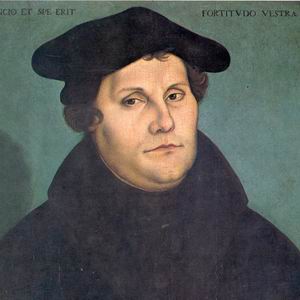
Martin Luther distinguished a theology of glory (theologia gloria) from a theology of the cross (theologia crucis). The theology of glory “is concerned primarily with God and his glory, whereas the other sees God as hidden in his suffering.”3 According to Luther, man prefers the theology of glory or triumphalism because it exalts man: “He prefers works to suffering, glory to the cross, strength to weakness, wisdom to folly, and in general, good to evil.”4 In contrast, the emphasis of the New Testament exalts the humbling of Christ and denial of self: “Have this attitude in yourselves which was also in Christ Jesus, who, although He existed in the form of God, did not consider equality with God a thing to be grasped, but emptied Himself, taking the form of a bondservant, and being made in the likeness of men. And being found in appearance as a man, He humbled himself by becoming obedient to the point of death, even death on a cross” (Philippians 2:5-8, NASB).

Via Wikimedia Commons.
Luther further declared, in contrast to some modern faith thought, that “God can only be found in suffering and the cross. … Therefore the friends of the cross say that the cross is good and works are evil, for through the cross works are dethroned and the old Adam, who is especially edified by works, is crucified. It is impossible for a person not to be puffed up by his good works unless he has first been deflated and destroyed by suffering and evil until he knows that he is worthless and that his works are not his but God’s.”5 Other mystics likewise emphasized the life of the cross. Fenelon avowed, “We are nothing without the cross.”6 Thomas a Kempis likewise observed centuries ago, “The Lord has many lovers of His crown but few lovers of His cross.”7
Via Wikimedia Commons.
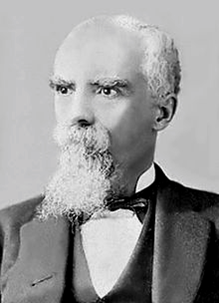
One of the men of the group of the “Friends of God,” Nicholas of Basle, counseled John Tauler, “You must die, Dr. Tauler! Before you can do your greatest work for God, the world, and this city, you must die to yourself, your gifts, your popularity, and even your own goodness, and when you have learned the full meaning of the Cross you will have new power with God and man.”8 Luther was influenced by Tauler and the Theologia Germanica. Because he became willing to die to himself, Tauler did indeed gain new power with God and man, having great impact on Luther and the Reformation.
E.M. Bounds follows these classic writers, saying, “All God’s plans have the mark of the cross on them, and all His plans have death to self in them.”9 A.W. Tozer, speaking as a twentieth century prophet, declares that the same is true of this century, saying, “We do not want the cross. We are more interested in the crown.”10 This is true of much of evangelicalism, and especially of some in the modern faith movement who teach a triumphalistic theology of glory with its emphasis on having faith in one’s own faith and claiming the rights, privileges, and authority of being a child of God or a “King’s Kid.” Classic faith teachers such as A.B. Simpson and Andrew Murray also emphasized the rights, privileges and authority of a believer, but with one crucial difference: they taught self-denial and the cross life—a theology of the cross. Simpson wrote, “How very much of the life of faith consists in simply denying ourselves.”11
Via Wikimedia Commons.
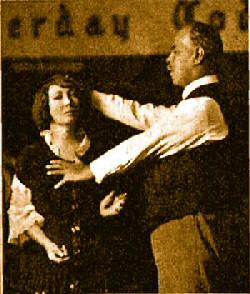
Charles Price noted the role of the cross in healing: “We have found that a broken spirit and a contrite heart and a feeling of unworthiness is generally an assurance of faith enough for healing, while on the other hand many people lose the blessing because they feel they are entitled to it.”12 Further, Price explained, “Faith must walk down the vales of self-abasement and humiliation in order that it might climb the mountain of divine revelation that is on the other side.”13 A. J. Gordon quoted faith healing pioneer Johann Christoph Blumhardt saying, “The way to have a strong faith is to think nothing of yourself.”14
While I have disagreed with several of the assessments of Hunt and McConnell in this study, I would agree with their concern about the lack of emphasis in modern faith teaching (and much evangelical teaching as well) and practice on the crucified life. McConnell remarks that modern faith teaching and practice, especially regarding prosperity, “subverts the demands of the cross for self denial.”15 Though he paints the modern faith movement with too broad a stroke, nonetheless, there is an element of truth in his criticism. Hunt correctly and perceptively observes, “Were Andrew Murray alive today, he would vehemently disagree with the new self-centered gospel.”16 In contrast to much modern faith teaching, Murray taught, “Our lesson of today leads us to the very deepest roots of the life of faith. The deeper we are willing to enter into the death of self, the more shall we know of the mighty power of God, and the perfect blessedness of a perfect trust.”17 Murray believed in claiming the believer’s covenant rights, but he also stressed that death to self must be at the roots of any covenant claims, writing further, “Selfishness is the death of faith. … Let us cease seeking faith in our own interest.”18

Via Wikimedia Commons.
Some modern faith teachers tend to imply that we can demand our rights from God. Biblical psychologists Larry Crabb and Dan Allender recognize that this problem is not confined to modern faith teaching: “The classic error of this culture: Demanding heaven now through some methodology or some person.”19 Classic faith teachers (and some modern faith teachers) agree we can demand of Satan, but, in contrast, we cannot demand from God. Wheaton College president Charles Blanchard wrote a book on principles of faith and prayer entitled Getting Things from God that sounds similar to Hagin’s Write Your Own Ticket with God. However, they are far apart in their theology. Blanchard wrote: “God takes no instructions from men. God does not permit men to give Him orders.”20 Likewise, in a similarly titled book, Harnessing God, Paul Rader assures that believers cannot harness God, but as believers walk in faith and obedience, God puts Himself at their disposal so that they can harness the power of God.21 Oswald Chambers asks the pivotal question: “Is the Son of God praying in me or am I dictating to Him?”22 Chambers was not against claiming God’s promises,23 yet he exhorted, “But if you are living the life of faith you will exercise your right to waive your rights, and let God choose for you.”24 Yes, believers can claim their inheritance in Christ, but they will always be willing to exercise their right to waive their rights for God’s sake. This is a healthy faith.
PR
Notes
1 John Calvin discusses both mortification of the flesh and vivification of the Spirit in his Institutes of the Christian Religion ([Grand Rapids, MI: Eerdmans, 1949], Vol. 1, Book 3, chap. 3:3), 651-654. He thus maintains more of a terminological balance than his contemporary, John of the Cross.
2 Kenneth Hagin, The Believer’s Authority (Tulsa, Okla.: Kenneth Hagin Ministries, 1984), 16.
3 Justo Gonzalez, A History of Christian Thought (Nashville, Tenn.: Abingdon Press, 1971), 3:35. Luther vilified the theology of glory, referring to the Roman Catholic Church and scholastic theologians who taught a triumphalistic doctrine of glory.
4 Ibid.
5 Ibid.
6 Francois Fenelon, Let Go (Springdale, Penn.: Whitaker, 1973), 5.
7 Thomas a Kempis, cited in A.W. Tozer, Men Who Met God (Camp Hill, PA: Christian Publications, 1986), 115.
8 F.B. Meyer, Five Musts of the Christian Life (Chicago: Moody Press, 1927), 41.
9 Lyle Dorsett, E.M. Bounds: Man of Prayer (Grand Rapids: Zondervan, 1991), 213.
10 A.W. Tozer, Men Who Met God (Camp Hill, Penn.: Christian Publications, 1986), 115.
11 A.B. Simpson, Days of Heaven on Earth (Camp Hill, Penn.: Christian Publications, 1984), October 19.
12 Charles Price, And Signs Followed (Plainfield, N.J.: Logos, [1972], 129.
13 Charles Price, The Meaning of Faith and the Sick Are Healed: Resolving the Mysteries of Faith (Shippensburg, Penn.: Destiny Image Publishers, 2002), 43.
14 A. J. Gordon, The Ministry of Healing (Harrisburg, Penn.: Christian Publications, n.d.), 159.
15 D.R. McConnell, A Different Gospel (Peabody, Mass.: Hendrickson Publishers. 1988), 180.
16 Dave Hunt, Beyond Seduction (Eugene, Ore.: Harvest House, 1987), 163.
17 Andrew Murray, “Faith Counting on the Power of God,” Triumphs of Faith, November 1934, 243.
18 Andrew Murray, The Holiest of All (New Kensington, Penn.: Whitaker House, 1996), 467-468.
19 Larry Crabb and Dan B. Allender, Hope When You’re Hurting (Grand Rapids: Zondervan, 1996), 132.
20 Charles Blanchard, Getting Things from God: A Study of the Prayer Life (Chicago, Ill.: The Bible Institute Colportage Assn., 1915), 134.
21 Paul Rader, Harnessing God (New York: George H. Doran Co., 1926), 16.
22 Oswald Chambers, My Utmost for His Highest (New York: Dodd, Mead, and Co., [1935] 1963), 221.
23 Ibid., 78, 322.
24 Ibid., 304.
This excerpt from Only Believe: Examining the Origins and Development of Classic and Contemporary Word of Faith Theologies (Tulsa, OK: Word and Spirit Press, 2008), comes from Chapter 25, pages 350-354. Only Believe is available through the author’s website, HigherLifeMinistries.com, and through online sellers, such as Amazon. Used with permission.