
The Ghost Of Alexander Severus: Third Century Religious Pluralism as a Foretaste of Postmodernity


Has Christianity ever found itself in a world full of competing religions and cultures? What can we learn from how those followers of Jesus acted in their times? Should we hope for the same kinds of outcomes?
We are presently concerned with the relationship of our faith to the other religions of the world, especially with Islam and a newly radicalized Hinduism. Except for Islam and a radicalized Hinduism, this is nothing new for Christians. Jesus was born into a religiously pluralistic world; much more, the first Christians, as acknowledged by D.A. Carson in his The Gagging of God, “not only lived in a pluralistic world, but they operated from a base of perceived inferiority.”1
For a visitor from the middle of the third century, it is déjà vu. All of the religions of that time are here and every one touting tolerance while displaying an intolerance of its own. There is an added feature not around in the third century, Islam and its Moslem adherents.
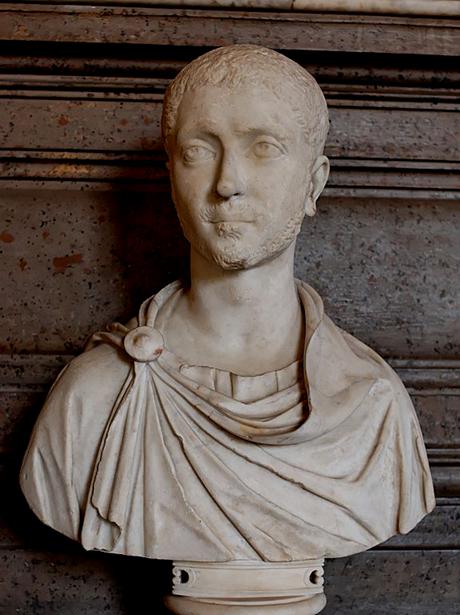
One of the Severan emperors, Alexander Severus, went one step further in the pluralist direction. In his own private chapel, he placed busts or statues of Apollonius, Abraham, Jupiter, Jesus, and Orpheus side-by-side.2 Whatever his intent, it suggested that he saw Jesus and Abraham on a par with Orpheus and Apollonius. That parity attitude exists in the 21st century when pluralists suggest that Christianity, Buddhism, Islam and Hinduism are just different ways of approaching the same God and, therefore, are of equal value. The ghost of Alexander Severus hovers over this postmodern 21st century. Back in 1993 Richard Unds assessed the postmodern golden rule as “Grant to all religions the same presumption of truth as you grant to your own religion. All religions are created equal.”3 Evidently, Severus thought that way himself; same situation, different century.
With the fourth century, a new order came with a triumphant Christianity—almost. With Julian’s ascension to the throne persecution against Christians broke out anew. Julian, in a gesture toward the Jews, started rebuilding the Temple on their behalf. Natural calamities hampered the project and it was abandoned in A.D. 363 upon Julian’s death. Jovian, Julian’s successor, restored to the Church its privileges. His successor, Constantius, closed all pagan temples.
Only then did the church finally emerge triumphant. Sacrifices to pagan gods were forbidden under threat of death and temples were abandoned and often destroyed.
The Soviet Union under the Communists in the 20th century tried to eradicate the Christians. It failed. “Christianity is like a nail” remarked Yemelian Yaroslavsky, chairman of Stalin’s League of the Militant Godless, “The harder you strike it, the deeper it goes.”4 Julian failed, Yaroslavsky failed, and others have failed. There is no need to be alarmed. Historically, we have been here before. This 21st century pluralism is essentially no different from previous pluralism.
To instigate the policies of Jovian, Constantine, Theodosius and Justinian, each in his turn, is out of the question in this postmodern period. There is a way out of this present pluralist morass.
First of all, we, as Christians, need to remember that we have been this way before. The record of the third, fourth and fifth centuries bear witness to the fact that the Christian faith had both the resiliency and the ability to outlast its competitors.
There are ways of dealing with our present situation. One is suggested by the Manila Manifesto of Lausanne II issued in 1989: “Nothing commends the Gospel more eloquently than a transformed life.”5 The effect of the Christian gospel upon an individual’s life and that impact’s residual effects within social relationships is a powerful enough apologetic. Ramachandra, the missiologist, reminds that the “credibility of Christianity” is in the “cogency of its advocates’ social practice.”6 There is no better argument than the Christian’s outgoing love.
The years of Severus’ rule, A.D. 222 – 235, were also the years of Origen, the Christian polemicist, perhaps the early Church’s greatest figure of the century. This author does not know whether Origen’s Contra Celsus won any converts or changed things but what is known is that the church had both an apologetic and polemical voice of no mean stature.
We are not lacking in either apologetic or polemic. We are lacking an Origen who put it all together in a systematic onslaught. We have our Zacharias, Geisler, Craig, Plantinga, Kreeft, Carson and Colson and are blessed for having them. But there is a problem—out of this number Geisler, Craig, Plantinga, Kreeft, and Carson are associated with Christian academic institutions. Zacharias and Colson are more in the public eye. Neuhaus, through the Institute on Religion and Public Life and his prestigious First Things, addresses specific issues but there is no broad address of what is afoot in our world. One can also add the names of D. James Kennedy, James Dobson, and Donald Wildmon. There is no wanting of concerned individuals and this is the problem, many voices but no one single commanding voice.
It was nearly one hundred years after Origen and Alexander Severus that the Church acted singly at Nicea; more than that after Irenaeus and Tertullian. There was more than one voice in the early church but the continued pressure of the Graeco-Roman culture forced the issue of having a single voice.
This is not to propose a modern Nicea or Chalcedon. It is a proposal to consider having a single apologetic voice on the order of a Lausanne Movement and its Manila Affirmation or an Amsterdam 2000 and its Declaration. The Christian front is weakened to the degree that is fragmented. This is not a far-fetched idea. Back in 1996, D.A. Carson made the observation that “partly under the impact of postmodernism, the various ‘schools’ of Christian apologetics have an opportunity to draw closer together than they have usually been in the past.”7
There is a practical side to this concern. Aside from D. James Kennedy’s annual “Reclaiming America” which brings concerned Christians together to deal with issues, there is little to no concerted effort to deal with the pluralism that confronts us. After each conference is over, there is another year of each ministry going into its own telemarketing scheme in order to stay on and do battle on its own limited front. It is no wonder we are more often on the defense instead of on the offense. This makes for an ironic situation; a pluralism of Christian ministries seeking to take on a pluralistic society. There is, however, a difference. Ours is a pure pluralism, not one based upon a concept of relativity. Nonetheless, any thought to what we present to the world’s plurality should be enough to make us take stock of where we are at. We have soldiers and leaders off in different directions trying to beat off a persistent postmodern mindset.
There is a third way which this writer calls a “reverse apologetic.” This “reverse apologetic” suggested itself from reading the Caner brothers’ Unveiling Islam. “One must love Allah in order for Allah to love that person in return. In Christianity, God loved people first in order to secure their salvation.”8 These two sentences from the book suggest the reverse type of logic in defining Christianity among the religions and the philosophies that abound.
The nearest similarity is the comment credited to Emil Brunner about religion being about seeking God while Christianity is about the gospel of God seeking man. It is man that is lost, not God.
Even Biblical inerrancy can be upheld and defended on the basis of a reverse apologetic by dealing with what the scripture maintains: that we are made in the image of God. There is no quarrel there. We are in a fallen state, incapable of saving ourselves and needing a Savior not of our own making. There is no quarrel that we have ignominiously failed in all our human-directed efforts. God has made Himself known in Christ Jesus. We come to God through Christ, no other way. There is no need to “hold the fort” or apologize to John Hicks and the theistic crowd. Forty years ago, the Christian philosopher and Thomistic scholar, Etienne Gilson maintained, “Not only do we need the Christian revelation to believe in the God of the Christian religion but it is senseless to imagine that His existence could be known otherwise than through faith in His own revelation.”9 This position is also maintained by missiologist Vinoth Ramachandra in his chapter on the “Scandal of Christ” in his The Recovery of Mission,10 where he alluded to a statement by Harvard theologian Harvey Cox in which he said, “… any honest dialogue between Christians and others will sooner or later—and in my experience it is usually sooner—have to deal with the figure of Jesus.”11
Instead of explaining evil, Christianity unabashedly faces it at the Cross of Christ. Christianity accounts for man’s salvation through the Cross of Christ. In dealing with documentary, textual, and historical matters, as important as they are, we often miss the inerrant, infallible Word that defines our creation, our sin, and our salvation in Christ Jesus.
We can face down the postmodernist through a tactical reversal. It is claimed by the postmodern pluralist that all truth is relative. We might well ask in return, “Relative to what?” and push that even further to the point of Romans 3:4 “Indeed let God be true but every man a liar.” On our terms, all truth is relative. We, as people, speak out of our own experience. But “relative to what?” reminds the relativist that he has to have an absolute in order to make the claim that all truth is relative. The postmodernist says that truth cannot be discovered and that is right but something is left out in that statement. Truth discovers it. We cannot find truth; truth finds us. In the Greek culture, aletheia, the word for truth, is associated with nakedness. The etymology of the word suggests “the unhidden” or “the uncovered.” The artist Botticelli represented truth as nude in his painting “Calumny.” Philosophy historian Anthony Kenny, in his 2001 reissued Oxford Illustrated History of Western Philosophy, uses the painting as an illustration within that edition under the caption “Naked Truth.”12 Hebrews 4:13 in the NKJV reads, “all things are naked and open to the eyes of Him to whom we must give account.” To claim that all truth is relative is in and of itself a duplicitous statement that seeks to hide its protagonist from accountability. We can never uncover truth; truth uncovers us. This is the reverse of the standard argument.
In a sense we do not live in a true pluralistic society but within a “pluralism grounded in and tainted by our deep-rooted relativism.”13
Richard Rorty, an American postmodernist, let slip in an essay entitled “Trotsky and the Wild Orchards” included in the book Wild Orchards and Trotsky: Messages from American Universities an admission that a world without God is one having no basis for universal truth or justice.14 With a stroke of the pen, Rorty unwittingly destroyed his own position.
A reverse apologetic can be used with respect to the other religions. Hinduism is based upon a sense of futility within a cyclical universe requiring a concept of reincarnation. The Resurrection refutes that as the Resurrection shows the way out.
Christianity is based upon forgiveness of one’s sins. Islam has none of this. A British missionary for fifty-two years in Pakistan told this presenter and several other men of a 20-Year old Pakistani who accepted Christ only to be shot dead by his own father. It is interesting to note that there are ninety some names for Allah; not one of them is love. There is a “subtle attraction to Buddhism” admits Ravi Zacharias, “the sense of being in control and fully insulated from the world of care.”15 It is a withdrawal from life, from loving and from caring and not wanting to be hurt, a quashing of all desire. “If you do not desire, you can never lose” is Zacharias’ summation16 of Buddhism. It also shuts out love and denies personality and personal identity.
Christianity speaks of the risk of love and loving which is something none of the other religions offers. Instead of arguing points of divergence in beliefs, follow out their positions as to where they lead in pragmatic expression and implementation. This is the reverse apologetic in practice.
What is offered here is something other than argumentation in a postmodern pluralist world. In our postmodern world where there are many options open, Christianity best defines itself as to the Gospel it offers to the world, none other than what Christ has come to give.
Practically all the religions are man-made institutions. At its heart, Christianity is a Gospel to Man. Practically all religions are in one sense geared to make the believer feel good; particularly the pantheistic and panentheistic varieties. Christianity is disturbing because it exposes us and requires of us coming to terms with what has been uncovered that we may ultimately know the love of God that covers us by way of his grace at Calvary, vindicated by His Resurrection, and sealed by His Holy Spirit.
This is why the Christian gospel eventually won out over all its competitors in the fourth century. Politics may have played its part but overwhelmingly through the lives of the Christians, imperfect as they may have been, there was exhibited what its competitors could never exhibit and delivered what the others could never deliver, the truth that was, and is, in Christ Jesus.
In his work, The Philosopher and Theology, Gilson wrote of the Christian’s faith that “Faith comes to intelligence as a light that overflows it with joy and inspires it with a certitude that does away with questions.”17
PR
More Christian History from Woodrow Walton
 A Time of Weakness, A Time of Strength: AD 315-450
Constantine’s Edict of Milan brought an end to the persecution of Christians, but that did not mean the Church was granted favor throughout the Roman Empire. What are the lessons for us today?
Notes
1 D.A. Carson, The Gagging of God: Christianity Confronts Pluralism (Grand Rapids, Ml: Zondervan, 1996), p. 146.
2 Scriptores Historiae Augustae, Severus Alexander 29.2, Cited by Michael Grant in The Severans: The Changed Roman Empire (London & New York: Routledge, 1996), p. 75.
3 Richard Linds, The Fabric of Theology: A Prolegomenon to Evangelical Theology (Grand Rapids, MI: Eerdmans, 1993), p. 246. Quoted by D.A. Carson in The Gagging of God, p. 150.
4 Quoted by Brian Moynihan, The Faith: A History of Christianity (New York: Doubleday, 2002), viii.
5 John R. W. Stott, ed., Making Christ Known: Historic Mission Documents from the Lausanne Movement, 1974 – 1989 (Grand Rapids, MI: Eerdmans, 1996), p. 240.
6 Vinoth Ramachandra, The Recovery of Mission (Grand Rapids, MI: Eerdmans, 1998), p. 167.
7 D.A Carson, The Gagging of God: Christianity Confronts Pluralism (Grand Rapids, MI: Zondervan, 1996), p. 184.
8 Ergun Mehmet Caner and Emir Fethi Caner, Unveiling Islam (Grand Rapids, MI: Kregel, 2002), p. 31.
9 Etienne Gilson, The Philosopher and Theology. Translated by Cecile Gilson (New York: Random House, 1962), p. 81.
10 Vinoth Ramachandra, The Recovery of Mission (Grand Rapids, MI: Eerdmans, 1998).
11 Harvey Cox, Many Mansions. Quoted by Ramachandra in The Recovery of Mission, p. 180.
12 Anthony Kenny, Oxford Illustrated History of Western Philosophy (Oxford, UK, and New York: Oxford University, 1997. Reissued 2001), p. 10.
13 Joseph M. Stowell, Shepherding the Church: Effective Spiritual Leadership in a Changing Culture (Chicago, IL: Moody, 1997), p. 26.
14 Richard Rorty, Wild Orchards and Trotsky: Messages from American Universities (New York: Viking, 1993), p. 38. Cited also by Charles Colson, How Now Shall We Live? With Nancy Pearcy (Wheaton, IL: Tyndale, 1999), p. 94.
15 Ravi Zacharias, The Lotus and the Cross: Jesus Talks with Buddha (Sisters, OR: Multnomah Publishers, 2001), p. 92.
16 Ibid.
17 Gilson, Op.Cit., p. 163.
This article has been adapted from a message given by Woodrow E. Walton in Toronto, Canada on November 21, 2002.