
Rightly Understanding God’s Word, by Craig S. Keener

The Rightly Understanding God’s Word series, with a new introduction, by Craig S. Keener.
Editor’s Note: Craig Keener created this introduction to his course of biblical interpretation to appear before Chapter 1: Context (Spring 2003). However, Pneuma Review editors did not receive it in time to publish it in the print edition of the journal. We include it now, twelve years later, to introduce this excellent series and link to all of the chapters in their new digital format.
Raul Mock
February 25, 2015

All chapters from the Rightly Understanding God’s Word series
Introduction — Follows immediately (Winter 2015)
Chapter 1: Context — Part 1 (Spring 2003)
Chapter 1: Objections to Context — Part 2 (Winter 2015)
Chapter 2: Learning Context — Part 1 (Summer 2003)
Chapter 2: Learning Context — Part 2 (Fall 2003)
Chapter 3: Whole-Book Context — Part 1 (Winter 2004)
Chapter 3: Whole-Book Context — Part 2 (Spring 2004)
Chapter 4: More Principles of Context (Summer 2004)
Chapter 5: Bible Background — Part 1 (Fall 2004)
Chapter 5: Bible Background — Part 2 (Winter 2005)
Chapter 6: Context of Genre: Narrative — Part 1 (Spring 2005)
Chapter 6: Context of Genre — Part 2 (Summer 2005)
A study of laws in the Bible, Biblical prayer and songs, proverbs, and romance literature.
Chapter 6: Context of Genre — Part 3 (Fall 2005)
A study of the type of inspired literature found in the teachings of Jesus, the gospels, letters to churches and individuals, and prophetic passages.
Editor Introduction: Context of Genre: Revelation (Winter 2006)
Chapter 6: Context of Genre: Revelation — Part 4 (Winter 2006)
What can we learn from this book that so many Christians have disagreed about?
Chapter 7: The Reader’s “Social Location” (Spring 2006)
Introduction
In Josiah’s day the book of the law was found in the temple, and Josiah’s humble response to its demands changed his generation. Jesus later confronted religious teachers of His day who, for all their attention to the law, had often buried it beneath their religious traditions. Numerous monastic orders through the Middle Ages kept finding the church (or earlier orders) corrupt and far from the apostolic message, and summoned them back to it. John Wycliffe, a Bible professor at Oxford, challenged the church hierarchy of his day. After he lost his position, he began sending his students out with translations of Scripture to preach in the countryside. Although England suppressed his work, it lay under the surface, ready to blossom again in the English Reformation a century later. Luther was a Bible professor who challenged the church hierarchy’s exploitation of the peasants, calling the church back to the Scriptures (other Reformers had the same emphasis, some seeking to take the matter even further than Luther). When many Lutherans became complacent in their faith, Philipp Jakob Spener, a university professor, helped stir the Pietist movement with his Bible teaching, summoning people back to living the Scriptures.
Throughout history, many of the major revival movements came as people turned back to the Bible, allowing it to challenge them to hear God’s message afresh in their generation. The church in much of the world today needs to return to the Bible no less, seeking from God a fresh wind of the Spirit to challenge many of the claims made in the name of God, His word, or His Spirit. May we pray for such an awakening, search the Scriptures ourselves, and become God’s agents in spreading His message.
I arrange this course from the most basic principles to the more complex. Some students may find principles like “context” too basic and may wish to skip ahead. Before they do so, I encourage them to sample the context examples; many will be surprised how many songs, sermons, and popular sayings have taken texts out of their context. In other words, it is one thing to affirm that we believe in context; it is quite another to practice that skill consistently. I have supplied concrete examples to help us grapple with that reality and encourage us to apply our “belief” in context more rigorously. Context is essential because that is the way God inspired the Bible—not with random, isolated verses but with a continuous flow of thought to which those verses contribute.
Some issues of interpretation perhaps should go without saying, but I will treat them briefly in the introduction, because some Christians also fail to apply these in practice. The central goal of studying God’s Word is to know God better, and the better we know Him, the better we will understand His Word. Because God gave us the Bible as a written book that contains much history, He does expect us to use literary and historical principles when we study it. But it is also a record of the message of God’s heart to His people, so we dare not approach it as merely a matter of intellectual interest or curiosity. Those who become “experts” from a purely intellectual or even religious standpoint can become like the scribes who opposed our Lord Jesus. We must remember that this book, unlike normal books, has the right to make moral demands on our lives. We do not become “experts” who show off our knowledge. We must humble ourselves before the God of Scripture.
The fear of the Lord is the beginning of wisdom and knowledge (Prov 1:7; 9:10). Our human tendency is to read into Scripture whatever we want to find there, whether to justify our behavior or to confirm what we have already been taught by our church, our tradition, or by other teachers we look up to. Slaveholders tried to justify their behavior from the Bible; many cults justify their doctrines from the Bible; but sometimes we Christians do the same things. If we fear God, we will want to hear only what His Word teaches us, and hear it as accurately as possible.
We must also be willing to obey God once we hear Him. James tells us that if we want wisdom we (like Solomon) should ask for it (1:5). But we need to ask in faith, he insists (1:6), and he later explains that real faith is faith that is ready to live according to God’s demands (2:14-26). If we really pray for God to teach us the Bible (and we should; see Ps 119!), we must pray with the kind of faith that is ready to embrace what we find in the Bible. We must embrace what we find there even if it is unpopular, even if it gets us in trouble, and even if it challenges the way we live. That is a high price, but it comes with a benefit: the excitement of often finding fresh, new discoveries, rather than simply hearing what we expected to hear.
Studying God’s Word with an open and yearning heart is one way that we express our love for God. God’s chief command to Israel was His declaration that He is one (Deut 6:4), hence there is no room for idols. Therefore, He admonished His people to love Him alone, with an undivided heart and one’s whole being (Deut 6:5). Those who love God in this way will talk of His Word all the time, everywhere, with everyone (Deut 6:6-9). If God is really first in our lives, then His Word will be central to us, and consume us.
Sometimes people miss the heart of God’s Word. The Pharisees debated about details but missed the bigger picture of God’s heart of justice, mercy and faithfulness (what Jesus calls, “the weightier matters of the law,” Matt 23:23); in the familiar English figure of speech, they missed the forest for the trees. All of Scripture is God’s Word, but some parts teach us more directly about God’s character than others (for example, we learn more directly from God’s revelation to Moses in Ex 33—34 than from rituals in Leviticus). Sometimes we may even hear God wrongly when we read the Bible, simply because our background predisposes us to think of God as always harsh or always indulgent.
Where do we look to find the central revelation of God’s character (Jesus’ “weightier matters”) that helps us rightly apply the rest of God’s Word? God revealed His law to Israel, but both Old Testament prophets and the New Testament show that some aspects of that law applied directly only to ancient Israel in a particular time (though we can all learn from its eternal principles). The prophets offered dynamic applications of the law based on knowing God’s heart. But God has most fully revealed His heart and His Word by sending us Jesus; when His Word became flesh, He revealed God’s heart (Jn 1:1-18). When Moses received the law on Mount Sinai, he saw some of God’s glory, some of His character of grace and truth; but no one could see God fully and live (Ex 33:18-20; 34:6). In the Word become flesh, however, God revealed His glorious grace and truth fully (Jn 1:14, 17); now the unseen God has been fully revealed in Jesus Christ (Jn 1:18; 14:9).
In this study, we will look further at context; whole-book context; background; and specific principles for understanding specific kinds of writings in the Bible (such as psalms, proverbs, laws, and prophecies. These are essential principles for learning what God was saying to the first readers, a necessary step in hearing how to apply God’s message today. But we still need God’s Spirit to guide us in how to apply His message to our own lives, to the church today, and to our world. There is more than one way to hear God’s voice (we hear Him, for example, in prayer), but it is through study of Scripture that we learn to recognize His voice accurately when He speaks to us in other ways. Paul warns that we both “know in part and prophesy in part” (1 Cor 13:9). That is why it is good for us to depend on both Scripture and the Spirit to help us hear accurately. But the Spirit will not truly say something that contradicts what He already inspired Scripture to say (the way He gave it to us, in context).
Note: many ideas in the genre parts of this manual closely follow Gordon Fee and Douglas Stuart’s How to Read the Bible for All Its Worth (Zondervan). I am especially indebted to their work on psalms and epistles. Most of the rest, however, began especially from inductively grappling with the Bible itself over many years, and then with the ancient sources that reveal the world of the Bible.
This manual may be shared freely but only on the condition that it is always free and that these credits remain. It is for public use, like a sermon, originally designed for use with students in Nigeria, not for traditional publication or financial remuneration. The “background” illustrations can be found in much greater detail in my IVP Bible Background Commentary: New Testament (Downers Grove, IL: InterVarsity, 1993, with about a quarter of a million in print).
—Dr. Craig Keener
Books by Craig Keener
Academic works in biblical studies for a more general audience:
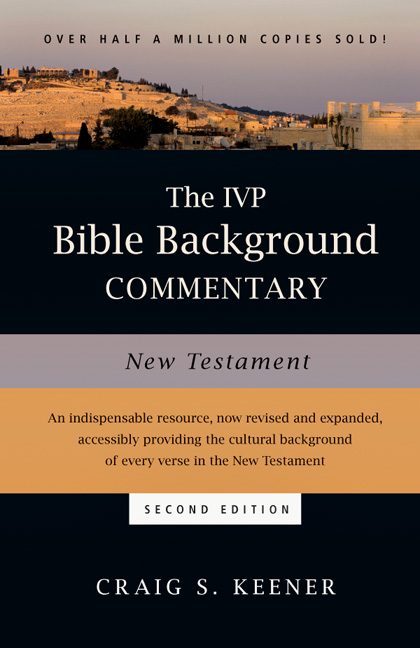
- The IVP Bible Background Commentary: New Testament (Downers Grove: InterVarsity Press, December 1993). Roughly a quarter of a million in print (available in several languages, including Arabic, Armenian, Korean, Polish, Portuguese, and Spanish; being translated into others, including Chinese, French and Russian).
- Revelation, for the NIV Application Commentary series (Zondervan, 1999).
- Matthew (IVP NT series, InterVarsity Press, 1997, 2011).
- Paul, Women & Wives: Marriage & Women’s Ministry in the Letters of Paul (Peabody, MA: Hendrickson Publishers, 1992).
Heavily academic works (especially for scholars)
- The Gospel of John: A Commentary. 2 vols. (Peabody, MA: Hendrickson, November 2003), over 1600 pages.
- A Commentary on the Gospel of Matthew (Grand Rapids, MI: Eerdmans, 1999, updated in 2009), over 1000 pages.
- The Spirit in the Gospels and Acts: Rebirth and Prophetic Empowerment (Peabody: Hendrickson, 1997).
Church-oriented academic works
- Defending Black Faith, coauthored with Glenn J. Usry (Downers Grove: InterVarsity, 1997).
- Black Man’s Religion: Can Christianity be Afrocentric? Coauthored with Glenn Usry (Downers Grove: InterVarsity, 1996).
- …And Marries Another: Divorce & Remarriage in the Teaching of the New Testament (Peabody, MA: Hendrickson Publishers, 1991).
Church-oriented works informed by scholarship
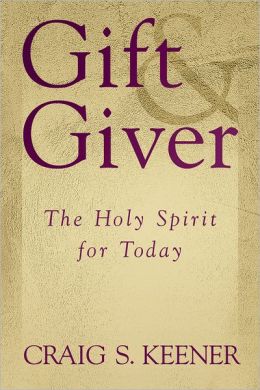
- Gift and the Giver: The Holy Spirit’s Work Today (Baker, 2001; revises his earlier 3 Crucial Questions about the Holy Spirit). Read Wolfgang Vondey’s review.
- Understanding and Applying the Scriptures, coauthored with Danny McCain (Bukuru, Plateau State, Nigeria: Africa Christian Textbooks, 2003). This is the book for which I originally collected most of the material in this interpretation manual.
More Recent Work

- Miracles: The Reliability of the New Testament Accounts, 2 vols. (Grand Rapids, MI: Baker Academic, 2011). Read extensive excerpts from Miracles. Review by Woodrow Walton.
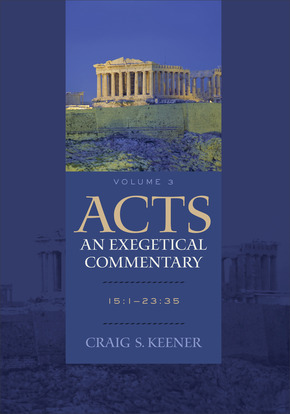
- Acts: An Exegetical Commentary, 4 vols. (Grand Rapids, MI: Baker Academic). Volume 1: Introduction and 1:1–2:47, 2012. Volume 2: 3:1-14:28, 2012. Volume 3: 15:1-23:35, 2014. Volume 4 is due out in October 2015.
- The Historical Jesus of the Gospels (Grand Rapids, MI: Eerdmans, 2012).
- Romans: A New Covenant Commentary, (Eugene, OR: Wipf & Stock, 2009).
- 1-2 Corinthians, New Cambridge Bible Commentary (New York, NY: Cambridge University Press, 2005).
- Revelation: A Vision of Hope, Bringing the Bible to Life, written with Janet Nygren and Karen H. Jobes (Grand Rapids, MI: Zondervan, 2010).
- Immersion Bible Studies: Acts (Nashville, TN: Abingdon Press, 2011).
Special thanks to John P. Lathrop for his help in updating the list of books by Craig Keener.