

Creation Care as Discipleship

What has God called you to do? In this chapter from Your Call to Work & Mission: Following Jesus 24/7, Lois Olena shows why and how followers of Jesus should participate in caring for the creation God has made.
It’s Sunday morning, and your adult class welcomes the day’s speaker. She steps up to the microphone and begins talking about the environment. The “E” word! “Oh my,” you wonder, “Is this church turning liberal? Has it started down the path of political correctness that will lead to new age, tree-hugging, nature worship—against which the Bible warns” (Rom. 1:25).

You cringe as the speaker continues on about the state of the earth. She shares statistics about air and water pollution, water scarcity, the destruction of rainforests, global warming, and desperate polar bears. Your mind questions, “Isn’t this just propaganda?” She goes on about the state of our oceans and waterways, biodiversity issues, habitat destruction, extinction of species, depletion of the ozone layer, and more.
Overwhelmed, your head swims, and your blood pressure rises. “What can I do about all this?” You think, “Besides, isn’t the earth going to just burn up anyhow at the end of days?1 What difference will it make if I recycle in the face of such massive global problems?” You let out a quiet sigh and find yourself wishing this class would focus on something relevant to living as a disciple of Jesus.

Too often these questions characterize the Christian approach to what has traditionally been called “environmentalism.” Believers have approached the topic of care for the earth with doubt and confusion. How we answer such questions, however, depends on the extent to which we can understand the why of God’s call to steward creation and how to do so.
Why Should Christians Care for Creation?2
Believers should care about creation because of what is happening to it. But even more important for Christians is what God’s Word says about it. Let’s look at both reasons.
Environmental Realities
It only takes a few moments of searching the Internet using phrases such as, “state of the environment,” “global warming,” or “pollution,” in order to see the earth’s “groanings” written about so long ago by the Apostle Paul (Rom. 8:22). Although various political, scientific, and religious groups differ on the causes of these realities—most contemporary environmental maladies are easily recognizable as crises in need of increased human awareness, cooperation, and action in order to improve global health.3 Global realities require that we tend to the earth if creation is to avoid continuing damage and thrive as God intended. To show no concern for these environmental realities, notes biblical scholar Christopher J. H. Wright, is “to be either desperately ignorant or irresponsibly callous.”4
Biblical Principles
Environmental plight, however, is not the only reason for believers to care for creation. Christ-followers must know the scriptural basis for doing so, which will guide our obedience to God. Caring for the earth and caring for the needs of the inhabitants of the earth both play a role in following Jesus in living out God’s missional plan of world redemption, since both the earth and its inhabitants—according to Romans 8—will experience that ultimate redemption one day. This section examines four key features of the biblical foundation for creation care.
God as Creator

The biblical basis for creation care begins with God as Creator. The Psalmist writes that the earth and everything in it belongs to the Lord (Ps. 24:1). God—the Father (Gen. 1:1), Son (Col. 1:16), and Holy Spirit (Gen. 1:2)—created everything, and (even before the creation of humans) pronounced as good all that He had made (Gen. 1:4, 10, 13, 18, 21, 25). Its goodness was not simply because of its usefulness for humans, but because God, who is himself good, pronounced His work to be good. He then commanded Adam and Eve (and all humanity after them) to serve and care for what He had made (2:15). In this, the Supreme Ruler of the universe mandated that people, as His hands and feet on earth, would nurture what flows from His power, love, and creativity.
Command to Stewardship
God commanded fruitfulness not only of Adam and Eve but all creation. He called the waters to teem with living creatures, the skies to be full of birds, the creatures to increase in number, and the land to produce (Gen. 1:20–24). Adam was to enjoy creation for food (v. 29) and to “rule” over it (vv. 26, 28). The King James Version translates this word as “dominion,” which sadly many people have interpreted as domination, resulting in careless destruction of creation. Instead, it involves the “working and serving” and “keeping and caring” principles of Genesis 2:15. But this role given to humankind is not only that of a gardener; it also entails a priestly role. We “have been placed within the creation to mediate God’s presence, embody God’s posture, and enact God’s purposes in the earth.”5
Honoring God as Supreme over Creation
If creation itself is to give glory to God (Psa. 8:1), then humans too must view God himself—not the created entities—as divine and worthy of worship. Creation is sanctified (made holy, set apart for God’s use). However, it is not divine, as some have said, resulting in worshipping the earth (Rom. 1:21–25).
On the contrary, Christians need to reclaim creation care as God-initiated and God-guided, from Genesis to Revelation.6 Ethicist David Gushee urges believers to reclaim this responsibility:
In the face of the charge that Christians and Christianity bear grave responsibility for our environmental crisis, we dare not simply move into a sulk of defensiveness. We must instead claim the profound resources for creation care that have been there from the very beginning in Scripture. We must tell our own story more adequately, understand our own holy texts more profoundly.7
Telling their own story is precisely what Evangelicals have been learning to do in recent decades as their scholarship, networking, and resourcing of the body of Christ for creation care continues to flourish.
God Will Redeem the Created Order
 A fourth biblical principle of creation care comes from Colossians 1. Through His death, Christ not only reconciles humankind to God, but all things—including creation itself. All things will be reconciled, “whether things on earth or things in heaven” (v. 20). Paul describes this redemption of the created order in Romans 8. Creation itself “waits in eager expectation” (v. 19) for the final day when it will be “liberated from its bondage to decay and brought into the glorious freedom of the children of God” (v. 21). Creation has been “groaning as in the pains of childbirth right up to the present time” (v. 22) along with humans who “wait eagerly” (v. 23) for the final redemption of their bodies.
Since all things are to be reconciled ultimately through Christ, we should not be surprised that God’s Word condemns the ruin of creation and calls for its restoration. As disciples, we imitate the One participating in creation restoration (making all things new, Rev. 21:5). We can learn to set aside greed, which exploits and degrades the earth, and instead practice contentment along with nurturing attitudes and behaviors.
Opportunities to Love and Serve
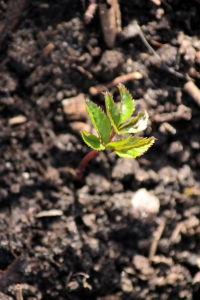 Followers of Jesus Christ must view creation care as more than simply an interesting topic of biblical and theological study, a good cause to believe in, or a culturally astute response. They must understand fundamentally that creation care matters8 because it provides a means for loving and serving God and others. Let’s look at four ways this can take place.
Walking in Thankful Obedience
Through God’s design, the earth gives to people, and people have opportunity to give back by treating it right. Calvin B. DeWitt9 describes provisions God has made for creation: energy exchange, soil building, cycles of the biosphere, water purification and detoxification, the abundance of life in all its species and habitats, the fabric of energy relationships (such as photosynthesis), global circulations of water and air, and—one of the most wonderful provisions—the ability of humans to learn from creation. In this and more, He has given us the “book” of His world, by which we can build “mental models of all aspects of creation—from atoms to plants to habitats to the cosmos.”10
 Both the book of His world and the book of His Word help propel humans toward meaningful life. As children of God, and in all we do as worship to God (Rom. 12:1; Col. 3:17), we can express our thankfulness to Him by caring for all He has provided. As Wright notes, “Our treatment of the earth reflects our attitude to its Maker and the seriousness (or otherwise) with which we take what he has said about it.”11 Jesus said, “If you love me, you will keep what I command” ( John 14:15). God has commanded that His children treat His creation well; doing so provides an opportunity to demonstrate obedient love to Him.
Participating in God’s Redemptive Mission
Second, creation care provides an opportunity for believers to lovingly obey God’s mandate to participate in His redemptive mission. This, says Wright, involves “not only the salvation of human beings but also the redemption of the whole creation.”12 This work begins now but has its ultimate fulfillment (Psa. 96:10–97:6; Rom. 8:18–25) in a future day, as all things are reconciled to Christ (Col. 1:20). Meanwhile, as we wait for that day, God, who owns all things (Deut. 10:14), has authorized us to work out His mission here on the earth, the “grand arena within which the Bible’s grand narrative [of redemption] takes place.”13
God desires that all people (Psa. 29:1–2) and all creation (Psa. 91:1) would bring Him glory. But just as unredeemed humans cannot fully reveal God’s glory, neither can degraded creation. Conversely, humanity touched by God’s redemptive hand brings glory to Him, as does creation properly cared for. To engage in that process puts us in a place where we can obediently participate with God in what He has begun to do and will ultimately do, for His glory. As we care for the earth and nurture its fullness, we work toward the redemptive mission of showing God’s glory throughout all the earth.
Caring for the Poor and Vulnerable
The Evangelical Environmental Network has several resources that raise awareness about these issues, such as how elemental mercury impacts the unborn14 and how climate change impacts the poor15 and vulnerable.16 Noah J. Toly and Daniel I. Block vividly describe this connection:
If the process of global warming continues, many millions living in coastal regions will be driven from their homes by rising ocean waters caused by melting ice and thermal expansion of the seas. Unless we address the problems of overcrowding and lack of sanitation in many of the world’s cities, premature death will rob their citizens of life; disease, poverty and unemployment will continue to dehumanize them and rob them of their dignity. Unless we manage the earth’s . . . resources well, . . . millions . . . created in God’s image will die prematurely.17
Mike Tenneson, biology professor at Evangel University, describes how everything in an ecosystem has the potential to impact human life: “Clean water, fertile soil and wholesome food are necessary for sustaining healthy communities. Even small acts of environmental stewardship can affect human populations.”18 For instance, seeming insignificant plants have led to the discovery of lifesaving medicines. Allowing or causing their extinction would have been our loss.
Thus, in stewarding creation we care not only for our own needs but our families’ and global neighbors’ needs. As we realize how environmental issues impact the poor and vulnerable, and as we work to address those issues, we show God’s heart for their holistic flourishing in the earth—body, mind, soul, and spirit. This allows justice to “roll down like waters, and righteousness like an ever-flowing stream” (Amos 5:24). In that way, creation care becomes truly an integral part of the Great Commandment and whole-life discipleship.
Cultivating a New Perception of Christianity
Disciples of Jesus will love God and others (the Great Commandment, Luke 10:27) and bring the good news of God’s redemption to all peoples (the Great Commission, Matt. 28:18–20). But often, people passionate about the health of the planet and its plants and animals—but who do not know the Creator—may lack opportunity to cross paths with Christians with “good news,” only Christians who oppose their beliefs.
Creation care offers Christians a fourth opportunity to love and serve others. By cultivating a changed perception of Christian faith in the minds of their neighbors, believers can help open their hearts to the gospel. With regard to the environment, the only notion some people have of Christians is that they believe the earth is going to “burn up” anyhow and that they are on our way to heaven, so all that “environmental stuff” doesn’t matter. Such a careless attitude by God’s children toward His creation, however, is poor testimony to those who do not yet know Him.19
 Christians need to properly understand what the Bible really says about the earth and then respond to that renewed awareness. Involved in creation care, they will undoubtedly rub shoulders with new-agers, pagans, nature worshippers, atheists, pantheists, and others who need to see Christians and Scripture in a better light. As others experience gracious, loving, careful, obedient, Christ followers stewarding God’s creation, they too may be drawn to the Creator by the Spirit of God. Showing the biblical basis of creation care will help pre-Christians see God’s intent for the world and help diminish the bad image of Christians ready to abuse the earth because of its supposed future annihilation.
Christian participation in cooperative ventures with pre-Christian environmentalists will help build friendships and trust. Through this interaction, believers can share their faith and communicate that the reason they care for the earth is directly related to who God is, His desire for humankind, how He participates in the world, and where we can find ourselves in that plan. Caring for what God cares for demonstrates what an obedient disciple looks like—thoughtful, considerate, understanding of the earth, and not antithetical to science but valuing the partnership between faith and science. Such Christians can gain a voice with those who might otherwise write off the Christian faith.
Knowing why we should value creation care is just the first step. Knowing how to care for creation is the next.
Practical Steps to Care for Creation
The first decade of the twenty-first century has seen what some have called “the greening of Evangelicals,”20—a proliferation of creation care awareness through statements,21 organizations,22 conferences, initiatives, and the development of resources. Some view this upsurge as a fad, a means for political correctness, or even a diabolical distraction from the focus of the Great Commission.
However, I believe God has raised up individuals for such a time as this, to remind Christians of biblical principles that have existed in Scripture from the beginning. In 1970, decades before the current Evangelical involvement in creation care, Francis Shaffer wrote Pollution and the Death of Man: The Christian View of Ecology. It responded to the anti-Christian environmentalism that blamed believers for the state of the environment. Shaffer issued a prophetic call to see the biblical basis for caring about the earth’s crises and responding accordingly.
Discernment
 Since then, we have witnessed an exponential multiplication of literature and resources. But Christians need more than exposure to resources; they need discernment from the Spirit regarding specific steps to take as obedient stewards of creation. Christians can easily feel overwhelmed with the massive needs of the world when faced with how to carry out God’s mission—whether that mission entails caring for suffering people or a suffering earth. Ministries abound that push and pull believers in multiple directions. For Pentecostal/Charismatic believers in particular, the how of creation care must begin with asking for spiritual discernment and direction regarding the way forward. Steven F. Hayward makes a clarion call for such discernment:
Still, creation care, if it is to be more than an appealing phrase, must do more than baptize conventional environmental opinion. . . . Am I saying that the discerning religious leader should distill the central principles of the biblical perspective, distinguish the signal from the noise in an increasingly fractious public debate, take account of subtle economic and scientific facts, and then carefully apply all of that to specific environmental questions? Well, yes, I suppose I am.23
Such discernment will help believers avoid feeling overwhelmed by the greatness of the task and instead find motivation to engage in this great opportunity.
Education
Education is key in following through on the Spirit’s direction in selecting a few practical steps to take and doing them well. The link at the end of this chapter provides extensive educational resources such as:
- The Evangelical Environmental Network web page (Creationcare.org)
- Calvin DeWitt’s Earth-wise: A Biblical Response to Environmental Issues
- Acton Institute’s Effective Stewardship video series and Participant’s Guide
- Matthew Sleeth’s Serving God, Saving the Planet (with workbook and DVD)
- Lisa Graham McMinn and Megan Anna Neff’s Walking Gently on the Earth: Making Faithful Choices About Food, Energy, Shelter, and More.24
Education is a vital step to raise awareness within the Christian community about creation care principles and opportunities.25 You will also be excited to discover opportunities available in your own community. For example, a simple Internet search for “recycling” and your city’s name will provide you with ways to connect with local recycling centers, resources, and initiatives so you can take practical steps to walk out what you are learning.
Participation
As the Spirit leads, some of the practical steps you may decide to take will involve the four Rs: Reduce, Reuse, Recycle, and Repurpose.
Reduce and Recycle
Reuse and Repurpose
Reusing and repurposing are also good, practical means of creation care. Donating clothing, giving used home furnishings and appliances to Habitat for Humanity’s Re-Store, using cloth towels instead of paper towels, using washable cups instead of Styrofoam or paper cups, composting, saving used water in the home or collecting rain in barrels for watering gardens are ideas for individuals and groups to consider.
One interfaith organization, GreenFaith (see www.greenfaith.org), helps people of faith take practical steps in all of the four “R” areas, providing resources on energy conservation, renewable energy, water conservation, toxics reduction, grounds maintenance, waste reduction and recycling, and green building. Their DVD, Renewal,26 recounts several stories of their initiatives.
Connect and Communicate
Involvement with organizations that are effective in conservation efforts is another way to participate in creation care. A significant number of Evangelicals have found ways to volunteer with A Rocha, an international Christian organization “inspired by God’s love, [that] engages in scientific research, environmental education and community-based conservation projects.”27

The opportunities are endless. The more you change your way of thinking and acting as a steward of God’s creation—not out of guilt or obligation, but rather excitement about loving and serving God and others—the more you will want to share this opportunity with others. You’ll find yourself communicating about it through social media and conversations with family, friends, church and community groups, and even total strangers! Begin by asking God to renew your understanding of His Word by the direction of His Spirit. He will show you how to participate.
One Story: A School Recycles
In the fall of 2009, in an attempt to better steward God’s creation, the Assemblies of God Theological Seminary in Springfield, Missouri began to take steps toward a more environmentally friendly use of its resources. The waste company provided a dumpster for recyclables. Students, staff, and administrators formed a weekly schedule of volunteers to pick up recyclables around the building. The Student Advisory Council also installed boxes to collect aluminum cans—proceeds of which go toward Habitat for Humanity.
Although these efforts might seem insignificant in light of larger global problems, this example demonstrates the impact that even a small group of people doing something can have. Through this effort, the Seminary has recycled many tons per year. This story shows how individuals and communities can act upon the biblical principle that God made the earth and instructed His people to care for it as part of their love and service to Him and to the world.
Conclusion
During the 1990s when my husband and I lived in Vermont, we recycled and composted our trash. We never really thought about why we did it, except that it just seemed the right thing to do. Not until years later when studying biblical principles of creation care did my understanding more thoroughly align with my practice.
Through appreciating the why and how of creation care, perhaps you will feel emboldened to step out as the Spirit leads you. You can participate in loving and serving God and others by developing attitudes and behaviors worthy of a Christ follower obeying the stewardship mandate. We patiently care for creation for God’s glory, hoping for its ultimate redemption (Rom. 8:23), and we look forward to our renewed planet—to a “new heaven and a new earth, the home of righteousness” (2 Pet. 3:13).
PR
For Further Study:
Evangelical Creation Care Organizations—Articles, Books, and Web Sites on Creation Care: http://ltet.net/download/Creation-Care-Sep-2013.pdf
To purchase Your Call to Work & Mission: Following Jesus 24/7, go to the AGTS bookstore webpage: https://www.agts.edu/book_order_form.html
Notes
- The last phrase of 2 Peter 3:10 says, “shall be burned up” (KJV, NASB). But the ESV translates it “will be exposed,” and in a lengthy note on this passage provides the reasoning behind that translation: “. . . the earliest and most reliable manuscripts have ‘will be found’ . . . indicating with this reading that the annihilation of the earth is not taught in this passage.” (The NRSV, “will be disclosed,” and REB, “will be brought to judgment” translations reflect the ESV wording). Christopher J. H. Wright says that the idea here is not the obliteration of the earth but its’ purging so that all that is sinful can not seek protection from God’s wrath and judgment; this purging will establish the way for the new creation, as in the example of Noah’s flood. There, water purged but did not destroy the earth. Christopher J. H. Wright, The Mission of God: Unlocking the Bible’s Grand Narrative (Downers Grove, IL: IVP Academic, 2006), 408–409.
- See “Why Care?” Blessed Earth’s Seminary Stewardship Alliance, accessed September 18, 2013, http://seminaryalliance.org/why-care/.
- “If the entire world lived like the average American, we’d need 5 planets to provide enough resources.” Steph, “15 Mind-Boggling Green Facts & Enviro-Stats,” WebEcoist: Going Beyond Green, accessed September 10, 2013, http://webecoist.momtastic.com/2008/11/26/amazing-frightening-green-facts-environmental-statistics/. See also: Vital Signs, http://vitalsigns.worldwatch.org/trends/environment-climate?gclid=CLmXuvOzwbkCFbBDMgodXn8Akg; World Resources Institute, http://earthtrends.wri.org/?gclid=CO6D7420wbkCFYFhMgodjkkAxw; Evangelical Environmental Network, http://creationcare.org; “Creation Care,” Lausanne Movement, http://www.lausanne.org/?s=creation+care&lang=en
- Wright, 413.
- Matthew Farrelly, “A Covenant with the Earth: Why the Work of Christ Makes All the Difference in our Care of Creation,” October 14, 2010, accessed September 21, 2013, http://www.christianitytoday.com/ct/2010/october/17.27.html.
- For more on how creation care permeates the biblical text, see The Green Bible (NRSV) published by HarperOne (2008) and its companion volume, The Green Bible Devotional: A Book of Daily Readings (New York, NY: HarperOne, 2009).
- David Gushee, “Environmental Ethics: Bringing Creation Care Down to Earth,” in Keeping God’s Earth: The Global Environment in Biblical Perspective, ed. Noah J. Toly and Daniel I. Block, 245–266 (Downers Grove, IL: IVP Academic, 2010), 265.
- For more on this topic, see: “Why Creation Care Matters,” Evangelical Environmental Network, accessed September 10, 2013, http://creationcare.org/blank.php?id=41.
- Calvin B. DeWitt, Earth-wise: A Biblical Response to Environmental Issues, 2nd ed. (Grand Rapids, MI: Faith Alive Christian Resources, 2007), 14–26. DeWitt’s book describes seven degradations of the creation that correspond to the seven provisions of the Creator. He says believers must choose life (Deut. 30:19–20) and find ways to enjoy the earth without destroying it.
- Ibid., 25.
- Wright, 398.
- Ibid., 416.
- Ibid., 393.
- “Mercury and The Unborn,” Evangelical Environmental Network, accessed September 18, 2013, http://creationcare.org/mercury-and-unborn/.
- “Addressing a Changing Environment,” Evangelical Environmental Network, accessed May 7, 2015, http://creationcare.org/2013/01/31/loving-the-least-of-these-addressing-a-changing-environment/. (This document introduces a 56-page discussion paper, “Loving the Least of These: Addressing a Changing Environment,” which discusses the impact of climate changes on the poor. The book is available from the National Association of Evangelicals, http://www.nae.net/images/content/Loving_the_Least_of_These.pdf.
- “Climate and the Vulnerable,” Evangelical Environmental Network, June 19, 2012, accessed September 18, 2013, http://creationcare.org/blog.php?blog=43.
- Noah J. Toly and Daniel I. Block, eds. Keeping God’s Earth: The Global Environment in Biblical Perspective (Downers Grove, IL: IVP Academic, 2010), 20–21.
- Christina Quick, “Bible Believers Join Environmentalism Discussion,” AG News, August 29, 2013, accessed September 21, 2013, http://tinyurl.com/qgpaqrm.
- Steven F. Hayward, in Mere Environmentalism: A Biblical Perspective on Humans and the Natural World (Washington, DC: American Enterprise Institute for Public Policy Research, 2011), x, notes that academic Lynn White “famously blamed biblical teaching about God and man as the source of ‘environmental degradation’; and his argument has been repeated ad nauseam in environmental ethics courses ever since.” Steven Bouma-Prediger’s chapter, “Is Christianity to Blame? The Ecological Complaint against Christianity,” addresses this question in his book, For the Beauty of the Earth: A Christian Vision for Creation Care, 2nd ed. (Grand Rapids, MI: Baker Academic, 2001, 2010), 57–80.
- Blaine Harden, “The Greening of Evangelicals,” Washington Post, February 6, 2005, A01, accessed September 18, 2013, http://www.washingtonpost.com/wp-dyn/articles/A1491-2005Feb5.html.
- “Evangelical Declaration on the Care of Creation and The Sandy Cove Covenant” (1994); “For the Health of the Nation: An Evangelical Call to Civic Responsibility” (2004); “The Evangelical Climate Initiative, Climate Change: An Evangelical Call to Action” (2006); “The Cape Town Commitment” (2011), specifically Part I: 7, accessed September 21, 2013, http://www.lausanne.org/en/documents/ctcommitment.html#p1-7. See also, Christina Quick, “Bible Believers Join Environmentalism Discussion,” AG News, August 29, 2013, accessed September 21, 2013, http://tinyurl.com/qgpaqrm.
- To name a few: Evangelicals for Social Action (1973), A Rocha (1983), Christians for Environmental Stewardship (early 1990s, now Restoring Eden, 2001), Evangelical Environmental Network (1993) and Creation Care magazine, Care of Creation (2005), Evangelical Declaration on Global Warming (2009), Lausanne-WEA Global Creation Care Consultation in Jamaica (2012), and Seminary Stewardship Alliance (2012).
- Hayward, xv, xviii. See also: Scott D. Allen and Darrow L. Miller, The Forest in the Seed (Phoenix, AZ: Disciple Nations Alliance, 2006) regarding the need for fresh perspectives about the world with the goal of personal, family, community, and even nation transformation, 9.
- Lisa Graham McMinn and Megan Anna Neff, Walking Gently on the Earth: Making Faithful Choices About Food, Energy, Shelter, and More (Downers Grove, IL: InterVarsity Press, 2010).
- On the graduate level, the Seminary Stewardship Alliance (SSA) is now taking the lead to connect Christians with their biblical call to creation care and advance scholarship in this area. Their hope is that member seminaries will “teach, preach, live, inspire, and hold each other accountable for good stewardship practices.” Blessed Earth’s Seminary Stewardship Alliance (SSA), accessed September 21, 2013, http://seminaryalliance.org/.
- “Renewal: Stories from America’s Religious-Environmental Movement.” Fine Cut Productions, 2007. Another significant Interfaith organization is the Cornwall Alliance, which in 2000 crafted the “Cornwall Declaration on Environmental Stewardship,” Cornwall Alliance, accessed September 21, 2013, http://www.cornwallalliance.org/articles/read/the-cornwall-declaration-on-environmental-stewardship/.
- “Mission: Environmental Stewardship,” A Rocha, accessed May 7, 2015, http://www.arocha.ca/about-us/. For ways to get involved, see http://arocha.org/en/get-involved/











Dr. Olena,
I don’t think there is any debate about the need to care for the environment. The question is whether environmental care is to be done directly or through the mediation of our treatment of people. Scripture discusses our treatment of people. In fact, God judges the land where moral evil prevails. One need only consider biblical prohibition of divorce. Divorce, not typically seen as an environmental issue, is absolutely one because now resources are consumed by two families rather than one. I would suggest that evangelical emphasis on creation care is actually a distraction from our real mission. If we take care of that mission, we will by default take care of the other.
Stephen M. Vantassel Tutor of Theology. King’s Evangelical Divinity School. Author of Dominion over Wildlife? An Environmental-Theology of Human-Wildlife Relations (Wipf and Stock 2009)