Jens Zimmermann: Incarnational Humanism

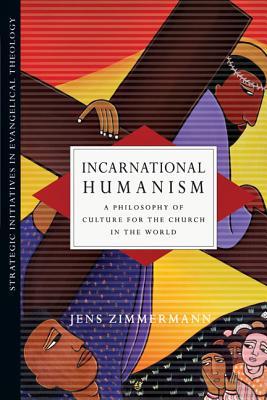
 Jens Zimmermann, Incarnational Humanism: A Philosophy of Culture for the Church in the World, Strategic Initiatives in Evangelical Theology(Downers Grove, Illinois: InterVarsity Press, 2012), 357 pages, ISBN 9780830839032.
Trinity Western University (Langley, British Columbia) Canadian research chair of Interpretation, Religion and Culture, Jens Zimmermann, argues that mainstream discourses on humanism are grounded in the religious reality of Christianity. He further proposes to read Christian humanism as the root of the western cultural heritage. With sources from the Greco-Roman antecedents, patristic, medieval, renaissance, and post-renaissance thinkers (chapters two and three) he corrects the dominant reading of humanism as an anti-Christian project of secularism in western intellectual history, especially found in the works of Kant, Hegel, Nietzsche, Martin Heidegger, Levinas, and Gianni Vattimo. These later thinkers were the focus of chapters four and five, even as Zimmermann also re-reads Marion’s phenomenology in light of Thomist and Barthian ontological emphasis, and with insights also to correct the works of contemporary philosophical hermeneuticians such as Richard Kearney and John Caputo in chapter five. Significant personalities mentioned in chapters two and three include Jesus Christ, Augustine, Nicholas of Cusa, Vico, Dilthey, and Gadamer. Chapter one provides an overlay of the current malaise of secularized western culture and its recent continental proposal about the return of religion, and argues that the exhaustion of secularism is because western civilization has cast aside its Christian roots. Theologians of culture would want to pay attention to the final chapter whereby he explains how transcendence and immanence meet as God’s presence in the world and in the church, with the Eucharist and the Sacrament of the Word understood as the heart of the Church and of incarnational humanism. Apologists and church leaders will find this publication a helpful reference, if they are not familiar with the primary canvass of secular humanism in western philosophy. Students in the philosophy of culture, cultural theological anthropology, or the ideological engagement of gospel and culture may find the introduction a good preliminary review. I suspect that scholars of religious interdisciplinarity would find the publication too concise, unless they read it with its companion-volume, Humanism and Religion (Oxford University Pres, 2012).
In Zimmermann’s explanation, God became man so that man may attain godlikeness as foundation of western culture (p. 163). Character formation, dignity, freedom, rights, language, and faith-reason are part of this participatory ontology; divine truth invites humanity to participate in the divine light. Christological personalism, combined with platonic idealism, brings about the vision of true humanism, and in that sense, renaissance’s project is not a quest for conceiving immanence that is devoid of transcendence or a secularizing self-creation (p. 188). One may read Zimmermann’s book as a bold declaration that anti-humanistic streams of thought could not continue its march triumphantly, albeit that some readers then and now still read western, continental philosophy and history in that anti-Christian secularist frame of reference. Zimmermann’s broad review however shows that the vision of the anti-Christian humanists were but partial and incomplete, and thus, humanists could not realize their vision when they remove the roots to their growing plant.
Also, with this book, those who tend to conceive life in dualistic categories of temporal and eternal may have to rethink their terms of reference. Here, Zimmermann shows that Foucault has terribly misread the Christian journey as that of “rushing through [this] life toward the next” (p. 182). God’s presence permeates the world. Therefore, the temporal life is not unimportant when compared to the eschatological life to come. Dualistic categories of sacred and secular, inherited from Platonic theory of forms, would not adequately explain the incarnational model that Christ has inaugurated. And along the same lines, readers would then have to ask themselves if they would have to revise a dichotomized view of reality: sacred vs. secular, temporal vs. eternal, and other dualisms, especially if they embrace the incarnational ministry of Christ, who have came to bridge barriers and cross boundaries.
If there were a weakness in the book to highlight, it would be that Zimmermann has also recommended an unrealizable dream. He urges the abandonment of pluralism (and European heterogeneous sociality) and to replace it solely with a Christian realism as the right way to conceive and develop human sociality (pp. 280-281). To be clear, he does not argue that the remaking of society could only be accomplished when the world converts to Christ (p, 279). He reprimands evangelical subcultures for retreating from secular culture and for promulgating sectarian subcultures that not only contradict God’s will of incarnational humanism but that also replicate the culture (and the worst of the culture) they have critiqued (p. 278). However, to call society to abandon the reality of pluralism and heterogeneous sociality is unwittingly a project that affirms the superiority of a particular group in society over and above all others. In a global world of civilizations, the proposal to abandon pluralism would not be warmly received, and would be subjected to severe criticism for perpetuating disrespect, intolerance, and incivility, and for going against the incarnate humanistic vision Zimmermann would fight so hard to defend in this volume under review. Here, we can only hope that a sequel would clarify this puzzling aspect of an already remarkable piece of work. Perhaps here, I wonder if this is a hint to an oeuvre that Zimmermann is developing, further to his contributions to theological hermeneutics, and now philosophical and theological anthropology.
Reviewed by Timothy Lim Teck Ngern
Originally published on the Pneuma Foundation (parent organization of PneumaReview.com) website. Later included in the Fall 2024 issue.