
Pouring Holy Water on Strange Fire: A Critique of John MacArthur’s Strange Fire and Charismatic Chaos

Are Pentecostals offering Strange Fire? (Panel Discussion)

Excerpts from Pouring Holy Water on Strange Fire: A Critique of John MacArthur’s Strange Fire & Charismatic Chaos by Frank Viola.
The central focus of this critique is simply to show that both Scripture and church history yield strong evidence that spiritual gifts are still extant in the church today.
My primary intention in writing it is to help my non-charismatic brethren who have been influenced by MacArthur’s books to reconsider and re-examine their understanding of the present-day work of the Spirit. My hope is that my non-charismatic brethren will open up their hearts more fully toward their charismatic brethren and sistren and vice versa.
(page 11).
3. Commending & Criticizing MacArthur’s Charismatic Blasting
Having read both Charismatic Chaos and Strange Fire, I want to cut to the chase in this Introduction and tell you where I think MacArthur is dead-on and where I think his conclusions are flawed and even outrageous.
The rest of this critique will provide evidence and examples supporting each point:
- The charismatic world is an easy target for any critic because there are a lot of problems within the camp.
There is no doubt that a number of high-profile charismatic leaders are guilty of outlandish teachings, absurd practices, stunts, gimmicks, exaggerations, and even fraud. And so are some of their followers. MacArthur is right about this and he articulates the problem well.
However, MacArthur is not the only person who has made this observation. Many charismatic leaders have as well. MacArthur even quotes some of them in Strange Fire.
Just as those charismatic leaders were not able to reel in the excesses that exist within the movement, I do not think MacArthur’s attempts will do so either. In fact, MacArthur’s latest book is his third attempt on this score (The Charismatics, 1978; Charismatic Chaos, 1992; Strange Fire, 2013).
(page 13).
- MacArthur is wrong in that he paints the entire charismatic world–which would include all charismatics and all charismatic churches–with the same broad brush.
The fact is, I have met many charismatics who were not guilty of any of the problems that MacArthur benightedly lays at their feet.
For example, the late David Wilkerson was a tremendous help to me when I was in my 20s. He encouraged me to make Christ, not the Holy Spirit, preeminent in my life.
Wilkerson—a charismatic leader—wrote a classic article called A Christless Pentecost on this subject.
I would encourage anyone who buys MacArthur’s arguments to read The Cross and the Switchblade and ask yourself if it is possible that the supernatural gifts of the Spirit are still operative today.
In addition, I wonder if MacArthur would admit that Teen Challenge, founded by Wilkerson, has been a blessing to many lost young people.
Throughout his books, MacArthur continually uses phrases like, “Charismatics believe … such and such.” “Charismatics think … such and such.” And then “the charismatic movement is guilty of . . . such and such.”
This is simply false. It would be accurate to say, “some charismatics believe” … or even “many charismatics believe …” or “some in the charismatic movement believe… .”
Using MacArthur’s logic and approach, one could easily write a book about the toxicity of the Reformed movement by painting all Reformed Christians as elitist, sectarian, divisive, arrogant, exclusive, and in love with “doctrine” more than with Christ.
And just as MacArthur holds up Benny Hinn, Todd Bentley, Pat Robertson, et al. to characterize the charismatic world, one can hold up R.J. Rushdoony, Herman Dooyeweerd, R.T. Kendall, or Patrick Edouard, et al. to characterize Reformed Christians. Or Peter Ruckman and Jack Hyles, et al. to characterize Fundamentalist Baptists. Or William R. Crews and L.R. Shelton Jr., et al. to represent Reformed Baptists.
My point is that countless charismatic, Reformed, and Baptist people would strongly object to the idea that any of these gentleman could accurately represent their respective tribes.
Even so, the game of burning down Straw Man City with a torch is nothing new.
The people whom MacArthur highlights as the poster boys for charismatics–Kenneth Copeland, Peter Popoff, Paula White, Bob Jones, E.W. Kenyon, Eddie Long, Oral Roberts, Benny Hinn, Pat Robertson—simply do not represent the views or practices of the majority of charismatic Christians in the world today.
(pages 14-15).
5. MacArthur makes statements that smell of elitism, sectarianism, and judgmentalism.
He says that charismatics do not have the “true gospel” and the “spirit behind them is not the Holy Spirit.” But that’s not all.
MacArthur bulbously claims that the charismatic movement “was a farce and a scam from the outset” and accuses it of being a “false church” (Strange Fire, Advanced Reader Copy, p. xix). He then rallies the troops saying, “this is the time for the true church to respond.”
Really?
MacArthur is part of the “true church” and all those poor charismatics are part of the “false church” which is driven by a spirit other than the Holy Spirit?
These vitriolic statements suggest that charismatic Christians are not true followers of Jesus.
In addition, MacArthur insinuates that the charismatic “movement is characterized by worldly priorities and fleshly pursuits” (Strange Fire, Advanced Reader Copy, p. 57). Hmmm . . . so David Wilkerson, Dr. Michael Brown, Adrian Warnock, Francis Frangipane, Sam Storms, and Jack Hayford (and their followers) are/were worldly and fleshly?
Really?
MacArthur accuses charismatics of being “obsessed with the supposed gifts and power of the Holy Spirit” (Strange Fire, Advanced Reader Copy, p. 53). By the same token, one could say that all Reformed people are obsessed with Calvin’s doctrine. But neither comment is fair nor accurate. (pages 15-16).
4. Does the New Testament Teach That the Gifts of the Spirit Ceased?
Most cessationists, including MacArthur, teach that the miraculous gifts of the Spirit ceased when the canon of Scripture (the completed writings of the Bible) was completed. Either that or they say the gifts ceased in A.D. 70.
They maintain that the Bible answers all of our spiritual questions and negates the need for the miraculous manifestations of 1 Corinthians 12.
In my opinion, this idea is a colossal stretch of logic and imagination.
Despite MacArthur’s claim, there is no verse in the New Testament that suggests that the supernatural gifts of the Spirit have ceased or will pass away before Christ’s second coming.
The burden of proof, therefore, rests upon those who would say that the work of the Spirit has somehow changed since Paul’s day.
1 Corinthians 13:8-13 is the only text in the entire Bible that is routinely interpreted to support the cessationist view.
Love never fails; but if there are gifts of prophecy, they will be done away; if there are tongues, they will cease; if there is knowledge, it will be done away. For we know in part and we prophesy in part; BUT WHEN THE PERFECT COMES, THE PARTIAL WILL BE DONE AWAY … For now we see in a mirror dimly, but then face to face; now I know in part, but then I will know fully just as I also have been fully known.
Here, Paul’s main point is that although the gifts of prophecy, tongues, and knowledge will one day cease, love will never cease.
Paul goes on to explain how the gifts of the Spirit are in part. This means that they do not reveal the complete mind or will of God, but only a fragment of it.
However, when “the perfect” comes, all things which are “in part” will cease to function.
Paul uses an illustration to describe what he means by “the perfect” saying that we now see through a glass darkly, but when the perfect comes, we will have a face-to-face knowledge of all things.
Paul says that when the perfect comes, he will know “fully just as I also have been fully known.”
In other words, when the perfect comes, Paul will know all things to the same degree that God knows him.
(page 18).
2. Paul says that knowledge will cease along with tongues and prophecy.
But if there are gifts of prophecy, they will be done away; if there are tongues, they will cease; if there is knowledge, it will be done away.
What cessationist would say that knowledge has passed away with the completed writings of the Bible? One has to do a lot of exegetical gymnastics to make that formula work.
(page 19).
4. The cessationist theory of 1 Corinthians 13 fails the practical application test.
Cessationists assert that there is no need for the revelatory gifts of the Spirit today because the Bible is all-sufficient for supplying us with an exhaustive knowledge of God’s will.
But consider the following biblical examples of how the revelatory gifts of the Spirit were used in the first century, and ask yourself this question when reading them:
Could the Bible reveal these same things to us today and thus substitute for these spiritual gifts?
1) Peter received a supernatural word that Ananias and Sapphira were lying to the church and to God (Acts 5:1-10).
2) Through the gift of prophecy, a sinner’s heart is exposed and falls to his knees claiming that God is alive through His people (1 Cor. 14:24-25).
3) Philip was specifically instructed to preach the gospel to a certain man whose heart God had prepared (Acts 8:29).
4) Agabus prophesied about a future famine that would grip the whole world, enabling the church to prepare for it (Acts 11:28-30).
5) God’s Spirit made known the calling of Paul and Barnabas and set them apart to begin a specific work of ministry (Acts 13:2).
6) The Spirit of God prohibited the apostles from ministering in certain areas for a season (Acts 16:6-7).
7) Paul received a night vision which instructed him to go into Macedonia to preach the gospel (Acts 16:9).
8) Agabus foretold Paul’s fate in going to Jerusalem, hence, preparing him for what was to come (Acts 21:11).
9) Peter received instructions from the Spirit to go with certain men sent from Cornelius (Acts 10:20). Peter was reluctant since they were Gentiles.
10) Peter discerned the spiritual state of Simon (Acts 8:23), and Paul discerned the spiritual state of Elymas (Acts 13:8-11), speaking words of correction and judgment to them. (pages 20-21). MacArthur argues that the majority of charismatics do not accept biblical criticism of their doctrines, but view such criticism as divisive and unloving.
He further asserts that the charismatic’s tendency to avoid judging doctrine by Scripture has fostered confusion as well as the emergence of many bizarre teachings.
In general, I agree with these points. Many charismatics are weak in their understanding of Scripture and prone to de-emphasize the role of sound teaching.
And it is common for some in the “movement” to exalt emotional experiences above the teachings of Scripture.
However, MacArthur fails to acknowledge that there are many believers who accept the perpetuity of spiritual gifts who are “mighty” in the Scriptures and who practice the mandate to “judge all things.”
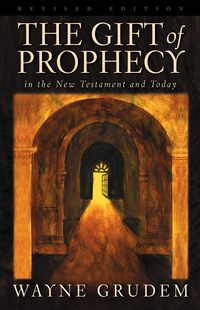
N.T. Wright, Craig Keener, Sam Storms, Gordon Fee, Jack Deere, Bernard Ramm, John Piper, Michael Green, James D.G. Dunn, Howard Snyder, Wayne Grudem, Russell P. Spittler, J. Rodman Williams, Charles Hummel, Robert Banks, the late Clark Pinnock, and Howard Ervin are just a few examples of men who embrace the continuation of miraculous gifts, yet take a highly academic approach to the written Word of God.
Moreover, their approach to spiritual gifts has been balanced, scholarly, and helpful.
Ironically, the academic credentials and works of scholarship that some of these men carry far exceed that of MacArthur himself. Hence, it is a gross mistake to denounce the entire charismatic world for failing to accept biblical criticism and embrace doctrinal soundness.
(page 27).
PR
Purchase Pouring Holy Water on Strange Fire: A Critique of John MacArthur’s Strange Fire & Charismatic Chaos at http://www.patheos.com/blogs/frankviola/strangefirefree. Find other resources from Frank Viola at http://frankviola.org/books. These excerpts are used by permission of the author.
Special thanks to John P. Lathrop for his help in selecting these excerpts.