The language of priests and the role of bishops in Jesus’ day

Kevin Williams responds to questions about the language used in the Second Temple and the role of the Bishop outside of the New Testament. This is part of a conversation that started with Henry Harbuck’s article, “What Bible Did Jesus Use?†and continued with “What Yeshua Quoted†by Kevin Williams. More recently, Henry Harbuck requested clarification in his letter, “Bishops, Aramaic, and the LXX.â€
Â
Brother Harbuck writes, “I must be wrong to have assumed for many years that the high priests spoke Aramaic.â€
It is certainly difficult to glean what may or may not have been going on in the temple when Jesus and the disciples walked the earth. Most of what we have recorded by the Israelites came well after the temple was destroyed, and what language was used was so common and widespread they did not consider it important enough to record.
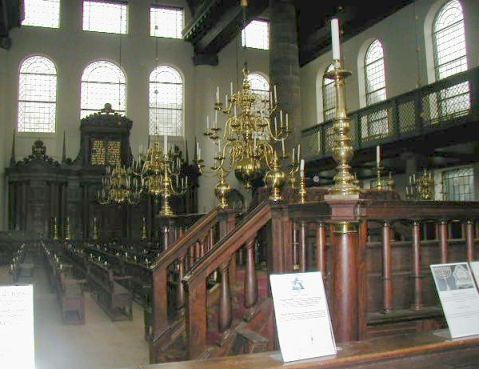
What I am about to suggest may not be a popular approach and not very academic, but let’s make an assumption based on what we actually do know. If today’s synagogue service is intended to be a mirror of the temple service, and it is, then I can tell you that the rituals are indeed conducted in Hebrew while the conversation and instruction would likely be in a local language. As a basis for my conclusion, there are two preeminent approaches to modern synagogue life: Ashkenazi and Sephardic, the first being more central and eastern European (German) based while the latter found its roots in Spain and Portugal. Both are considered authoritative in modern Judaism and while distinctly Jewish/Rabbinic they also share commonalities to the nations in which they are rooted. Their services are conducted in Hebrew though their conversations are in the commonly accepted tongue.

A quick story: years ago in a Messianic Synagogue in Toledo, Ohio, we were holding regular Friday night services. The liturgy was in Hebrew based on the Ashkenazi tradition and many of the praise songs we sang were in both Hebrew and/or English. The discussions, as you might guess, were about Yeshua and were in English. On one particular evening we had a small group of visitors, Russian Jewish immigrants. They spoke no English. We spoke no Russian. It was interesting to say the least! But we could share the Hebrew liturgy, which they understood, and we discovered that we had one other shared tongue with one individual—Italian. So we went from Hebrew to English to Italian to Russian and back again. Without intending to, we upheld a long-standing synagogue tradition.
So we have established what we know about today. Looking ahead, I refer you to the Temple Institute in Jerusalem. They routinely practice and prepare for the next temple doing all that they can to reestablish the observances just as they were carried out 2,000 years ago. For them, biblical Hebrew is a sacred tongue and the role of the priesthood is to make clear distinctions between the sacred and the secular. I can guarantee you that they will not be speaking Greek. More than likely they will speak modern Hebrew rather than biblical Hebrew when not conducting liturgy.
So we have a clue of what the practice is and what will be, ergo can we make an assumption about what was? Not with certainty or authority, but my informed conclusion is that the common language was practiced—Aramaic—for conversational purposes while Hebrew was reserved for liturgical observances.
Greek had come into common used by the ancient Hebrews because they had become so Hellenized. We have the Septuagint for that very reason. We have the text in many modern English versions because we have no attachment to Hebrew or Greek. The same was true of the Hellenized Jewish community. They could no longer read nor understand Hebrew and had become so “Greek†that it was a conscious decision to translate the Hebrew Bible into the Septuagint. But life in Alexandria would have been very different from religious life on the temple mount.
Brother Harbuck’s second question: “Is Mr. Williams saying that the Overseer (Bishop) presided in the synagogue? Though it seems he is saying this, based on the sentence construction, surely he is saying otherwise. The title Overseer (Bishop) is an office of the New Testament Church, but I’ve never heard it used in relation to the synagogue.â€
“Overseerâ€â€”which approximates into “Bishopâ€â€”and still officiates today in the synagogue service, is the chazen or chazzan. His role is to provide oversight, the literal application of the word overseer. He did not preside as a president, but as an official in charge of every jot and tittle. If any word in the Scripture was mishandled or mispronounced in any way, it was the role of the “Bishop†to correct the error so there would be no misunderstanding or misinterpretation of the Holy Writ. His authority only held sway during services.
In his commentary on the Gospel of Matthew, John Lightfoot (1602-1675) writes:
Besides these there was ‘the public minister of the synagogue,’ who prayed publicly, and took care about the reading of the law, and sometimes preached, if there were not some other to discharge this office. This person was called the angel of the church, and the Chazan or bishop of the congregation. The Aruch gives the reason of the name: “The Chazan (saith he) is the angel of the church (or the public minister), and the Targum renders…[it as] one that oversees; for it  is incumbent on him to oversee how the reader reads, and whom he may call out to read in the law.” The public minister of the synagogue himself read not the law publicly; but, every sabbath, he called out seven of the synagogue (on other days, fewer) whom he judged fit to read. He stood by him that read, with great care observing that he read nothing either falsely or improperly; and calling him back and correcting him if he had failed in any thing…Certainly the signification of the word bishop, and angel of the church, had been determined with less noise, if recourse had been made to the proper fountains, and men had not vainly disputed about the signification of words, taken I know not whence. The service and worship of the Temple being abolished, as being ceremonial, God transplanted the worship and public adoration of God used in the synagogues, which was moral, into the Christian church; to wit, the public ministry, public prayers, reading God’s word, and preaching. Hence the names of the ministers  of the Gospel were the very same, the angel of the church, and the bishop; which belonged to the ministers in the synagogues (John Lightfoot, From the Talmud and Hebraica: Matthew, emphasis mine http://www.ccel.org/ccel/lightfoot/talmud.txt).
That obviously causes some distress to our modern sensitivities as the role of Bishop has progressed well beyond how it was observed in the synagogues and early church. My role is not to condone nor criticize what it has become, but rather to point out what a “Bishop†was when Jesus walked the earth.
We read in Luke 4:16-17: “And [Jesus] came to Nazareth, where he had been brought up: and he entered, as his custom was, into the synagogue on the sabbath day, and stood up to read. And there was delivered unto him the book of the prophet Isaiah…†(ASV). The person who assigned him his portion to read would have been the synagogue’s Bishop—Chazzan—who only selected those to read whom he knew he could trust to be faithful to the Scripture. That makes me curious, did the Bishop suspect whom Yeshua was and intentionally reserve the Isaiah portion for him to read, or was this strictly a matter of Providence?
Thank you so much for the opportunity to clarify. May God be glorified now and always!