What Yeshua Quoted

Note from the Editor: I wrote this note to Kevin: “In an article I was reading recently, the author says that Yeshua likely read and quoted from the Septuagint. While I have always known that as a possibility, I thought it was more likely that Yeshua used the original Hebrew which was later quoted in the Gospels as if it had come from the LXX. What can you tell me about this?”
The article I referenced was “What Bible Did Jesus Use?†by Henry Harbuck. Without reading Harbuck’s article, Kevin responded with the brief article that follows.
– Raul Mock
I do not believe anyone can say unequivocally what Yeshua quoted.
Having fled to Egypt as a boy, possibly to the area of Alexandria where there was a flourishing Jewish population and the home of the LXX, he was no doubt very familiar with the text. It had already been around a hundred years or so.
Here’s what I do know, which again, is not authoritative but hopefully will help.
The LXX was adopted so that all the Greek-speaking Hebrews would have a text they could understand. The Hellinization of the Jewish population had been going on for some time (think liberal theology versus more orthodox and mainstream). There were plenty of Jewish people in the known-world, just as there are today, who had never been taught the Hebrew language. There was a deep concern that if they did not get the Greek-speaking Jewish men (women likely were not allowed to read yet) into the Word of God, they would slip further and further into paganism. There are reports, in fact, that Hellenization had become so prominent, that surgeons would perform reverse circumcisions so the men could participate in the arenas without being “noticed,” (as the athletes commonly performed au natural).
So the LXX was created, if you will, to be an evangelical tool to the Hellenized Jewish community. It was never intended to replace the Hebrew scrolls read so fastidiously over the centuries. “For Moses has been preached in every city from the earliest times and is read in the synagogues on every Sabbath” (Acts 15:21).
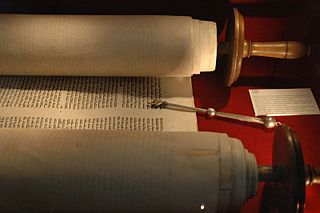
In the synagogues, the Hebrew would have been the preferred text. As I’ve written elsewhere, there were offices such as the Overseer (Bishop) who made certain the text was read verbatim and the Targumim (translator), whose job it was to repeat the text in the local language for the sake of the non-Hebrew speaking Jewish population as well as the God-fearing gentiles. If it was being read from the LXX, then there was no real need for a Targum, yet that office did exist in the synagogues.
The commentaries, notably the Mishnah which later became the Talmud, were not written in Greek. Study of the Word was done in Hebrew, and the commentaries reflect that. They would not work in Greek and make commentary in Hebrew. Yes it could happen, but it seems very counter intuitive.
 Certainly, extra-biblical texts such as the books of Maccabees may have originated in Greek. I’ve read that no Hebrew text of the story of Hanukkah existed until the 18th Century, when it was translated from the Greek. Yet the story of Matthias and Judas Maccabee was well-known, observed in the temple in Jerusalem (John 10:22), and likely known in Greek.
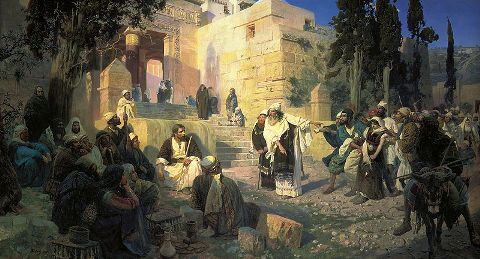
Now, did Yeshua quote from the LXX? Maybe. Yeshua demonstrates time and again a great propensity for speaking to his audience effectively. Would he quote the Septuagint to the Pharisees? I very much doubt it unless he intended to provoke them. I prefer to think that he would let the truth of the Word of God be the stumbling block and not his use of Greek.
In Matthew 22:35 we are told that Yeshua was asked by an “expert in the law.” Would Jesus reply to such an educated individual in the vulgar (i.e. common)? Maybe. But remember, his reply incorporates part of the Sh’ma, the holiest prayer of Israel both then and today. Given to whom he was speaking and the content quoted, it seems more reasonable that he would reply in Hebrew. A good speaker and a good teacher is always concerned with who is audience is and how best to communicate with them.
At other times, such as when he would address the multitudes, likely a mix of Hebrew and non-Hebrew speakers, who knows? He may very well have spoke in the regionally common Aramaic (as he used on the cross-Mark 27:46). Or, if there were God-fearing gentiles and Hellenized folk in his crowd, it seems reasonable to assume that he would use Greek.
I don’t think anyone can say with any measure of certainty what language or languages Yeshua used when quoting the Scripture. Neither do I think it relevant. Communicating the message in the best way, with as few hindrances to the audience as possible, would have been paramount. If that required Aramaic, Greek, Hebrew, or Latin, I believe it is likely that the Living Word would make it accessible to his hearers.