
Tongues: The Controversial Gift

A brief look at the controversial gift of speaking in tongues as the Spirit gives utterance, by Pastor John Lathrop.
The twentieth century has witnessed the rapid growth of two remarkable religious movements, the Pentecostal Movement and the Charismatic Movement. The Pentecostal Movement, which appeared first, attracted widespread attention in the early 1900’s. This was due largely to the revival services that took place at the Azusa Street Mission in Los Angeles beginning in 1906.[1] A little more than fifty years later the Charismatic Movement burst on the scene claiming the same spiritual manifestations that had previously appeared in the Pentecostal Movement. The charismatic renewal, sometimes called neo-pentecostalism, began to make its way into the mainline Protestant churches in the late 1950’s and by 1967 had infiltrated the Roman Catholic Church as well.[2] The impact of these movements has been profound. The sheer number of people involved indicates that. In 1995 the number of adherents to the Pentecostal Movement was said to be 410 million.[3] These movements have touched the world. While there are differences between the two movements, the one thing that they hold in common is the claim to fresh outpourings of the Holy Spirit, complete with healings and the other gifts of the Spirit, including the gift of tongues.
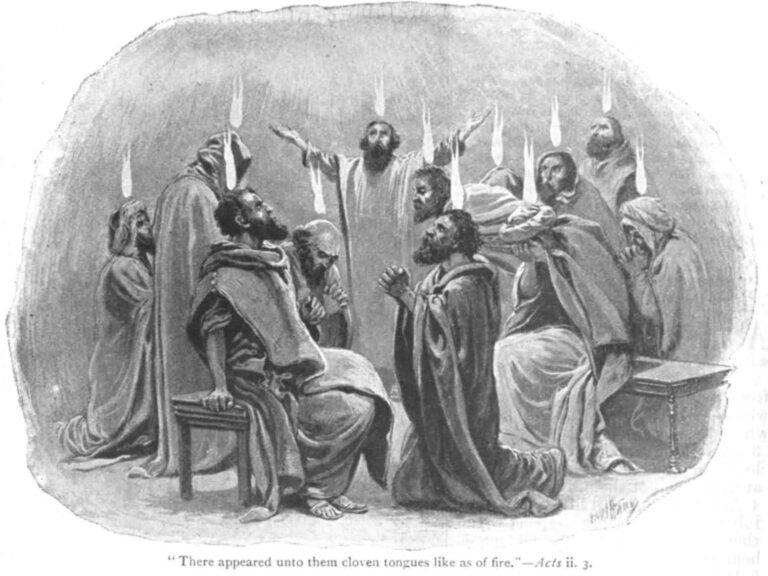
The gift of tongues, referred to by the apostle Paul in 1 Corinthians chapters 12-14, is perhaps the most controversial of the gifts of the Spirit. The reported reappearance of this gift in the Pentecostal and Charismatic Movements has produced responses ranging from joy to horror. The purpose of this paper is to consider the controversy regarding this gift, examine the contribution that the gift can make to the church and to contend for the restoration of this gift to its rightful place in the life of the church.
The major controversy regarding the gift of tongues concerns it’s existence. The Christian Church today is divided on the issue of whether this gift exists in our day or not. Christians who believe that the gift of tongues still exists are called charismatics or Pentecostals. Christians who do not believe that the gift exists today are called cessationists.
Regardless of one’s theological or denominational persuasion one thing that must be admitted about the gift is that it did exist in the first century church. The apostle Paul makes repeated reference to it in 1 Corinthians chapters 12 and 14. No other New Testament epistle makes any direct reference to this gift. However, this is not to suggest that the gift was something unique to the church at Corinth. The cessationist, Benjamin B. Warfield believed that the gift existed in the apostolic church and that it was not limited to Corinth.[5] In fact he goes so far as to say that an apostolic church without the gifts would be an exception.[6] The gifts, including tongues, were a regular part of church life in the first century.
The Christians at Corinth were very much people of the Spirit. As Paul writes to them they are already experiencing the gifts of the Holy Spirit. Paul said that they did not lack any spiritual gift (1 Cor. 1:7). This was certainly true of the gift of tongues. The amount of space given to it in 1 Corinthians 14 makes that clear. The gift of tongues held a prominent place in the Corinthian assembly even though it was not a gift for all (1 Cor. 12:30). It is significant to note that in all of his instructions regarding tongues Paul never speaks of them in a derogatory way. However, he does lay down some guidelines concerning the proper expression of the gift. This is not because there is anything wrong with the gift, but because the Corinthians were not using it correctly. They seem to have exercised it without restraint or interpretation. Paul’s correction of the Corinthians errors provides us with the most extensive information anywhere in scripture concerning the gift’s nature and function.
The scriptural teaching that Paul gives concerning the gift affirms a number of significant things about it. The first concerns its source. In 1 Corinthians 12 he repeatedly emphasizes that the gifts come from God (1 Cor. 12:4, 8-11). The second important point that he brings out is the purpose of the gift. The purpose of the gift of tongues, and all of the other gifts of the Spirit, is edification (1 Cor. 14:5,26). That is, they are meant to build up and strengthen the church. It is God’s intention that they make a positive contribution to the health and well being of the church. The third important point that Paul makes concerns the permanency of the gift. It is true that scripture says that tongues will be stilled (1 Cor. 13:8, NIV). The context indicates that this will happen when we see Christ face to face.[7] Thus, the gifts, including tongues, are a part of the church age and will continue until Christ returns. This truth is also affirmed in 1 Corinthians 1:7 where Paul says that the Corinthians lack no spiritual gift as they wait for Christ to be revealed.[8]
While there can be no argument that the gift of tongues existed in the apostolic church, there are those in the church who do not believe that this gift exists today. They believe that is has ceased (1 Cor. 13:8, KJV). These people are known as cessationists. Their theological position is built upon a combination of historical observation and scriptural interpretation.
However, the cessationists do also offer a scriptural foundation for their position. One text that they appeal to is 1 Corinthians 13:8,9. This text specifically says that tongues will be stilled when perfection comes. A cessationist interpretation of the text is that the perfection to come is the completion of the canon.[15] As was stated earlier the context of 1 Corinthians 13 does not support this interpretation. Noted textual critic Gordon Fee dismisses the cessationist interpretation of this text, not only on the basis of context, but also on the grounds of Paul’s intention and the recipients understanding.[16] He maintains that Paul couldn’t have meant the completion of the canon and that the Corinthians couldn’t have understood him to be saying this.[17]
Cessationist John F. MacArthur Jr offers another scriptural argument for the passing of the gifts. In his book, Charismatic Chaos, he asserts that the last record of miraculous gifts in the New Testament took place in A.D. 58.[18] He also says that tongues are not mentioned in any of the later books of the New Testament.[19] This is the argument from silence, which is never really conclusive or convincing. As ex-cessationist Jack Deere has pointed out, the cessationist position is not one that naturally comes from scripture; it is a position that one has to be taught.[20]
Those who believe in the present day existence of the gift of tongues do not necessarily agree about what the contents of an utterance in tongues should be. Since one who speaks in tongues speaks in a language that neither he nor his hearers understands, the companion gift of the interpretation of tongues is necessary to make the utterance intelligible.
One popular opinion in Pentecostal/charismatic circles is that an utterance in tongues is a word from God. In fact utterances in tongues are commonly referred to as messages in tongues.[21] This indicates that God is speaking to his people via the gift of tongues and interpretation. This understanding of the gifts is widespread. It can be found in scholarly works such as commentaries.[22] It can also be found in books that are written on a more popular level.[23] This view is expressed in the writing of classical Pentecostal Donald Gee.[24] Even those who would not be considered classical Pentecostals hold this view.[25] This view is essentially, tongues plus interpretation equals prophecy.[26] This belief informs the contemporary use of tongues and interpretation. Many, if not most, of the modern day expressions of these gifts are messages in tongues.
The scriptural foundations of this belief can be found in 1 Corinthians chapter 14. In verse 6 of this chapter the apostle Paul raises a question about what benefit he would be to the Corinthians if he came to them speaking in tongues. He implies that he would be of no benefit to them unless he brought them a revelation, prophecy or a word of instruction. One commentator sees in this text the possibility of tongues with the accompanying gift of interpretation being one of these things.[27] The other text used to support the view that tongues are a word from the Lord is verse 21. This verse, which is adapted from the Old Testament, refers to God speaking to people through strange tongues. Pentecostal writer, Donald Gee, sees in this grounds for tongues being a message from God.[28]Another view regarding the gift of tongues sees it as a word to God. In this view the direction of the communication is reversed, God’s people are speaking to him. Of the two views regarding the contents of an utterance in tongues this is certainly less widely known and practiced. One advocate of this view is Gordon Fee.[29] Another scholar who leans strongly in this direction is Craig Keener.[30] Some of the previously cited authors such as the Bennetts and Donald Gee also accept this expression of the gift.
The understanding of the gift as communication from the believer to God sees tongues primarily as praise and worship. This seems to be a common understanding of the private use of tongues but not of the public gift with interpretation. While this may be the minority view, at least in practice, it has strong biblical foundations.
The scriptural support of this view is found in Paul’s direct statement in 1 Corinthians 14:2 that the one who speaks in a tongue does not speak to men but to God. Also in favor of this understanding of the gift are the words that Paul uses to describe the gift of tongues. Paul describes tongues as prayer, praise and thanksgiving (1 Cor. 14:14, 16-17). All of these words describe activities that are properly directed to God.
The gift of tongues along with the gift of interpretation provides a supernatural connection between God and his people in which communication takes place. These gifts when properly exercised serve to greatly bless God’s people.
This now brings us to the consequences of the gift, that is, the effect or impact that the gift has when it is in operation. There are some in the church who do not like the word experience. To them it is a term that stands in tension with the authority of scripture. While experiences should never be exalted above scripture, this does not mean that all experience should be shunned. Scripture and experience are not mutually exclusive. Part of the purpose of scripture is to lead us into an experience with God. If God is still the living God (1 Tim. 3:15) it should be expected that his people will experience him as the New Testament church did.
The gift of tongues as described in 1 Corinthians 14 is for congregational use and the common good (1 Cor. 12:7). When tongues are expressed in a church meeting they come through an individual who is the first to experience them. This individual serves as the human vessel through whom God graces the meeting. Whether they are conscious of it or not this person experiences a number of important things.
The first thing that the individual experiences is the presence of the Lord. While it is true that God is everywhere present, this is a manifest presence. God is not only with the individual but moving through them by his Spirit.
Another thing that the individual experiences in exercising the gift of tongues is being chosen. They have been prompted to speak by the Spirit. Of all of the assembled worshipers the Lord has called upon them to minister to the church as a whole through this public gift. This should be both a holy and a humbling experience since it is the Holy Spirit who distributes the gifts (1 Cor. 12:11).
The gift, once manifested through the individual brings about a corporate experience of the gift. The other worshipers are now aware that something is happening in the assembly and this has an effect on them.
The first effect tongues produces is the same that it produces for the individual, namely an awareness of the presence of the Lord. God is in their midst and is making that clear through the manifestation of the gift. This generally results in a hush falling upon the congregation as the speaker, inspired by the Holy Spirit, utters words in an unknown tongue. This is a holy moment and is usually one that is characterized by a great awe and reverence for God.
The public gift of tongues also produces a sense of anticipation. For the gift is not complete without the companion gift of the interpretation of tongues (1 Cor. 14:5,13,27,28). The worshipers now wait to hear, in their own language, what has been previously said in a language that they did not know. Those who have been in services where these gifts have been in operation know the effect that they can have upon the congregation. It can be a very rich experience.
But experience without purpose means nothing. God gives the gifts of the Spirit, including tongues, for a purpose. The divine intention is declared to be edification (1 Cor. 14:4,5). The edification provided by the gift is both individual and corporate. The apostle Paul states very clearly that the person who speaks in tongues edifies himself (1 Cor. 14:4), he is somehow built up in his faith by speaking in tongues. Some may question how this can be since the individual does not know what he is saying. While speaking in tongues does not seem to appeal to the logical or analytical mind it is of benefit. There are at least two reasons why it is of benefit.
The second reason why they edify the believer is because of what they are. Paul describes tongues as prayer, praise and thanksgiving (1 Cor. 14:14-16). These are all parts of communication with God. Anything that increases or strengthens our communication with God will build us up in our faith.
The gift of tongues can provide edification to the congregation if the tongues are interpreted (1 Cor. 14:5). The tongues, once interpreted, are understood by the congregation and can serve to edify them in one of two ways.
First, they can be a source of great encouragement as God speaks to his people and gives them direction and comfort. Thus, tongues and interpretation function as prophecy (1 Cor. 14:5). This contemporary word from the Lord can be a great help to the people of God as they are reminded that he knows were they are and that he cares for them. They may also be touched by the fact that they have been granted time in heaven. God took the time to speak to them.
The second way in which tongues can edify the congregation is in the area of worship. If the interpreted utterance is prayer and praise, this inspired worship can enhance the worship of the entire congregation. As the praise is offered, the people become aware of the greatness of God and in greater numbers and intensity enter into worship. This manifestation of the gift serves to make worship contagious.
In this paper we have seen that the gift of tongues is a controversial gift. While definitely present in the first century church its presence in the contemporary church is questioned. We have also seen that the cessationist’s position rests on strained scriptural interpretation, the history of the post-apostolic church and their own experience.[31] Cessationists lack a clear word from the Lord that the gift of tongues has passed from the church. We have also seen the purposes that the gift served in the early church and the great benefits that it provided both to the individual who exercised the gift and to the congregation. These things cannot be minimized. God gave the gift of tongues to the church to strengthen it (1 Cor. 14:26).
The outpouring of the Spirit is a characteristic of the last days.[32] The last days began in the first century AD, the time of the apostolic church, and will continue until the Lord’s return.[33] In view of this fact we should expect the presence of spiritual gifts in the church today.
The church is still in need of the edification and strengthening that the gifts provide.[34] Since this is so, we dare not exclude any of the spiritual gifts from the church, including tongues. On the contrary, we should earnestly desire all of the spiritual gifts (1 Cor. 14:1).
PR
This brief look at the controversial gift of tongues was written by John Lathrop in 2004, when it was published at the Pneuma Foundation (the parent organization of PneumaReview.com) legacy site.
Notes
[1] Stanley Burgess and Gary McGee, eds. Dictionary of Pentecostal and Charismatic Movements (Grand Rapids, MI: Zondervan, 1988), s.v. “Azusa Street Revival,†by C.M. Robeck Jr.
[2] Charles E. Hummel, Fire in the Fireplace: Contemporary Charismatic Renewal (Downers Grove, IL: InterVarsity Press, 1978), 39.
[3] Harvey Cox, Fire From Heaven: The Rise of Pentecostal Spirituality and the Reshaping of Religion in the Twenty-first Century (Reading, MA: Addison-Wesley Publishing, 1995), xv.
[4] Carl Brumback, What Meaneth This? (Springfield, MO: Gospel Publishing House, 1947), 268-269.
[5] Benjamin B. Warfield, Counterfeit Miracles (New York: Charles Scribner’s Sons, 1918), 5.
[6] Ibid.
[7] Douglas A. Oss, Are Miraculous Gifts For Today? ed. Wayne A. Grudem, Counterpoints (Grand Rapids, MI: Zondervan, 1996), 274.
[8] Ibid.
[9] Warfied, 3-31.
[10] Richard B. Gaffin, Jr., Are Miraculous Gifts For Today? ed. Wayne A. Grudem, Counterpoints (Grand Rapids, MI: Zondervan, 1996), 28.
[11] Warfield, 5-31.
[12] Ibid., 6-12.
[13] Ibid., 6,23.
[14] Gordon D. Fee, Gospel and Spirit: Issues in New Testament Hermeneutics (Peabody, MA: Hendrickson Publishers, 1991), 119.
[15] Jack Deere, Surprised By The Power Of The Spirit (Grand Rapids, MI: Zondervan, 1993), 141.
[16] Fee, Gospel and Spirit, 7,8.
[17] Ibid., 8.
[18] John F. MacArthur, Charismatic Chaos (Grand Rapids, MI: Zondervan, 1992), 231.
[19] Ibid.
[20] Deere, 54-55.
[21] Gordon D. Fee, God’s Empowering Presence: The Holy Spirit In The Letters Of Paul (Peabody, MA: Hendrickson Publishers, 1994), 218.
[22] C. K. Barrett, The First Epistle To The Corinthians (New York: Harper & Row, 1968: reprint, Peabody, MA: Hendrickson Publishers, 1987), 319 (page citations are from the reprint edition).
[23] Dennis Bennett and Rita Bennett, The Holy Spirit And You: A Study-Guide To The Spirit-Filled Life (Plainfield, NJ: Logos International, 1971), 85.
[24] Donald Gee, Concerning Spiritual Gifts, rev. ed. (Springfield, MO: Gospel Publishing House, 1972), 63,64.
[25] C. Peter Wagner, Your Spiritual Gifts Can Help Your Church Grow (Glendale, CA: Regal Books, G/L Publications, 1979), 233.
[26] Barrett, 316.
[27] Ibid, 317.
[28] Gee, 63,63.
[29] Fee, God’s Empowering Presence, 217-217, 223.
[30] Craig S. Keener, 3 Crucial Questions About the Holy Spirit, 3 Crucial Questions Series (Grand Rapids, MI: Baker Books, 1996), 121.
[31] Deere, 55-56.
[32] Oss, 266-267.
[33] Ibid.
[34] Deere, 135.
Bibliography
Barrett, C. K. The First Epistle to the Corinthians. Harper’s New Testament Commentaries. New York: Harper & Row, 1968. reprint, Peabody, MA: Hendrickson, 1987.
Bennett, Dennis and Rita Bennett. The Holy Spirit and You: A Study-Guide to the Spirit-Filled Life. Plainfield, NJ: Logos International, 1971.
Brumback, Carl. What Meaneth This? Springfield, MO: Gospel Publishing House, 1947.
Burgess, Stanley and Gary McGee, eds. Dictionary of Pentecostal and Charismatic Movements. Grand Rapids, MI: Zondervan, 1988.
Cox, Harvey. Fire From Heaven: The Rise of Pentecostal Spirituality and the Reshaping of Religion in the Twenty-First Century. Reading, MA: Addison-Wesley Publishing, 1995.
Deere, Jack. Surprised By The Power Of The Spirit. Grand Rapids, MI: Zondervan, 1993.
Fee, Gordon D. God’s Empowering Presence: The Holy Spirit in the Letters of Paul. Peabody, MA: Hendrickson Publishers, 1994.
________ Gospel and Spirit: Issues in New Testament Hermeneutics. Peabody, MA: Hendrickson Publishers, 1991.
Gee, Donald. Concerning Spiritual Gifts, rev. ed. Springfield, MO: Gospel Publishing House, 1972.
Gruden, Wayne A., ed. Are Miraculous Gifts for Today? Four Views. Counterpoints. Grand Rapids, MI: Zondervan, 1996.
Hummel, Charles E. Fire in the Fireplace: Contemporary Charismatic Renewal. Downers Grove, IL: InterVarsity Press, 1978.
Keener, Craig S. 3 Crucial Questions about the Holy Spirit. 3 Crucial Questions Series. Grand Rapids, MI: Baker Books, 1996.
MacArthur, John F., Jr. Charismatic Chaos. Grand Rapids, MI: Zondervan, 1992.
Wagner, C. Peter. Your Spiritual Gifts Can Help Your Church Grow. Glendale, CA: Regal Books, G/L Publications, 1979.
Warfield, Benjamin B. Counterfeit Miracles. New York: Charles Scribner’s Sons, 1918.