

Henry I. Lederle: The Third Wave: New Independent Charismatic Churches, Part 1

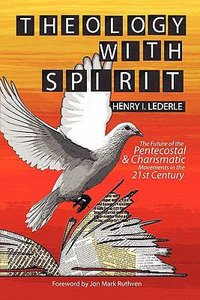
Editor’s Note: In this excerpt from his latest book, Professor Lederle says the “third wave” should perhaps be called the rise of the new independent charismatic churches. The Pneuma Review editorial committee hopes you will be encouraged as you read this chapter and will purchase this excellent book for yourself.
The third major movement of the Pentecostal-Charismatic segment of Protestantism distinguishes itself from the First and Second Waves in two important ways. First, as we have just seen, it led to new structures being formed. Although the word “denomination” has remained suspect in these circles, and the idea of tradition is usually also viewed rather negatively, these new Christian groups are, in fact, already new denominations in the making, rapidly forming their own traditional patterns of organization and church life. It has been estimated that over 3,000 of these new independent Charismatic groups or denominations have been established globally. Second, in the teaching of these Independent Charismatic Churches, a whole spectrum of innovative doctrinal emphases emerged. There has been much debate about some of these teachings. Usually there is some continuity to be found within the Pentecostal-Charismatic heritage with these new teachings. Some of their teachings have remained contentious, especially in the wider circles of Christianity. The fact is, however, that most of these innovations had their roots in the classic spiritual writers of the nineteenth century. This fact will be pursued later.
The term “Third Wave” will now be used as synonymous with the Independent Charismatic Churches. Here the primary slogans and metaphors were not “Hang in there,” “Be salt and light,” “Renew from within,” as in the Second Wave, but rather, “Go out from among them,” avoid “unequal yoking,” seek “new wineskins” for the new wine. The universally pervasive conviction was that “the Cloud has moved on” and God’s pilgrim people need to launch out and chart a new course. The people who make up this new move include both converts to the Christian faith and many believers who transferred from other churches. A significant number of the latter group came from both the First and the Second Waves. Classical Pentecostalism provided a large number of leaders in the Independent Charismatic movement.
Some believed that the Pentecostals had themselves fallen prey to denominationalism and had become too formal or traditional. The Latter Rain movement expressed this in a scathing critique of Pentecostal churches that led to an equally swift denouncing of the Latter Rain as a heretical movement. Although the Classical Pentecostal denominations continued to experience growth, some of their members left to join the new Independent Charismatic ministries. The same applied to the Second Wave. It has been estimated that at least 50% of mainline denominational Charismatics gave up on their program to renew their churches from within and left for what they considered to be greener pastures. They had a hunger for a church where Spirit-empowerment and Charismatic gifts and ministry could be more visible or regular. Some naturally found a home in major Pentecostal denominations, such as the Assemblies of God. A larger section of the discontented, however, pursued the pathway of the non-denominational or Independent Charismatic Churches.
First a word needs to be said about the term “Third Wave.” It was, I believe, first coined by C. Peter Wagner, at that time from the School of World Missions at Fuller Theological Seminary in Pasadena, California. He believed that the “Second Wave,” or denominational Charismatic movement, influenced the larger mainline Protestant churches that were of a more liberal background theologically. I disagree with this analysis and maintain that more conservative and evangelical Protestants were also deeply involved in this movement from the very beginning. Wagner further stated that the Second Wave writers, who preferred to identify themselves as Charismatics rather than as being of a Neo-Pentecostal persuasion, nevertheless still remained within the theological tradition of a theology of subsequence with a heavy emphasis on glossolalia. The more integrative understandings of Spirit-baptism, as developed in the global Charismatic awakening, especially in England and Germany, were less prominent in the United States than in Europe, and their unique contribution may have escaped his notice. As a result, the awakening of charismatic gifts—especially of healing and prophecy—among more conservative Protestant groups was heralded by Wagner as constituting a “Third Wave,” while others, like myself, still considered them as an integral part of the whole denominational Charismatic Renewal, or Second Wave.
A significant aspect among the evangelical Charismatics, which Wagner was accentuating, is a fresh openness and acceptance of all the charisms of the Spirit without requiring any initiatory crisis experience. In these circles, the major hurdle to clear was the theory of cessationism, which still held sway in many conservative Protestant groups. Cessationism teaches that at some point in early church history all miracles ceased. In this study, Wagner’s third wave is discussed loosely under the third subsection of the Third Wave (Empowered Evangelicals). The term Third Wave is here more broadly understood as the whole Independent Charismatic movement.
To my mind, the primary objection against designating this group of more conservative denominational Charismatics as a separate Third Wave is the limited size of this movement. Whenever illustrations of this approach are given, the examples seem to come from the Vineyard movement associated with the ministry of John Wimber. The Vineyard movement, however, is not structurally parallel to the renewal movement within conservative Protestant Churches, such as Southern Baptists or conservative Congregationalists, because it is clearly a new denominational grouping. It took the major ecclesiological step of forming a separate structure. The renewal among conservative Protestants has been an arduous journey. The Southern Baptist Convention, for example, has a long history of disfellowshiping local congregations that become overtly charismatic, and it objects to glossolalia being practiced among its missionaries—even as a private prayer language.
As a result, this researcher chose to use the term “Third Wave” for a much more prominent and sizeable movement that has taken place in the last two decades of the twentieth century. I am referring to the Independent Charismatic churches that grew to become a global phenomenon in the eighties and nineties. They are structurally distinct from the renewal movement within established churches and have become known for specific doctrinal emphases. There is, nevertheless, a very broad spectrum of theological views represented in this group.
For this chapter, no thorough written history of the development of this movement is available, as was the case with the First and Second Waves of the Spirit. The tentative analysis of the major groupings presented here is the result of my own taxonomy that was published in 1990. Due to the paucity of sources, some attention will be given to the development of the movement itself. The Third Wave—used in this particular way to designate all Independent Charismatic churches—has at least four subsections or currents (to maintain the analogy of waves). These currents range from the faith emphasis found in the Rhema Bible Church to the more “laid back” West Coast style of the Vineyard movement. Some of these Independent Charismatic churches or ministries are rooted in Classical Pentecostalism or, more especially, in the Latter Rain movement of the late 1940s and early 1950s. Others more clearly have a post-denominational renewal stamp to them, being born of the dissatisfaction that arose when traditionalists in many churches resisted Charismatic emphases and the renewal movement was stifled or sidetracked by denominational leadership.
The Third Wave has produced a large number of strong and dynamic leaders. While many Independent Charismatic groups over time felt the need to form loose networks and some even opted for clearly defined Episcopal structures (such as the International Communion of Charismatic Churches), others formed local congregations with no formal links to any other believers at all. Churches of this latter category are usually generically named according to locality, e.g., Middleton Family Church, Laketown Fellowship of Believers, and Westville Worship Center. The term “non-denominational” has sometimes been used to describe the whole Independent Charismatic movement, but “non-denominational” applies only to the unconnected type of churches referred to in the previous sentence. Most Independent Charismatic groups have tended to seek some form of mutual accountability, association, and networking with those of similar ministerial focus and teaching. The trend toward forming links has been made more urgent by the unfortunate circumstances of several prominent Charismatic leaders going astray morally when too much influence and control were concentrated in the hands of an individual. “Non-denominational” or unconnected churches may initially still have a strong sense of theological heritage, communality and connectedness to Christian tradition, simply through the heritage and training of the current leadership.
The Independent Charismatic movement is a global phenomenon. Firmly established in the United States and Canada, it has spread internationally, with significant concentrations in England, Sweden, France, the Netherlands, South Africa, Nigeria, China, Russia, South Korea, Singapore, and India.
Four Third Wave Currents
We move now to a description of the doctrinal distinctives of the four main currents of the Third Wave, seen as the Independent Charismatic churches, or networks of churches. As pointed out above, in contrast to the previous two chapters, this chapter will be based largely on my own research.
The first two groups are both kingdom-focused, but will be dealt with separately, since the first has a premillennial approach and the second a postmillennial one.
Restorationist (Premillennial)
The first Independent Charismatic group to be dealt with may be designated as the Restoration movement. In many ways, the Restorationist current of the Independent Charismatic movement is merely the latest expression of a perennial trend that can be observed in church history. The early church, as described in the book of Acts, has been viewed as the ideal model throughout the centuries. The vibrancy of Christianity under persecution in the first three centuries has also been somewhat romanticized. The dream is to build a New Testament church—one that is truly apostolic in the sense of being like that of the first apostles. Most major renewal movements in church history have expressed something of this passion to restore the Church to the way things were, but inevitably become the victim of the same tendencies against which they were protesting. A striking example in North America was the movement led by Barton Stone and Alexander Campbell in the nineteenth century. They were against any form of denominationalism, wanting merely to be known as Christians, disciples, or churches of Christ. Nevertheless, in time they took on structural form, got organized, experienced internal dissension and have now added another three denominations to the American landscape of churches.
Within the whole Independent Charismatic movement, this Restorationist vision plays a significant role. It goes hand in hand with an insistence that “denominations” are not in the plan of God. Like the Irvingites, the Brethren, and the Disciples of Christ, they are striving to restore the New Testament pattern of early Christianity. A special characteristic of this ideal among Independent Charismatics is the restoration of the fivefold (or fourfold) ministry of Ephesians 4:11–12. The charismatic offices of apostle and prophet need to be restored to the church, in addition to the more common offices of evangelists, pastors, and teachers. (According to many exegetes, the office of pastor and teacher actually forms one office. This is why views vary as to whether there are four or five primary offices in the Church.)
The Restorationist wing of the Independent Charismatic movement significantly influenced England, where it was originally called the British “House Church” Movement—a name that did not apply long, since the increase in numbers soon moved the gatherings out of private homes. The underlying conviction was that the Church should invest in relationships rather than in buildings.
Authoritarian Undercurrent
There is a strong authoritarian undercurrent in this movement, coupled with some influence from the Exclusive Brethren Church. Leadership is placed in the hands of apostolic teams which have oversight and supervision over regional geographical areas (like bishops). This oversight, however, is not considered formal or hierarchical but rather relational in nature. Authority is upheld through relationships nurtured with local pastors by the traveling apostolic teams. The emphasis is not on formalized structures, as may be found in an Episcopal polity or church government in the hands of bishops. Restorationism has generally seen itself as radical and engaged in preparing the bride of Christ as a church “without spot or wrinkle.” The history of Christianity is viewed very negatively. Historic, established churches are part of the apostasy of denominationalism and staid tradition. This view was advocated by William Branham in the Latter Rain movement as well. In parts of the restoration movement, freedom and openness have been marred by authoritarian leadership. Although rejecting the hierarchy of bishops, some leaders assumed authority that may, in practice, be greater than any Episcopal authority found, for example, in the Church of England, which has developed over the centuries a system of checks and balances for the exercise of power. Restorationist groups in the Independent Charismatic movement have sometimes fostered intentional communities and covenantal extended households. This practice became a worldwide phenomenon in the 1970s, but it has not stood the test of time. Many large communities experienced problems with authoritarian styles of leadership (usually all male), leading them to fragment and eventually disband.
Strong Link to Israel
Another dimension of the Restorationist movement is its strong link to the nation of Israel. This is also shared more widely in the Independent Charismatic circles, for example, well known Charismatic leader, Pastor John Hagee of Cornerstone Church in San Antonio advocates unwavering support for the state of Israel and the Jewish community. In broader theological circles, some have emphasized and (re)discovered of the Jewishness of both Jesus and Paul since the 1960s.
The Christian Embassy in Jerusalem and the annual celebration of the third great Jewish festival, the Feast of Tabernacles, by evangelical and Charismatic Christians are also indications of this focus. In line with this is an exuberant style of worship found among Independent Charismatics, including dancing, rhythmic hand clapping, and joyous praise. By this style of worship, some claim the Tabernacle of David is being spiritually restored, ushering in the rapture. David’s way of worship is seen as paradigmatic for New Testament church believers because it was not centered on animal sacrifices like the temple worship; and worship centers like the International House of Prayer in Kansas City have had ongoing worship led by musicians and prayer leaders around the clock (24/7) for almost a decade.
The biblical basis presented for the “Tabernacle of David” trend in worship is found in Acts 15:16, where James quotes Amos 9:11-12 concerning the restoration of David’s tabernacle. Other more common interpretations are that the reference is to the restoration of Israel as a nation or to the restoration of the Davidic kingship in the eternal kingship of the Messiah. However, to these Restorationists, the renewal of a perfect pattern of exuberant praise and worship is seen as a pivotal step in restoring God’s glory to the Church, which will then usher in the return of Christ. This form of worship is sometimes called “warfare praise” and is linked to doing battle with demonic forces. Bill Hamon speaks of the “Joshua Generation” which has crossed over the spiritual Jordan to march around Jericho in order to take the land. The term “Eagle’s Nest” for a network of congregations also represents this military language of conquest.
Shepherding & Discipleship
In the United States the whole Charismatic world was rocked just prior to its largest gathering ever—some 50,000—at Arrowhead Stadium in Kansas City in 1977 by the controversy which centered on the so-called “Shepherding” movement associated with such leaders as Bob Mumford, Derek Prince, Don Basham, Charles Simpson, and Ern Baxter. They were leaders in a Restorationist style group called the Christian Growth Ministries. These popular Bible teachers and evangelistic preachers gathered a large following through speaking at Charismatic conferences, circulating audio tapes, and their primary publication, New Wine magazine. At the heart of this Shepherding movement was a concept of discipleship involving submission to Christian leaders that challenged both American individualism and the style of evangelism represented in the frontier revivalist heritage of American evangelicals. The discipleship teaching of Argentinean evangelist, Juan Carlos Ortiz, seems to have been influential in developing the theological concept of the Church found in both the British and American forms of restorationism. His 1975 book Disciple sold well internationally. Leaders in the Shepherding movement, which was centered geographically in Fort Lauderdale, Florida, and later in Mobile, Alabama, emphasized that the Christian life necessitated ongoing discipleship and character development. Leading someone to Christ made one responsible to provide follow-up teaching and guidance. Here the controversial term “shepherd” was introduced. New converts were to submit to their shepherds.
In time, problems were bound to surface. Some shepherds abused their authority and saw themselves as mediators between the “sheep” and the Lord. Some also challenged the authority of local pastors. When suggestions were made that tithes may be paid to shepherds rather than to local congregations, a showdown became inevitable. The underlying tension erupted at gatherings arranged to discuss ways to resolve the issues and maintain unity in the fledgling Charismatic movement. Most denominational Charismatics (Second Wave) as well as many Classical Pentecostals (First Wave) questioned the Fort Lauderdale teaching on submission. Independent Charismatics, with unexpected support of some Catholic Charismatics, aligned themselves on the other side. The underlying fear was that popular and widely influential leaders, such as Derek Prince and Bob Mumford, might form a new denomination and that most denominational Charismatics would then leave their churches and flock to it. The “Fort Lauderdale five” of the Christian Growth Ministries were stung by the criticism they received and were adamant about rejecting the option of a new denomination. A large number of Second Wave denominational believers did eventually leave their more traditional churches and formed new structures of an independent nature within the Third Wave.
S. David Moore’s The Shepherding Movement: Controversy and Charismatic Ecclesiology is the definitive history of the American movement. He traces its origins as a distinct stream to 1974—a few years before the public controversy—when many denominational Charismatics started leaving their traditional churches. To counter a lack of moral discipline and character among new converts, individual believers were being taught to submit to a shepherd and develop covenant relationships that could foster growth in spiritual maturity and integrity. Leaders also needed to be linked to one another for mutual accountability and “covering.”
Those remaining in the Second Wave feared a virtual take-over of the whole Renewal movement by these Independent Charismatics. David du Plessis, also known as Mr. Pentecost, who—as has been pointed out above—had been very instrumental in bringing people from a wide range of established churches into the Charismatic movement, expressed the opposition of many to this non-denominational movement. Against the idea that Christians need to submit to a shepherd, he stated publicly and in a dramatic way: The Lord is my Shepherd.
Between 1973 and 1975, three annual Shepherds’ conferences consolidated a network of churches under the leadership of the five Fort Lauderdale leaders. New Wine magazine became the most widely circulated Charismatic journal in North America. Churches that related to the Shepherding/Discipleship movement adopted new structures, often in accordance with the writings of Ortiz. Relationships were seen as crucial. When these churches became large, they often adopted the following pattern. The smallest unit was the regular weekday house church or cell group gathering in homes for Bible study, fellowship, and worship, under a local shepherd. Next came a Sunday congregational or district meeting in a hall or other facility, under a pastor. The largest meeting would be a Sunday celebration of the whole group of several thousand, perhaps bi-monthly, under the leadership of a Charismatic senior pastor who often was also an apostle with translocal authority.
Kilian McDonnell, the prominent Roman Catholic ecumenist and scholar, who has been referred to several times, gathered the documents describing the heated Discipleship controversy that developed in 1975–76 and included them in his three-volume study on the global responses to the Charismatic movement entitled Presence Power Praise. In his doctoral study, Moore describes the meeting in Minneapolis, called to bring leaders of different emphases together, as the “Shoot Out at the Curtis Hotel.” The independent, or non-denominational, movement’s teaching on submission was severely criticized, and the Shepherding leaders were shocked and hurt by the vehement attacks by their Christian brothers. The movement actually reached its peak only in 1982 with 100,000 members and 500 associated churches. However, by then their teachings had been widely discredited, and internal problems also led to the dissolution of the movement by 1986. Much later Bob Mumford publicly declared contrition and admitted that he had been wrong in some of his views. Only a small group continues under the leadership of Charles Simpson in Mobile, Alabama, now called the Covenant movement.
With the advantage of hindsight, it is probably true to say that the differences that existed between the proponents and detractors of the shepherding/discipleship/submission teaching belong well within the parameters of acceptable diversity within basic evangelical Christianity. Had a new church grouping been formed, it is probable that the extremes which were being evidenced on the fringes (shepherds claiming too much authority, manipulation, etc.) would have been corrected within the movement over time.
Perhaps the reasons why this greatly feared “new denomination” was not formed and momentum and support for this whole movement was lost could be summarized as follows: (1) There was still a deep theological aversion to forming new “denominations.” This tendency had been more recently illustrated in 1948 by “the New Order of the Latter Rain” and its across-the-board rejection of Catholicism, Protestant denominations, and even Pentecostalism. In these Restorationist type movements, organized, institutional structures and personal relationships were seen as mutually exclusive. (2) The overreaction of, especially, mainline Protestant Charismatics and some of their Classical Pentecostal allies unnerved the Fort Lauderdale Restorationist leaders. Their motives and personal integrity had been questioned. Their growth was said to be largely by transfer of believers, and the reproach of “sheep stealing” was leveled. The forming of a national network of churches would have confirmed the worst fears of their detractors. (3) There seemed to be theological differences on the nature of the church, as well as practical issues like unbridled individualism, lack of moral accountability, pride, and authoritarianism that muddied the waters.
Apart from the Fort Lauderdale movement, which was then called the Christian Growth Ministries (but renamed itself several times), there are many other examples of Restorationist style groups in the USA. A typical example may be Silver Spring Community, also known as the People of Destiny International (PDI), under the leadership of C. J. Mahaney and Larry Tomczak. These two young evangelists, coming originally out of the Jesus movement, formed a network of churches in which relationships, communal living, and exuberant worship were of pivotal importance. The movement started in 1977 in Wheaton, Maryland. Tomczak’s background was in the Catholic Charismatic renewal. He later left PDI and was for a time connected to the Brownsville Revival in Pensacola, Florida. Mahaney’s background is Reformed, and the official stance of PDI expresses this with its new name “Sovereign Grace.” The designation PDI has been retained as an acronym: Proclaiming God’s grace, Developing local churches, and Influencing our world with the gospel. The ministry is now led by an apostolic board of six men, with headquarters in Gaithersburg, Maryland. Catholic scholar Peter Hocken discerns an influence on PDI from the Bradford (Harvestime) group of restorationism in Britain. There is a similar focus on an end-time restoration of the New Testament church and the concept that spiritual gifts are to be used in mission and ushering in God’s kingdom rule.
In his 1985 study on restorationism titled Restoring the Kingdom: The Radical Christianity of the House Church Movement, Andrew Walker explored the influence of the Catholic Apostolic Church (associated with Edward Irving) and the Christian Brethren (associated with John Nelson Darby) of the nineteenth century on the contemporary restoration movement in Britain. Walker distinguishes two factions, which he dubs Restoration 1 and 2, after their separation by 1976. The first group is identified more clearly by its apostolic teams, involvement in the annual Dales Bible Week, and the magazine Restoration. Restoration 2 is more loosely structured and contains many who have distanced themselves from Restoration 1. Leaders in the second group include John Noble, Gerald Coates, and David Tomlinson, while Arthur Wallis, David Matthew, and Bryn Jones and, later, Terry Virgo of New Frontiers, placed their stamp on Restoration 1. The connection between the British and American Restorationists came about through contacts between Bryn Jones and Canadian Pentecostal Ern Baxter, who was part of the “Fort Lauderdale five.” Together with the Vineyard Association, which will be referred to below, these Restorationist groups are called the New Churches and number about a half million in Britain.
Restorationist Independent Charismatics are widely diverse. Some have more rigid leadership styles while others are more flexible. Theologically, they espouse believer’s baptism and generally have an Assemblies of God approach to baptism in the Spirit and glossolalia (i.e., support the view that tongues is the initial, physical evidence of Spirit-baptism), although they do not focus much on speaking in tongues in their preaching. What holds the remaining Restorationist grouping together is a vision for restoring apostolic leadership—including prophets and apostles—and a rejection of “tradition.” As a current, it has passed its heyday, and some of the larger churches have realigned themselves and formed new networks.
PR
Coming in Spring 2012: The next three Third Wave currents: Dominion, Empowered Evangelicals, and Word of Faith.
This is part of chapter six from Henry I. Lederle, Theology with Spirit: The Future of the Pentecostal & Charismatic Movements in the 21st Century (Tulsa: Word & Spirit Press, 2010). Used with permission.
Theology with Spirit The Future of the Pentecostal & Charismatic Movements in the 21st Century Henry I. Lederle Henry I. Lederle, Theology with Spirit: The Future of the Pentecostal & Charismatic Movements in the 21st Century. Tulsa: Word & Spirit Press, 2010. x + 246 pp.; bibliography, index. ISBN: 978-0-9819526-3-5. Distributed by Ingram (ingrambook.com). Available at BarnesAndNoble.com and Amazon.com, also in the Kindle Store. Query WordSP@gmail.com regarding discounts for quantity purchases.




Read part 2, from the Spring 2012 issue:
http://pneumareview.com/hlederle-third-wave-2/
Read part 2, from the Spring 2012 issue:
http://pneumareview.com/hlederle-third-wave-2/