

Henry I. Lederle: The Third Wave: New Independent Charismatic Churches, Part 2

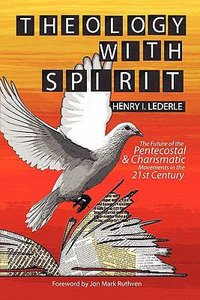
Editor’s Note: In part two of this excerpt from Theology with Spirit, Dr. Lederle continues his examination of the major streams of the Third Wave, what he has renamed New Independent Charismatic Churches. The Pneuma Review editorial committee hopes you will be encouraged as you read this chapter and will purchase this excellent book for yourself.
Dominion (Postmillennial)
The second major group of Independent Charismatics is also characterized by its view of the kingdom of God. The distinctive teaching is known as Dominion theology and has been described by its pre-millennialist detractors as “Kingdom Now.” The recently deceased Earl Paulk, perhaps the most significant representative of this new thrust, became the Archbishop of the International Communion of Charismatic Churches, a global network representing at its zenith some 10 million members. The ICCC, however, may not be totally identified with Dominion theology. The ICCC was formed in 1982 by Bishop John Meares of Washington, DC, and Bishop McAlister of Rio de Janeiro, Brazil. Later, Bishop Idahosa of Benin City, Nigeria, and Bishop Paulk of Chapel Hill Harvester Church in Atlanta, Georgia, joined. They were all part of a global Pentecostal denomination named the International Evangelical Church, which, interestingly enough, joined the Geneva-based World Council of Churches in 1972 and was the first Pentecostal denomination to participate officially in the Roman Catholic-Pentecostal dialogue.
The origins of Dominion theology, however, do not lie within the Pentecostal-Charismatic arena but outside it in classically Reformed theology. (This is illustrated in the ICCC Handbook, which lists the Presbyterian Westminster Confession in its creedal statements that provide the proper interpretation of the Bible.) Dominion theology is the product of the Christian reconstructionist movement, which developed in the 1960s and ’70s around the publications of scholar Rousas John Rushdoony. In order to understand their influence on the Dominion movement some reconstructionist views will be now outlined briefly. Rushdoony, an Armenian American, established the Chalcedon Foundation in Vallecito, California, in 1965. Another center is the Institute for Christian Economics in Tyler, Texas, founded by Gary North, who has also published widely. Central to the reconstructionist vision is the acknowledgement of the all-embracing cosmic headship of Christ, who has dominion over every dimension of reality, and the ensuing ideal of transforming society in accordance with God’s divine laws. Rushdoony had studied presuppositional apologetics with Cornelius van Til, who taught for many years at Westminster Theological Seminary. It is widely believed that in his book Theonomy in Christian Ethics, Christian reconstructionist theologian Greg Bahnsen argues that the laws of Moses should be applied directly to contemporary public life. The vision is, first, to reclaim the United States as a Christian nation and then to work in a gradual postmillennial strategy to establish the kingdom rule of God over all the earth. This would, in fact, be theocratic rule, with obvious parallels to Puritan thinking. The moral decline in the Western world is seen as the direct result of forsaking the eternal laws of God.
This vision is radical and goes far beyond a mainstream Reformed understanding of the transformation of culture under the Lordship of Christ. Christian reconstructionists hold to a theonomy (law of God) which considers Old Testament laws to be normative for all times. That would entail such extremes as capital punishment for adultery, bestiality, homosexuality, and even for incorrigible children! Critics of this movement go so far as to allege that some reconstructionists condone slavery, and exhibit racist tendencies.
Reconstructionist advocacy starts with the regeneration of individuals, who are then restored to fulfilling God’s purposes and remade in God’s image, receiving His cultural mandate and dominion over the earth. In the political and economic realm, this vision is worked out along clear, free-market principles—limited government, decentralization, and a strong focus on private enterprise and individual rights.
Dominion theology is unswervingly committed to postmillennial eschatology. The Church is seen as the instrument of God, aggressively reoccupying the world in the name of Christ. The kingdom is already established and is advancing. The Second Coming of Christ does not break into world history suddenly in an apocalyptic fashion but only after the Church has fulfilled the Great Commission and established global dominion.
Gradually Dominion thinking also started to influence a number of leaders in the Independent Charismatic movement. This aggressive and encompassing vision for the transformation, not only of the Church but of all of society, proved to be attractive to them. Originally Classical Pentecostalism had aligned itself to anti-cultural tendencies, withdrawing from secular society. Premillennialist and dispensational views with a pretribulation rapture of believers tended to discourage any active involvement in societal and, especially, political matters. Later initiatives, however, such as the Moral Majority of Jerry Falwell and the Christian Coalition associated with Pat Robertson, decisively changed the attitude of many evangelical Christians towards involvement in the public sphere and political life. Rushdoony’s influence even reached the Reagan White House.
Bishop Paulk caused a stir in Pentecostal circles when he defected from the traditional cause of premillennial eschatology, denied the doctrine of the rapture, and questioned the relevance of the nation of Israel to biblical prophecy. He taught that the Church is the spiritual Israel and has replaced the Jews, and that current events in the Middle East have no bearing on prophetic fulfillment. The fact that an imminent return of Christ is not expected is reflected in the title of his 1985 book Held in the Heavens Until… Christ must remain until the restoration of all things—a reference to Acts 3:12. The Church needs to accept its responsibility first to attain unity and maturity as the bride of Christ. The doctrine of the rapture is also reinterpreted: the new hope of the church is achieving victory in this world. Paulk maintains that his “Kingdom Now” principles transcend traditional millennial categories, but there is an unmistakable postmillennial slant to his teaching. God is effecting restoration through His Church, and we now have to assume the dominion that was lost in the Garden of Eden. It needs to be noted that Bishop Paulk’s church is well integrated racially and heavily involved in outreach to the African-American community in Atlanta.
The vision of cosmic societal restoration has had a broader impact among Charismatics than the sphere of Bishop Paulk. Bob Mumford, one of the “Fort Lauderdale five” of the Restoration movement, was also attracted to it and gradually incorporated dominion perspectives into his public teaching. At the same time, these ideals also influenced people very critical of the Discipleship movement, such as Pat Robertson. The university he founded in Virginia Beach changed its name from CBN University to Regent University, thereby reflecting the idea of Christ’s regency over the world. Dominion thinking, in a more general and balanced sense than the rigid theonomist views of Christian reconstructionists, pervades the whole University as it seeks to train Christian graduate students in a variety of disciplines such as law, education, global leadership, psychology, divinity, and government. The ongoing influence of this perspective can be seen in initiatives such as the legal advocacy of the American Center for Law and Justice (Jay Sekulow) and the Republican presidential primary race in 1988 of Pat Robertson—although unsuccessful, he surprised many by winning the Iowa caucuses.
Maranatha Ministries, under the leadership of Bob Weiner, had also propagated a postmillennial vision of societal transformation to thousands of college students before it disbanded in 1989.
An intriguing aspect of the whole Independent Charismatic movement is the fact that influence from the “Latter Rain” movement keeps reappearing. Although this brief revival was snuffed out by vehement opposition by Classical Pentecostals, its seminal ideas seemed to go underground and resurface time and again. The Latter Rain has also come to be known by other names such as Sonship, Manifested Sons of God, or the Body of Christ. Leaders such as Bill Britton and Sam Fife continued to propagate their ideas through publications and meetings in Lubbock, Texas. Their major teaching of the restoration of the five-fold ministry was viewed as a threat to the authority of denominational leaders and local pastors. Another key concept of the New Order of the Latter Rain that resurfaced in the whole Third Wave was a high view of prophecy, sometimes including predictive and personal prophecy—the ongoing revelation of truth to apostles and prophets. Some critics attacked Paulk for his concept of revelation, which was viewed as equating revelation gained through contemporary prophecy with the Bible. Paulk denied this and affirmed a closed canon.
Personal prophecy also occurred in the Latter Rain circles. Bruce Barron’s study Heaven on Earth: The Social & Political Agendas of Dominion Theology notes that George Hawton of North Battleford supposedly rejected the concept of the imminence of Christ, teaching that Christ could only return after the restitution of all things (Acts 3:21; p. 76). It was said that Earl Paulk taught the very same thing. Barron declares that Paulk “mainstreamed” Latter Rain ideas, presenting them in a more respectable form (p. 78). Bishop John Meares, who founded the ICCC, also represented a clear link to the Latter Rain through Bethesda Temple in Detroit, which was a leading Latter Rain church.
While Paulk reshaped traditional premillennialism into a postmillennial vision with a societal involvement, the “Christ against culture” stance (as expressed in H. Richard Niebuhr’s classic Christ and Culture), or otherworldliness of early Pentecostalism, has been retained by Bill Hamon, who, for a time, was also a Bishop of the ICCC and who authored The Eternal Church (p. 76). It presents a very negative view of church history reminiscent of Restorationism.
Since Bishop Paulk, who died in 2009, had been sidelined due to accusations of immoral conduct going back several decades, this grouping and its teachings have unfortunately lost influence in the public arena and in Independent Charismatic circles.
Empowered Evangelicals
The third major group of the Independent Charismatic movement is quite different. It is closely connected to the ministry of John Wimber and the Association of Vineyard Churches and is said to consist of about 1,000 churches world-wide. It is sometimes called the Power Encounter movement or the Signs and Wonders movement. The term “power encounter” comes originally from use in missiology and refers to the force of the supernatural in spreading the gospel; often the references are to victory over demonic spiritual forces. “Signs and Wonders” highlights the role of the miraculous and the fact that churches seem to grow rapidly, especially in the Majority World, based on testimonies of dramatic healings and powerful signs. This is sometimes called Power Evangelism. More recently, some have preferred to use the designation “Empowered Evangelicals.” It is this category that C. Peter Wagner identified with the term Third Wave. (In this book, Third Wave is used to designate the whole Independent Charismatic movement.) The term Empowered Evangelicals captures the essence of this current well. This group is self-consciously not Pentecostal or Charismatic. It represents those evangelicals who have become open to the present-day occurrence of the full range of the charisms of the Spirit. (An important book by several scholars that is a kind of progress report showing Empowered Evangelicals grappling with the ideas discussed in this section is The Kingdom and the Power: Are Healing and the Spiritual Gifts Used by Jesus and the Early Church Meant for the Church Today? A Biblical Look at How to Bring the Gospel to the World with Power, edited by Gary Greig, J.I. Packer, and Kevin N. Springer, with a foreword by C. Peter Wagner, published in 1993. Editor’s Note: Most of the chapters and appendices from The Kingdom and the Power have been reprinted serially in The Pneuma Review.)
Worldview
The distinctive core of this second grouping of Independent Charismatics is made up of three interrelated concepts. First is the awareness of the importance of worldviewand philosophical presuppositions. The Empowered Evangelical movement has become profoundly aware of the role of naturalism, materialism, and rationalism in the heritage of the Western Enlightenment. This insight has its origins in academic circles and missiologists such as Paul Hiebert and Charles Kraft, who have published along these lines and have strongly influenced the leadership of the Vineyard movement. Nevertheless, the concept of worldviews and their impact on how we perceive reality is profoundly practical. It is through a rejection of rationalist modernity that the dimension of the miraculous is often discovered and reclaimed. More so than any other group, the Power Encounter movement has opened our eyes to the role played by these pervasive frameworks or mindsets in church as well as in culture.
Every-member Ministry
Second, the Vineyard Bible Churches have a unique focus on an every member ministry. This is a form of democratization. The usual way of referring to it is “equipping the saints.” Although the principle of what Martin Luther called “the priesthood of all believers” dates back to the sixteenth century, most churches still maintain a rigid demarcation between clergy and laity, and they concentrate most of the “ministry” in the hands of ordained leadership. The Empowered Evangelical movement objects to this. For example rather than create “healing lines” in which one gifted individual would pray for all the sick, Wimber encouraged the whole body of believers to become involved in healing prayer. The practice of healing lines actually originated with the controversial healing evangelist William Branham. In concrete terms, the Vineyard approach was quite different. It usually started by asking people requiring prayer to stand up in a meeting, with those who happen to be sitting around them then simply laying hands on them, uniting in prayer for healing. The presumption is that God would grant gifts of healing across the congregation as needed. The Empowered Evangelicals emphasize the healing ministry.
Signs and Wonders
The third distinctive aspect of this grouping is quite simply the present-day reality of signs and wonders. The reclaiming of the miraculous is, of course, the heritage of a number of movements in the twentieth century. The Vineyard movement, however, has a different perspective on them. Healings and miracles are consciously seen as a means of evangelism and church growth. The concept of church growth, as developed by Donald McGavran of Fuller’s School of World Missions, had a significant impact on John Wimber. It was the testimony of students from the Majority World that first opened the eyes of Charismatic leaders to the fact that healing can play a pivotal role in evangelism. This is certainly the case in many churches in Africa and Asia. What Wimber discovered was that the proclamation of God’s kingdom needs to be accompanied by the demonstration of God’s power. The concept of power was to become crucial, as can be seen from Wimber’s book titles Power Evangelism, Power Healing, Power Points. Here was a new strategy—the growth of the church in numbers and in maturity is consciously and intentionally linked to the power and gifts of the Holy Spirit.
The Kingdom of God: Already but Not Yet
An important theological impulse behind this movement was an understanding of the kingdom of God. George Eldon Ladd, of Fuller Seminary, developed this as a central motif in his book Jesus and the Kingdom. The Lordship of Christ is of paramount importance and presents a challenge to the contemporary church, with its focus on meeting people’s needs and fulfilling human potential. Equipped with kingdom power, the believer receives the authority to drive out demons in what has become known as spiritual warfare. Crucial to Wimber’s understanding of the kingdom of God is the creative tension between the already and the not yet. This polarity was originally formulated by Geerhardus Vos, developed by Oscar Cullmann, and popularized in North America by George Eldon Ladd. The Christian life is lived out between the First and Second Comings of Christ. Certain aspects of God’s rule are already apparent, such as salvation, fellowship in the Spirit, forgiveness of sins, and Charismatic manifestations, but others will only become evident at the final consummation of the kingdom. They are not yet manifest due to the fallenness of creation and include such things as the elimination of death, total healing, and moral perfection. Wimber argues powerfully that physical healing is affected by this tension. Against the traditional Classical Pentecostal doctrine of healing as included in the atonement, he advocates, rather, healing through, or as a result of, the atonement. With this formulation, he desires to break loose from an automatic guarantee of healing. Wimber also advocates a holistic understanding of healing that includes an inner healing of the memories and emotions as well as deliverance of people who are demonized.
John Wimber was converted as an adult. He had an Evangelical Quaker background and was generally Reformed in his theological leanings. He was initially associated with Chuck Smith of Calvary Chapel and the Jesus Movement of the 1970s. He led the Vineyard movement from 1982 until his death in 1997. It was Wimber who gained notoriety by teaching the controversial course MC510: Signs, Wonders and Church Growth at the Fuller School of World Mission between 1982 and 1985. This course was eventually canceled due to widespread objections, including opposition by the theological faculty at Fuller. One of the concerns expressed in their report Ministry and the Miraculous, edited by Lewis Smedes, is that it is inappropriate to include the practice of healing within the academic setting of a classroom. (No such reservation seems to exist with regard to preaching in homiletics courses!) They furthermore argue that the answers to prayers for healing should not be called “Signs and Wonders” because that detracts from the uniquely revelatory events of salvation history (p. 28). The course had become immensely popular, and the demonstrations of healing in the laboratory, or practical, part of the class had an extensive impact. The cancellation of the course may have illustrated that the broader evangelical community has not yet fully moved beyond its heritage of cessationism and dispensationalism.
The fact that Classical Pentecostals were also critical of Wimber’s approach illustrates the tension between the First Wave and this particular form of the Independent Charismatic movement. This tension is illustrated further by the whole concept of spiritual warfare, which has become as contentious as the concepts “faith” and “prosperity” in the Word of Faith grouping of Independent Charismatics. Classical Pentecostals generally have supported the conviction that Christians cannot be demon possessed and, consequently, have grave reservations about much of the deliverance ministry practiced in Empowered Evangelical circles.
Spiritual Warfare
John Wimber explained his approach in battling demonic spirits in Power Points, warning against a pre-occupation with the satanic realm. There is an age-old heritage of exorcism found within Eastern Orthodox and Roman Catholic churches and, to a lesser degree, in mainline Protestant churches, such as the Anglican and Episcopal communion. Usually specific priests have this as a designated ministry, and ritual formulas and prayers are used. In practice, however, little of this has remained in operation due to the Western scientific mindset and the preeminence of rationalism. It is mainly among some denominational Charismatics that this more liturgical ministry is being practiced. In evangelical Protestantism, however, there is a new a growing awareness of the importance of spiritual warfare that is quite independent of any Pentecostal or Charismatic influence. Often the focus of these groups is on preserving doctrinal truth. As with Wimber, there is an acknowledgement and interest among these non-charismatic evangelicals of the role that worldview plays in our thinking, but Neil Anderson, in his well-known book The Bondage Breaker, concentrates on spiritual warfare as a conflict between truth and error. For Wimber, it is not merely a “truth encounter,” exposing the lies and false teachings of Satan, but also a power encounter, in which victory and liberation are demonstrated.
Independent Charismatics from the Empowered Evangelical movement deal with the thorny issue of Christians and demon possession by relying on a new approach among scholars that suggests it is better for Christians to change our terminology. The New Testament word usually translated as “demon possession” should rather be rendered “demonized.” A Christian cannot be possessed by Satan in the sense of ownership, but a high degree of oppression or evil influence is possible as people give a foothold to demonic spirits through habitual sinful practices. It is appropriate to pray prayers of deliverance in such situations.
A further contentious issue is the concept of territorial spirits. With some humor, the question has been raised: Do demons have zip codes? Are they to be associated with specific geographical areas? Peter Wagner advocates this understanding and encourages Christians to do “spiritual mapping”—discerning the prevailing spirits over cities and nations according to the most prominent sins (such as drug abuse, prostitution, greed, racism, divorce, etc.), and doing battle against them in the Spirit. Although there are references in Scripture to demons exerting influence over specific locations, such as “the Prince of Persia” in Daniel 10, one needs to be cautious about generalizing this idea. The role of intercessory prayer and prayer walking as a practical strategy against these powers and principalities has been vividly illustrated by ministries in Argentina. Wimber himself cautions that it is God who sends angels into battle. Perhaps prayer for God to deploy angelic forces is more appropriate than intercessors commanding angels themselves.
The understanding of Ephesians 6 and the believer’s battle against demonic forces is of pivotal significance in this understanding. Bishop Michael Reid of England, formerly of Peniel Church in Essex, England, who is a bishop with the International Communion of Charismatic Churches, has written a book whose title expresses his view: Strategic Level Spiritual Warfare: A Modern Mythology? Reid rejects this Strategic-Level Spiritual Warfare approach associated with C. Peter Wagner and George Otis, Jr. and warns against demon-phobia and quasi-pagan concepts. While Reid’s view is supported by some senior Classical Pentecostals, it is clear that our struggle is not against flesh and blood, and I believe the Bible reveals a physicality to grace as well as to evil that our rational minds find difficult to accept and grasp. Response to such manifestations of spiritual evil may lapse into an animistic superstition, but that is not necessarily the case.
The Vineyard movement grappled with two contentious issues in the late 1990s, which caused it, at first, to reevaluate its identity as Empowered Evangelicals. Then, eventually, it recognized that it wished to retain its original identity and the ideal of a democratizing of ministry and so severed ties to two new movements that it had initially embraced.
Prophecy
The first was the encounter with a new style of prophecy. The Kansas City Fellowship joined the Association of Vineyard Churches in 1990. Prominent leaders with a prophetic ministry included Mike Bickle, Bob Jones, and, especially, Paul Cain. Cain had been involved in the New Order of the Latter Rain. Predictive prophecy as practiced by leading individual prophets introduced an element into the movement that threatened the thorough-going democratization of Wimber’s original vision. Just as the healing ministry had been concentrated in the hands of prominent leaders in the 1940s and ’50s, so prophecy was becoming concentrated in a small number of gifted prophets. The leadership of the Vineyard movement weighed the situation and decided to steer back to its more mainstream evangelical roots. Reservations were expressed about some of the prophecies as well as behavioral issues. Wimber did not come to reject the gift of prophecy, but ultimately he did not find the Kansas City Fellowship’s expression of it in line with his vision.
Toronto Blessing
The encounter with the “Toronto Blessing” followed the same pattern of initial support, followed by a gracious, if contentious, parting of ways. The Toronto Airport Vineyard Fellowship had begun as a home group founded by John and Carol Arnott in 1990. It soon became associated with the Vineyard movement as it grew into a church. Then revival broke loose. What came to be known as the “Toronto Blessing,” started on January 20, 1994. Arnott had invited Randy Clark, a Vineyard pastor from St. Louis, to come and minister at his church. Clark had recently been exposed to the ministry of Rodney Howard-Browne, a South African-born evangelist from Tampa, Florida, whose meetings were characterized by involuntary fits of laughter. Howard-Browne had been reared in the Word of Faith teaching at the Rhema Bible Church in Randburg, near Johannesburg, South Africa. This laughing revival drew much attention. Howard-Browne had led a revival at Karl Strader’s Carpenter’s Home church in Lakeland, Florida for fourteen weeks. He also ministered powerfully at Oral Roberts University, where students were so overcome by the Spirit that many still needed help walking in order to return to their dormitories three hours after the service had ended.
As Clark ministered in Toronto, similar manifestations of holy laughter and being “drunk in the Spirit” occurred. Wimber initially supported this awakening, but by December 1995, the Toronto Airport church was ousted from the Vineyard Fellowship. The reason given by the Vineyard leadership was not that they did not recognize this blessing as a genuine move of God but that they realized that they themselves were not called to give further leadership to it because of differences in style. The awakening continued. Membership has skyrocketed from 350 to 4,000, and it is estimated that 2.5 million people from all over the world visited Toronto Airport Christian Fellowship between 1994 and 2000. The Toronto Blessing touched several thousand churches in England, most notably Holy Trinity Church, Brompton, in London that later launched the Alpha courses for new believers that is now used across the world.
Criticism from traditional anti-Charismatic sources as well as from Classical Pentecostals has focused on some of the more unusual phenomena that have accompanied the revival, especially uncontrollable laughter and some animal noises. (Actually animal noises such as barking are not unknown in the history of revivals. As far back as 1801 there was a practice of barking, known as “treeing the devil,” at the Cane Ridge revival in Kentucky!) According to their critics the centrality of Christ, sound preaching, and a discernment regarding miracles was judged to be somewhat lacking in the revival, but the 5,000 professions of faith and many more transformed lives have testified to the great impact of this movement. Theologian James Beverly has written about the Toronto Blessing and gives a balanced and helpful critique. Wimber was unwilling to go too far beyond the confines of North American evangelical culture, and so disassociated the Empowered Evangelical movement from the Kansas City prophetic movement and the exuberance of the Toronto blessing. The Vineyard churches are growing into an organized denomination, representing the more Reformed and evangelical sector of the Independent Charismatics. They have left behind the theology of subsequence and the requirement of tongues, but practice the full range of the charismata, acknowledging the supernatural dimension very clearly in their Power Encounters with the demonic.
Word of Faith
The fourth major grouping of the Independent Charismatic movement is known as Word of Faith or Faith Confession Churches. (This movement will be discussed again in detail in chapter 7 because of the prominent role it plays in the current situation.) It has probably been more misunderstood and maligned than any other part of the movement but surprisingly has retained its vibrancy and exhibits great potential for the future as it moves beyond some of the unfortunate excesses of the past. Other names for the movement reflect this criticism: the Health and Wealth Gospel, Prosperity Theology, Positive Confession teaching, or even the derogatory phrase “Name It and Claim It” movement. After an initial spate of knee-jerk reactions, such as critiques by Hunt and McMahon, Hank Hanegraaff and Dan McConnell, the movement itself seems to have undergone some self-correction. This current of the Third Wave has a lot of continuity with the Classical Pentecostal teachers and healing evangelists of the 1940s and 50s. What are the origins of this movement?
Although the father of the movement undoubtedly is Kenneth E. Hagin, founder of the Rhema Bible Church and Training Center in Broken Arrow, Oklahoma, the originator is seen as E. W. Kenyon (1867–1948). Essek William Kenyon grew up in New York State where he joined the Methodist Church. In 1892, he moved to Boston and enrolled in the Emerson School of Oratory, where he was exposed to New Thought and the Christian Science of Mary Baker Eddy, who also had her headquarters in Boston. Classical idealism was coming into vogue at this time, and the concepts of Plato and Ralph Waldo Emerson formed part of the curriculum. Mind was seen as superior to matter, and through mental attitudes and positive confession, circumstances could be transformed. McConnell, who evaluated the Faith movement with a degree of harshness, relates an anecdote about Ern Baxter (also a link between the Latter Rain and the Discipleship movements) once happening upon Kenyon engrossed in reading Mary Baker Eddy’s Key to the Scriptures. When Baxter commented on that, Kenyon responded that a lot of good could be gained from her perspectives.
Kenyon was ordained as a preacher in the Free Will Baptist Church and traveled extensively. He often spoke in Pentecostal churches but clearly did not consider himself Pentecostal. He had serious reservations about the gift of tongues and the importance placed upon it. He was inspired by the work of George Mueller in Britain and ran his Bethel Bible Institute on the same “living by faith” principle.
Kenyon responded sharply to the higher criticism of the Bible that was fashionable in his day by firmly rejecting the claim that Paul had exaggerated the importance and stature of Jesus, making Him into the divine Son of God. Many scholars of that day (and in later so-called Jesus Quests as well) were seeking the “historical Jesus” behind the Gospel narratives, stripped of His divinity. Reacting to this, Kenyon, in fact, believed that the epistles were superior to the Gospels and built his thinking mostly on Pauline theology.
The major contribution of Kenyon to the Faith movement was distinguishing knowledge into two radically different categories: “sense knowledge,” based on the physical world, and “revelation knowledge,” which is vastly superior and is based on supernatural revelation from God through the Scriptures or through the guidance of the Holy Spirit, communicating with the human spirit. When these two kinds of knowledge conflict, the believer needs to transcend empirical understanding and act in faith upon God’s Word. This action may even necessitate the denial of physical symptoms of illness. At this point, the danger of a radical Gnostic dualism between the natural and the supernatural as two mutually exclusive realms becomes apparent. The issue becomes even more troubling when the biblical tension between the flesh and the spirit is superimposed on this polarity. Kenyon found support in Hebrews 11:1—“Now faith is being sure of what we hope for and certain of what we do not see” (niv). William DeArteaga points out that this faith-idealism is in line with the Christian Science healing practice which teaches “corresponding action.” This practice entails acting upon the revelation knowledge even before the change has taken place. Scriptural support and illustrations of this are not hard to find—the ten lepers of Luke 17 were healed as they headed off in faith to go and show themselves to the priests. Kenyon considered the taking of medication after a prayer of faith for healing to be inappropriate.
Kenyon taught that through identification with Christ, the believer can approach God without guilt (DeArteaga, Quenching the Spirit, p. 219). Through this Pauline concept of identification (being in Christ, Christ lives in me), which is found abundantly in Paul’s letters and is well expressed in Galatians 2:20, believers have the same power that Jesus did on earth. By exercising faith, believers can become “Christian Supermen” with power over diseases and demons. The only limitation that Kenyon recognized in his faith idealism was that one can ask in faith only for things that are promised in Scripture. They could be claimed and confessed without any qualification. In his teaching, Kenyon provided all the theological building blocks on which Kenneth Hagin would later construct his teachings.
Kenneth E. Hagin was born in Texas in 1917. He suffered from a congenital heart defect and was bedridden by the age of sixteen. He then had an experience that stamped his whole ministry. He had a revelation or vision from God (the first of several) and gained a new understanding of Mark 11:24: “Therefore I say to you, all things for which you pray and ask, believe that you have received them, and they will be granted you.” Meditating on this verse, he realized that “the having comes after the believing.” Previously he had been reversing it. One needs to believe you have it before you actually receive it. This led to his getting out of bed and being healed after some days of struggling with his paralysis. Total recovery took sixteen months.
Hagin did not receive formal theological training, but a number of amazing visions and personal encounters with Jesus form the foundation of his ministry. He considers his calling to be that of a prophet and a teacher. Because of its origins, there has long remained a critique of Word of Faith or Faith Confession teaching that it is implicitly anti-intellectual and somewhat anti-medical. (The genius of the ministry of Oral Roberts was to bring perspective into this realm of thinking by his building both a university and a hospital.) Today the objection of Faith teachers is not against scholarship as such, but only against a certain type of scholarship that exalts itself above God’s revelation and denies the realm of the miraculous!
Hagin became well known through his radio program and the Rhema Bible Training Center, founded in 1974, where hundreds of thousands of students received Bible training—many coming from overseas. It seems that when the Shepherding/ Discipleship movement ran into difficulties in the late 1970s, the momentum and growth among Independent Charismatics was passed on to the Word of Faith movement. This shift of momentum led to a substantial growth in the ministries of Faith leaders, such as the Hagins, Kenneth and Gloria Copeland, Jerry Savelle, Fred Price, Robert Tilton, and, further afield, Ray McCauley in Randburg, South Africa, Ulf Eckman in Uppsala, Sweden, David Yonggi Cho of Seoul, Korea, Benson Idahosa of Nigeria, and Hector Giminez of Argentina.
The pivotal doctrinal issue is how faith is understood. Nico Horn of Namibia describes the Word of Faith movement’s concept of faith thus:
It may be described as “a special emphasis on faith as a mechanism at the disposal of the believer to make him or her victorious; the belief that positive confession creates faith, and, linked with faith, changes circumstances; the belief that everyone who has faith can receive either healing from sickness or eternal health; and the belief that financial prosperity is, like healing, provided for in the atonement.”
Here is a brief outline of three of the major teachings of the Faith movement (from Barron, Health and Wealth, p. 9).
Positive Confession
The doctrine of positive confession comes directly from the idealism of E. W. Kenyon. Perhaps it was inevitable that in the pioneering stage, the newness of this teaching would lead to unfortunate excesses. For many centuries, Western culture has been dominated by a realist worldview in which physical matter and the material world are seen as fixed and closed. The world is seen as a “space-time box” and is accessible to our knowing only through empirical investigation by the five senses and through analytical reasoning. Any involvement of a supernatural being, such as God, is at best indirect and, in line with the cessationist teaching of many conservative Christians, should be limited to “the age of miracles,” which has passed. This doctrine of cessationism is based on a dispensational theory of God’s using different strategies in different epochs of history. In our present Church age, God no longer operates with the miraculous but rather only through the Scriptures. William DeArteaga, in his book Quenching the Spirit, defines idealism as the philosophical position that mind and matter can interact, with mind having some influence over matter (p. 335). The classic expression of an extreme idealist view would be sorcery, magic, or alchemy, in which officiants incant formulae in order to change reality magically. DeArteaga himself argues rather for a moderate idealism, which he sees as being in accordance with Scripture. (More about this in chapter 7.)
In the face of the strong realist tradition of the Western Church, any ascendancy of idealist thought represents a radical shaking of the foundations. Knee-jerk reactions abound. Positive confession is portrayed as manipulating God, deifying humans, and disregarding God’s sovereignty. It is possible to supply several quotations from Word of Faith teachers’ sermons that are vulnerable to such portrayals. A fine line separates believing that what you say can have an impact on concrete reality from lapsing into claiming things just for one’s own comfort and gratification. It is distressing when speakers “guarantee” material wealth seemingly in direct connection with contributing financially to a particular Christian ministry. Unfortunately, this is a perception that is widespread among people today, based both on limited exposure and on some unbalanced preaching on television. Reality has a way of catching up with those who distort the truth in such a way. It is possible that such overblown claims may seem to “work” for a season, but the ultimate fall and collapse of such extreme teaching is inevitable. We also know that God in His mercy is longsuffering and patient, wanting us to repent.
Nevertheless, the fact remains that the prayer of faith and the spoken word do have power and, when used in accord with God’s purposes, they can miraculously change circumstances. Two Scripture references will suffice—Mark 9:23, “All things are possible to him who believes”; and Mark 10:27, “With people it is impossible, but not with God; for all things are possible with God.” Naturally the danger exists that faith may be placed on particular historical promises in the Bible that are then automatically transposed to contemporary circumstances in a one-to-one relation (without any confirming quickening of the Spirit’s guidance, often called a rhema word). Ultimately, faith rests securely as a trusting in Christ Jesus; in God the Father, who calls us to covenantal relationship and whose love is unfailing; and in the Holy Spirit, who is our Helper and dependable Guide.
Prosperity
The teaching on prosperity is also is an area fraught with potential pitfalls. In the Protestant Reformation, a spiritualizing tendency abounded. God’s preeminent blessing was the forgiveness of sins, grace for the soul, and spiritual liberation from bondage. Long neglected was the rich Old Testament tradition of an encompassing shalom or peace that includes the promise of land, offspring, and material blessings—sitting under your own fig tree and vine, and the integral concept of salvation in the New Testament, which includes not only salvation for the soul, but physical healing for the body. As a result, money itself is often considered suspect, rather than just the love of money (1 Tim 6:10). Western asceticism and the monastic cult of poverty have further clouded the issue. The Faith movement bucks this trend by teaching that the blessings of Abraham may come to the Gentile peoples through Christ (Gal 3:13–14) and that these include material blessings. Usually, preaching of this nature also emphasizes tithing. Despite some extravagant portrayals, most Word of Faith teachers make it clear that giving from egotistical and selfish motives is unacceptable. Hagin himself denounces the type of faith that is focused on “getting Cadillacs” for oneself. Prosperity is defined as having sufficient for one’s needs and the ability to bless the poor.
The ministry of Oral Roberts was revolutionized by the simple statement from 3 John 2, that God desires for us good health and welfare or prosperity. He later developed the concept of seed-faith, which underscores three principles: God (and not our abilities) is our Source and Provider; Give generously to others—the so-called law of seed time and harvest (or give and it shall be given to you); and, Be expectant in your faith—Expect a miracle! This is not the language of automatic manipulation or mechanical guarantees, although it can sometimes be twisted to sound that way. The reference in Mark 10:29–30 that selfless service in evangelism will bring a hundredfold return is preceded by Jesus’ admonition to the wealthy man (the so-called rich young ruler) to sell his possessions and give to the poor. Human covetousness can take these verses out of context and turn them into a calculating attitude of giving one item in an attempt to receive a hundred back for oneself.
Remarkably, Faith teaching here shows a similarity with Liberation theology by acknowledging the importance of material possessions and rejecting an over-spiritualized salvation that focuses only on the soul and the life hereafter. Rightly understood, both stand in stark contrast to secular, materialistic culture and the narcissism of postmodern society.
The last central teaching of the Faith movement may be discussed under the rubric …
A Right to Healing?
With regard to the healing of the body, the Faith movement stands in direct continuity with Classical Pentecostalism. In fact, the recovery of the doctrine of divine healing in evangelical Christianity preceded the Pentecostal movement by a good fifty years, as has been pointed out above. On the fringes of Christianity, divine healing has probably never been absent. Through the Pietist and Holiness movements, physical healing became part of a crucial stream of Christianity. The first advocates were generally skeptical about medical work. In time, the anti-medical stance of such people as John Alexander Dowie of Zion City, Chicago, Illinois, was replaced by an integral or holistic approach in which medical, psychological, and spiritual aspects were all incorporated, as we see, for example, in the ministry of Francis MacNutt.
The Faith movement represents only one group of a broad spectrum that acknowledges the reality of divine healing today. There is a growing emphasis in all Three Waves of the whole Pentecostal-Charismatic movement that God desires wholeness and health for His children. Sickness and disease are of the devil, and Jesus came to liberate those under demonic influence and to destroy Satan’s evil purposes. The term “Healing in the Atonement,” which correctly links the biblical passages Isaiah 53:5, Matthew 8:17, and 1 Peter 2:24, was originally conceived in anti-medical circles and still carries that baggage. Today its focus is to emphasize that the death of Christ on the cross has consequences not only for our eternal salvation but also for our bodily healing. The reference is to the messianic prophecy in Isaiah that “by His wounds we are healed.”
How this is worked out in practical details brings us to divergencies within the Pentecostal and Charismatic movements. The most radical form of the Word of Faith teaching claims absolute victory in this present life. Christians are entitled through Christ’s atoning death to the blessings of Abraham, which include salvation, health, and material prosperity. Physical healing is considered a right of every believer that may be expected and claimed boldly after the devil has been rebuked. Sometimes it is even stated that praying is not necessary. The believer just needs to make a positive confession of faith. Most problematic are the situations in which people are taught that all lingering symptoms of illness are to be denied and not to be treated medically. Unfortunately, there have been examples where this has led to deaths that easily could have been avoided by timely medical treatment. (Denying symptoms is a more extreme approach than that of temporarily disregarding symptoms when one is convinced that this is what God is requiring.) One is often dealing with the hardness of human hearts that have difficulty focusing on the seen rather than the unseen dimension.
Inevitably, a one-sided focus on faith may lead to the loss of acknowledging God’s sovereign freedom. It seems as if God has no choice but to respond to human proclamations and requests. Support for this view is offered from Isaiah 45:11, which in the King James Version states: “Concerning the work of my hands, command ye me.” Modern translations capture the implied irony by rendering it: “Would you command me?” Once more it needs to be said that reality and experience soon trip up those who follow on this path. God, as a personal loving and responsive being, is our hope, not a particular key phrase from Scripture.
Examples of foolhardy and presumptuous faith in fact amount to over-realized eschatology. Claiming total healing as an absolute right in the here and now for every believer denies the element of mystery that remains in our fallen condition. There is a creative tension between the already and the not yet, as was explained above. The continued occurrence of death is a conclusive indication that some aspects of fallenness still remain and will be resolved only in the life hereafter.
Although this polarity or creative tension may bring some balance, it should nevertheless not come to function as a way to evade the biblical call to prevailing expectation and robust faith. The concept of the already / not yet tension itself is helpful, but the major episodes of salvation history illustrate that God works not only from the already to the not yet, but regularly does miracles—something totally new, that allows the power of the future to invade the present. Creation is a radical creation out of nothing. The exodus is encircled by the wondrous inflicting of plagues and miraculous deliverances. The incarnation, resurrection, and ascension of Jesus are all unexpected, apocalyptic events through which God reveals Himself and His majesty. The outpouring of the Spirit at Pentecost, the Second Coming, and even individual rebirth are the not yet becoming the already through God’s inbreaking grace and sovereign rule. Paul states that we live by faith and not by sight (2 Cor 5:7). Life in the Spirit walks the fine line of ongoing openness to the miraculous on a daily basis.
These insights of radical biblical truth the Word of Faith movement presents to Christianity at large.
Conclusion
In this chapter the four major groupings of the Independent Charismatic churches have been discussed. The first two groupings Restorationism and Dominion-minded Charismatics have premillennial and postmillennial perspectives respectively. For differing reasons their impact has decreased. The third grouping, Empowered Evangelicals, has moved away from traditional Pentecostal and Charismatic distinctives but retains a strong ministry of the full range of biblical charisms and openness to the supernatural realm. They have moved into the position of a new denomination as a global Vineyard Fellowship.
The roots and fruits of the Word of Faith movement were probed in the final section. Despite some initial excesses which discredited the whole movement, it continues to grow internationally and challenges traditional Christianity with an innovative perspective on the role of faith and the spoken word. The pivotal position of these churches in the twenty-first century will be explored further in the next chapter.
PR
This is part of chapter six from Henry I. Lederle, Theology with Spirit: The Future of the Pentecostal & Charismatic Movements in the 21st Century (Tulsa: Word & Spirit Press, 2010). Used with permission.
Theology with Spirit
The Future of the Pentecostal & Charismatic Movements in the 21st Century
Henry I. LederleHenry I. Lederle, Theology with Spirit: The Future of the Pentecostal & Charismatic Movements in the 21st Century. Tulsa: Word & Spirit Press, 2010. x + 246 pp.; bibliography, index. ISBN: 978-0-9819526-3-5.
Distributed by Ingram (ingrambook.com). Available at BarnesAndNoble.com and Amazon.com, also in the Kindle Store.
Query WordSP@gmail.com regarding discounts for quantity purchases.





CE asked: "Where's part 1?"
Editor said: "We are releasing our digital issues backwards. Part 2 from Spring 2012 was posted today and Part 1 from Winter 2012 will be posted on March 1, 2014."
CE asked: "Where's part 1?"
Editor said: "We are releasing our digital issues backwards. Part 2 from Spring 2012 was posted today and Part 1 from Winter 2012 will be posted on March 1, 2014."
CE asked: "Where's part 1?"
Editor said: "We are releasing our digital issues backwards. Part 2 from Spring 2012 was posted today and Part 1 from Winter 2012 will be posted on March 1, 2014."
CE asked: "Where's part 1?"
Editor said: "We are releasing our digital issues backwards. Part 2 from Spring 2012 was posted today and Part 1 from Winter 2012 will be posted on March 1, 2014."
Part 1 is now available:
http://pneumareview.com/hlederle-third-wave-1/
Part 1 is now available:
http://pneumareview.com/hlederle-third-wave-1/
Part 1 is now available:
http://pneumareview.com/hlederle-third-wave-1/
CE asked: “Where’s part 1?”
Editor said: “We are releasing our digital issues backwards. Part 2 from Spring 2012 was posted today and Part 1 from Winter 2012 will be posted on March 1, 2014.”
Part 1 is now available:
http://pneumareview.com/hlederle-third-wave-1/
CE asked: “Where’s part 1?”
Editor said: “We are releasing our digital issues backwards. Part 2 from Spring 2012 was posted today and Part 1 from Winter 2012 will be posted on March 1, 2014.”