

Marcia Mount Shoop: Let the Bones Dance

 Marcia W. Mount Shoop, Let the Bones Dance: Embodiment and the Body of Christ (Louisville, KY: Westminster John Knox Press, 2010), 184 pages, ISBN 9780664234126.
In Let the Bones Dance, ordained theologian-in-residence at University Presbyterian Church (Chapel Hill, North Carolina) Marcia Shoop produces a constructive theology (revised from her dissertation submitted to Emory University under the supervision of Professor Wendy Farley). The project is constructive in several respects. First, Shoop recovers the Schleiermacherian paradigm mostly ignored in conservative circles since Barth’s devastating critique of Schleiermacher’s use of feelings in theology. In Shoop’s recovery, she combines the mapping of feelings with subjectivity, physicality (of the body) and consciousness for the purposes of articulating a theology of the redemption of bodies. Second, Shoop reflects on how she dealt with her personal experiences of sexual trauma, pregnancy and motherhood. Her goal is twofold: to explore the relationship of the feminine body and theology, and to show where existing theological models of conceiving post-traumatic disorder, pregnancy and motherhood in the church fall short of what these experiences can potentially become – a witness for the healing of bodies and for reconceiving a theology of redemption and a theology of the church. Third, Shoop’s project cuts an interdisciplinary edge when she brings her feelings and experience of tragic bodies, relational bodies and ambiguous bodies to bear in proposing a theology of embodied redemption, ecclesiology and worship.
Reflecting on her experience as a woman who has survived trauma, lived through pregnancy and overcame the ambiguities of motherhood, Shoop proposes to see feelings as “a grammar of our body language” (p.11). Through feelings, one understands one’s body. Feelings are not limited to emotions and sensations. Rather, feelings as a mode of experience are the ground of all primal and embodied experiences. Feelings define, shape and condition us in ways that also beyond the realms of consciousness. Shoop’s notion of feelings differs from Schleiermacher’s gefühl (of God-consciousness) and Whitehead’s conception (as universe’s structure/function) in that she conceives of feeling as the mechanism for the redemption of the bodies. The redemption of the body entails attending to feelings and bodily functions and responding to the body. The redemption of the body occurs also by paying attention to how relationships build up through simple feelings and consciousness.
Shoop reminds her readers how impossible it is to retell one’s story fully; a narrative is by its nature an activity that both conceals and reveals. The limits of language, thought, memory, analysis, listening and speaking all point to this reality that no narrative can ever be exhaustive.
- For instance, the experience of trauma makes it difficult for the victim to synthesize and articulate the event clearly. Sexual assault carries a sense of loss, of harm and of grief, which are impossible to report objectively. As a result of tragic events, the body instinctively produces mechanisms for the rejuvenation of bodily health: feelings become the body’s mechanism for surviving the tragedy and for the redemption of the body especially in the aftermath of trauma.
- In another instance, pregnancy becomes the ground for connecting God’s promises of life with the reality of our bodily finitude within the relational web of “contorted subjectivity” and “entangled subjectivity” (p.79). Feelings connect the woman with God (and God’s creativity) and with others in the midst of labor pains, thereby demonstrating the capacity of pregnancy to function as an icon for connectivity (p.90). During the course of pregnancy, the woman responds to bodily changes even as she discovers her entangled relations with the baby in her womb.
- And in the third instance of motherhood, a woman encounters ambiguity with promises and perils lurking at its door. Motherhood is not just about nurture and self-sacrifice (roles commonly associated with good mothers) but motherhood entails also the prospect of negotiating open spaces and possibilities for cultivating hope amidst ambiguity, indeterminacy and multiple other roles mothers play in a relational web. The “intense rhythm of mothering” (p.103) includes sensitivity to the layers of meanings behind frenetic activities dealing with the “everydayness of human life” (p.103) – the fusion of the sacred with the mundane in the embodied functions of motherhood.
But what has trauma, pregnancy and motherhood to do with redemption, ecclesiology and Christian worship? In Part II, Shoop proposes the value of embodying redemption through a theological rethinking of body language. One discovers God’s redemptive power in a number of ways. By encountering dissonance and ambiguity, one learns compassion. To deal with the tragedy of sexual assault, one learns interdependence and adventure. From pregnancy and motherhood, she learns relationality and how to cope with ambiguity in relationships. In other words, through compassion, interdependence and relationality, one discovers how redemption works in the bodies to bring about sanctification. How do these languages of the body connect with ecclesiology? The church then becomes a “connectional church” in interdependence (p.135) and overcomes moral relativism, structural chaos, and erosion of identity. The challenge for ecclesial formation then entails a re-conceiving of holy habits and sacred wounds; we revitalize the body, overcome the wounds of intellectualism, and create opportunities for learning about mystery and surrender when we encounter the strangers in ourselves, seek out differences, and embrace diversity. She calls this challenge “in-forming the Body of Christ” (p.141). Finally, for “re-membering the Body of Christ” (p.161), Shoop proposes enlivening modes of worship by examining the heart of Christian identity in connecting, integrating and joining with those who were harmed, severed, maimed, mutilated, and displaced. By becoming open to the bodies and feelings, the church frees people to worship with rhythms, music and their bodies, as if in a dance before the Lord!
For the rest of this review, I propose to take Shoop’s theme of embodied theological reflection seriously in an egalitarian spirit. In today’s climate, egalitarianism is typically approached from the perspective of elevating female experiences (which is a much needed and much to be celebrated orientation for any discussion). But, for this review, I would like to ask Shoop and others in the field, how would males relate to their embodied experience? While it is not Shoop’s intention to ignore male embodiment in her pursuit of female embodiment in ecclesiology, what does masculinity contribute to an embodied theology of and for the church? Does Shoop already have a sequel in mind?
Men are often perceived as initiators of relationships, supporters of pregnant spouses and sharers in the parental role. Psychological studies typically claim that men operate more readily with their left-brain, and that men have been culturated to suppress most of their feelings (Beth Erickson, 1993; Fredric Rabinowitz and Sam Cochran, 2002). Apart from aggression and anger, men have difficulty expressing their emotions through the language of feelings. Nevertheless, as psychologist Babette Rothschild claims, that it is not just that The Body Remembers (2000) [its trauma] but that the body rehabilitates as it overcomes the experience of relational estrangement (which sums up the thrust of Shoop’s proposal): Babette asserts that this bodily function operates in male and female bodies. Given the dynamics of male-socialization, how would the roles men play in their embodied experience be a factor for ecclesial reflection on redemption, ecclesial formation and worship? How would it differ from Shoop’s proposed outcome? Would we then need to moderate Shoop’s original proposal for a churchwide theology that plays exclusive attention to women sensibilities in the areas of redemption, ministry and worship?
In the final analysis (despite the one-sided orientation of the book towards female voices), Shoop certainly offers a good read for pastors, theologians, and church leaders in the urban contexts seeking a psychological and ecclesial theology of human experience from and for a women’s perspective. What is now needed is a sequel dealing with male embodied experience for an ecclesial theology of human experience. At this point, a caveat is in order: Shoop’s insightful interdisciplinary exploration may pose difficulties, especially for readers uncomfortable with approaching theology from feminist perspectives. Still, I would recommend Shoop to pastors and church leaders who desire their church to reach the major of their congregants. We may be on our way to mobilizing women in the churches towards God’s purposes that the churches have yet to encounter if Shoop’s ideas are taken seriously! In that sense, while the book is academic in nature, the implication of the book is more than academic. Hence, I recommend a wider readership than a mere academic audience.
Reviewed by Timothy Lim Teck Ngern
References Cited: Beth M. Erickson, Helping Men Change: The Role of the Female Therapist (Newsbury Park, SAGE Pub., 1993); Fredric E. Rabinowitz and Sam V. Cochran, Deepening Psychotherapy with Men (Washington D.C.: American Psychological Association, 2002); Babette Rothschild, The Body Remembers: The Psychophysiology of Trauma and Trauma Treatment (New York: Norton, 2000).
Originally published on the Pneuma Foundation (parent organization of PneumaReview.com) website. Later included in the Winter 2014 issue.








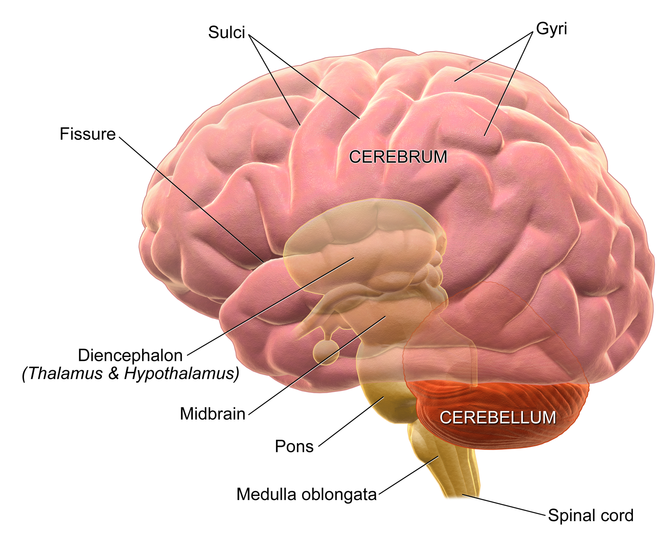



TW writes: "A Woman's voice gives new insight to Body Life in 'Let the Bones Dance'".