Matthias Wenk, Community-Forming Power: The Socio-Ethical Role of the Spirit in Luke-Acts, Journal of Pentecostal Theology Supplemental Series 19 (Sheffield, England: Sheffield Academic Press, 2000), 368 pages, ISBN 9780567043504.
Those who have been keeping abreast of the developments in biblical scholarship by Pentecostal scholars are in for a treat with this book. A pastor and part-time lecturer at the Theologisch-Diakonisches Seminar Aarau in Hindelbank, Switzerland, Wenk has revised his doctoral dissertation written under the guidance of Max Turner—who may be most familiar to readers of this journal as the author of The Holy Spirit and Spiritual Gifts (Hendrickson, 1998)—at London Bible College. Here, he extends the insights of Turner, and other Pentecostal biblical scholars like Robert Menzies and James Shelton, by showing how the Holy Spirit in Luke-Acts is more than just the divine person who inspires the speech of the people of God. Rather, inspired speech is but the initial work of the Spirit of God through which the believing community is transformed. The result is an illuminating exposition of the Spirit’s work in Luke-Acts that highlights a) the content of Spirit-inspired speeches; b) the divine intent behind such Spirit-inspired speeches; and c) the transformative effect of these same speeches that shape the community of faith.
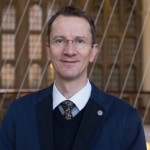
Matthias Wenk at the Society for Pentecostal Studies convention, March 2014.Wenk therefore argues that prophecy in Luke-Acts should be understood not only as inspired speech, but as a complex interactive process between God, the prophet, the inspired utterance, and the audience to which such utterance is directed. The prophetic message of John the Baptist, for example, is the means through which God addresses Israel, the tax collectors, and the soldiers, and which produces in them repentance (Luke 3:1-14). Yet, it was also a message which left a mark on the messenger himself since John could not be a voice proclaiming in the wilderness without having his home in the desert. Spirit-inspired speech thus has transformative effects on both the speaker and the audience. At the same time, rejected prophecy is not only a rejection of the prophet, or the word of the prophet, but also of (the Spirit of) God. Wenk is able to show, using sources from the intertestamental (between the appearance of Malachi circa 400 BCE and the birth of Jesus) period, that what previous scholars had claimed was the cessation of prophecy during this time is better understood as reflecting the unwillingness of the people of Israel to hear, engage, or be transformed by the word of God. In other words, it is not—either during the intertestamental centuries, the early Christian period, or since—that the Spirit of God has ceased to speak; rather, a hard-hearted and hard-of-hearing people have refused to accept the message, the messenger (the inspired prophet), or God (cf. Acts 28:25-28). Arguably then, prophecy never ceases; it is, instead, denied, ignored, neglected, rejected or resisted by the unfaithful community.
It is not that the Spirit of God has ceased to speak; rather, a hard-hearted and hard-of-hearing people have refused to accept the message, the messenger, or God.
Wenk’s book is replete with such insights into the transforming word and work of the Spirit in Luke-Acts. The Spirit-inspired speeches in the infancy narratives (Luke 1-2) herald the new, restoring work of God that is about to transpire through Jesus (Luke) and the believing community (Acts). Jesus’ ministry of reconstituting a liberated community is itself anointed by the Spirit of God (Luke 4:18-19). Luke’s version of what we’ve came to identify as the Lord’s prayer (11:2-4) is the means through which the people of God ask and receive the life transforming and community-forming power of the Spirit of God (11:13). Pentecost (Acts 2) is a liberative event of the Spirit that results in the formation of the new messianic community (2:42-47). Elsewhere in volume two of Luke-Acts, the Spirit’s words and works level out socio-economic, ethnic, and gender differences, even while these same words and works identify, mark, and guide the people of God. Wenk’s exposition of Luke-Acts thus highlights the restoring and reconciling work of the Spirit of God that brings human beings into relationship with God and with each other. It turns out that my listening to what the Spirit is saying includes my being open to being transformed by what is said, and not just myself, but all those claim to be of the Spirit of God and are claimed by that same Spirit.
My listening to what the Spirit is saying includes my being open to being transformed by what is said.
Make no mistake about it: this is a scholarly book, extensively researched and heavily footnoted throughout. Pastors and lay leaders will probably be slowed not only by the technical apparatus accompanying almost every page, but also by the original Hebrew and Greek script in both the main text and the notes, and the ongoing scholarly discussion carried on with others, including those mentioned above. And, Part I which focuses on the Spirit in the intertestamental literature and takes up almost 20% of the book will almost surely appeal only to scholars. Nevertheless, those pastors, preachers, students and lovers of Scripture who persevere through this text will be amply rewarded with exegetical insights, and greatly enriched in terms of their biblical literacy.
The rhema word of the Spirit of God is formative and transformative for individuals-in-community.
The Pentecostal experience can no longer be understood in individualistic terms after Wenk’s book. Rather, the rhema word of the Spirit of God is formative and transformative, and that precisely for individuals-in-community. The entire Church, not to mention the communities of Pentecostal believers world around, will be challenged by Wenk’s prophetic word that insists the words of the Spirit go beyond conveying information to transforming those hearers open to what the Spirit is saying and doing. To those who have ears, let them hear what the Spirit is saying to the Churches in this book.
Amos Yong is Professor of Theology & Mission and director of the Center for Missiological Research at Fuller Theological Seminary, Pasadena. His graduate education includes degrees in theology, history, and religious studies from Western Evangelical Seminary and Portland State University, Portland, Oregon, and Boston University, Boston, Massachusetts, and an undergraduate degree from Bethany University of the Assemblies of God. He is the author of numerous papers and over 30 books. fuller.edu/faculty/ayong/amosyong@fuller.eduFacebook
The Insanity of God (LifeWay Films 2016). The film, The Insanity of God, is based on the book with the same title; it tells the story of Nik and Ruth Ripken’s involvement in missions. Ripken, by the way, is not their real name, it is a pseudonym. The film is narrated by the Ripkens and…
Michael L. Brown, Authentic Fire: A Response to John MacArthur’s Strange Fire (Excel Publishers, Dec 12, 2013), 418 pages. Authentic Fire is Dr. Michael Brown’s response to John MacArthur’s book Strange Fire. MacArthur’s Strange Fire launches a scathing attack on the Christian Charismatic Movement and so it comes as no surprise that champions of…
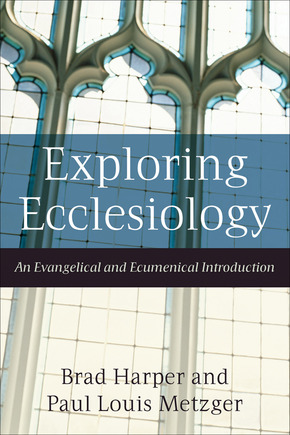
From the Conversations with Readers department appearing in the Spring 2011 issue. A Reader writes about a review that appeared in the Winter 2011 issue: In his review of Brad Harper and Paul Louis Metzger, Exploring Ecclesiology: An Evangelical and Ecumenical Introduction (Brazos, 2009), Wolfgang Vondey writes, “At least in their understanding of…
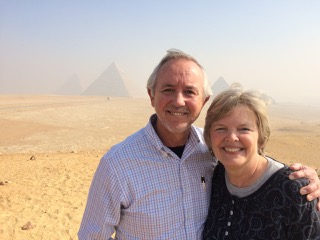
PneumaReview.com: Please tell our readers briefly what your film The Insanity of God is about. Nik and Ruth Ripken: The Insanity of God journeys with Nik and Ruth Ripken as they seek to walk in obedience and follow what God has asked of them. From the hills of Kentucky to the villages of Africa they…
Making your church a modern-day Addullam: Reach, Teach, Release. As you finish your prayer, you realize that the weeping man at the altar has come to Christ. The leather, tattoos and body piercings clearly no longer agree with the transformation you know has changed his soul. As you praise God for this new soul, a…
Can you recommend any curriculum for a children’s school? A few days ago, PneumaReview.com received this request from Pastor Jim in Ethiopia: I am setting up a computer learning center for a missions orphanage of 150 students K-12 [Kindergarten through High school]. I am looking for Bible and other curriculum for these young students. They…


 Matthias Wenk, Community-Forming Power: The Socio-Ethical Role of the Spirit in Luke-Acts, Journal of Pentecostal Theology Supplemental Series 19 (Sheffield, England: Sheffield Academic Press, 2000), 368 pages, ISBN 9780567043504.