

The Westminster Confession of Faith and the Cessation of Special Revelation

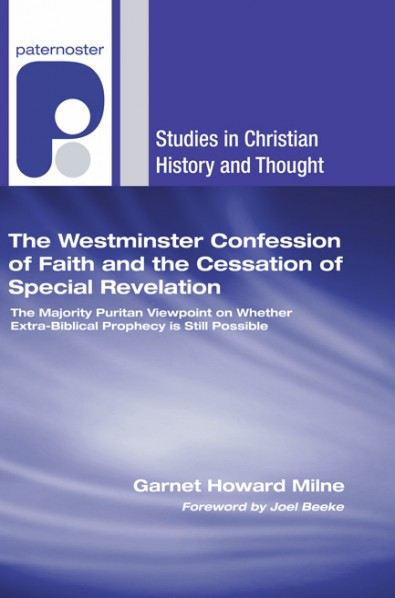 Garnet Howard Milne, The Westminster Confession of Faith and the Cessation of Special Revelation: The Majority Puritan Viewpoint on Whether Extra-biblical Prophecy is Still Possible (Studies in Christian History and Thought; Milton Keynes: Paternoster, 2007), 362 pages, ISBN 9781556358050.
This book discusses the circumstances surrounding the Westminster Confession of Faith (the most influential confession in the English-speaking Reformed tradition today), and it does so from a particularly interesting angle. Milne asks: What did the framers of this confession make of revelatory dreams and other signifying means by which the believer might be guided, and how did they reconcile their belief in the continuation of these means of divine communication with the WCF’s disavowal of continued (viz. “special”) revelation after the closing of the biblical canon? Milne discusses this issue from the point of view of one who appears to affirm the WCF in all its particulars, but his treatment of the topic is balanced and fair, his research is impressive, and his writing is engaging.
Pentecostals in particular will be interested in learning something of the history of the cessationist argument. I found it fascinating that only one out of the scores of arguments issued against the continuation of miracles centered on 1 Corinthians 13. Apparently, this prooftext did not become a live wire until sometime after the birth of modern Pentecostalism.
Although Milne’s position is not likely to find sympathy among Pentecostal readers, his book is a fascinating read and one that many Pentecostals will want to engage. I believe it will strengthen Pentecostals in their understanding of the cessationist argument, and in fact will help solidify their own position.
This book makes me want to explore more volumes in this series from Paternoster.
Reviewed by John Poirier










[…] Apesar das experiências carismáticas de alguns dos mesmos autores da CFW e, especialmente, de seu fundador, John Knox, cujas experiências carismáticas eram abundantes e poderosas, os dogmáticos se opuseram ferrenhamente a isso, em um texto calvinista pouco popular de 1546, que, era para ser imposto sob ameaça de morte nas ilhas-Britânicas incluindo a Irlanda católica. Essa história curiosa é cuidadosamente documentada em uma dissertação de doutorado revisada por Garnet H Milne, The Westminster Confession of Faith and the Cessation Of Special Revelation (A Confissão de Fé Westminster e da Cessação da Revelação Especial. Milton Keynes, Reino Unido: Paternoster, 2007). Veja resenha do livro, em inglês, no site Pneuma Review 31:2 (2009), 318. […]