
N. T. Wright: Paul and His Recent Interpreters and The Paul Debate, reviewed by Amos Yong

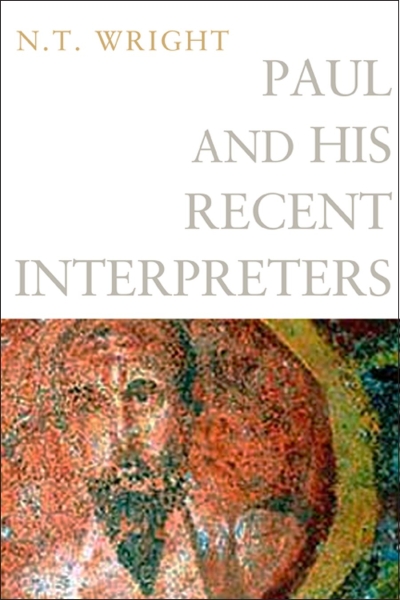
 N. T. Wright, Paul and His Recent Interpreters: Some Contemporary Debates (Minneapolis: Fortress Press, 2015), xxiii + 379 pages.
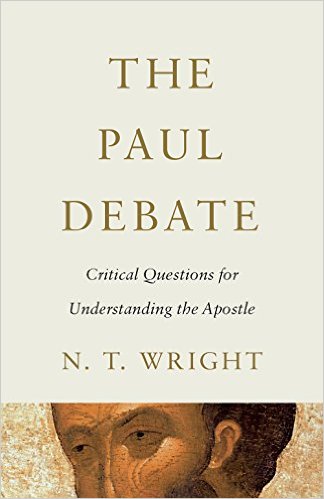
N. T. Wright, The Paul Debate: Critical Questions for Understanding the Apostle (Waco, Tex.: Baylor University Press, 2015), xi + 110 pages.
I must confess that I am writing this double-review with both volumes of N. T. Wright’s Paul and the Faithfulness of God (Fortress Press, 2013), sitting on my desk, partially open, and partially read. I must also come clean that I have intentionally decided to read first the two books under review in part because I am unsure when I will finish the Wright magnum opus (so far), but I have read and been positively challenged both by Wright’s Christian Origins and the Question of God series which go back to the early 1990s (to which Paul and the Faithfulness of God adds the fourth installment) and his earlier book on Paul (What Saint Paul Really Said, Eerdmans, 1997). For those who find themselves in situations somewhat like mine, I say up front: Paul and His Recent Interpreters (PRI) and The Paul Debate (PD) are very different books that interface with Paul and the Faithfulness of God (PFG) in contrasting ways, and will not in the end alleviate from those serious about the New Testament the burden of taking up and persisting through the latter books. Let me explain.
Wright tell us in the preface to PRI that as originally imagined, it intended to serve as an introduction to PFG, particularly in terms of mapping the trajectories of Pauline scholarship in the modern era. However, the material “quickly became more complex than I had imagined, to the point where it could no longer be contained within the larger book†(PRI, xvii). One response might be that tacking on the 350 plus pages of PRI to the beginning of PFG would have resulted in an expansion of book 1 to about the current size of book 2; on the other hand, the complicating factors appear to be less about size or length than with conceptuality, and perhaps setting off PRI on its own account can be appreciated only after working through the details of PFG.
What PRI does, then, is situate PFG within the broader landscape of Pauline studies, particularly around the turn of the twenty-first century. The three parts of PRI unfold three dominant conversations about Paul: 1) on the Jewishness of the apostle, particularly as negotiated and disputed after E. P. Sanders’ Paul and Palestinian Judaism (1997); 2) on Paul as apocalyptic thinker and theologian from Ernst Käsemann at mid-century through J. C. Beker, J. L. Martyn, and Douglas Campbell more recently; and 3) on the social world of Paul and the apostolic Christians, particularly as initiated and developed by the work of Wayne Meeks and David Horrell. While the discussions are explicated along separate tracks (in the three parts), Wright’s account clarifies the interconnections while also locating how these important issues are relevant to other developments in Pauline scholarship, whether the so-called “New Perspective,†those working in empire studies, or the philosophical-continental Paul. Along the way, we get glimpses about how Wright’s own constructive vision in PFG has been shaped in dialogue with these developments. In particular, we understand better Paul, not to mention Jesus, as Jewish and apocalyptic visionaries, but in ways that make sense given the social and historical world of first century Palestinian life under the shadow of the Greco-Roman empire and amidst Hellenistic culture.
If PRI in effect sets up and complements the argument of PFG (even as it supplements the accounts provided by and within the larger Christian Origins series), then PD documents the conversation channeled by PFG. Within a year of the latter’s appearance, published reviews had begun to appear (sixteen are identified in the appendix of PD), and it is to questions posed by reviewers that PD responds. Specifically, five clusters of concerns are engaged in the book’s five chapters: 1) Paul’s worldview and its coherence vis-à -vis that of first century Judaism; 2) Paul’s christology; 3) on the notion of apocalyptic in relationship to Paul; 4) Paul’s soteriology, in particularly his theology of justification; and 5) on theological methodology, Paul’s and ours. PD provides Wright with the opportunity to clarify PFG in the wake of critical questions, although those familiar with other debates about Paul that Wright has been involved in even prior to the appearance of PFG – for instance, the disputes about justification (see, e.g., Wright’s Justification: God’s Plan and Paul’s Vision, IVP, 2009) – will come away also better informed about such controversies.
There is thus a sense in which PRI tells us what we can and will find in PFG and why, while PD tells us what some readers of PFG think they have found, and sets out to clarify or correct what it is that they should have found. The former presents Wright more as a cartographer and a guide to Pauline studies while the latter unveils him as an apologist; both, however, include Wright the historian, exegete, and theologian, albeit refracted through different dialogical voices and perspectives.
Readers of Pneuma Review will benefit from PRI’s mapping of important developments in Pauline scholarship and from PD’s concise summaries of key aspects of Wright’s reading of Paul. Those less informed will come away with greater perspective both about the compelling nature of Wright’s understanding of the New Testament and about why some might be uncomfortable with at least aspects these proposals. Part of the worry might be that Paul as apocalyptic theologian in the hands of Wright is less about a dispensational understanding of the end of history and the world that many pentecostal and charismatic believers are used to, but Wright’s treatment forces reconsideration of how the New Testament message can be comprehended otherwise when properly illuminated in its ancient context. More precisely, as at least some of the contributors to Janet Meyer Everts and Jeffrey S. Lamp, eds., Pentecostal Theology and the Theological Vision of N. T. Wright: A Conversation (Cleveland, Tenn.: CPT Press, 2015), have shown, it may just be the case that readings such as suggested by Wright actually are more amenable to Spirit-empowered Christian faithfulness for the present age than that promulgated by our more other-worldly pentecostal ancestors. So if pentecostal and charismatic pastors and leaders want a more biblical framework for life in Christ and in the Spirit, then they can do no better than be invited to reconsider the familiarity of the Bible’s message, even if this is mediated through alternate lenses like those forged by Wright. What he has done is shine a new light on the pages of scripture and it is to his credit that he has done so as a person of faith, not as a skeptic or deconstructionist. Hence those who pick up the book after Wright are afforded the opportunity to ask perhaps fresh questions of the sacred text that our more traditioned readings might obscure. And in the end, if the journey of and toward a more Spirit-filled life will need to be evermore so scripturally informed, then we who yearn for such will have pastor-scholars like Tom Wright to thank, even if we might not agree with him on every point.
Reviewed by Amos Yong
Â
Paul and His Recent Interpreters: Preview | Publisher’s page
The Paul Debate: Publisher’s page | Review by Scott Lencke