

Deliverance Ministry in an African Cultural Perspective, by Jim Harries

Editor’s Preface:
When The Pneuma Review asked seasoned missionary Jim Harries to explain what “vulnerable mission” is, he wrote an article showing us how one aspect of understanding the host culture can change everything for a foreign missionary.
Introduction
Can there be appropriate deliverance ministry in Africa? The viability of deliverance ministry in sub-Saharan Africa is a vexing question that this article seeks to examine. We must consider not only biblical study and spiritual awareness but also the context where ministry is to take place if we hope to design an appropriate practice. Are there any signposts for those of us who are concerned about practices of Christian deliverance from malevolent spirits?
An African Context
The small rural theological college in Zimbabwe had a new Principal from the USA. The new Principal noticed some tensions. He decided to investigate them. It seemed appropriate to give all campus members opportunity to tell him how they felt about things. So he and the deputy Principal invited them in small groups to meet with them in afternoons over a cup of tea.
 This process turned out differently than anticipated. The Principal had expected to find a few areas of difficulty, and that they could be ironed out. Instead, mistrust and suspicion seemed to be everywhere. Teachers were plotting against students. The previous Principal was a tyrant. Students were in opposing factions. Grounds-crew were accused of theft and subversion. The senior administration was presented as if they were adulterers who were busy diverting school money into their own pockets.
Deeply perturbed, the new Principal felt like a friendly soldier walking through an enemy camp. Where was God in all this? People seemed to be at each other’s throats. It took him a while to realise—this was a context dominated by a perception of witchcraft. Yes, people need each other, so they are together. But this may be far from trusting each other. This was far from what he had known in America. There the ideal was people working in carefully thought out ways for the common good. In Africa people were reasoning in a way just as complex to protect themselves from the bad spiritual forces emanating from the very colleagues they also needed the most. Before realising what was going on, the new Principal had already supported what were seen to be attacks—attacks on various parties who were, in American terms, totally innocent but who were caught up in the ‘witch-hunt’.
In my own experience, 16 years of running a Bible teaching programme in rural Africa, similar difficulties arise in settings where people are supposed to be trained for Christian ministry. An initial flash of enthusiasm for something new is unlikely to last; suspicions soon set in. Someone seems to be making money unjustly; others become wary lest they not get their rightful share. People are getting tired and are less enthusiastic; they need an excuse to get out of commitments that they made initially. Someone is blamed for something and the teaching programme declines, then grinds to a halt.
The widespread belief in witchcraft drives a culture of fear; a culture where one wants to appear poor to avoid the witchcraft of the jealous. If you have the time, why not do more to loosen the grip of poverty on your family? Suspicions and whispered accusations that many Westerners would call superstition are rife throughout the culture.
Relations with other people also tend to be antagonistic. Close family and neighbours form your closest relationships, and in rural areas the two tend to coincide. These are the first to be accused should some evil happen. For example, should food be stolen, a house be broken into or animals become unexpectedly sick—the first to be suspected of causing these things are immediate family and neighbours. The members of your family are your most likely enemies. This may be a surprising perspective to a Westerner, but it is commonplace in parts of Africa.1
Recent media attention given to child witches demonstrates that Africans can be as wary of the evil in their children as they are of evil elsewhere. Children are loved, but they are also feared. They are rarely seen as ‘innocent’. Their potential for ‘evil’ is related to the troubles they can cause to their parents once they have grown—boys beating their mothers or girls who can embarrass the family should they become sexually promiscuous. But it is more than this. Children may be considered inherently evil, and therefore inherently needing to be oppressed, put down, and sometimes tortured or even killed. All too easily they can be considered dangerous to the well being of the family if they are perceived as being witches or sorcerers.2
My purpose for mentioning the above features of African life is not to confuse or trick my readers. Neither is it to put Africans down. It is to point to a context that ought to make a Westerner think before rushing into a deliverance ministry. Before going on, please note that I do not claim objective truth for the above account. The search for objectivity has, it seems to me, been too unhealthy a straight jacket for academia too long—that has kept too much actual ‘truth’ out of view. Not every African person will agree with all of the above. But many will, I believe, strongly identify with it as a general perspective.3
How should a missionary from the West respond to such contexts? How will such contexts affect the way in which one ministers?
Missionary Responses to the African Spirit World
This is a time when the spiritual awareness of many Western churches is rising. That is, there is an ever growing Pentecostal/charismatic movement or emphasis, amongst Western churches.4 Because this is ‘new and exciting’ for Christians in the West, Westerners can be the most enthusiastic about transporting the same to the ‘mission field’. But how should deliverance ministry be applied to such an already spiritualised context? How does the secular context with which many Western missionaries are familiar impact how they approach spiritual warfare?
The following are just a few components of deliverance activities by African churches that I have personally witnessed: The possessed person, typically a girl or woman, may have the undivided attention of a group of three or more men shouting at demons to leave—for perhaps several hours. A patient can be thumped with a Bible, soaked with water, hit with leafy branches or other objects. The patient may be stood in the middle of a circle of people and spun around till they are so dizzy that they keep trying to fall, but are instead thrown back and forth by the circle. They can be ordered to run around the church. An incision can be made in their skin and a ‘substance’ sucked out.
Advice being given in deliverance ministry in Western nations is quite different. Burnard tells us that “Neil Anderson, now one of the widest read authors and acceptable to those of a charismatic and conservative evangelical position, emphasises truth and faith, alongside self-deliverance from demonic spirits” (2001:64). Anderson says the following: “therapists should be getting their information from the Holy Spirit, the spirit of truth [as it is] … truth that will set them free … Setting a captive free is better understood as a truth encounter … it is never our responsibility to defeat the devil; Jesus has already done that …” (2000:124). If judged by these or similar Western writers on deliverance, many African practices of deliverance seem to be marginal or even beyond the pale.
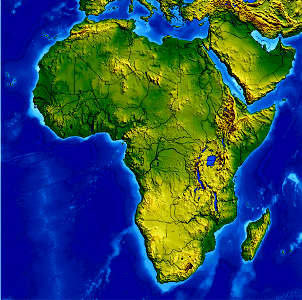 A basic difference seems to be that the West perceives ‘truth’ to be other than confined to the spiritual realm. ‘Truth’ as Anderson perceives it, is presumably historically-known truth about Jesus Christ that is confirmed by the Scriptures. The West has a strong notion of absolute or objective truth. Not so Africa, or at least not in Kenya. Blunt (2004:318) points out that for Kenyan Pentecostals “the senses can no longer determine the true nature of things or people”. An encounter of truth with spiritual forces is likely to be much less significant for an African, for whom that which has the greatest spiritual force in the light of demonic or other attack may be thereby considered to be ‘the truth’.
A Western approach to deliverance may not be appropriate for lively and noisy East Africa with its perception of numerous witches and spirits. A populous accustomed to elaborate rituals and vigorous dancing to the beating of noisy drums in hot sweaty rooms, may not be impressed by the quiet tone and smile of an orderly Western-style deliverance event. The political correctness often inherent in Western teaching will seem to be stripped of power in comparison to what Africans are accustomed.
So then how should deliverance be practiced? Perhaps we ought to say that practices related to casting out demons in East Africa are ‘all wrong’? That sounds rather imperialistic. Perhaps they are ‘wrong’ in the West, and Africa has got it right? Of course both may be ‘wrong’—but is one side more ‘wrong’ than the other? Perhaps we need to recognise that it is important to consider the context in deciding what means are appropriate. Then we must concede that teaching on deliverance ministry in Europe arises from an understanding of the Scriptures acquired through a particular context and may only be appropriate in a particular context. If this is the case, then for Europeans to teach Africans how to carry out deliverance ministry is to mislead them. Frankly, the alternative is to say that the African church is misled, not guided by the Holy Spirit, junior in status, or ignorant. This would keep the European and Western church in the position of tutor and the African church as under tutelage for many years to come. If the African church is ‘apprentice church’ and not capable of (with God’s help) guiding itself—then can it (in Protestant terms) be considered to be church at all?
Western missionaries who want to make a stir in Africa often do so by provoking the spirit world. Reinhard Bonnke’s preaching intentionally identifies with this; he readily acknowledges that spirits and witchcraft are there, and need to be overcome by the power of Jesus. “For Bonnke … human beings are totally evil and depraved … ‘witchcraft’ is the only category which Bonnke can treat of [African culture]” (Gifford 1992:162-163). Hoffman has explained that to have an impact on a village, one’s entry should take the form of a powerful prayer aimed at troublesome spirits. He ‘enjoyed’ much demon casting in Zambia and ‘planted’ many churches in the process. To him, when he arrived on the scene, the Zambians had “finally found someone who knew how to cast out demons” (Hoffman 2008).
Given the extent to which Africa is already imitating Europe and also keeping in mind the holistic African lifestyle and worldview, there is an important sense in which African audiences expect preachers from the West to be revealing to them the secret of how to acquire wealth. The indigenous African view is that there are spiritual forces at work that prevent wealth accumulation. Good things like wealth, in African thinking, come by default (Harries 2006a). Therefore an indigenous economics generally assumes wealth to come not by careful thinking, planning, hard work, accounting or business sense but by deliverance from the spiritual powers that are preventing it. Is this a view that Westerners should encourage?
Westerners do not always realise the ways in which the presence of spirits and ways of dealing with them are tied in with people’s traditions and customs. Knowledge of the circumstances of possession, or at least likely-understood circumstances, will assist in the dealing with untoward spirits. For example, a woman who has been married for two years and has not yet given birth comes for prayer. While ‘waiting’ for two years may be normal in the West, she may be at a point of crisis in her African context. If the woman’s family has a history of barrenness she may be convinced that deceased barren female relatives are causing her problem. An exorcist who ‘recognises’ this will, presumably, be in a position to ‘cure’ her barrenness.
A Western missionary who engages in deliverance ministry in Africa could very easily end up ‘alone’. That is, their relative ignorance of the details of local conditions, such as the cultural understanding of the spiritual realm, will handicap them in their approach to spiritual warfare. Unless, of course, they back their ministry with foreign money—an option that I will consider in more detail below.
Some readers may be troubled by this presentation, feeling that this discussion has been unnecessarily humanistic or caught up in a cultural understanding. Why have I framed the ‘problem’ of deliverance within the context of the African way of life instead of offering ‘answers’ from the Scriptures? I can give two reasons for this:
1. African people read and understand the Scriptures in the light of their own way of life, as all of us do. Our culture is the background to our reading. Culture is the lens through which we view the world. Therefore, setting a foundation for African theology must be on the basis of the same African view of Scripture.
2. Many Christian ministries in the West are influenced by humanistic thinking. The above study I see as the equivalent to Western humanism, but drawing on African thinking instead of Western psychology. While we consciously or unconsciously allow our culture to influence our Biblical model, we often call it error when other cultures do the same. In light of all of this, I think if it fair to say that African contextual knowledge is required in order to minister in a way that connects with Africans.
Acquiring Contextual Knowledge
It has become normal for Western missionaries in Africa to invest money from ‘home’ into their ministries. In a ‘poor’ continent such as Africa, this has contributed to the flourishing of whatever ministry has outside links, and the neglect of truly indigenous activity. Perceiving the inequity of this neglect, some funds have started to seek to support indigenous ministry. Unfortunately the strings with which money are tied being ever-present. ‘Indigenous’ ministries can become Western oriented to ensure the ongoing flow of funds. The same funds tend to corrupt indigenous ministries.6

In both the above cases, dependence on foreign funds aligns ministry to the context of the origin of the finance concerned. I have considered the question of whether strings can be removed in Harries (2006b). In essence I conclude: they cannot be. While donors can make some efforts at aligning funds with what is ‘truly indigenous’, such alignment is of necessity very limited. In much of Africa recipients and potential recipients of donor funds have discovered that what is important in order to succeed in today’s donor-dependent world is not their aptitude in the recipient (i.e. their own) culture, but the ability to relate to the donor culture. It is the ability at writing a proposal, relating amicably with Westerners, English comprehension, computer literacy, and enhancing the feelings of esteem and self-importance of Westerners that differentiate success from failure in Africa today.
Many questions asked by the West in relation to the rest of the world’s people pertain to how to use the West’s abundance of resources to benefit the rest of the globe. But as has been noted, there are some real difficulties in this process.
Is there another way? I suggest that there is an important need for some Westerners to become ‘vulnerable’ missionaries. To start with, they must flatly refuse to enhance their ministries using resources that come from the West. Such missionaries reject the privileged status of bountiful funding for their ‘projects’. What they gain instead includes:
In due course, the cessation of expressions of interest in one’s project by those who are really only after money.
Setting up of an activity that from the beginning is rooted in local resources. This will ensure that it will remain sustainable in the absence of foreign subsidy.
Not having to be oriented to please donors, participants in a project can give genuine priority to local concerns and sustainable, culturally-aligned ways of resolving problems and building capacity.
The absence of donor funds does away with the fighting, disputes, jealousy, gossiping, discord and ‘witchcraft’ often associated with donor money (Harries 2009). Putting aside the option of ‘buying success’ has various implications for missionary service. Whereas the availability of finance can compensate for a lack of local wisdom, if finance is not available, an alternative means of drawing attention to one’s activities must be found. On a level playing field the foreign missionary is forced to compete on equal terms with local actors. The latter are by default closely integrated into their communities. A missionary will have little choice, but to also acquire skills in communication and understanding that pertain to the context being reached. This requires, at the very least, knowledge of local languages.
In order to be internationally acceptable, formal discourse in a language such as English has to follow prescribed conventions. It is, therefore, extremely difficult to learn details about a non-English culture using English. An example may illustrate this. The Luo people of Western Kenya have something called chira. A large number of deaths are regularly attributed to chira. Chira is a wasting away of the body caused by an angering of ancestral spirits that results from a breaking of traditional taboo. There is no known English equivalent term. The closest contemporary English word that is these days as widely used as is chira amongst the Luo, is AIDS (and its translation to Dholuo; ayaki). A further drawback of the use of chira as a substitute for the real epidemic of AIDS is that people are not supposed to believe in it. In formal or educated circles those who ‘believe in it’ are considered primitive. Because of this loss in translation, Luo people are likely to attribute someone being sick and dying to Acquired Immune Deficiency Syndrome (almost impossible to translate long-hand into Dholuo), while attaching all the grave content of chira to the same word.
Native-English speakers should realise that they are at a disadvantage by comparison with locals if they use their English in ministry outside of the native-English world. Locals may understand one another pretty well using English, as they presuppose content to words such as “AIDS” in the example given above. A native-English speaker will, however, be misguided to suppose that locals will grasp the full meaning of words or idioms from their own cultural background.
Taking this look at deliverance ministry as a case study, we have found that appropriate sensitivity to context for the establishment of a sustainable groundwork for deliverance is likely to be achieved only if a foreign missionary engages in ministry using local languages and by depending on local resources. This is what vulnerable mission is all about—growing the kingdom of God sustainably by immersion in the local context of language and culture and depending on local resources.
Conclusion
The linguistic and financial domination of the Western church can give the impression that Christianity in Africa is still in ‘apprenticeship’ and needing constant guidance from the West. If, however, the African church is doing things differently than the Western church because of its cultural context, then an important place for that context must be left in the planning of deliverance ministries for Africa from the West. Presumably then, styles of deliverance that are inappropriate in one context may still be appropriate in another.
PR
Further reading
From PneumaFoundation.org: “Understandings of Pneuma in East Africa, that point to the Importance of ‘Vulnerable Mission’ Practices from the West” by Jim Harries. Encouraging Western missionaries to carry out ministry in non-Western contexts using the languages and resources of the host culture. http://pneumafoundation.org/resources/articles/JHarries-VulnerableMission.pdf
Isaac Phiri, “Saving Witches in Kolwezi: Accused of witchcraft by parents and churches, children in the Democratic Republic of Congo are being rescued by Christian activists” Christianity Today (Sept 2009). Available online: http://www.christianitytoday.com/ct/2009/september/27.62.html
Sunday Agang, “Who’s Afraid of Witches?: Among African Christians, too many of us are” ChristianityTodayOnline: http://www.christianitytoday.com/ct/2009/septemberweb-only/137-21.0.html
Endnotes
1 I have noted this in Harries (2007:233). It has been striking to me how frequently when some evil arises in the communities with which I am familiar in Western Kenya, a neighbour or other local person is considered to be responsible. For example should a thief break in to someone’s house, few will suspect him or her to have come from a distance. They will immediately suspect a close neighbour, even though that neighbour is likely to be a relative.
2 This has been carefully articulated in relation to Nigeria in a Dispatches special shown on channel 4 on November 12th 2008. This gives instance after instance of children being physically abused in the course of attempts to drive witchcraft from them. All this is considered to have been inspired particularly by Helen Ukpabio’s film entitled ‘End of the Wicked’ (nd). The blame for such abuses of children is often laid at the feet of Christian pastors. Phiri reports on children in Congo being accused of being witches (2009).
3 There are many issues with this kind of ‘reporting’ of the African context. Not least, questions of what terms to use in English to refer to things that are African such as ‘witchcraft’. Sometimes an English term could be used that could seem to be inappropriate in certain African uses of English. Many ‘differences’ between African and Western ways of life that are visible to Westerners may not be easily visible to Africans, but does that mean that they are not there? Sometimes the multitude of such questions can have scholars minimise or even pretend to do away with differences that are very real.
4 Pentecostal (2006) reports this for the UK. The phenomenal growth of Pentecostalism is being increasingly recognized throughout the world.
5 Maranz explains that in Africa “a disinterested friendship is something without sense” (2001:65). Maranz goes so far as to say apart from their resources, Westerners “lack most other qualifications for meaningful relationships” (2001:9).
6 Many factors contribute to donor’s funds encouraging corruption. For details see Harries (2009).
References Cited
Anderson, Neil T., Zuehlke, Terry E., and Zuehlke, Julianne S., 2000. Christ Centred Therapy: the practical integration of theology and therapy. Grand Rapids, Michigan: Zondervan.
Blunt, Robert, 2004, ‘Satan is an imitator: Kenya’s recent cosmology of corruption.’ 294-328 In: Weiss, Brad, (ed.) 2004, Producing African Futures: ritual and reproduction in a new liberal age. Leiden. Boston: Brill.
Burnard, Clive, 2001. ‘Deliverance: a vital ministry for the church today.’ Master of Theology dissertation. Spurgeon’s College, University of Wales. July 2001.
Gifford, Paul, 1992, ‘Reinhard Bonnke’s Mission to Africa, and his 1991, Nairobi Crusade.’ 157-182 In: Gifford, Paul, (ed.) New Dimensions in African Christianity. Nairobi: All African Conference of Churches.
Harries, Jim, 2006a, ‘Good-by-Default and Evil in Africa.’ 151-164 In: Missiology: an international review, Vol. XXXIV, no. 2, April 2006.`
Harries, Jim, 2006b. ‘Difficulties in Giving: what to give, how to give, why to give, who to give, when to give, if to give?’ jim-mission.org.uk/articles/difficulties-in-giving.html (accessed 6 May 2009).
Harries, Jim. 2009. ‘The Immorality of Aid to the Third World.’ In: William Carey International University. 2009. The Modern World Reader. Pasadena: Institute of International Studies. (Page numbers not known.)
Hoffman, Stan. 2008. ‘Stan Hoffman.’ Maarifa Lecture held at Kima International School of Theology on 17 September 2008 at 3.15pm.
Maranz, David, 2001, African Friends and Money Matters: observations from Africa. Dallas: SIL International.
Pentecostal, 2006. ‘Pentecostal Church ‘sees growth’. news.bbc.co.uk/2/hi/uk_news/6192785.stm (accessed 11 November 2009).
Phiri, Isaac, 2009. ‘Saving Child Witches in Kolwezi, Congo.’ blackchristiannews.com/news/2009/09/saving-child-witches-in-kolwezi-congo.html (accessed 11 November 2009).
Reese, Robert Boyd, 2005. ‘Dependency and its Impact on Churches Related to the Baptist Convention of Zimbabwe and the Zimbabwe Christian Fellowship.’ PhD Thesis. Mid-America Baptist Theological Seminary. May 2005. (Page numbers are not those of the original thesis.)
Ukpabio, Helen, nd. ‘End of the Wicked.’ youtube.com/watch?v=NUeKBibBN0I (accessed 11 November 2009).








This is very insightful and fit well and vividly into the African perspective. God make your mission enterprise fruitful.
This is very insightful and fit well and vividly into the African perspective. God make your mission enterprise fruitful.