
Prosperity Gospel in Zambia: The Problems of Engaging African Theology Using English

In this review essay, missionary-scholar Jim Harries challenges Western assumptions used to decry the prosperity gospel as it is taught and believed in Africa.
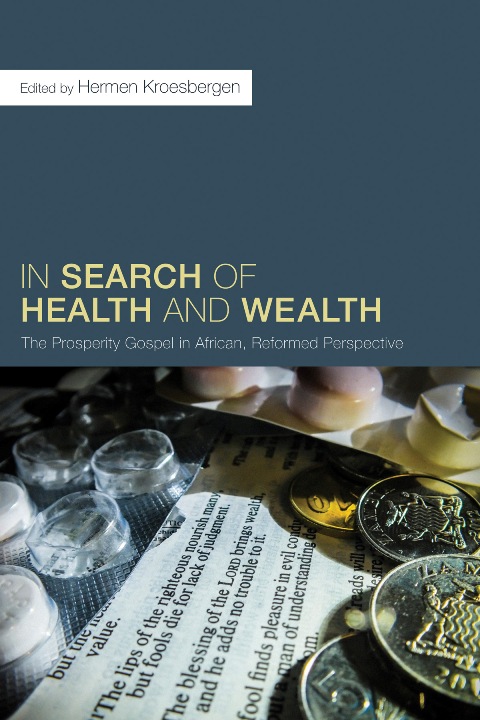 Hermen Kroesbergen, ed., In Search of Health and Wealth: The Prosperity Gospel in African, Reformed Perspective (Eugene, Oregon: Wipf and Stock, 2014).
In reviewing a book about Africa written in English, one is tempted to ignore constant category errors being made. I have chosen in this review not to ignore them.
The contributors to this book have embarked on an impossible, but nevertheless important task. Impossible, I suggest, because one cannot effectively evaluate African thinking using English. Important, because the issue they address is critical and topical. The book is an outcome of debates that occurred at Justo Mwale Theological University in Lusaka, Zambia, in 2012.
My own background affects my interpretation. As a young man, I was much influenced by Calvinism. I continue to love Calvin’s teaching. Yet, I struggle to see how it can fit in Africa. I lived in Zambia from 1988 to 1991. Since 1993, I have lived in Western Kenya. Reformed churches in my home area in Kenya (I am familiar with one or two, there may be more I do not know about) have been swamped by Pentecostalism. It is hard to see how a reformed church can thrive, except through foreign donations, which would then implicate them in a kind of prosperity teaching that this text sees itself as critiquing.
Chilenje gives us a run-down of the kinds of difficulties that the West has with prosperity teaching. In the following chapter, Zulu sees positive things in prosperity teaching, rejecting the idea that it is only a pathology. Ellington tells us that correct analysis of biblical texts would solve the problem of prosperity teaching. Banda, D. suggests that we shouldn’t attack prosperity unless or until we have a better alternative. Then Banda L. suggests that the best way to resolve the rift between reformed and Pentecostal churches, is through dialogue. Kroesbergen struggles not to condemn prosperity teaching as sheer folly, by looking at ways in which it enables African dignity. Soko sees prosperity teaching and Pentecostalism in general as a response to globalisation. Kroesbergen-Kamps realises that in Zambian minds, Christianity and modernism are integrally linked. Togarasei concludes the book, by suggesting that what prosperity-oriented Zambians are looking for is not flagrant wealth, but merely bread on the table.
Many hours were needed to edit and proofread this book (xi). This indicates a starting difficulty – the expectation that citizens of African countries should produce work of a literary standard that pleases Western scholars. The book presents many respectable avenues of exploration of prosperity teaching in Zambia. I very much appreciate the efforts made by its authors.
Chilenje mentions a Zambian belief in ‘supernatural power’ (4). Supernatural is a Western category, that arises from a Western positivistic dualism, in which physical materiality is considered ‘real’, and what is not physical, sometimes known as the spiritual, when it impinges on the real in certain ways, ‘supernatural’. Zambian people never experienced the enlightenment or reformation and are not known to be dualists, so why are they credited with belief in the ‘supernatural’?
Chilenje tells us that the bible considers ‘healthful living’ from, amongst others, a psychological standpoint (14). Yet, psychology is a post-enlightenment category; is it right to read post-enlightenment categories back into the bible? This seems to be eisegesis writ-large. It is particularly ironic, as Ellington (below) accuses Zambians of reading their own cultures into the bible.
Many of our authors presuppose that Zambian people understand that there is a ‘material world’, that there are ‘material goods’, and that the category ‘material’ is distinct from the category of ‘spiritual’. Hence, Deuteronomy 28:11 is interpreted as being about “possessing material goods” (Zulu 22). Ellington tells us that prosperity preachers remove verses they use from their original context (31), but then so do authors of this work, who ignore the holistic context of biblical times, that has many parallels with African contexts today. It is a relief on page 68 (Banda L.) to be told that we need “new theological categories” – a truth that the rest of this book cannot take advantage of, because in using English, it is confined to already-existing categories.
Prosperity gospel theology, I suggest, endeavours to compliment Western theological categories, in an effort to make sense of them. ‘Material things’ are in Africa not what they are in the West. The material and the spiritual are in Africa interchangeable, even mutually creative. Hence the use of English terms such as ‘material goods’ (e.g. Ellington 34) with respect to Africa is fallacious. This text recognises the need for the way forward to be “holistic” (Chilenje 17), yet it’s too often unquestioned use of English-language categories disqualifies what it advocates.
The power of stated words is recognised elsewhere in this text (Chilenje 4). The same power of words tells us why telling people they should ‘suffer’ and ‘embrace poverty’ as part of their Christian belief, is problematic: Doing so implies one is cursing people. Prosperity preachers are wanting to produce an ‘anthropocentric spiritual force which is directed at God’ (66), Banda L. tells us. This is, he concedes, a use of language largely unfamiliar to the West. If Zambian bases for language usage are unfamiliar to the West, then Westerners should stop thinking that they understand what Zambian preachers are saying.
The contributors to this work implicitly, but not explicitly, recognise that prosperity teaching points to a failure in communication on the part of the West. Westerners after all typically enjoy greater levels of prosperity than do Africans (Togarasei 119). The West is frustrated by the failure of the prescriptions it has given to enable Africa to ‘develop’. An underlying reason for that failure is that the West intends to communicate only through means understood by those who have a modern and therefore Western worldview. Because Zambians typically do not have a Western worldview, what is intended is not what Zambians hear.
“Poverty is [in Zambian minds] linked to African traditional ‘things’,” Togarasei tells us (119). Zambian people realise that modernity is associated with prosperity, but most of them do not (and cannot) recognise the detailed mechanisms that Westerners use to produce that prosperity. Yes, prosperity sermons can be inspiring (Togarasei 122). To Africans, that may be ‘all that there is’. Westerners however realise that such sermons represent a failure at grasping Western dualism. This will continue to be frustrating to those Westerners who want African people to learn to produce wealth as the West does.
Ellington tells us that Zambian “people face poverty and sickness beyond what much of the world has ever seen” (29). One wonders – is Zambia the poorest country in the world? The author seems not to have realised how much Africa has advanced in the last century. Zambian people now drive cars, wear glasses, read books, put on clothes and shoes, watch TVs, build houses out of bricks, communicate by phone; and many more things that were absent before the advent of Christian mission. Some might see Zambians as ‘poorer than ever’. Zambians are themselves more likely to perceive that they are on the up and up! They want to make sure that trend continues. For Zambians, “Christianity and modernity seem to be a package deal” (97), Kroesbergen-Kamps rightly observes. Although reminiscent of the cargo cults, the prosperity gospel is for many African people means to continue that upward movement.
In Zambia, Pentecostalism has been tied to prosperity teaching and is therefore seen as the clean way of getting rich. If it is God who legitimately gets you rich, then if someone has gotten rich without God, he is suspected of using alternative means. Those alternative means, in Zambia, are considered part of Satanism or witchcraft. Hence the negation of Pentecostalism, or getting rich without God, means Satan has got you rich, which is wealth that has come by sacrificing to demons.
My own methodological conclusion, drawing on the above observations, is to suggest that serious African theology must be engaged using African languages, using those languages as understood with respect to African ways of life. Continuing to engage African theology using Western English, as this book tries to do, may be a distraction from the important task of doing truly African research.
A member of the Alur tribe in Congo once explained to me that it was a tradition amongst their people, that their names should always be ‘depressing’. As a reflection of their take on life, they would call their children ‘Death is near’, ‘I am cursed’, ‘There’s no hope’, ‘Loveless’, and such like. Anyone who broke out of the mould, and dared call their child ‘Blessed’, or ‘Beloved’, or ‘Successful’, was mocked, scorned, disdained, ostracised. Thus the envious were kept at bay. When faith in Christ came to these people, that faith gradually enabled the Alur people to break out of the accursed prison of death-oriented naming. “Alur Christians [could be] identified by their Alur Christian names such as Pirwoth (because of the Lord), Uyirwoth (believe in the Lord), Mungujakisa (God is merciful), Munguromo (God is able), Kwiyocwiny (peace) and Merber (love in good),” (Atido 2015:22).
Reviewed by Jim Harries
Publisher’s page: https://wipfandstock.com/in-search-of-health-and-wealth.html
Preview In Search of Health and Wealth: https://books.google.com/books?id=B2sNBQAAQBAJ
Bibliography
Atido, Geroge Pirwoth, 2015, ‘Religious Identity and Mobility Among Alur Christians in Northeastern Congo,’ PhD Thesis, Africa International University, Nairobi.