
Experiencing Life in the Spirit: an interview with Frank Billman
PneumaReview.com speaks with Christian historian and renewalist, Frank Billman, about John Wesley, the Methodist Church, and the supernatural ministry of the Holy Spirit today.

PneumaReview.com: You have written a book called The Supernatural Thread in Methodism. Please tell our readers a little bit about the book.

Frank Billman: I have always had an interest in history, especially church history. And when I took the Methodist history course required for United Methodist ordination at a United Methodist seminary, I really enjoyed the course. The course was taught by the author of the textbook we used, a well-known Methodist historian. However, sometime after seminary graduation I began to read some other books and articles that highlighted supernatural elements of our Methodist history that I never learned about in seminary—like John Wesley praying for healing and casting out demons, and experiencing angelic encounters, and even raising a man from the dead. Wesley taught that all of the gifts of the Holy Spirit in the Bible (including speaking in tongues) are valid for today. Methodists rested in the Spirit, and experienced trances and visions and dreams. The power of God would show up in Methodist preaching services, love feasts, communion services, camp meetings, even annual conference sessions. This supernatural history is not only the heritage of United Methodists, but all the denominations today that trace their history back to John Wesley and the Methodists.
So as I would share in various settings about what I found in our history I was encouraged to gather my findings together in a book. It was published by Creation House Press, a publishing arm of Charisma Magazine. Charisma Media shut down that part of their publishing business so the book has gone out of print. (Aldersgate Renewal Ministries still has some copies and I have some.) I am in the process of revising and updating the book with some additional chapters and I need to connect with a new publisher.
PneumaReview.com: How did you personally come into the charismatic experience of the Spirit?
Frank Billman: I grew up in the Methodist Church. My parents and grandparents were Methodists. I gave my life to Christ at a Lay Witness Mission that came to our Methodist church in Philadelphia when I was in high school. Although this event was not about the Holy Spirit, the Holy Spirit was very much a part of that weekend. It was during that weekend that I first heard people speak in tongues.
When I went to college I got involved with a Catholic Charismatic prayer group. Although the majority of those in this group were Catholic there were also a number of us Protestants from various denominations. That group prayed for me to be baptized in the Holy Spirit and shortly thereafter I began to speak in tongues. In my college and seminary years I was involved with a number of different charismatic groups. And when I graduated from seminary and began pastoring a local United Methodist church I knew I would have to find some like-minded Spirit-filled United Methodists if I was going to survive.
So I, along with some others, formed the Eastern Pennsylvania Renewal Fellowship in our Eastern PA Conference of the UMC. We would hold an annual conference on the Holy Spirit and have monthly prayer and praise services in churches. Eventually the Renewal Fellowship affiliated with Aldersgate Renewal Ministries (ARM) nationally and I began to attend their annual national Aldersgate conferences on the Holy Spirit.
Although I have concentrated my time on charismatic renewal in Methodism, I have tried to involve myself over the years in the renewal as expressed in other “streams” as well.
PneumaReview.com: How open would you say the United Methodist Church in the United States is to the gifts of the Holy Spirit?
Frank Billman: Most United Methodists are unaware that our denomination has an official statement regarding the charismatic movement that is quite positive. Guidelines: The Charismatic Movement and the United Methodist Church has appeared in our official United Methodist Book of Resolutions since 1976. When this document was to be revised and updated ahead of our 2008 General Conference I was the one who did most of the revision. This document basically says that speaking in tongues is to be recognized in UMCs as a valid gift for today, though it is not to be understood as the only initial evidence of baptism in the Holy Spirit. And UMs are encouraged to understand other gifts of the Spirit like word of wisdom, knowledge, faith, healing, miracles, and prophecy.

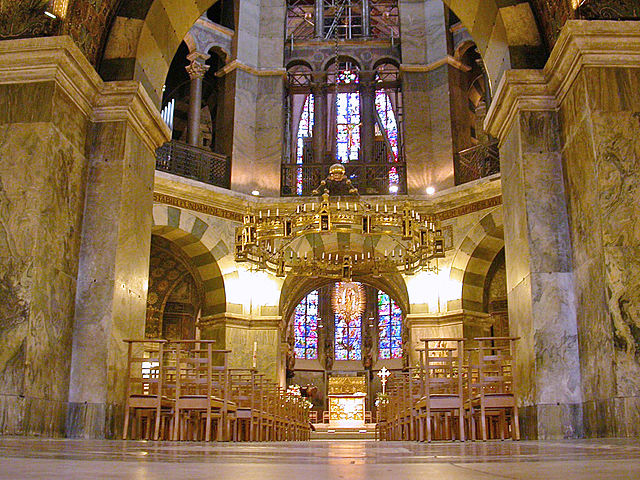
Image: Wikimedia Commons
And in 1978 when Aldersgate Renewal Ministries was formed (whose purpose at its formation was to encourage UMs to be filled, gifted, empowered and led by the Holy Spirit in ministry to the world) it became an affiliate of the UM General Board of Discipleship.
When the official United Methodist Book of Worship came out it was published with two healing services in it that are there for all United Methodist Churches to use if they want. Not many of our churches use them but they are there in our official denominational material.
So, officially the UMC has written statements supporting tongue speaking, gifts of the Spirit and healing prayer, which is more than many other mainline denominations or conservative evangelical churches have. Having said all that, teaching about and practicing gifts of the Spirit is not generally done much at all in American UM churches. In United Methodist churches where the Apostles Creed is recited those present say “I believe in the Holy Spirit” but if you were to ask them WHAT they believed about the Holy Spirit they would be hard pressed to answer. Many are practically like the Ephesian believers in Acts 19:2-3 where Paul asked them if they received the Holy Spirit when they believed and the Ephesians responded “No, we have not even heard that there is a Holy Spirit.”
However, in UM churches I have served over 41 years I have seen people baptized in the Holy Spirit, gifted by the Spirit, speaking in tongues, healed and praying for the healing of others. And there are certainly other UM churches where this is happening on a regular basis.
PneumaReview.com: In places where there is not openness what are the main issues?
Frank Billman: One would be theological liberalism/modernism. Where the pastor or church people come from a liberal/modernist theological perspective where they do not believe any of the miraculous or supernatural passages of the Bible ever happened, then of course they do not believe they happen today. My father-in-law was a Methodist preacher for over 50 years and people in one of his churches told him that they did not want to hear any more of “that Bible preaching.”
Another issue would be cessationism—the belief that the miracles and supernatural gifts of the Spirit did happen in Bible times but they “ceased” with the death of the last of the apostles or the completion of the New Testament. Any supposed miracles or supernatural gifts today are either fraudulent, imagined, or demonic. John Wesley wrote against this view, but that doesn’t mean that there aren’t United Methodist pastors and lay people who support this view.
Then there would be the “practical cesssatonists” who believe that the miracles and gifts of the Spirit did happen in Bible times and that God can still do those things today, but, practically speaking, incidents of God doing these things are so rare that they cannot be anticipated, sought after, or depended upon. I think an example of this would be in times when prayer requests are taken and needs for healing prayer are voiced. The requests are written down and maybe not even prayed for. Or prayer is offered for the doctors and nurses who are attending that person, but no prayer is offered with the expectation that God the Holy Spirit will supernaturally intervene in that situation and heal the person. And if people are healed, God is not given the credit.
And finally there is the problem of what I might call “professional church.” I was at my first church 15 years, my second church for 11 years and my third church 9 years before I went on staff of ARM full time. But for most United Methodist pastors the reality is they tend to move to a new church every 5-6 years. So after a while, a UM pastor (and others) can become “professional.” They can become good at what they do. They can learn how to do this “church thing.” They can have the worship bulletin shell on their laptop and plunk in hymns, they can use a Scripture and message or series of messages they used before and put that in, the choir will do their special music, the ushers will take up the offering, they will make the announcements and follow the schedule for that church’s year from the years before with the fundraising dinners, the bazaars, VBS, and all the other things that that church does. They will do their hospital visits and weddings and funerals and attend church meetings to plan the same things they planned last year. They can lead a church professionally and smoothly—without God! There is no asking God: “What do you want to do in the worship service next Sunday? What do you want us to do to accommodate that? What do you want us to do different this year?”
One of my current Doctor of Ministry in Supernatural Ministry students is an associate pastor of a very “successful” UM church. It is a large church with multiple services. It is growing. The bills are all being paid easily. They have many great programs going on. The Word is being preached and the people are hearing and learning the Word. This pastor has been “successful” in other churches and he is certainly “successful” in this one. He is a self-reliant pastor serving a church of self-reliant people. But he is in this DMin program believing that this self-reliant pastor and self-reliant church need to experience how much more they could do with the supernatural power of God working with them and directing them. He is seeking more than being a “professional pastor.”
PneumaReview.com: Do you think there is greater openness to the gifts of the Holy Spirit in United Methodist churches in the Majority World? If so, why do you think that is?
Frank Billman: It does seem that generally there is more openness to the gifts and manifestations of the Spirit in UMCs in the Majority World. When we were leading a team at a UMC in Nepal close to the border of India, we heard a church member testify that she had been a Hindu and her child was demonized. She prayed to her Hindu gods and made multiple sacrifices with no results. Then some ladies from the local UMC came over to her house and cast out the demons from her child so she became a Christian and a United Methodist. Another lady was preparing to become a Buddhist priest. She became very sick and she testified that her Buddhist prayers did nothing for her. But the ladies from the local UMC came and prayed for her and she was healed. She was then preparing to become a UM minister.
In Tanzania, Africa we were teaching on healing and were going to use anointing oil during the prayer time but first we had to teach what the Bible says about healing through anointing oil because the people were very familiar with the “special oil” of witch doctors. We had to stress that it is not the oil or some magical spell that would do the healing, but it would be the power of the Holy Spirit.
Earlier this year I was asked to review a manuscript for one of the main publishers for our denomination. The manuscript was titled The Practice of Exorcism in the United Methodist Church in Africa. The very fact that this publisher would consider publishing a manuscript on this topic is supernatural. But it also reflects where our church is in Africa.
 In the West, it is not surprising that when a person who generally looks askance at anything seeming to be Charismatic or Pentecostal and gets a diagnosis of stage 4 cancer for which the doctors say there is nothing more they can do for them, all of the sudden they are open to prayer from the Charismatic or Pentecostal person. The western person has gotten a taste of what desperation feels like, just like the woman with the bleeding problem who spent all she had on doctors. She reached out and touched the tassel of Jesus’ tallit and she was healed. Desperation can make skeptics open to receive anointed prayer cloths from Charismatics and Pentecostals!
I was part of the leadership for the Estonian UMC summer conference in 2017. There were about 200 people there from Estonia, Latvia, Lithuania, Russia, Finland, Germany, the UK, the US and a man from Egypt who was seeking Asylum in Estonia. The speakers had to be translated into 3 different languages for the people to understand. A 93-year-old lady had come to the conference for several years and her favorite part was going into a neighboring town with a team to deliver words of knowledge to people there. The main sessions were held in a tent outside and when it came time for prayer ministry people kept coming to the prayer teams which had to be arranged by language. They rested in the Spirit on the wet grass with biting black flies. That situation alone would have turned off many in the West. But these were people who were hungry and desperate. Many of these were people who had been oppressed by the Nazis and then the Soviets. Now they are free and spiritually hungry.
I have become a Scholar in Residence for the Methodist Church of Barbados. The Methodist Church of Barbados is part of the Methodist Church in the Caribbean and Americas, not the United Methodist Church. I was first asked to come because someone there read my book. As I did some research I found evidence of some supernatural Methodist history in the Methodist Church of Barbados and that opened that church to hunger for more. They now have me come twice a year for a month at a time to teach and minister on supernatural themes. The countries of the Caribbean that are part of this Methodist denomination are Western rather than Majority world, but there is generally more openness to the power of the Holy Spirit there than in the US, perhaps due to the presence of Santeria, Voodoo, Obeah, Macumba, and other African/Spiritualist/Occult religions that are operating there as well.
Although our UMC has been declining for years in the US it is growing significantly outside the US where people are desperate and hungry.
PneumaReview.com: You are involved in Aldersgate Renewal Ministries. Please tell us about this ministry.
Frank Billman: In 1977, the Conference on Charismatic Renewal in the Christian Churches gathered at Kansas City with about 50,000 people attending from a wide variety of denominations. Among them were about 800 United Methodists. At this conference there was opportunity for the different groups to break out and gather together with others of their “tribe.” The United Methodists did this and asked their leaders to form an ongoing national Charismatic United Methodist group as a result of this conference. The leaders were reluctant to do that but they agreed to enter into a time of prayer about it. They consulted with two UM bishops about this possibility and both bishops said that the leaders should go ahead and form this group. So, in 1978 the United Methodist Renewal Services Fellowship was officially incorporated. Today it is known as Aldersgate Renewal Ministries (ARM) and it seeks to bring Holy Spirit renewal especially to Methodism.
At its headquarters in Goodlettsville, TN just north of Nashville, ARM has held a number of events including annual Ministers retreats. That is where I started the Methodist School of Supernatural Ministry and Supernatural Ministry Intensives.
ARM has branches called Regional Fellowships in several of the UM annual conferences across the country. These provide ARM programming on a more local level.
John Wesley wrote “the world is my parish” so ARM has ministered in around 20 countries around the world at conferences or teaching missions. ARM ministry will take place at the annual conference of the UMC in Finland this summer. There are ongoing ARM groups in The Philippines, the UK, Estonia and one is now developing in Barbados. The ones in the UK and Barbados are Methodist, but not United Methodist.
When invited to do so, ARM ministers in local churches with 7 different weekend local church renewal events on testimony, worship, prayer, the Holy Spirit and Supernatural Ministry. Although most of these venues have been UMCs, ARM has been willing to go where invited and some non-UMCs have requested these ministries.
More information can be found on all these ministries of ARM at AldersgateRenewal.org.
PneumaReview.com: One of the things you teach is the Life in the Spirit Seminars. Tell us what those are.
Frank Billman: One of the local church renewal events that ARM does is the Life in the Spirit Seminar. This is usually a weekend event on teaching about and experiencing the Holy Spirit. The team members share teaching on different ministries of the Holy Spirit found in Scripture and then they balance that with personal testimony about how they have experienced that aspect of the Spirit’s ministry in their own lives. There are teachings on Kingdom Encounters from the book of Acts, Fruit of the Spirit and Gifts of the Spirit. During the seminar there is worship interspersed between talks and opportunities for participants to receive prayer for baptism in the Holy Spirit, impartation of Spiritual gifts, healing or whatever else the Spirit has in mind. ARM has multiple coordinators and team members available to lead these across the country and around the world.
I have led these seminars from Delaware to California, from Michigan to Florida, and in Liberia, Nepal, and Tanzania (including in 2 refugee camps there). I hosted them in the 3 churches I pastored. All over the world I have seen God use this seminar to bring people into a deeper experience with the Holy Spirit. ARM is willing to take this seminar wherever invited, not just in UMCs.
PneumaReview.com: You are also involved in a doctoral program in supernatural ministries at United Theological Seminary. Please tell us about the program and the tracks of study they offer.
Frank Billman: After ARM had done several sessions of the Methodist School for Supernatural Ministry, Dr. Peter Bellini, a faculty member at United Theological Seminary in Dayton, Ohio, contacted the ARM office asking if ARM would be willing to partner with United in providing a Doctor of Ministry in Supernatural Ministry group and ARM said they would. Since I was the one on the ARM staff with an earned doctorate and since I founded the Methodist School for Supernatural Ministry, that task was given to me to lead this program. As far as I know United is the only seminary in the country where you can get a DMin in Supernatural Ministry that is fully accredited by ATS.
It would not be unusual to walk down the halls of the seminary and overhear students and teachers praying for healing or deliverance or speaking in tongues. At the DMin Intensive weeks it is not unusual to witness people resting in the Spirit, singing in the Spirit, giving words of knowledge or displaying other manifestations of the Spirit. The first Friday in December they host a Holy Spirit conference at the seminary co-sponsor with ARM. In April United will be hosting a four-day session of the Methodist School for Supernatural Ministry also co-sponsored with ARM.
In our DMin in Supernatural Ministry group each project that the students come up with has to have an element of dependence upon the Holy Spirit to succeed. So, one student did his project on teaching UM pastors in America to do spiritual warfare. Another did hers on creating a spiritual boot camp on a US Navy base in Italy to teach people to pray for healing and deliverance. Another did his on training ten and eleven-year-old children to hear from God and pray for adults in a UM church.
PR
For Further Reading:
Frank Billman introduces an excerpt from his book, The Supernatural Thread in Methodism: Signs and Wonders Among Methodists Then and Now.
- Author’s Introduction
- A Pentecostal Season: The Methodists in England and America, Part 1
(Summer 2018) - A Pentecostal Season: The Methodists in England and America, Part 2
(Fall 2018)
The Holy River of God: Currents and Contributions of the Wesleyan Holiness Stream of Christianity reviewed by David Belles.
Watch: John Wesley and Pentecostalism: an interview with Frank Macchia
Daniel Jennings, The Supernatural Occurrences of John Wesley reviewed by Tony Richie.
Winfield Bevins, “Wesley and the Pentecostals”
This article will attempt to briefly discuss the historical development of Pentecostalism by making a special application of John Wesley’s contribution.
Watch: Miracles: John Wesley, with Craig S. Keener
Winfield Bevins, “Historical Development of Wesley’s Doctrine of the Spirit”
There is no telling what will happen when the church rediscovers Wesley’s doctrine of the Holy Spirit.
Peter Althouse, “Wesleyan and Reformed Impulses in the Keswick and Pentecostal Movements”
Winfield Bevins, “A Pentecostal Appropriation of the Wesleyan Quadrilateral”
From the beginning, Pentecostals have always emphasized the importance of Scripture.
Gary Best, Charles Wesley: A Biography reviewed by David Malcolm Bennett.
Gary Best captures Charles Wesley as a man of courageous action as well as a thoughtful churchman, theologian and poet. He also gives some wonderful insights into early Methodism.