
Highlights from the Charismatic Anglican 2014 Prayer Conference
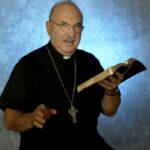

A report from the 2014 Anglican Diocese of the South Intercessory Prayer conference by William De Arteaga. The conference was convened at Holy Cross Anglican Church in Loganville, Georgia, from August 27 – 28, 2014.
I had the privilege of speaking and participating in the intercessory prayer conference sponsored by the Anglican Diocese of the South (ADOTS). This is a diocese within the Anglican Church in North America (ACNA). I will describe he conference below, but need first to clarify what ACNA is and how it formed.
The ACNA is made up mostly of ex-Episcopalians who were fed up with the heresy and apostasy of the Episcopal Church. The lamentable state of the Episcopal clergy came about (as with other mainline denominations) because the seminaries accepted de-mythologizing and other liberal theologies as normative. At the same time they increasingly disdained and marginalized the views that the scriptures are true. This implied that the supernatural world pictured in the Bible, as in angels, demons, healing and exorcisms, is also mythological. As liberalism gutted the Gospels and the creeds, what remained were various fashions of psychology and philosophy which were self-labeled as “progressive” theology. This liberal cluster of non-beliefs attached to traditional forms of liturgy, vestments, feast days, etc., and passed itself off as Christianity. The steady, and now, precipitous decline the Episcopal Church and other mainline denominations is the natural result of the triumph of liberal theology over Bible orthodoxy.
But within the Episcopal Church there were many laypersons and clergy who were orthodox, read the scriptures naturally (without de-mythologizing) and who practiced an evangelical faith. This was often combined with the gifts of the Spirit which came into many Episcopal Churches via the ministry of Agnes Sanford and the Charismatic Renewal of the 1960s. The evangelical and Spirit-filled congregations battled to keep the rest of the denomination orthodox. As the 1970s turned into the 1980s it was apparent that the battle was turning against orthodoxy. The Seminaries remained stubbornly liberal and dismissed the Charismatic Renewal as a passing fancy, and continued to churn out apostate or weak-faith clergy.
The 1990s saw many Episcopal clergymen and congregations leave the church into continuing churches. That is, churches which retained the liturgy and Book of Common Prayer as the basis of their worship but separated from the Episcopal church and hierarchy.[1] After 2003, the exodus became a torrent. At that time there was no single entity to receive these orthodox exiles.
When this author left St. Jude’s Episcopal Church in Marietta Georgia, in 2003, with about a third of the congregation, we were received for Episcopal cover by the Anglican Bishop of Bolivia, the Very Rev. Francis Lyons. He was an American missionary, orthodox and highly charismatic. He ultimately took under his wing dozens of exiled congregations. It was understood that this was a temporary and abnormal situation, waiting for a better resolution. Then ACNA was formed under the leadership of Bishop Robert Duncan, from the diocese of Pittsburgh, and the congregations under Bishop Lyons transferred to ACNA. Bishop Lyons subsequently handed over his charge to a Bolivian Anglican bishop, and joined Archbishop Duncan’s staff in Pittsburgh.
ACNA has grown steadily. It now has over nine hundred congregations in the United States and Canada, with about 119,000 persons attending Sunday services. The Churches and clergy of ACNA are three streamed. That is, they worship liturgically, based on the Book of Common Prayer (several variations, 1928, 1979, etc.), preach the Gospel evangelically, and practice the gifts of the Spirit. There is a wide variety of how the streams are manifest in individual churches. Some churches are more traditional and liturgical, with few charismatic manifestations such as tongues or prophecy. Some churches are highly charismatic. All practice some form of healing ministry, as in weekly healing services, or having trained healing intercessors pray for supplicants at the Sunday services.
I came into the Episcopal Church in 1981, to a congregation that was highly charismatic, but in a diocese led by a liberal Bishop, and with a majority of churches in the liberal camp. The spiritual warfare involved was time consuming, distressing, and exhausting. I recall the tensions of an Episcopal diocesan meeting I attended in the 1980s. One had to guard each word spoken, as one did not know if the person you were conversing with was liberal or orthodox. The agenda was all about liberal topics, such as condemning American foreign policy. I grieve over the many Methodists and Presbyterian brothers undergo the same unpleasantness in their meetings. It has been a relief and joy to be part of a wholly orthodox, if smaller denomination.

So now I can discuss the intercessor’s conference, and share how spiritually refreshing and exciting it was. This was a conference to teach laymen and clergy further insights on intercessory prayer. No de-mythologizing cited, and no cessationism accepted. We all understood that prayer was a real force, and that it could move mountains and stop storms. In fact, one of my talks was on Mrs. Agnes Sanford’s pioneer “nature ministry,” where she outlined the Christian’s authority and stewardship over nature, as in stopping storms.[2] No one at the conference dis-believed this could be done by Christians, as promised in John 14:12 (I have blogged on this topic earlier).[3] In fact several persons shared incidents in their lives where they commanded weather changes. I would not have been invited to an Episcopal conference to talk about such a thing, and had I done so I would have been met with silence or derisive laughter.
The conference was organized into five plenary sessions and five workshops, plus Morning Prayer, a Eucharist, and several sessions of joint intercessory prayer. This was the first prayer intercessor’s conference of the diocese. And there were only about fifty participants (we expect triple that number next year). Archbishop Beach not only gave the first session, but led the prayer services (morning and noon prayer, and a Eucharist). He could have delegated most of his appearances to others, and we would have understood that he was a very busy man. He did not. It was his statement that he was not only the Archbishop of ACNA, but still our diocesan Bishop. He wears, so to speak, two bishop’s hats—one as Archbishop and another as Bishop of ADOTS. Mostly it was a statement of how much he believed in prayer, and wanted to encourage others in that ministry.
 In the Archbishop’s plenary session he stressed the importance of intercessory prayer and shared some quotations of the great saints and heroes of Church history, such as Charles Finney, on their high view of prayer. He showed us his own prayer journal which spanned his years in ministry. As a priest, he prayed for every member of his congregation (when it became large, he divided it into five segments, one for each week day. When he became Bishop and had to oversee many churches he could not pray for every person in all the congregations, so he limited himself to prayer every day for the pastors and clergy. He assumed they would be praying for their sheep daily. Recently, when he was called to be Archbishop, he shifted to praying for the bishops of ANCA, again divided into daily segments so that every week every Bishop would be prayed for.
This was followed by my address on inner healing as a Eucharistic intercession. Most people associate inner healing as a prayer of visualization, but I showed how the first inner healings pioneered by Agnes Sanford were really Holy Communion intercessions modeled after a Medieval practice of reparation prayer. This was, in essence, a form of burden bearing that all Christians are enjoined to do (Galatians 6:2) I stressed that this early form of inner healing as intercessory prayer is a ministry that every Christian can and should do.
An outstanding plenary session was the one by Rose Marie Edwards, a layperson who has the title of ACNA Lead Intercessor. How many other denominations would honor their prayer warriors with such a title? I had the pleasure of praying with her at the conference and immediately sensed her prayer power and intimacy with God. She had studied under and ministered with Dr. Francis and Judith MacNutt, and Mrs. Leanne Payne, all giants of the Charismatic Movement. Her session “From One Intercessor to Another” described the importance of parish level intercessory groups, and how critical it was to have proper prayer cover for these groups.
The praise music was wonderfully led by Mr. Tyrone Bragg, who with his wife, initiated and organized the conference. The workshops were: Rose Marie Edwards, “How to Start a Team of Intercessors,” the Rev. Canon George Ivy, “Healing Ministry,” the Rev. Jim Cheetham, “Portraits of Prayer: Biblical Illustrations of Prayer,” Deacon Dena Upshaw, “Hindrances to Prayer,” the Rev. William L. De Arteaga, “Agnes Sanford, Intercessor.”
It was the first conference of its kind for the diocese, and was a great success. I expect even greater things for next year.


The plenary sessions were all recorded, but unfortunately not the workshops. To watch them, go to the website of Holy Cross Anglican Church: http://www.hcanglican.org/live-streaming-of-services
PR
[1] In 1984 I was in a home group within a faithful and highly charismatic Episcopal church in Marietta, Georgia, St. Jude’s. The leader of the group felt a call to the ministry and went to be interviewed by the bishop of our diocese. He was told by the Bishop that he was not acceptable as a candidate to the Episcopal priesthood because he was “white, male and too orthodox.” Providentially, Ministries Today had just run an article on the CEC (Charismatic Episcopal Church), a “continuing church” and I handed a copy of the article to my friend. He became a fine CEC priest.
[2] Her principal book on this topic is Creation Waits (Plainfield: Logos International, 1978).
[3] William L. De Arteaga, “Is Calming Tornadoes a Christian Ministry?” Anglican Pentecostal, June 1, 2013. http://www.hcanglican.org/live-streaming-of-services