
John MacArthur’s Strange Fire, reviewed by Monte Lee Rice

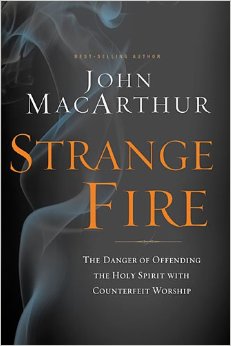 John MacArthur, Strange Fire: The Danger of Offending the Holy Spirit with Counterfeit Worship (Nashville, TN: Nelson Books, 2013), 333 pages, ISBN 9781400206414.
Introduction
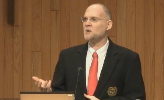
In this highly polemical book, John MacArthur argues that as an aggressive though “counterfeit” form of Christian spirituality, the global Pentecostal-Charismatic movement is neither founded on nor representative of orthodox Christian doctrine. He claims it has infiltrated and is undermining orthodox Christianity with “counterfeit” theologies, worship beliefs, and practices—all emerging from its heretical doctrine of the Holy Spirit. MacArthur’s stated purpose for writing this book is to therefore galvanize the “evangelical church” in concerted condemnation against its existence, and honour the Holy Spirit by ridding the evangelical church of the movement’s influence, thus leading to the recovery of correct doctrines of the Holy Spirit.
Having read some highly constructive reviews and responses emerging on MacArthur’s book, in this review, I will hopefully avoid covering matters already well addressed, and provide critique on issues perhaps not adequately touched. I will begin first however with a thematic survey on the book’s content.
Survey
In sermonic style, MacArthur begins his treatise by setting forth the Pentateuchal narrative on Nadab and Abihu’s priestly offering of “strange fire” and God’s judgement against them, as his controlling metaphor for exposing the demonically sourced errors of Pentecostal/Charismatic spirituality that have infiltrated Evangelical Christianity. MacArthur then structures his book into three parts. In Part One (“Confronting a Counterfeit Revival”), MacArthur pursues two basic objectives. First (chapter 1) is to establish that the “systemic” reason for the Pentecostal-Charismatic movement’s existence as a false form of Christian spirituality, is its elevation of “religious experience over biblical truth.” (pp. 16-17). He then argues that at the heart of this aberration is the movement’s historical foundation upon a “deficient soteriology,” which conversely fosters this elevation of experience. Here, MacArthur directly blames the soteriological themes of 19th century Holiness Movement teachings (p. 27).
MacArthur moreover charges that this deficient soteriology under girded the preaching of early Pentecostal leaders, particularly that of Charles Parham. While stressing the dubious nature of Parham’s life and ministry, MacArthur argues that we acknowledge him as the originating founder of the Pentecostal/Charismatic movement—in order to jeopardize the theological “legitimacy” of the whole movement (p. 26-28). MacArthur moreover argues that equally responsible for the “theological foundations” of the movement is E.W. Kenyon, whose seminal Word of Faith doctrine MacArthur stresses, is rooted in a synthesis of various early 20th century “New Thought” metaphysical teachings (pp. 28-31). Hence, in MacArthur’s construal of Pentecostal historiography, Parham and Kenyon together “are responsible for the theological foundations upon which the entire charismatic system is built,” and together represent its dubious “historical roots.” Hence, in MacArthur’s construal of Pentecostal historiography, the doctrinal and moral errors of Parham and Kenyon together establish the dubious theological underpinnings of Pentecostalism and the Charismatic Movement (p. 31).
MacArthur’s second pursued objective of Part One (chapters 3 and 4) is to critique Pentecostal-Charismatic spirituality via Jonathan Edwards’ “distinguishing marks” of genuine spiritual renewal (e.g., “The Distinguishing Marks of a Work of the Spirit of God”). MacArthur thereby argues that Pentecostal-Charismatic spirituality is neither birthed by nor honouring to the Holy Spirit. To argue this MacArthur alleges that the movement shifts people away from Christ by its false doctrines, worship practices and experiences wrongly attributed to the Holy Spirit (pp. 53), and through its fostering of immorality via its emphasis on miracles and prosperity gospel teaching. (pp. 60, 65-66). Crucial also to this critique, is MacArthur’s allegations that Pentecostal/Charismatic spirituality moreover undermines Scriptural authority by encouraging believers to seek extra biblical revelation (pp. 67-68), thus elevating false experiences of God over Scriptural and doctrinal truth (pp. 71-72). Finally, MacArthur charges that Pentecostal-Charismatic spirituality fails to produce genuine love amongst believers (pp. 74-76), which MacArthur roots to the movement’s narcissistic blending of “mysticism” (via charismatic worship practices) to the “materialism of prosperity theology” (p. 78). MacArthur concluding verdict is that Pentecostals and Charismatics are “playing with strange fire” (p. 81).
In the Part 2 (“Exposing the Counterfeit Gifts”) MacArthur repudiates as fraudulent “apostolic” and “prophetic” roles or categories, prophetic utterances, spiritual gifts and miraculous phenomena, tongues speech, and alleged healings that all together characterize Pentecostal-Charismatic spirituality. Grounded upon his firm cessationist position, MacArthur contends that biblical narrative points to an understanding of tongues speech as translatable human languages (thus xenolalia rather than glossolalia, unknown languages; pp. 138, 143-144, 154). MacArthur then uses this premise to dismiss the Pentecostal-Charismatic practice of tongues speech as mere gibberish, analogous to similar phenomena observed in pagan religious practices and heretical Christian groups (pp. 134-136, 143, 154). Finally, MacArthur dismisses most contemporary healing experiences as counterfeit hoaxes, primarily popularized through of Pentecostal-Charismatic healing evangelists (pp. 155, 176). He does however affirm that “according to His sovereign purposes,” God may heal people in response to answered prayer (p. 176).
In Part 3 (“Rediscovering the Spirit’s True Work”), MacArthur outlines a true biblical portrayal of the Holy Spirit’s role and activity in human salvation (chapter 9), sanctification (chapter 10), and empowering the meaning to Scripture (chapter 11). He concludes his book with “An Open Letter” (chapter 12), to conservative Reformed evangelicals, who identify themselves as “Continuationists.” Here MacArthur urges them to recognize the “dangerous ramifications” of their continuationist position, given its link to the counterfeit Pentecostal-Charismatic movement (pp. 234-235), finally warning that failure to do so shall further pollute the evangelical tradition with heresies, wickedness and theological error (p. 247).
Critique
Inflammatory defamation guised as pastoral correction
MacArthur’s Strange Fire book generally reiterates themes first propagated in his 1978 book, The Charismatics: A Doctrinal Perspective, and his 1993 book, Charismatic Chaos. Writing from a Calvinistic fundamentalist perspective, MacArthur has distinguished himself as a highly prolific popular writer, conference speaker, and senior pastor of the 8,000 member plus Grace Community Church in Sun Valley, California, USA.
Notwithstanding my disconcertion with the emotive and strong inflammatory rhetoric that peppers every aspect of his Strange Fire book, I sense that MacArthur believes he is discharging an urgently needful pastoral correction to what he remains convinced to be a demonically charged spirituality that is undermining the spiritual integrity of contemporary evangelicalism (pp. xvii, 113, 128, 247-248). On the other hand, MacArthur’s wonton proclamation of anathema upon a global block of Christianity may well belie any well-intentioned motives. In his own review, Craig Keener provides excellent reflection on how MacArthur’s book may provide necessary rebuke for where we have lacked effective processes towards restraining extremities within the Pentecostal and Charismatic movements.[1] I think that his concession to this one redeeming role of MacArthur’s message places him on high moral ground as he demonstrates MacArthur’s logical fallacies and his gross misconstruing of Pentecostal history.
Apparent intentional misconstrual of information
What I shall foremost stress is that MacArthur’s research and scholarship is at best shoddy, and at worst—intentionally misconstruing, misrepresenting, and misleading, all for the purpose of maliciously maligning all Pentecostal-Charismatic traditions, movements, spiritualities, and resulting past and on-going theological constructions. MacArthur’s ultimate purpose is to stem their influence within the Reformed tradition via Reformed Continuationists, by exhorting them towards cessationist doctrine and ideology. Here we are perhaps touching on a deeper root to MacArthur’s inflammatory rhetoric, which is his dismissal of any soteriological doctrine other than that of Reformed doctrine. This is why he titles the beginning chapter to the book’s final part, “The Holy Spirit and Salvation.” As I earlier mentioned, this is also why MacArthur argues at book’s beginning, that the foundational root to the systemic Pentecostal-Charismatic theologically flawed nuance on experience, is the movement’s “deficient soteriology” which he roots in 19th century Holiness soteriology (p. 27).
MacArthur therefore ardently stresses the Wesleyan roots of Pentecostalism, while I suspect deliberately, refraining from engaging any recognition of the Reformed influence on early Pentecostalism (chapter 2). I find it important therefore to recall the Reformed influences on the broader 19th and early 20th century holiness movements, such as early 19th century Oberlin second work theology (e.g., Charles G. Finney, Asa Mahan), and later 19th century Keswick “higher life” teaching. All of this is well known, but MacArthur conveniently sidesteps established historiography obviously detrimental to his project. This trajectory accounts for why MacArthur dismisses any credence or relevancy to how the Pentecostal-Charismatic movements have substantially fostered ecumenical bridges with Roman Catholicism or to the spiritual renewal evidenced by Roman Catholic Charismatics. For in MacArthur’s mind, the Pentecostal-Charismatic movements, together with Roman Catholicism altogether represent false forms of Christianity, which he also lumps together with all other identified aberrant groups such as Mormons, Jehovah Witnesses, and Oneness Pentecostals (pp. 48-47, 52, 72-73, 102, 217, 244).
Another important area where I believe MacArthur intentionally misleads readers towards a grossly inaccurate portrayal of global Pentecostal-Charismatic history, is his subsuming of all observed varieties, families, streams, traditions, definitions and historiographies of Pentecostal and Charismatics worldwide under his chosen umbrella term, “Charismatic Movement” (pp. xii, see footnote 2 [p. 263]). By doing so, MacArthur evidently seeks to affirm attempts by Reformed “Continuationists” to distance themselves from the Charismatic movement (chapter 12). Yet on the other hand, he does so to undermine legitimacy to their positions by arguing that their “continuationist position” still endorses the “Charismatic Movement” in its entirety (pp. 234-248).
I must also point out that MacArthur’s skewered use of the few scholarly sources utilised, demonstrates an intentional refusal towards responsibly engaging Pentecostal and Charismatic theological and historiographical scholarship. I have discerned this irresponsibility by skimming through his endnotes, categorizing his sources, and then noting how he appropriates this information towards sweeping condemnatory indictments and generalisations on the Pentecostal and Charismatic movements in their entirety. A rough breakdown of MacArthur’s sources shows about 25 scholarly books representative of Pentecostal (not Charismatic) tradition, with nine of these works written by scholars sympathetic to Pentecostalism. However, most of these works are introductions and readers, or focused on historiographical issues. Besides these, I noted about 20 more popularly written books, primarily representative of Charismatic literature, particularly third-wave type literature. Authors of these books are people such as C. Peter Wagner, Jack Deere, and Wayne Grudem, or people associated with the Toronto Revival. Then there are about seven more popular books representative of Classical Pentecostalism, albeit mostly written by controversial individuals such as Kenneth Hagin or Benny Hinn.
At this point, I will provide some specific examples on how MacArthur misrepresents data, largely from his more scholarly sources. One of MacArthur’s most relied on sources is Allan Anderson’s An Introduction to Pentecostalism: Global Charismatic Christianity (Cambridge University Press, 2004). To some extent, MacArthur may have found Anderson’s title helpful towards his vast umbrella term “Charismatic.” However, he obviously ignored Anderson’s analysis and intention towards the relevant terminology, whereby he maintains a distinction between Pentecostalism and the Charismatic Movement, stresses Classical Pentecostalism as one branch of this broader global block.[2] MacArthur also ignored another crucial theme to Anderson’s work, which was to correct past uni-linear, “Americo-European” centered historiographies of world Pentecostalism, alongside with the Americo-centric construing of the Azusa Street Revival as the original “Jerusalem” fountain for world Pentecostalism. Hence, Anderson stressed the polycentric Majority World origins of world Pentecostalism emerging from countless and spontaneous 20th century Pentecostal outpourings of the Spirit worldwide, quite often independent of Azusa Street.[3] Anderson thus reiterated the consensus in Pentecostal scholarship that in many ways it is more appropriate to speak of many “Pentecostalisms” rather than Pentecostalism per say.[4]
Another way MacArthur misconstrues his more scholarly sources, is to extrapolate their own critical exposés on Pentecostal and Charismatic moral failures towards defaming Pentecostal-Charismatic spirituality in its entirety. MacArthur thus translates these internal critiques into broad sweeping indictments, which in virtually every chapter, he then substantiates by drawing attention to some of the most well known controversial past and current figures within Pentecostal and Charismatic history. The individuals MacArthur thus focuses on are Parham, Kenyon, Aimee Semple McPherson, Oral Roberts, Jimmy Swaggart, and Benny Hinn. Moreover, most of MacArthur’s research on these individuals comes from general readership-oriented, online news sites.[5]
Also noteworthy is MacArthur’s misconstrued use of Margaret Poloma’s research on the Toronto Blessing laughter phenomena, which he sourced from her book Main Street Mystics: The Toronto Blessing and Reviving Pentecostalism. MacArthur called this a notable example of false worship and then charges that such mystical phenomena only produce a “counterfeit form of love” (pp. 76-79). The irony here is that as a well-respected sociologist, Poloma researched the Toronto Blessing to assess its capacity towards effecting behaviour change on participants. From her empirical research, Poloma demonstrates that the Toronto Revival generally provided participants profound experiences of God’s love, which resulted in desires for behavioural change and ministry or missionary involvement.[6] It is also pertinent to note that Poloma’s research at Toronto soon sparked off several other similar interdisciplinary research projects by her and many others elsewhere on Pentecostal and Charismatic renewal experiences.
Meanwhile, in 2007 similar studies (in which Poloma also participated) emerged known as “The Flame of Love: Scientific Research on the Experience and Expression of Godly Love in the Pentecostal Tradition.” Researchers coined the term “godly love” as a conceptual premise to guide the project’s research, defining this as “the dynamic interaction between divine and human love that enlivens and expands benevolence,” primarily focusing on how this interaction fosters in people, altruistic behaviour.[7] The hard research has broadly confirmed that within many localities representative of Pentecostal and Charismatic spirituality, that coinciding with experiences of spiritual renewal generally are encounters with “godly love” which subsequently causes movement towards altruistic behaviour. Particularly relevant is Candy Gunther Brown’s empirical study on healing practices within the varied networks that developed out of the Toronto Revival over the following decade or so. Brown discovered a close link between experiences of healing within the post Toronto Blessing albeit sprouted ministry networks, and movement towards altruistic concern and behaviour.[8]
Assessing probable impact in non-western Majority World
I shall now briefly assess the relevancy, impact MacArthur’s book may have and evoke from within the non-western Majority World. Knowledgeable observers may quickly deduce that MacArthur’s message would largely fail to resonate with the interests of Southern Hemisphere and non-Western Pentecostal and Charismatics as well as with the non-Pentecostal/Charismatic world. This probable disinterest would arise from how MacArthur’s Western Enlightenment-steeped fundamentalist worldview, incongruously contrasts with Southern Hemisphere/Majority World religious supernaturalism—which takes for granted efficacious links between religious practices and miraculous occurrences, both within and outside the Christian faith.
A good illustration that demonstrates this incongruence is West Malaysian Methodist Bishop Hwa Yung’s attempts to reinterpret the impact of Pentecostal and Charismatic movements in Asia, in manners that take more seriously affirm the indigenous nature of these movements within the Asian continent. He thus faults the “three-wave” theory (e.g., Pentecostalism → Charismatic Renewal → Third Wave) for its biased western and particularly North American historiography, “which see everything flowing out of American Pentecostalism.”[11] Yung thus contends that the Asian Pentecostal/Charismatic movements primarily emerged because of the sacralistic Asian worldview, and that these movements are thus wholly indigenous without dependence upon the “three wave” historical development of Charismatic movements in the Western world.[12] Hence, Yung believes that “a truly indigenous Christianity in Asia,” will always be “supernaturalistic, and therefore Pentecostal-Charismatic!”[13] While I differ from Yung’s strict contention that Asian Pentecostal/Charismatic historiography is wholly independent of Western connections, I believe his analysis points to a definitive epistemological incongruence between MacArthur’s message and Southern hemisphere Christianity.
Yet notwithstanding the incorrigible quality I have described between MacArthur’s underlying epistemology and Majority World sacralistic sensibilities, I am concerned his inflammatory rhetoric against Pentecostalism and the Charismatic movement can negatively influence Southern Hemisphere non-Pentecostal/Charismatic believers at the grassroots level, away from healthy ecumenical appreciation towards and with Pentecostal/Charismatic spirituality, practices, and theological scholarship. I say this contending that popular caricatures of Pentecostal and Charismatic spiritualities and practices as devoid of biblical authority and mature theological reflection, do substantially exists within more mainline and Reformed albeit conservative Evangelical communities in the Southern as well as Northern hemispheres. Hence, I would caution that MacArthur’s broad sweeping tactics and ideological caricaturizing is detrimental at the grassroots level, because it is there that its rhetorical power demonstrates its influential effectiveness.
Conclusion
I shall therefore conclude by suggesting that Reformed networks indeed reflect on the viable impact MacArthur’s message may pose towards impeding healthy ecumenical fruit at the grass-roots level within both Reformed and non-Reformed communities. Relevant here is Assemblies of God theologian Frank Macchia’s reflection on his participation involvement in an international dialogue between the World Alliance of Reformed Churches and Pentecostals. In that dialogue, Reformed and Pentecostal participants issued a formal statement granting theological and hence legitimate space to one another’s differing views on spiritual gifts, the ongoing reality of gifts from the Holy Spirit, and need for expanding one another’s horizons on our understandings of the Holy Spirit and gifts, through ecumenical dialogue.[14] Perhaps for the sake of fostering the ongoing fruit of worldwide ecumenical sharing between the Reformed and Pentecostal theological traditions, a formal censure may be order—by Reformed bodies against MacArthur’s defamation campaign.
Reviewed by Monte Lee Rice







On Pentecostal Theology Worldwide, RW wrote to Monte Lee Rice: "Thanks for the well-thought out response to MacArthur."
On Pentecostal Theology Worldwide, JKT wrote: "I have found Macauthor to be nearly dishonest the way he selectively picks his 'proof texts' and ignores others. He never paints an honest, complete picture. I have exposed some of his tactics here: http://mightygodblog.com/does-god-do-miracles-today/"
Monte Lee Rice responded: "I wholly agree with you [JKT]. For this reason, never before have I written such a disproving critique on someone's work, which I did for Pneuma Review. I see little redemptive value in MacArthur's inflammatory rhetoric and miss-guided construals of the Pentecostal and Charismatic traditions. Nor do I find anything within his book helpful towards our own internal self-critique. We have better resources we can turn to."
On Pentecostal Theology Worldwide, BLJ wrote: "Monte, I guess the question for me is this: what , if any, are the points of convergence from which a dialogue with MacArthur, and others for whom he speaks, might proceed? This assumes a willingness/disposition to do this, of course. A critique of his volume needs to speak to this (in my humble opinion, and no, I have yet to offer one myself). On the other hand, there is much to criticize within the Pentecostalism. What is missing is a substantive self-critique within the movement (though one is emerging, of which you and I seem to have an interest, see Thiselton's latest volume on the HS for suggestions). I offer my thoughts here as a Pentecostal, and certainly enjoy your reading your ideas…"
Monte Lee Rice responded: " Part of the problem I see, from reading between the lines of certain "auto-biographical" themes in MacArthur's book, is that there simply does not seem to be any established or sought after relations or networks MacArthur has with credible people representative of Pentecostal scholarship. One of the few he mentions to have personally met is Jack Deere. Apparently, if I recall correctly, Deere and Paul Cain met MacArthur in his office, and Cain appeared besides himself; MacArthur alleges Deere later apologised for Cain's behaviour."
On Pentecostal Theology Worldwide, BLJ asks: "Should I read Stranger Fire?"
Monte Lee Rice responded: "I suppose if it serves a functional purpose towards understanding MacArthur & similar parties, and the seeming debates/conflicts transpiring between Reformed-identified 'Censationalists,' 'Continuuists,' and Charismatics; and towards pastorally responding to quires and/or confusions emerging at the congregational level."
Why would there be a willingness for John Macarthur or any who believe the Pentecostal beliefs oppose what we believe to meet??? There is One Way, One Truth and One LIfe. Only one. Not Catholic, Pentecostal, Muslim, Buddhist or any other religion. These all of the four are not the same. Good on John for holding his ground. Jesus Christ was on his own not trying to find relationships between religions, He brought one truth, one way. And shame on those from a human perspective and the judgement be to the One Who is who use the Holy Spirit as a manifestation of their own needs. Pentecostals if they think they are anything like us, need to back away from the vile practices of these movements, cackling spirits and men doing workings in the name of the Holy Spirit. The Holy Spirit is God, a gentleman, does come in like lightening and cause a bunch of people to scream and laugh and carry on. You entertain the spirits not the Spirit.
Why would there be a willingness for John Macarthur or any who believe the Pentecostal beliefs oppose what we believe to meet??? There is One Way, One Truth and One LIfe. Only one. Not Catholic, Pentecostal, Muslim, Buddhist or any other religion. These all of the four are not the same. Good on John for holding his ground. Jesus Christ was on his own not trying to find relationships between religions, He brought one truth, one way. And shame on those from a human perspective and the judgement be to the One Who is who use the Holy Spirit as a manifestation of their own needs. Pentecostals if they think they are anything like us, need to back away from the vile practices of these movements, cackling spirits and men doing workings in the name of the Holy Spirit. The Holy Spirit is God, a gentleman, does come in like lightening and cause a bunch of people to scream and laugh and carry on. You entertain the spirits not the Spirit.
On Pentecostal Theology Worldwide, BLJ wrote: “Monte, I guess the question for me is this: what , if any, are the points of convergence from which a dialogue with MacArthur, and others for whom he speaks, might proceed? This assumes a willingness/disposition to do this, of course. A critique of his volume needs to speak to this (in my humble opinion, and no, I have yet to offer one myself). On the other hand, there is much to criticize within the Pentecostalism. What is missing is a substantive self-critique within the movement (though one is emerging, of which you and I seem to have an interest, see Thiselton’s latest volume on the HS for suggestions). I offer my thoughts here as a Pentecostal, and certainly enjoy your reading your ideas…”
Monte Lee Rice responded: ” Part of the problem I see, from reading between the lines of certain “auto-biographical” themes in MacArthur’s book, is that there simply does not seem to be any established or sought after relations or networks MacArthur has with credible people representative of Pentecostal scholarship. One of the few he mentions to have personally met is Jack Deere. Apparently, if I recall correctly, Deere and Paul Cain met MacArthur in his office, and Cain appeared besides himself; MacArthur alleges Deere later apologised for Cain’s behaviour.”
On Pentecostal Theology Worldwide, JKT wrote: “I have found Macauthor to be nearly dishonest the way he selectively picks his ‘proof texts’ and ignores others. He never paints an honest, complete picture. I have exposed some of his tactics here: http://mightygodblog.com/does-god-do-miracles-today/”
Monte Lee Rice responded: “I wholly agree with you [JKT]. For this reason, never before have I written such a disproving critique on someone’s work, which I did for Pneuma Review. I see little redemptive value in MacArthur’s inflammatory rhetoric and miss-guided construals of the Pentecostal and Charismatic traditions. Nor do I find anything within his book helpful towards our own internal self-critique. We have better resources we can turn to.”
On Pentecostal Theology Worldwide, BLJ asks: “Should I read Stranger Fire?”
Monte Lee Rice responded: “I suppose if it serves a functional purpose towards understanding MacArthur & similar parties, and the seeming debates/conflicts transpiring between Reformed-identified ‘Censationalists,’ ‘Continuuists,’ and Charismatics; and towards pastorally responding to quires and/or confusions emerging at the congregational level.”
On Pentecostal Theology Worldwide, RW wrote to Monte Lee Rice: “Thanks for the well-thought out response to MacArthur.”