
Pentecostals Needed: New NCC Director Partners with Pentecostals
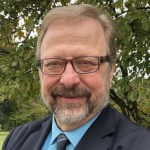
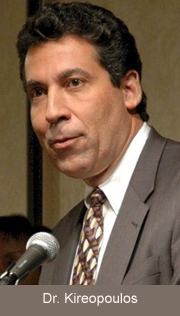
Explanatory Note: Dr. Antonios Kireopoulos, a Greek Orthodox theologian, formerly Associate General Secretary for International Affairs and Peace at the National Council of the Churches of Christ in the USA, was recently (January 1, 2008) appointed Senior Program Director for Faith & Order and Interfaith Relations at the NCC. The following is an exclusive interview with Dr Kireopoulos conducted by Dr. Tony Richie on June 10, 2008. Richie, a frequent contributor to Pneuma Review, is the Society for Pentecostal Studies liaison to the Interfaith Relations Commission and works closely with Dr. Kireopoulos on a number of theological task groups.
TR: Dr. Kireopoulos, thank you for talking with us. Please tell our readers something about your self, especially your background and ministry.

TR: Would you also briefly describe your duties at the National Council of Churches on the Faith & Order and the Interfaith Relations Commissions respectively?
Dr K: Yes, of course. The NCC brings together 35 churches or denominations and ecclesial communities for the goal of intentional ecumenism or fostering unity among Christians. Faith & Order is the primary place where “heavy duty” theological discussion on diverse issues occurs in order to increase understanding and build bridges for healing and cooperation among Christians. Interfaith Relations addresses the reality of ministry on the ground, so to speak, in a religiously pluralist society, and brings a united witness of Christ into conversation with religious others through dialogue and collaboration offered in hospitality.
TR: Tony, please, let’s be frank and direct. Readers of PR often tend to be conservative Evangelical and Pentecostal/charismatic Christians involved in hands on church leadership and ministry. Many of them are probably wondering what relationship, if any, between Pentecostals and the NCC is appropriate or even possible. From your perspective, what would you wish to say to readers regarding developing or future relations between the NCC and Pentecostals?
Dr K: We are blessed to have a growing relationship with the Pentecostal community, both on Faith & Order and on Interfaith Relations. NCC official membership in the USA is from mainline and historic Protestant, Orthodox, the Episcopal, historic African American, and historic peace churches. However, we are making an intentional effort to expand our horizons for a wider representation especially at these crucial dialogue tables. We all need a wider perspective. I can’t imagine not having Pentecostals on board with us. At even the most basic level, the sheer size and growth of Pentecostalism and its influence suggests a need for mutual interaction and participation. I’d love to see even more involvement on the institutional level at some time in the future, but for the present I’m grateful for the involvement we already have. I would encourage an understanding by Pentecostals that there needs to be conversation among us on the issues of the day even if not on the institutional level of formal affiliation. In some ways, the relationship of NCC with Pentecostals is similar to that with Roman Catholics – the Catholic Church is not an official member of the NCC either, but it is involved as an important voice in the NCC conversations around Faith & Order and Interfaith Relations. In those settings, we are extremely pleased to be working with members of the Pentecostal community.
TR: Sir, from your perspective in this national organization of churches, what do you anticipate to be some of the most important issues facing the American church now and in the near future? How do you suggest Pentecostals and Charismatics may contribute, with other Christians, on these important matters of mutual concern?
Dr K: Yes, Tony, first, one thing that stands out for me is that Christians today need to be a truly effective voice in the public sphere. We don’t need to be detoured or sidetracked by partisan politics, especially by the extreme agendas of either the far left or the far right. The witness of Christ in and to contemporary society is not well served when Christians over-identify with a particular political perspective. Politically, and theologically, the NCC has both conservative and liberal members, but a careful reading of our documents will show that together we are a fairly moderate bunch, especially when it comes to advocacy on peace and justice issues. What we seek to do most of all is to speak and act according to the Gospel of Jesus Christ. That’s very important for us all to do! Second, terrorism and the challenges it raises are critically important. There is a necessary response to terrorism, sure enough, but it is how we respond that I am concerned about here. Some identify terrorism with Islam and Muslims in general rather than with the extremists who are its actual perpetrators. Terrorism is real, and we need to address it in a constructive and comprehensive way rather than in a way that only adds to hostility. Effectively addressing terrorism requires, among other things, countering its causes – poverty, marginalization, oppression, humiliation – rather than ignoring them or even contributing to them through policy decisions based on generalizations such as the indiscriminate of labeling others. Third, the volatile situation in the Middle East, in particularly Israel and Palestine, is a core problem that only a just peace can answer.
TR: Dr Kireopoulos, for our readers’ information, you and I along with some special teammates from a broad spectrum of Christian denominations, are working on a number of pressing issues of contemporary concern. These often involve complexities in Christian-Muslim relations. Additionally, Christian understanding of the Middle East is frequently in the forefront. Without speaking prematurely, could you perhaps give our readers a general synopsis of your impressions on these issues?
Dr K: This year is the commemoration the 60th anniversary of the birth of the modern State of Israel. It is also the 60th anniversary of the displacement and marginalization of the Palestinians. As Christians and as Americans we should be concerned with Israel’s peace and security, as well as with justice for the Palestinians. True peace in the region must include justice for Palestinians as well as security for Israelis. American Christians should be praying and working for this just peace in the Middle East, as well as pushing our government to be actively involved in the peace process. Only the USA can move this forward, especially since on the ground a viable two-state solution looks less and less likely unless a dramatic shift takes place. Conditions in the Occupation are deplorable, and morally speaking, we must address them. Admittedly, we are dealing with an exceeding complex and intricate situation. But Christians are compelled to pray, work, and advocate for a just and secure peace for both the Israelis and Palestinians. Whatever the eventual solution, if it is to work well or have lasting impact, it must include the minimum of these two essential components. And another thing we mustn’t forget, especially as Christians, is that there are historic Christian communities among the Palestinians, whose presence is diminishing as the conflict drags on. We need to ask ourselves how we can be a source of strength for them.
TR: Is there anything you would like to add to our discussion, Dr Kireopoulos?
Dr K: Just this, Dr. Richie: I would emphasize to everyone the value of being at the table! I want to assure non-member communities that the NCC is really all about the Gospel—about Christ and Christian community and unity, and about witness to the world in terms of peace and justice. I especially want to invite Pentecostals to explore ways their faith can enhance their witness and work in the public square. I also encourage churches not familiar with the Pentecostal and Evangelical traditions not to isolate or stereotype them as “outsiders,” but to appreciate how great their contribution can be to the ecumenical movement. Accordingly, we all ought to reach out and thereby “encourage one another and build up each other” in our faith.
TR: Thank you, Dr. Kireopoulos. We appreciate you granting The Pneuma Review this exclusive interview regarding some of the most important inter-religious dynamics on the national scene today. I’m sure our readers and staff members will be remembering you and your work in their prayers.