The Preeminence of Life: Towards an African Christian Cosmology in Intercultural Context

A fresh look at how emphasizing full life can transform how we do mission.
Without life all else that may be considered of value is nothing. African people are not easily convinced of the hegemony of science that seems to sideline life itself. Once undermined, the rather groundless assumption that life only exists in a chemical host, is easily replaced by questions regarding the nature and activity of spiritual powers. So-called holistic mission often runs in the face of African reality through drawing on the products of a Western dualism that Africa does not share. Dualistic understandings result from faith in a high God, something that is best advocated from a vulnerable approach to mission.
Note: The author’s experience of Africa is limited. His comments refer to some of the African people and contexts with which he has personal familiarity.
Introduction
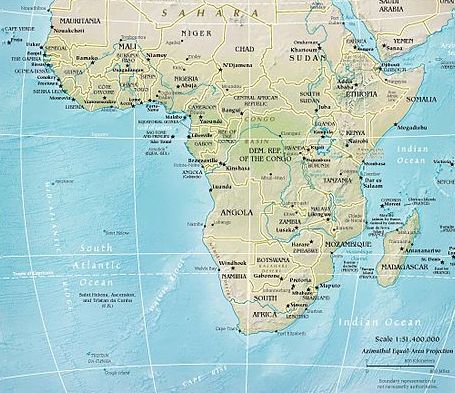 This article takes an original approach to the question of how to do mission in Africa. It is designed to help a missionary or potential missionary from the West to avoid some of the foibles that can stand in the way of effective ministry. It intends to help the West to see itself in an African mirror. It intends, through under cutting some Western mythology, to enable the Western reader to see Africa more clearly. It identifies and exposes issues that tend to discourage the development of deep and lasting intercultural relationship. Thus it intends to encourage healthy relationship.
This article points to limitations of the scientific/dualistic worldview that is very common in the West. It deems belief in science to be a pragmatic option undergirded by faith. It goes on to consider implications for understanding life that arise from the realisation that life itself falls outside of the realm of scientific discovery. Implications of the above are applied to the missionary encounter with African people. The weaknesses of dualism and science in engaging African worldviews are exposed. Some implications of these weaknesses are explored.
I am Alive
This author has over 25 years been increasingly immersed in African ways of life. Instead of having his own children he has informally adopted African children. Instead of using English at home he uses African languages engaging with those children. Instead of driving a car he rides a bicycle to visit villages of Western Kenya. Instead of seeing his identity as being to bring better things from the West to Africa, he endeavours to live God’s word in a contextually relevant way. Whether or not he has succeeded in this, his life outlook has definitely been influenced by the process. Those who like to see non-Western inputs into Western scholarship, Christian or otherwise, should bear in mind the above source of some perhaps otherwise unconventional approaches taken by this author.
I am alive, and life is all I have. Yes, I may have money, I may have a house, I may have a good reputation, I may have a family, but the value of all of these and everything else I have hinges on one thing – that I am alive. Should I no longer have life, then I could no longer consider myself to be in possession of the above things. In that sense; and that is really a most important if not the most important sense: life is all I have.[1]
Increasingly in the West it seems as if ‘science is it’. Everything seems to be measured by the dimensions of science. Even social disciplines such as anthropology, sociology, economics, psychology measure themselves against science; the more scientific the better. Some folks known as positivists or naturalists claim only to believe in that which is scientifically measurable. To them, what falls outside of the perceptible realm of science really does not exist. For them – value in life is evidently other than life itself. How strange! How peculiar – to value humanity according to what is not its essence.
All science is a product of life. There has never been a scientist who has not been alive. Yet true science seems to be done by those who ‘pretend’ that they are not. True scientists attempt, that is, to remove the influence of their being alive from the object of their investigation. Thus they convert, in their minds, that which they see as living beings, as if they were not alive at all. Thus is the foundation for objectivity. There is an assumption that things exist, whether or not they are perceived. The universe as a result becomes a place that pre-existed, in which people happen to have found a place. People have become a product of statistical chance. This is an amazing reversal; instead of starting with us or I as people have for centuries, science endeavours to suppose one’s non-existence, and then to theorise how one might have come to be.[2]
Science has its uses
Science has its uses, but may be a terrible slave-master. Science undoubtedly has its value. It has also had and continues to have many disciples. There seem to be people who believe that the ultimate purpose in life may be serving the needs of science. This belief is upheld despite the evident fact that the realm of science excludes life itself. Science presumes life to be meaningful but can provide no evidence for its meaningfulness. Science builds on a foundation laid by someone else: It seems to be clear that certain religious beliefs necessarily provide (and provided) a foundation from which science was able to emerge. I suggest that science can be an abuse of that foundation. It denies peculiar forms of European Christianity that underlie its own roots (Weber 1930).[3]
Science may be useful, but it cannot be meaningful. This is because its tenets deny the very foundation of meaningfulness. Life, according to science, only exists in its effects and not in its essence; whatever constitutes the essence of life is outside the realms of science. While the continuation of life as we know it may require oxygen and water, that of itself says little about life itself. Life has yet to be identified by science. In fact, it seems that it cannot be identified by science. This is because it is in a realm that is other-than science. This means that the whole of science is rooted in a foundation that is both other than it and beyond it. It is incredible to find people in Europe and North America who in their daily lives appear not to have grasped the above. I say, appear not to have, as in an ever more basic sense anyone who is alive must know that they are alive and that everything else hinges on their being alive. They must realise this, surely, even if they then appear by some of their words and actions to deny it.
What Appears is not what is
Perhaps we are more aware in Africa than in other parts of the world that what appears to be is not necessarily what is. That is to say; the unseen determines the seen. That which is ultimate and which is of fundamental importance is life (Magesa 1997: 32, 48, 77, 174, 237). Life is important, and life itself is unseen. The importance of other things should be measured against it and can never be beyond it. Surely that makes sense. What is visible in the so-called material world is a certain portrayal of life. It is an arena for life that of itself is neither adequate nor sufficient to justify or support life. It is clearly contingent on something else that is not seen. This is starkly pointed out by Blunt (2004:318). The arena in which life is played out may be visible. The essence, life itself, remains a mystery.
How come then, my sceptical reader may be asking, are there scientists in Africa, some good ones? Let us remember that; you don’t have to believe in science to do science. You can do science while doubting it. This is a bit like so-called religion. Someone behaving as if they are religious does not prove that they ‘believe in’ the doctrines of the religion concerned. So someone’s behaving as if they are convinced by science does not of itself prove that they believe in science. It is as possible to have rice scientists as it is rice Christians. We can just as well have prosperity science as we can prosperity gospel. Both are means to an end, but not necessarily an ultimate end. Many people in Africa who talk science may not necessarily ‘believe’ in science.
Language can obscure the above. I was recently talking to an African colleague in Nairobi. He explained to me that more and more Kenyan people are secular. After further explanation I realised that what he meant by this was that they give more credence to the possibility of revenge of their ancestors than they do to Christian or other religious systems. In the West the term ‘secular’ can be loosely used to describe those who do not adhere to certain religions. In Africa it refers those who follow traditional religions. In the course of transfer from the West to Africa, the content of the term ‘secular’ has been transformed.[4] Anyone who supposes that secularists in Africa ‘believe in’ science, may be far from the truth. As I have mentioned above; such would make little sense in Africa. This article suggests that it would make little sense to anyone who thought hard enough about it. Meanwhile, ‘secular’ people in much of Africa appear to be those who ‘believe in’ their tribal customs. Iteyo tells us that to Africans materialist teachings are “alien, absurd and therefore not acceptable” (2002:150).
‘What do you believe?’
You (my reader) may not believe me. Perhaps you have already picked up your phone and called your African friend to ask them what they believe? Probably you want to ask them: “do you believe in science or do you believe in ghosts”? Hang on a minute. What is science to someone who could not get their head around a notion that someone may possibly believe that only what is ‘real’ exists? ‘Science’ comes to mean what they want it to mean. Someone intelligent will acknowledge faith in science, because not to do so would be to be considered foolish. Conceding that one ‘believes in ghosts’ seems to be inviting some kind of mockery. This does not mean one does not know that one’s long-dead grandmother can harm one’s life prospects. It means that one knows how not to talk. We must not forget that a rising percentage of African people are forced to spend (and encouraged to spend) ever more years of their life rote-learning Western ways of expressing themselves using Western languages, in the formal education system in Africa. What African people learn helps them to pass exams. Denying ‘belief in ghosts’ is the quickest way to avoid difficult subsequent questions and to identify oneself with a very dominant global value system.
Let us remember also, that science discourse using European languages works; knowing how to engage in such discourse can be incredibly materially fruitful. I can hardly emphasise this point strongly enough. The incredible value of English rises exponentially when someone knows how to use it as native speakers use it. (Rather contrary to the claim by some that native-standard English is of no greater value than any other colloquial English in today’s globalised world, for example see McKay (2002).) This advantage has no let up. That is to say – there is no clearly identifiable point on the competitive stage at which someone should cease to follow native-English language use patterns and instead just ‘speak honestly’ from their heart. On the contrary – the latter practice has numerous ‘dangers’. It is very difficult for a start to be very honest about one’s heart-level feelings in a language that is not one’s own and that does not resemble one’s own. Attempts to do so may even invite condemnation. Why else has it become so common for mixed ethnic churches with Blacks and Whites in them to self-segregate into separate Black and White churches even in supposedly very integrated racial communities for example in North America?
At the same time Magesa tells us that: “Foreign languages are always a serious drawback in the discussion of African religion and other African realities. African theologians are realising that efforts must be made to study Africa’s realities in the indigenous languages of the continent to evoke more genuinely and more accurately their content” (1997:39). It should be clear that the use of native-English-style communication that enhances often lucrative engagement with a prospering global community, at the same time makes it more and more difficult to achieve self-understanding.
To many African people; the notion that there may be life without intervention by numerous mystical forces is so illogical as to be close to ridiculous. One only has to think of a story like that of the garden in the forest to begin to see such reasoning.[5] It is however equally clear in many parts of the world and especially where major resources and power are at stake – that it can be the ultimate in folly to admit that one is thinking such things. Someone wanting to know the take of numerous Africans on such issues ought to try spending a decade or two living in an African community, as a member of that African community…
‘Life’ in Africa
In all the African languages I am aware of, the term regularly translated into English as life, is something one can have more or less of. Life is not an ‘on/off’ thing. The objective is always to have more of life. In this sense ‘life’ in Africa is more like health in English; more is always better. As with other aspects of monistic thinking however, the more that is better in Africa includes material wealth as well as bodily health. The Luo people have an interesting way of describing someone who has died. They can say that chunye ochot. This implies that the heart has been separated from the body. Life (ngima) is no longer in the body as in a living person. Instead, there has been a rift between body and life.[6]
The notion that life can separate out from the body is not a new one in the history of mankind. Because life is found to not-exist in scientific terms, the question of whether life continues once the body is gone is a difficult one for scientists. Their default answer must be no; because they anyway do not know what life is.
All known living organisms are assumed to engage in certain basic chemical processes. For example – they are assumed to variously alter the arrangements of hydrogen, carbon and oxygen atoms in the course of metabolic interactions. Scientists make the assumption that life, that which they do not at all comprehend, can only exist in a context in which these elements are providing it with a sustenance or a habitat. This seems to be confirmed by the discovery some years ago now, that new life consistently emerges from contact with older life. This applies even to fungi. Fungi were once assumed to appear to emerge from nowhere (a theory known as ‘spontaneous generation’). Closer examination revealed that they spread by means of tiny spores carried in the air.[7]
To note that observable new life always emerges from observable old life is however not to have identified life itself. The fact that its now visible scientifically perceivable manifestation requires an organic context is not actually to demonstrate that there cannot be life without such a context. Even in a physical body life has no apparent role and fills no known space. How can we say with any certainty that the continuation of life is dependent on a supply of oxygen? Allow me to unpack this a little: All scientific studies done so far on the human body appear to reveal that the body’s metabolic processes can be explained chemically. In those instances where chemical explanation falls short, it appears that there are aspects of chemistry that are not yet known, and not that chemistry is an inadequate explanatory medium. That is to say; research on the physical processes that enable bodily function have yet to reveal the presence of a necessary and identifiable material that could be considered to be life. At the same tine it is clear that life is essential for chemical processes to continue in a living organism. It should be clear not only that life itself is of a different fundamental nature than is the rest of the body. It should also be clear that something that is not chemically identifiable may be not chemically dependent.[8]
Life and Gravity
Life could be a kind of force that acts independently of a medium. A comparable example would be gravity. Gravity is clearly identifiable and recognised by science as being a force. It also remains beyond current levels of scientific understanding.[9] It is amazing that such a fundamental force in human existence should not yet be understood. Gravity can be measured by its effects on substances and objects, and not in itself for what it is. The gravitational pull of the planet now called Pluto was observed before Pluto itself was identified.[10] Gravity appears to emerge from a material presence, according to a formula often written as follows: F = Gm1m2/r2.[11] That material presence need not be within the system studied for its effects to be evident.[12] Again, while gravity is observable by the way that things fall towards the centre of the earth, gravity is still there even when nothing is falling. Gravity acts on human bodies, while remaining independent of their chemistry. In some respects, gravity resembles life.
The above is not to say that life is gravity. It is merely to point out that as gravity is an unseen dimension that works without physical presence, it may parallel life itself? It follows that – because life is only scientifically observable when in chemical combination to produce living organisms does not mean that life is necessarily absent where there are no organic materials present. Life is a mystery. There is no way of knowing how lifes that are not in organic context interact with each other. Lifes may be all over the shop. Unconnected lifes may be capable in unperceived ways at engaging with the lifes that happen to be located in organic union in bodies. For example, they might influence them through dreams. Modern technology can help us to perceive some possibilities. I can pick up a small metal object, put it to my ear, and talk to someone thousands and thousands of miles away as if they are standing beside me. This is something that a few decades ago would have seemed impossible. Why should it be so difficult for lifes to communicate with each other through an unknown spiritual media, something like a 5th dimension to existence?
I have above tried to make a case that can make sense to a Westerner for something that is for numerous African people considered obvious. To Africans, for one’s late grandmother to be speaking to one in a dream is not a puzzle. A person’s life-presence is expected to be floating around their dead body. Why should there not be a fifth dimension after all? Why should there not be such a dimension to life?
Gravitational forces that are not understood by science are capable of bending light.[13] Why should spiritual forces be incapable of influencing physical forces and material objects? Clearly they are not incapable. The spirit (i.e. the life) in possession of a human body constantly animates it. The same applies to all plant and animal bodies. A difficulty that has antagonised understanding of this is perhaps the English term spirit. Presumably under the influence of scientific hegemony, spirits have been required either to have some physically identifiable bodily manifestation, or not to ‘exist’. In fact, the English term spirit represents an incredibly powerful force, which the Scriptures tell us also has the nature of being, that is beyond scientific identification. If it were not so, then our bodies could not even function. Every time someone moves their arm, they are performing what is scientifically speaking a miracle. Not because scientists cannot explain the chemical functioning of muscles; but they cannot identify what it is that is in you that wants to move your arm, i.e. life.
Scientific Hegemony
The scientific hegemony passed down through generations of Western people is now so dominant as to barely be questioned. Horton observes; there is a “limited vision of natural causes provided by common sense” (1993:202). Although Horton is making the point that the distinction between ‘natural’ and other than natural is not a clear one for African people, he still seems to ascribe some kind of comprehension of ‘nature’ to traditional African people. Western man easily but unjustifiably extends his own presuppositions to others, including to Africans. In reality – the notion that the world is essentially a mechanistic system in which ‘natural’ objectifiably identifiable forces prevail, is far from universal to the human species. This presupposition regarding “common sense” is not necessarily common at all. Compare the well-known Italian philosopher Gramsci, who pointed out that common sense is “continually transforming itself”.[14] Realising this might free so-called global processes of Western origin from restricting the field of research to the so-called scientific. This makes it clear why ‘religions’ are always centre stage on the global scene; they deal with that dimension of human existence that is actually in the end all that people have to depend upon; life.
Note that I am not here advocating a return to superstition. Rather, I am pointing to the central role for so-called religions that take the fifth-dimension in human life seriously. I speak as a Christian missionary to Africa, trying to explain to Westerners some aspects of life and identity of many of the people on this great continent. I explain such by pointing out that actually the peculiar ones are the Westerners.
The way that Western missions to Africa have been caught up in the enlightenment project is these days perceived by many scholars. The sheer depth of the immersion of the Gospel into that which is essentially not gospel is not so quickly apparent. Adherence to a science/spiritual dualism itself prevents smooth development of relationship between the West and Africa; so different are African people’s ways of thinking from those common in the West. One of the latest strategies intended to solve the issues that arise when dualists are reaching out to monists with the gospel, is the holistic or integral gospel. This is hard to argue with in monistic terms, where everything anyway consists of wholes. In Africa the spiritual and the material are anyway one. On the other hand, a dualistic community such as that in the West invariably interprets the holistic gospel as spiritual plus material, i.e. as two categories put together. The difficulty in doing this arises from the fact that they have developed separately. The brilliance of Western civilisation has been to bring about a dualistic separation between material and spiritual. Bringing the spiritual in hand with the material that can only develop in the absence of the overtly spiritual (i.e. the products of dualistic thinking) is not necessarily helpful for monistic African people.
In practice the holistic gospel that I am describing brings the products of the scientific approach e.g. modern biomedicine, hand-in-hand with the Gospel. Unfortunately or otherwise, the gospel which is said to be the authority, does not explain how modern biomedicine works. The basis for the explanation of modern medicine lies in dualism. Dualism though is not found in Africa and does not make sense in Africa. Try as they might, while many Africans may be able to do science by believing in the Gospel and carefully following instructions; they struggle to take it to heart as do Western men. Dualism, to many non-westerners, is nonsense. One can only add; quite right too. As I have explained above: it doesn’t make sense.
Dualism and Dependency
Because the products of dualism that come with the gospel are dependent for their running on a way of thinking that is absent in Africa, African ‘development’ is accompanied by an enormous dependency. Because the products of the holism that Western mission these days tries to pursue arise from dualism, the holistic gospel comes to be gospel-plus-handouts. The association of Gospel preaching with material gifts has various serious deleterious side effects. Not least – it results in a distorted theology. In addition, it gives a great boost to prosperity teaching. It can draw a lot of the wrong attention. It constantly weakens leadership and results in disputes and division resulting from misguided envy and perhaps also righteous indignation over the unbalanced allocation of resources.
Ironically, when the association between gospel promotion and the products of Western life/gifts continues to become stronger and stronger, some Westerners no longer perceive a role for the gospel by itself. Hence the AVM (Alliance for Vulnerable Mission) sometimes meets opposition to its proposal that some missionaries to the non-West should work on the basis of local resources. This opposition can be of the order of blasphemy against the Holy Spirit (Matthew 12:31), as it suggests that the Holy Spirit cannot work if his actions are not backed by Western money. In the meantime the task of any indigenous African pastor or evangelist who has not yet made a lucrative friend in the West becomes more and more difficult as Christians prefer to attend churches where they are given handouts. Such disenfranchising of conscientious spirit filled African servants of God I consider to be inexcusable. Serious re-thinking needs to be done in the whole area of holistic mission.
Contrary to the apparent presuppositions of many Westerners – dualism is not the natural order of things. Dualism is not a default understanding of life. Rather, the dualism we are talking about is a peculiar product of a particular set of developments powered by European Christianity. Many people, for very good reason, are quick to point to the benefits of dualism, in which can be included numerous technical innovations, medical care, modern transport and unfortunately, also the gun and the atomic bomb. Dualism is an incredibly valuable resource, to be judicially shared and not to be kept by one set of peoples (the West) so as to oppress or create endless dependence by others on them (much of the non-West, certainly much of Africa).
The necessary moral component for a helpful spread of dualism has already been identified. Products of dualism, such as atomic weapons, can easily be abused. Already in today’s world, major political powers are very concerned over the prospect of having nuclear armaments fall into the hands of Islamic governments. Islam is considered to provide an insufficient moral basis from which to handle the full power of such dualistically-rooted technology. Christianity in the minds of many seems to do better – but experiences such as the carnage caused by Hitler in a very Christian part of the world in the 20th Century should not be forgotten too quickly. Fear of the consequences of atomic warfare probably underlie aid policies of Western governments who know that countries dependent on one’s aid (especially if also one’s language) as in many parts of Africa, do not easily become a military threat. For a Christian who believes in the universality of God’s love for all of mankind this is an inadequate reason not to share what one has with others. A Christian believes that when others take on faith in Christ, God’s Holy Spirit lives in them, and then it should be possible to trust them with the power of dualistic thinking, i.e. scientific understanding.
It should be clear at this stage that the appropriation of a scientific worldview does not arise from a diminution of belief in spirits. It appears to arise instead from a true appreciation of the over-arching power of God (which of course will result in a dimming of the perceived power of spirits). This is not to say that we teach about God in order for people to become dualistic. What we teach is what is guided by God’s Spirit, and it is what is recorded in the Scriptures, that are the very necessary foundation of non-dependent sustainable moral development! Taking people such as those in Africa large doses of the products of dualism which is not in proper theological perspective or context, is like a man with a ladder on his shoulder unthinkingly turning hither and thither causing the ladder to crash into people in a crowd.
To introduce people to dualism is to give them understanding. This requires starting where people are, and taking them to where they are not. Because of the vast cultural gap between Europeans such as the British (owners of English) and many Africans, for Africans this has to occur in African languages. This process can be assisted by Western peoples concerned for Africa learning and then ministering in African languages. The same should leave the unwieldy swinging ladder at home. That is – they should build what they do in the resources they find where they have gone. This is what we know as vulnerable mission.
Conclusion
This article exposes the legitimacy or otherwise of the tendency for Western missionary practice to root itself in the benefits of scientific knowledge, that is itself founded in dualistic philosophy. Science is exposed as incompetent in its handling of real life-issues. For many African people, we are told, life is central to their values. Acceptance of the claims of science is an additional pragmatic means of social advance. The fact that life is extra-scientific, outside of the realm of science, is used as a basis of defence for African worldviews that give credence to mysterious spiritual powers; why after all should life, which like gravity science does not understand, be dependent on organic materials that it neither consumes nor produces? The above insights help to articulate why African worldviews are monistic. They are used to challenge widespread contemporary wisdom that advocates the holistic gospel and holistic mission. They indicate that ‘holistic mission’ is not all that it claims. Finally, a case is made for an inherent value for dualism, as an integral part of true faith in Christ, that is best communicated through a ‘vulnerable’ approach to Christian mission.
PR
Bibliography
Blunt, Robert, 2004, ‘Satan is an imitator: Kenya’s recent cosmology of corruption.’ 294-328 In: Weiss, Brad, (ed.) 2004, Producing African Futures: ritual and reproduction in a new liberal age. Leiden.Boston: Brill.
Horton, Robin, 1993, Patterns of Thought in Africa and the West: essays on magic, religion and science. Cambridge: Cambridge University Press.
Iteyo, Crispinous, 2002, ‘An Analytical Study of the Doctrine of Materialism: with reference to selected African conceptions of reality.’ PhD thesis, Maseno University, 2002.
Magesa, Laurenti, 1997, African Religion: the moral traditions of abundant life. Nairobi: Paulines Publications Africa.
McKay, Sandra Lee, 2002. Teaching English as an International Language: rethinking goals and approaches. Oxford: Oxford University Press.
Weber, Max, 1930. The Protestant Ethic and the Spirit of Capitalism. London: George Allen and Unwin Ltd.
Notes
[1] In terms of the Bible, I am using the English term ‘life’ instead of the normal ‘soul’ to translate the Hebrew nephesh and the Greek psuche.
[2] My allusion here is to the theory of evolution, Copernican thinking in which the earth and man are no longer the centre of the universe, and more generally to mechanistic modern worldviews.
[3] I am here assuming that Weber was correct in his well-known thesis that certain forms of Protestant Christianity were a necessary part of the development of modernism, which contributed to a massive expansion in the hegemony of science, in Western Europe.
[4] See also: http://conversation.lausanne.org/en/conversations/detail/10610
[5] A garden implies the existence of a gardener. http://consciousnessmatters.wordpress.com/2012/10/23/evidence-and-god/
[6] Note that chuny in Dholuo is actually the liver. Because the liver is by the Luo considered to be the seat of the emotions, I take chuny as being metaphorically equivalent to the English term heart.
[7] http://www.britannica.com/EBchecked/topic/560859/spontaneous-generation
[8] See recent research by Davies and Walker: http://www.sciencedaily.com/releases/2012/12/121212205918.htm
[9] Scientists propose the existence of gravitons, which are yet to be observed. They are thought to be “massless particle[s] having no electrical charge” (http://www.scientificamerican.com/article.cfm?id=is-gravity-a-particle-or ).
[10] http://www.discoveryofpluto.com/pluto06.html
[11] http://www.universetoday.com/57713/gravity-formula/
[12] For example, the gravitational pull of the moon affects the level of oceans on the earth.
[13] http://www.ccmr.cornell.edu/education/ask/index.html?quid=743
[14] http://www.aber.ac.uk/media/Documents/marxism/marxism10.html