White House Convention on Religious Pluralism
Tony Richie Summarizes and Reflects on Special White House Convening: “Celebrating and Protecting America’s Tradition of Religious Pluralism”
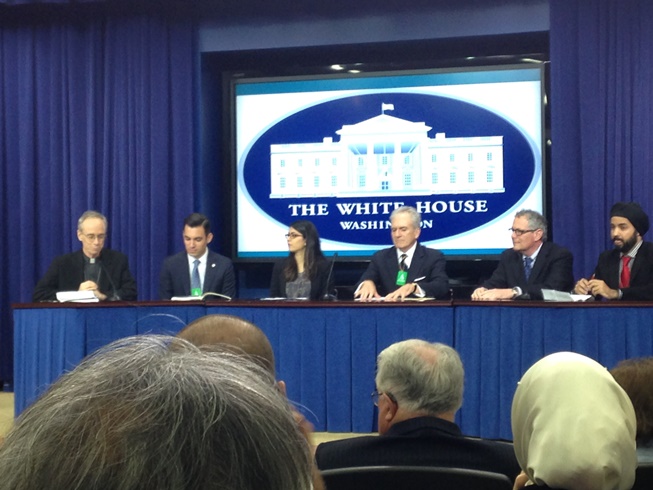
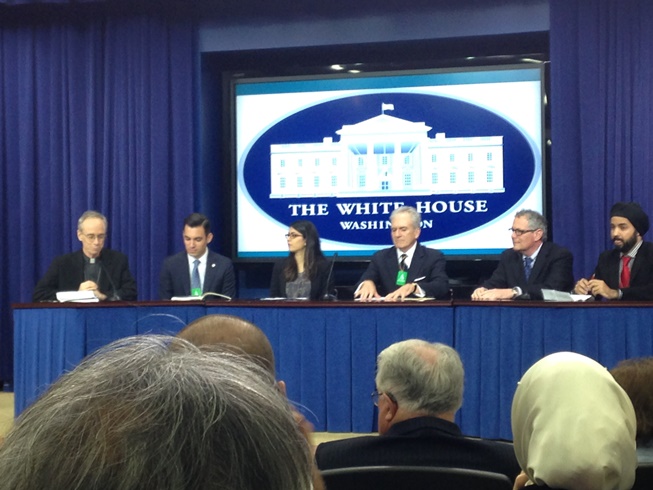 On Thursday, December 17th from 1:00-4:30 PM the White House conducted a special convening on “Celebrating and Protecting America’s Tradition of Religious Pluralism.”[1] Participation was by White House invitation only. Two Church of God ministers, Cheryl Bridges Johns and Tony Richie, were among those involved. Johns and her husband, Jackie, pastor New Covenant in Cleveland, Tennessee while Richie and his wife, Sue, pastor New Harvest in Knoxville, Tennessee. Johns is Robert E. Fisher Professor of Spiritual Renewal and Christian Formation at Pentecostal Theological Seminary. Richie is Adjunct Professor of Historical and Doctrinal Theology at Pentecostal Theological Seminary. Steven D. Martin, Director of Communications and Development for the National Council of Churches, was instrumental in effecting this significant invitation for these two Pentecostals.
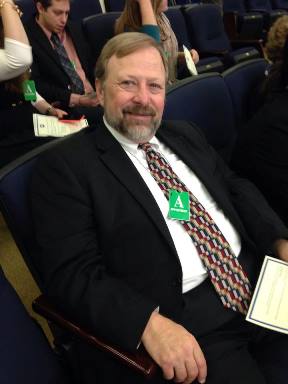 The meeting was sponsored by the White House Office of Faith-based and Neighborhood Partnerships. It focused on the deep American traditions of religious inclusion, freedom, and cooperation among those with different beliefs. Officials discussed steps they take to promote and protect these traditions. Attendees had the opportunity to discuss efforts to carry these traditions forward in positive modes. Devotees from the major faith traditions participated.
The day’s sessions were moderated by Melissa Rogers, Special Assistant to the President and Director of the White House Office of Faith-based and Neighborhood Partnerships. She insisted that, “There are no second class faiths in the United States of America.” However, Rogers also admitted “We have not always lived up to our ideals.” Remarks setting a tone of sober discussion with serious political overtones were made by Cecilia Muñoz, Assistant to the President, Director of Domestic Policy Council; Amy Pope, Deputy Homeland Security Advisor and Deputy Assistant to the President for Homeland Security; and Vanita Gupta, Principle Deputy Assistant Attorney General and Acting Assistant Attorney General for the Civil Rights Division, Department of Justice.
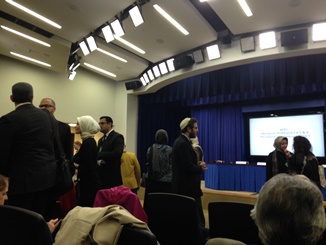 Robby Jones, Chief Executive Officer of the Public Religion Research Institute, presented recent data describing the United States as an increasingly plural nation in terms of its religious population. He submitted that religious diversity is in line with our nation’s history. However, the US has never before experienced the high level of diversity it does now. Yet most people (including atheists) still have small friendship circles including only or almost only their own faith group. The least levels of interaction in the US appear to be in the geographical South (the Bible Belt) and Midwest (the Heartland), apparently because of lower levels of religious diversity than the overall national average. Nevertheless, white Evangelicals appear to be a prominent group expressing mistrust and suspicion of religious others. Tennessee is frequently cited as a key battleground state in the fight for freedom of religion. Accordingly, both challenges and opportunities arise. In a word, more interreligious interaction is needed at communal and individual levels.
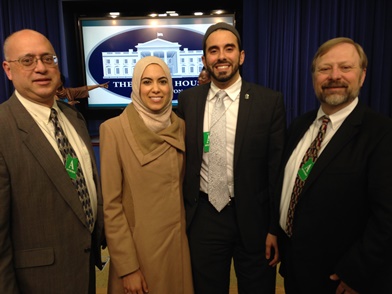 Representatives from the Justice Department, Department of Education, Equal Employment Commission, and Federal Emergency Management Agency, discussed government policy and practice in assuring religious freedom and tolerance. Panelists from Atheist, Baptist, Catholic, Jewish, Muslim, and Sikh traditions expressed objectives and procedures for respectful but uncompromising coexistence. In an environment of fear spawned and sustained by global and national terrorism, reactionary or retaliatory violence against those of different (that is, minority) faith groups continues to be a serious problem. Yet a great bright spot is the frequent ability of faith-based groups to come together in times of crisis to partner in helping their local communities. Concrete, practical work at the grassroots neighborhood level is critical.
Cheryl Bridges Johns, widely known for years of extensive ecumenical work with a broad range of Christian traditions, responded to a sense of global and national need for direct attention to Christian relations with other religious traditions as well. Of the White House meeting she noted that, “It was a very rich and rewarding day.” Johns further commented insightfully that, “We work together to make the stranger the neighbor and the neighbor our friend. America is most beautiful in many colors.” Certainly a great deal of information was distributed and high level networking occurred in the formal White House context.
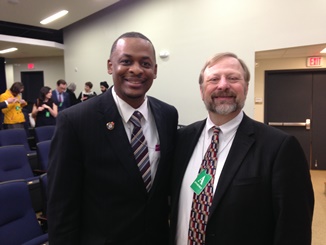 Tony Richie has been involved in interreligious dialogue and cooperation efforts for several years, including a recent Knoxville initiative that has been garnering widespread attention. He suggests that perhaps the main accomplishment of the White House in convening this special session was “to empower those working to interpret and apply American traditions of religious freedom and tolerance in today’s increasingly diverse and plural society.” Just this kind of critical frontline pastoral and theological work is urgently needed for addressing these times of extremism ranging, on one hand, from radical Islamist terrorism to, on the other hand, reactionary Islamaphobic hate crimes. Furthermore Jews, Christians, Sikhs, and others, are at times victims of religious intolerance.
In short, over 100 invitees from around the nation, mostly Christians of various denominations but also many from other religions, including Jews, Muslims, Sikhs, and others, gathered at the White House. For its part, the White House Office of Faith-based and Neighborhood Partnerships affirmed them and their work and assured them of this administration’s staunch support. Advocates for religious liberty were encouraged to rely on their government’s leadership and resources for ratcheting up the work of getting out the message of religious freedom and diversity in the United States of America.
As a Pentecostal believer with a high view of biblical inspiration and authority, Richie observes scriptural support for religious tolerance (2 Kings 5:18-19), separation of Church and State, (2 Chronicles 26:16-21), and freedom of conscience regarding religious matters (Romans 2:14-15). Therefore, religious freedom is a unique principle supported by not only the United States Constitution but, more importantly, God’s Word. Theologically, the well-known Pentecostal emphasis on pneumatological liberty has obvious affirmative implications for the political doctrine of religious freedom. Accordingly, religious liberty can and should be a valuable tool for overcoming religious prejudice and persecution on all sides in today’s increasingly pluralistic society. And Pentecostals can and should be at the forefront of the fight for freedom!
Notes
[1] An original working title given to attendees and participants in planning and development stages included words such as “religious freedom,” “religious inclusion,” and “religious tolerance,” along with the final “religious pluralism.” It became pragmatically necessary to shorten the title. While efforts to not exclude the earlier themes were to an extent successful, I think the emphasis shifted slightly toward religious pluralism. Yet an affirmation of religious freedom was an undergirding element throughout. For me, that is a critical component.