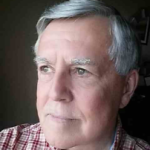

The Fire of Revival with Eddie Hyatt
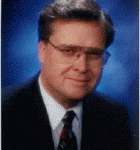
John Lathrop interviews Eddie Hyatt about revival and his book Revival Fire.

John Lathrop: The word “revival” means different things to different people. How would you define “revival?”
Eddie Hyatt: Revival is a sovereign work of the Holy Spirit in response to the prayers of God’s people, breathing new life into His people and bringing a new passion for the honor and glory of God and a desire to see His name honored throughout the earth.
Lathrop: What prompted you to write the book Revival Fire?
Hyatt: As a new believer many years ago, I had the privilege of participating in a genuine move of the Holy Spirit that impacted many lives and an entire community. In contrast, especially recently, I have observed so-called revivals where there was so much hype, exaggeration and manipulation. This has grieved me deeply. I have a passion to see genuine Spiritual awakening but I know it must be based in Scriptural truth. I hope, through this book, to point people, who have a passion for revival, back to the Bible as their foundation for genuine Spiritual awakening.
Lathrop: What can be done to help Christians, especially Pentecostal and Charismatic Christians, to be more biblically knowledgeable?

Wikimedia Commons.
Hyatt: We need to emphasize the foundational nature of God’s Word and show the transforming power the Word of God will have in our lives. We need to encourage people to have a personal daily time of prayer and reading the word. We need to encourage our people to memorize Scripture; for example like writing a Biblical passage on an index card and carrying it throughout they day, and at the end of the day you will have it memorized. We need to offer structured Bible studies for our people and more formal opportunities for Biblical studies.
Lathrop: Do you think that we give too much attention today to outward manifestations like shaking and falling?
Hyatt: It depends on the location. I have ministered in Pentecostal churches where they were, for one reason or another, opposed to outward manifestations and needed to be more open. Sometimes it is a fear of facing manifestations that may be fleshly or demonic and, instead of being willing to discern and confront, they reject all manifestations.

On the other hand, there are those who are off the deep end in the other direction—chasing manifestations and anything sensational, and not taking seriously the Biblical admonition to “test the spirits.” I have preached in churches where people had been trained—subtly of course—to fall when prayed for. In one particular church, I recall praying for a man who looked over his shoulder to make sure the catcher was there before he fell backward as I was praying for him. The bottom line is that we need to be focused on Jesus and His Word, not on manifestations.
Lathrop: What causes these manifestations?
Hyatt: There are three possible origins: God, Satan, or human—and it could be a combination of the human and God or the human and Satan. In a true revival, many of the manifestations are human responses to the presence of God. I think the cases are rare where a person is so overwhelmed by the Spirit (as Paul on the Damascus Road) that they have no control over their behavior. Wise leaders who desire revival will give room for people to respond—even intensely—to the presence of God while not tolerating fleshly and demonic manifestations.
Lathrop: Some people reject all manifestations, others accept them all. What should our response to these things be?
Hyatt: We should be open without being naïve and discerning without being judgmental. While not rejecting manifestations, we should not be afraid to do what the Bible has commanded us to do, to “test the spirits” and “judge prophetic utterances.”
Lathrop: Do you have any final thoughts that you would like to share with believers who are seeking the renewal of the church?
Wikimedia Commons.
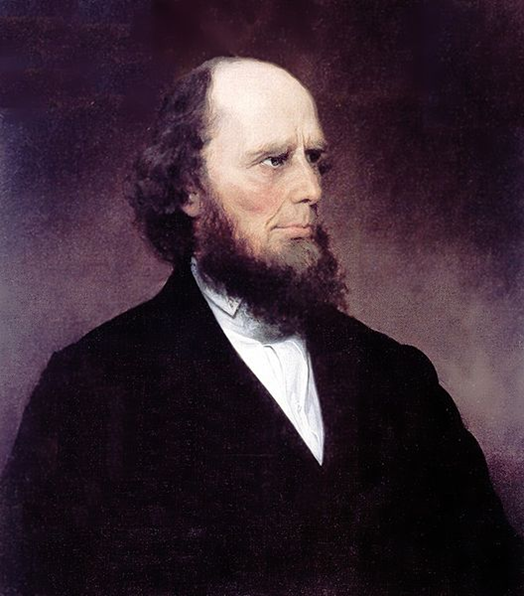
Hyatt: In the midst of praying for renewal/revival, allow God to purify our motives for wanting revival. Our goal must never be revival itself, but Jesus Christ and conformity to His will. In his Lectures on Revival, Charles Finney tells of the many invitations he had received from churches and pastors wanting him to travel to their communities to promote revival. He said, however; “When I came to weigh their reasons, I have sometimes found every one of them to be selfish. And God would look upon every one with abhorrence.”
Some wanted revival in order to raise their social status and influence. Others wanted revival to increase the numbers attending their meetings, which in turn would enable them to build new and larger buildings. Still others wanted revival so that they would feel superior to one or more congregations with whom they felt a sense of competition. They were not seeking the Lord. They were seeking revival, and that from self-centered motives. Finney rightfully refused their requests. So, as we spend time in God’s presence, allow Him to purify our hearts for, “Blessed are the pure in heart, for they shall see God” (Matt. 5:8).
John, Thanks for the opportunity to participate in this.
Revival Fire: Discerning Between the True & the False is a follow-up to 2000 Years of Charismatic Christianity (Charisma House, 2002) and consists of Dr. Hyatt’s mature reflections on the state of spiritual renewal in America and the world today. He shows that the way forward is by striking a healthy balance between Word and Spirit and by taking the time to learn from revival movements of the past.
Visit www.EddieHyatt.com/bookstore.html for more information about Dr. Hyatt’s books.
 John P. Lathrop, M.A. (Gordon-Conwell Theological Seminary), is an ordained minister with the International Fellowship of Christian Assemblies. He is the author of four books: Apostles, Prophets, Evangelists, Pastors, and Teachers Then and Now (Xulon Press, 2008), The Power and Practice of the Church: God, Discipleship, and Ministry (J. Timothy King, 2010), Answer the Prayer of Jesus: A Call for Biblical Unity (Wipf & Stock, 2011), and Dreams and Visions: Divine Interventions in Human Experience (J. Timothy King, 2012). www.JohnPLathrop.org