

The Holy Spirit and the Ministries of Jesus
Part 1 of an excerpt from Peter Ostrander’s book, New Testament Healing.

The Holy Spirit and the Ministries of Jesus
When Jesus spoke and acted with authority and with God’s power to heal the sick and disabled, he set people free from demonic oppression, then rebuked and stilled the storm on the Sea of Galilee. Were these mighty works primarily related to his divine nature as the Son of God, or to the person and power of the Holy Spirit? When Jesus humbled himself to be born of a virgin, he took on the form of a servant and became obedient to death (Phil. 2:5–11), even death on the cross for our sins. Had he laid aside the abilities that had already been his from the creation? I do not believe that he ceased to be the divine Son of God. I believe that his healing ministry was performed in such a way that Spirit-filled, empowered Christians, forming the Body of Christ, might do similar or even greater works, after Jesus’ resurrection and ascension. Let’s explore the role of the Holy Spirit in the Gospels, book of Acts, and the Epistles.

In our world of advanced western medicine, complementary or alternate therapies, twelve-step groups, and self-help programs, many people have sought to maintain or improve their health in this life Have you considered another possibility: Christian healing ministry according to the patterns found in the New Testament? If you read the Gospel according to Mark, about 32% of this wonderful narrative up to Jesus’ final week upon earth, is about healing and miracles! Jesus and his first disciples were quite successful. How did they heal the sick? Would a contemporary expression of this ministry be of interest to you? As the good news about Jesus is preached and ordinary Christians pray and minister, people have been healed physically, emotionally, and spiritually, then experience abundant life with Jesus Christ. This book will help you learn more about Christian healing, encourage you to receive ministry, and prepare you to reach out to others.
Purchase New Testament Healing by Peter Ostrander
In chapter 1, we considered several explanations for why Jesus of Nazareth engaged in a healing and deliverance ministry. There are also significant Hebrew Scriptures, primarily in Isaiah, that relate the personality and ministry of the coming anointed one to the work of the Spirit of God in his life. When, through Isaiah, the threatened king Ahaz of Judah is given an opportunity to ask the Lord for a sign, whether it should come up from the depths or down from the heights, Jesus refuses to provide a sign but Isaiah is given one anyway: “The virgin will be with child and will give birth to a son, and you will call him Immanuel, meaning ‘God with us’” (Isa. 7:14). The prophet then speaks of darkness in the land of Zebulun and Naphtali being replaced by God’s light after heavy burdens are broken off: “For to us a child is born, to us a child is given and the government will be on his shoulders. And he will be called Wonderful Counselor, Mighty God, Everlasting Father, Prince of Peace” (Isa. 9:6–7). His just and righteous kingdom will continue forever. These epithets pointing to the divinity of the coming King were not commonly used in Israel. These words are followed by a prophecy that a shoot and branch would come up from the cut-off stump of Jesse’s tree. This indicates a return of the Davidic dynasty, which seemingly ended forever during the Babylonian exile that began around 587 B.C. This new ruler would bear fruit because the sevenfold Spirit of the Lord, of Yahweh, would rest on him. The Spirit would give him wisdom, understanding, counsel, power, knowledge, and reverence for the Lord, who is his delight (Isa. 11:1–3). After the wicked are slain by the “rod of his mouth” the peaceable, safe kingdom will finally break out on the Earth. This will occur as the knowledge of God becomes universal and all the Jewish exiles are restored to their land, along with many others who are attracted by the glory of God.
It was in fact normal for leaders in Israel—kings, priests, and prophets—to not only be anointed outwardly by special preparations of olive oil with spices but also by the Holy Spirit of God. When Moses, exhausted by the burden of the people (which numbered over 500,000), complains to God, the Lord has him bring together seventy elders so that the Spirit that is on Moses can also be on them. When the Spirit comes upon sixty-eight punctual elders and two tardy elders in the camp, they prophesy. When a young man protests about the two individuals, Moses says that he wishes that all of the Lord’s people would be prophets because the Spirit of God rests on them (Num. 11:29). These elders wisely deal with the bulk of legal matters and other disputes among the people. Before Moses dies in the wilderness because of his earlier disobedience, he is told to lay his hand on Joshua and commission him as the new leader of Israel. Joshua is filled with the spirit of wisdom (Num. 27:18, Deut. 34:9) and leads God’s people through the Jordan River into the promised land.
After the conquest or resettlement of Canaan by the descendants of the Jews who left Egypt and the chaotic ups and downs of the time of the Judges, the people want a king. Samuel, the final judge, is not happy about this; however, the people get what they want. Saul, the Son of Kish, is chosen and not only begins to prophesy when he meets a band of prophets but is for a time changed into a different man. Later, controlled by another spirit, Saul tries to kill David, son of Jesse, out of jealousy. He refuses to wait for Samuel to carry out a sacrifice, and fails to terminate the Amalekites. Ultimately, Saul and his sons die in a battle against the Philistines.

While mourning Saul’s failures, Samuel is sent by God to Jesse in order to quietly anoint the next ruler of Israel. As the sons parade by Samuel, God keeps saying no. When Samuel finds out there is one more candidate, a boy named David, who had been minding the sheep, he has Jesse get the boy. Then God tells Samuel that David is the right one. Samuel takes the horn of oil and anoints David. From that day on, the Spirit of God comes on David in power. In seventeen years, David will finally become king of all Israel. Though far from perfect, David is the best king or anointed one of God for over a thousand years. After he sins with Bathsheba and kills her husband, David prays, “Do not cast me from your presence or take your Holy Spirit from me. Restore to me the joy of your salvation and grant me a willing spirit, to sustain me” (Ps. 51:11–12). Late in life, David says, “The Spirit of the Lord spoke through me; his word was on my tongue” (1Sam. 23:2). Many kings of Israel or Judah fell far short of David, who was a man after God’s heart.
Returning to Isaiah, chapter 42, we find the first of the Servant Songs. It seems to be describing a special servant of Yahweh, rather than the nation as a whole. With pride, God says: “Here is my servant, whom I uphold, my chosen one in whom I delight; I will put my Spirit on him and he will bring justice to the nations” (Isa. 42:1). We hear this very passage again in the voice of the Father at Jesus’ baptism and transfiguration. The servant of Yahweh will neither cry out loudly in the streets nor deal harshly with those who are weak and wounded, bruised, easily snapped reeds, or smoldering wicks, whose light and heat are almost extinguished. Indeed, Jesus expresses his care for the poor, marginalized, and wounded of first-century Palestine. As the suffering servant passage in Isaiah 52–53 shows, the servant would go meekly, like a voiceless lamb, to his death. This death would set us free from guilt, condemnation, shame, and our infirmities. Indeed, these passages are so serious, so grim, that few Jews think of associating them with the Messiah, whom they expect to be a victorious, military, political king like David.
Chief among the passages from Isaiah, which are applicable to Jesus, is the one that he chooses to read in his hometown synagogue. This occurs shortly after he is baptized by his cousin John and is tempted by Satan in the wilderness (Luke 4:16–20). Luke records his reading as “The Spirit of the Lord is on me, because he has anointed me to preach good news to the poor. He has sent me to proclaim freedom for the prisoners and recovery of sight for the blind to release the oppressed, to proclaim the year of the Lord’s favor.” In Isaiah 61, we read further: “. . . and the day of vengeance of our God, to comfort all who mourn, and provide for those who grieve in Zion—to bestow on them a crown of beauty instead of ashes, the oil of gladness instead of mourning, and a garment of praise instead of a spirit of despair” (Isa. 61:1–3). Jesus shocks his audience when he sits down to preach and then says, “Today this Scripture is fulfilled in your hearing!” In other words, Jesus is the Messiah, the Christ, the anointed one of God, the expected king. Jesus’ surprised listeners are not only unable to square his statement with their memories of the carpenter’s son, but they also fulfill Jesus’ statement that a prophet will not be accepted in his hometown. They try to kill him after he speaks about God helping Gentiles instead of his own people. The fulfillment of Isaiah 61 might not only involve changes in the situation of poor, sick, and marginalized people in Judea (as a result of alterations in government, laws, institutions, and parties) but also involve an interior change in people as they develop a personal relationship with the Messiah, are healed physically and emotionally, and then live new lives. Though Isaiah didn’t know anything about inner healing of past wounds, the passage is certainly relevant to those involved in such ministry. Jesus is the one anointed to fulfill the prophecies of Isaiah.
The same Holy Spirit that descends on Jesus as he is being baptized by John in the Jordan River had been actively involved in his conception, birth, and growth. The Spirit also influenced the lives of Jesus’ family and those who eagerly awaited Jesus’ coming. Zechariah and Elizabeth, well along in years and childless, had been enabled to bear a son who would be filled with the Holy Spirit from birth (Luke 1:15). When Gabriel tells Mary that she will bear a son named Jesus who will be called the Son of the Most High and will reign on David’s throne, she asks how this could happen, since she is a virgin. The angel tells her that the Holy Spirit will come on her and the power of the Most High will overshadow her, so the holy one born will be called the Son of God (Luke 1:35). Mary visits her cousin Elizabeth after finding it difficult to explain what has happened to her. When she arrives, John, the future baptizer, leaps for joy within his mother. Elizabeth exclaims, “Blessed are you among women, and blessed is the child you will bear” (Luke 1:42). Mary then praises God with words enshrined as the Magnificat (Luke 1:47–55).
Joseph decides to put Mary quietly away after he learns that she is pregnant but not by him. However, an angel tells Joseph that the baby within Mary had been conceived by the Holy Spirit (Matt. 1:22–21). After his birth in the stable, when Jesus is presented at the temple, Simeon and Anna praise God and identify Jesus as the Savior and Redeemer of Israel.
About twenty-seven years later, John begins to preach a baptism of repentance for the forgiveness of sins (Mark 1:4) at the River Jordan. This results in hundreds confessing their sins as they are baptized. John points forward to the king, who soon appears. “I baptize you with water for repentance. But after me (in time) will come one who is more powerful than I, whose sandals I am not fit to carry. He will baptize with the Holy Spirit and with fire” (Matt. 3:11 and parallels). John proclaims repentance in light of the coming reign of God.
When Jesus appears at the Jordan River to be baptized, John tries to deter him, but Jesus goes into the waters in identification with us sinners. As Jesus leaves the river, praying, he sees Heaven opening, giving visible access to God’s throne room. He hears the Father’s voice quoting the Scriptures to affirm Jesus as his Son: “You are my Son, whom I love; with you I am well pleased” (Luke 3:22). More importantly, Jesus and John see the Holy Spirit descend on Jesus like a fluttering dove and then remain on him. In fact, God had told John that this would be the sign by which he would recognize this expected greater one (John 1:31–33). We cannot say how many others knew what had happened, but John rejoices at the coming of the bridegroom for his bride, the Church, even as his popularity declines. John also identifies Jesus as the Lamb of God, who takes away the sins of the world. According to John 3:34, Jesus speaks the words of God, for God gives him the Spirit without any limitations.
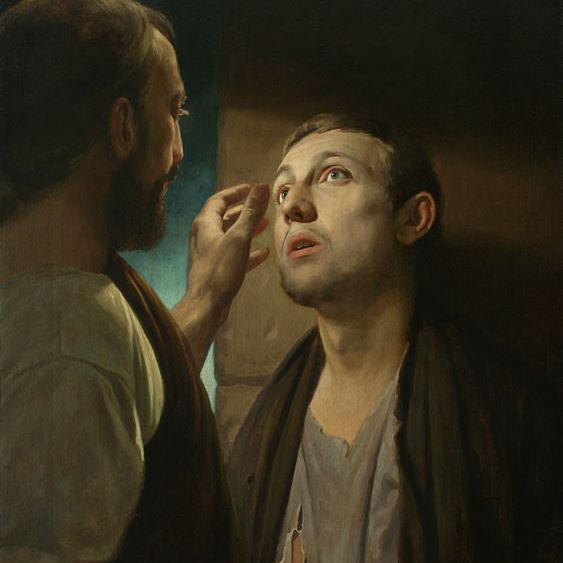 Immediately after his baptism, Jesus, full of the Holy Spirit, is led by that same Spirit into the desert, where he fasts for forty days. He grows very weak in his humanity while facing three difficult temptations: to satisfy his own hunger, to do something spectacular to win the crowd, or to avoid the cross for earthly glory. Surprisingly, Jesus not only triumphs over the devil’s temptations by using the Word of God but returns to Galilee in the power of the Spirit (Luke 4:14). He amazes his listeners in Capernaum with his personal authority in teaching and by setting a demonized man free (Mark 1:21–28). He then travels to his hometown of Nazareth to tell the people there that his ministry fulfills Isaiah 61.
The power of God was coming from Jesus and healing all the sick he encounters, including a multitude near Tyre (Luke 6:17). According to Matthew 12, after challenging the religious leaders and healing a man with a shriveled hand, Jesus travels through the Galilean countryside and heals all the sick who find him but tells them not to reveal his identity. Matthew states that these actions and words fulfill the prophecy in Isaiah 42, quoted earlier, about the one upon whom God would place his spirit while expressing delight in him!
We may well ask, What was the source of Jesus’ outstanding healing and authority? The religious leaders, especially the Pharisees (who opposed Jesus because he performed healings on the Sabbath, formed friendships with sinners and tax collectors, and was successful in his ministry), accused Jesus of setting people free from demons through Beelzebub, a chief demon. Here is one example: “Then they brought a demon-possessed man who was blind and mute, and Jesus healed him, so that he could both talk and see. All the people were astonished and said, ‘Could this be the Son of David?’ But when the Pharisees heard this, they said, ‘It is only by Beelzebub, the prince of demons, that this fellow drives out demons’” (Matt. 12:22–25).
One of the clearest Scriptures connecting the work of the Holy Spirit through Jesus and healing is found in Acts 10:38 within Peter’s message to Cornelius, a God-fearing centurion, and his other Gentile friends. Peter tells them, “How God anointed Jesus of Nazareth with the Holy Spirit and power, and how he went around doing good [works] and healing all who were under the power of the devil, because God was with him.” As Peter goes on to tell them about Jesus’ death and resurrection, his hearers come to faith and the Holy Spirit sovereignly falls upon them. They are baptized and included in this new movement.
Jesus is anointed and empowered for a healing ministry. His ministry also freed people who were under the power and reign of evil in their lives. (This is not to specify what proportion of illnesses, infirmities, or diseases are caused by demons rather than by a host of other factors, which were unknown in the first century.) Though Jesus was a good deed-doer in the best sense, he was nevertheless killed, and then rose on the third day.
The passages discussed so far in this chapter indicate that the Holy Spirit of God had clearly been involved in the life and healing ministry of Jesus, as He will be in our lives. We cannot actually estimate the number of times Jesus’ healings were accomplished through his own divine nature or through the Spirit. In some ways, Jesus may have humbled himself by not doing his mighty works except through the power of the Holy Spirit.
However, in his early encounters with demons that were oppressing or indwelling human beings, the demons defensively asserted that they knew who Jesus really was; namely, the “Holy one of God” (Mark 1:21). His usual tactic, while casting them out, was to silence or muzzle them, keeping them from prematurely identifying him as the Anointed One, the Son of the Living God. Jesus usually called himself ‘the son of man’ as God had addressed Ezekiel (Ezek 7:14) but points to Dan 7:13 at his trial before the Sanhedrin.
Overall, we believe that God was working powerfully in the preaching, teaching, healing, and deliverance ministries of Jesus the Christ, without any hindrances. Though they may have taken different roles at various times, the Father, Son, and Holy Spirit worked in perfect harmony to redeem and transform humankind and will create new Heavens and a new Earth. Is it possible for Christians to be caught up in such movements and ministries of God, resulting in a spreading Gospel wave, carried by Spirit-endowed believers?
PR

Part 2 continues in the Spring 2016 issue with “The Holy Spirit and the Ministry of the Disciples”
This chapter is reprinted with permission from New Testament Healing by Peter E. Ostrander (Xulon, 2011).